21 Pixie Bob Haircuts for Thin Hair
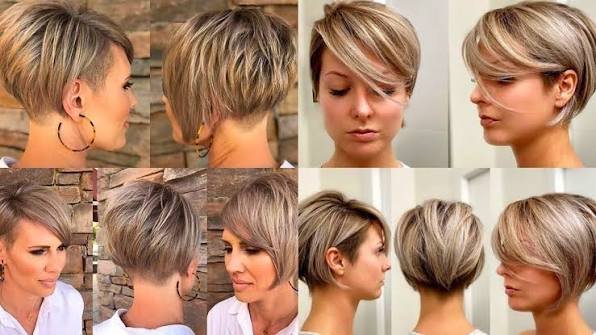
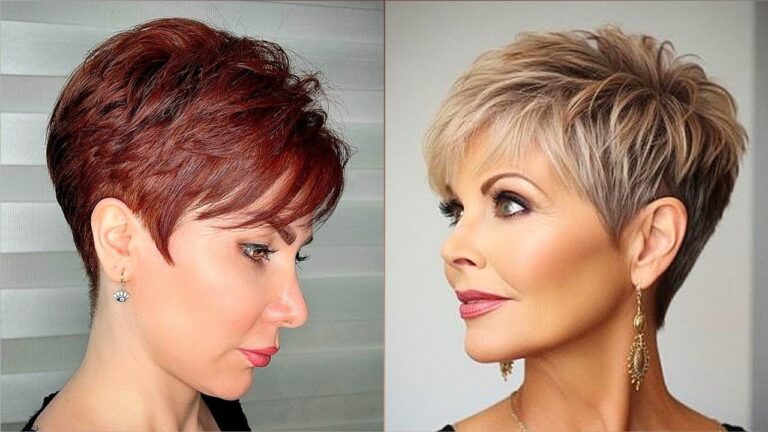
The pixie bob is one of the smartest length choices for thin hair, and it does not get enough credit for it. It sits in that zone between a short pixie and a chin-length bob where the hair is short enough that the limited density creates real presence but long enough to show movement and face-framing quality. For thin hair, that combination is genuinely useful.
The key is understanding what version of the Pixie Bob works for your specific thinness. Some thin hair needs a blunt, dense perimeter to look full. Some needs crown texture and root lift to avoid looking flat. Some need a structural element like a stacked back or an A-line angle to create the shape that the hair cannot generate on its own.
The right version depends on what your hair actually does, not just what looks good in a reference photo.
Quick tip before you scroll. Whatever version you choose, ask your stylist to keep thinning shears away from the ends. The ends are where thin hair needs its density most. Thinning there is one of the most common mistakes made on this cut for thin hair, and it makes the perimeter look wispy and sparse rather than full and intentional.
1. Blunt Perimeter Pixie Bob
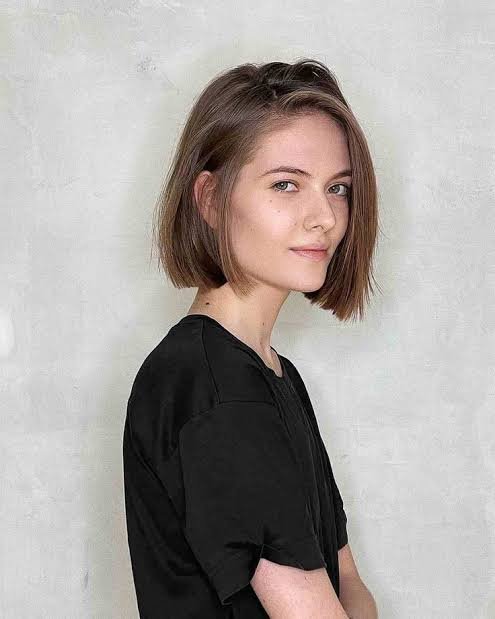
A blunt perimeter on a pixie bob maximizes end density at the cheekbone length, where thin hair needs fullness most. The clean, even edge makes the hair look significantly thicker than any layered or textured perimeter would on the same hair. It is the most reliable starting point for very thin hair.
Ask for a clean, blunt perimeter at cheekbone length with no thinning through the ends. A small round brush at the crown during blow drying lifts the roots for volume. Keep the perimeter maintenance tight with trims every five to six weeks.
2. Stacked Back Pixie Bob
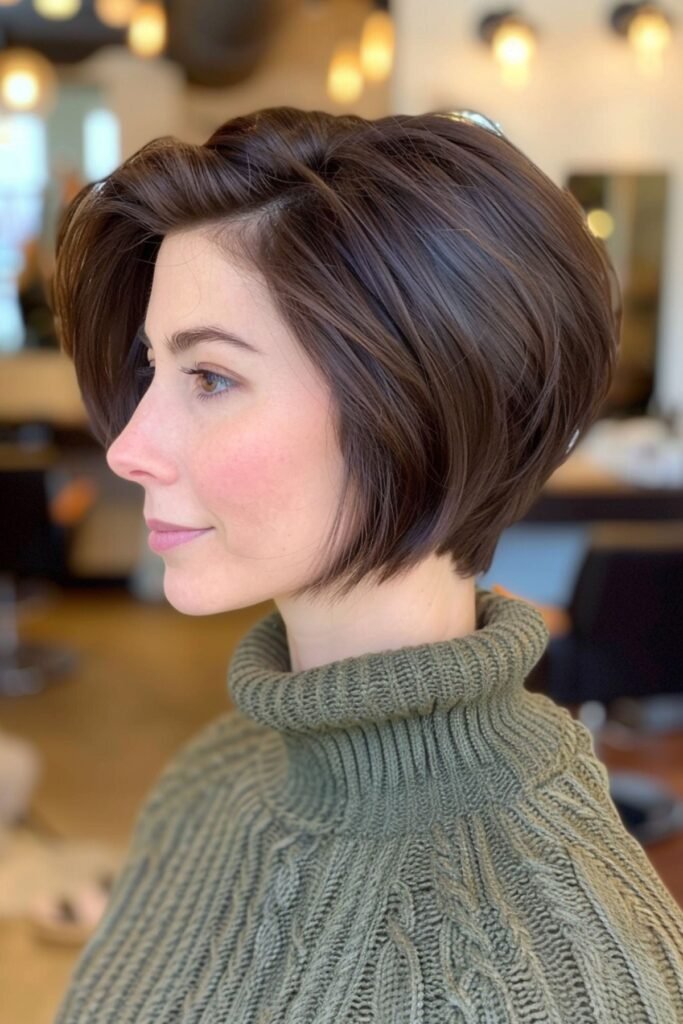
A stacked back adds structural crown lift through the back of the cut rather than through the density of the hair. For thin hair, this structural approach creates volume and shape that does not depend on what the hair can generate on its own. The front stays longer and frames the face.
Ask for stacking concentrated at the back to create a rounded, lifted back profile with longer front sections at cheekbone length. The perimeter should stay as full and dense as possible. Blow-dry the back roots upward first for maximum crown lift.
3. Side-Parted Pixie Bob
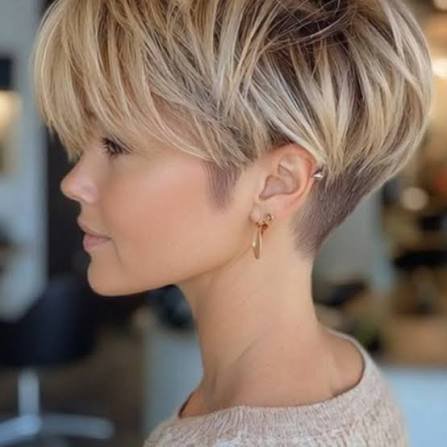
A deep side part on a pixie bob creates immediate volume on the heavier side and asymmetry that reduces the impression of a rounder face. For thin hair, the side part concentrates the limited density on one side, where it creates more apparent fullness than a centered style would.
Set the part while the hair is damp and blow-dry the crown roots upward and over to the dominant side. A medium round brush at the crown builds volume that holds through the day. Keep the perimeter blunt and full for maximum thin hair density.
4. A-Line Pixie Bob
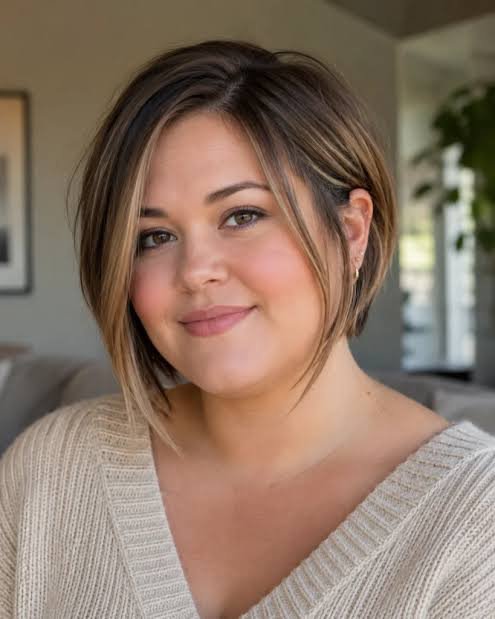
An A-line pixie bob is shorter at the back and longer at the front, creating a structural vertical line that elongates the face without relying on the density of the hair to create shape. The angle does the design work, and the thin hair just needs to fill the frame it provides.
Ask for an A-line angle with a noticeably shorter back and longer front sections at cheekbone length. Interior layering should be kept minimal to preserve thin hair perimeter density. The angle provides all the visual interest this cut needs.
5. Textured Crown Pixie Bob
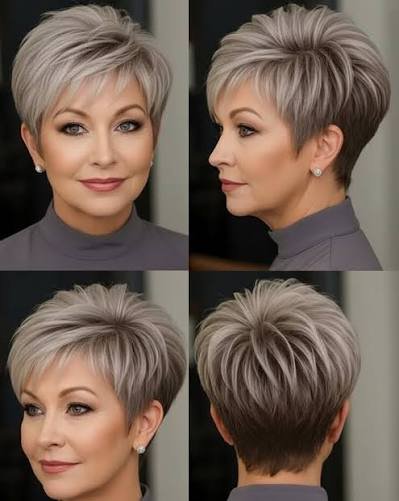
A textured crown pixie bob concentrates visible layering specifically through the crown to create lift and movement at the top of the head, while the rest of the cut stays fuller and cleaner. For thin hair, this targeted approach adds visual interest where it matters most without stripping perimeter density.
Ask for layering concentrated through the crown, with the sides and lower sections kept cleaner and fuller. A root spray before rough drying activates the crown texture. Avoid touching the ends when styling to preserve the blunt, full perimeter.
6. Graduated Pixie Bob
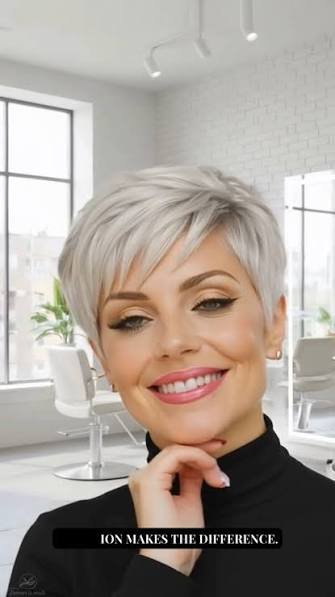
A graduated pixie bob creates structural lift through the graduation itself, with the shorter back generating natural crown volume that does not depend on hair density to exist. The longer front sections frame the face at cheekbone length, and the graduation creates a built-in shape.
Ask for a graduated cut with a shorter back that creates natural crown lift and cheekbone-length front sections. Interior layering was kept minimal, preserving thin hair perimeter density. The structural graduation does the work that a blunt symmetric cut cannot.
7. Pixie Bob with Curtain Bangs
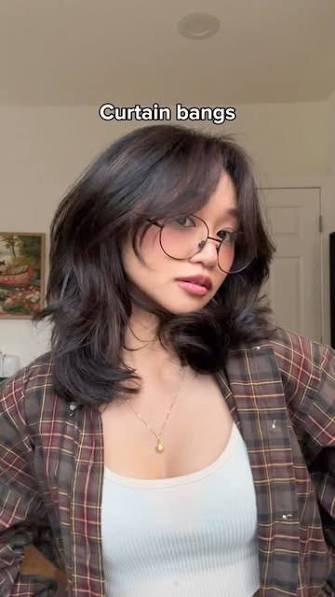
Curtain bangs on a pixie bob create a face-framing front element that adds visual interest without demanding the density a full fringe requires. For thin hair, curtain bangs are one of the safest fringe options because they are naturally light and do not go as flat through the day as heavier fringe styles.
Keep the curtain pieces airy and separated rather than thick and flat. A small round brush forward, then swept outward, keeps them sitting right. The body of the pixie bob should stay as full and dense as possible to compensate for the front section used to create the bangs.
8. Wispy Fringe Pixie Bob
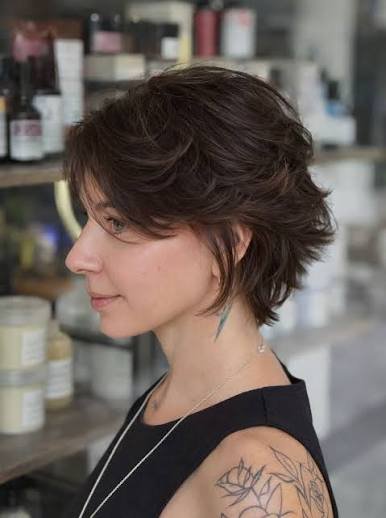
A wispy fringe on a pixie bob creates a soft focal point at the forehead that gives thin hair an intentional, styled quality at the front. The wispy rather than blunt quality is important for thin hair because it does not demand the density a full blunt fringe requires.
Keep the fringe separated and light rather than flat and heavy. Dry shampoo at the roots of the fringe adds grip between washes. The pixie bob perimeter should stay blunt and full to balance the wispy, lighter quality of the fringe.
9. Pixie Bob with Side Sweep
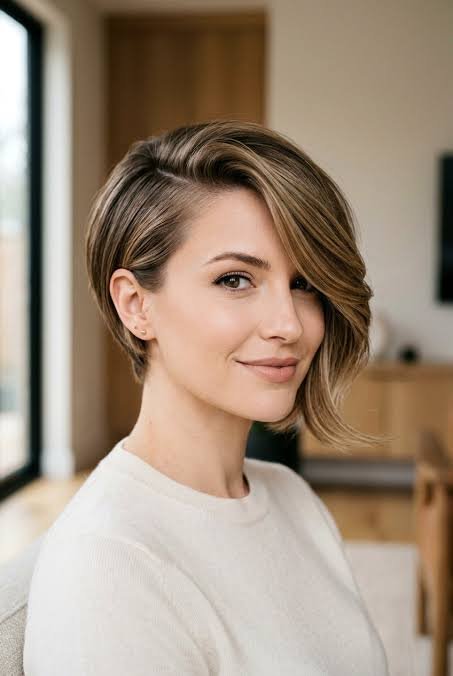
A side-swept front on a pixie bob creates a directional, polished quality that makes thin hair look more intentional and fuller on the heavier side. The sweep creates a diagonal element at the forehead that reduces the circular impression of a rounder face and adds a sense of movement to the whole style.
Blow-dry the front section forward and then sweep it to one side with a round brush. A light-hold spray sets the direction without making thin hair feel stiff. Keep the rest of the pixie bob blunt and clean for a polished finish.
10. Babylight Pixie Bob
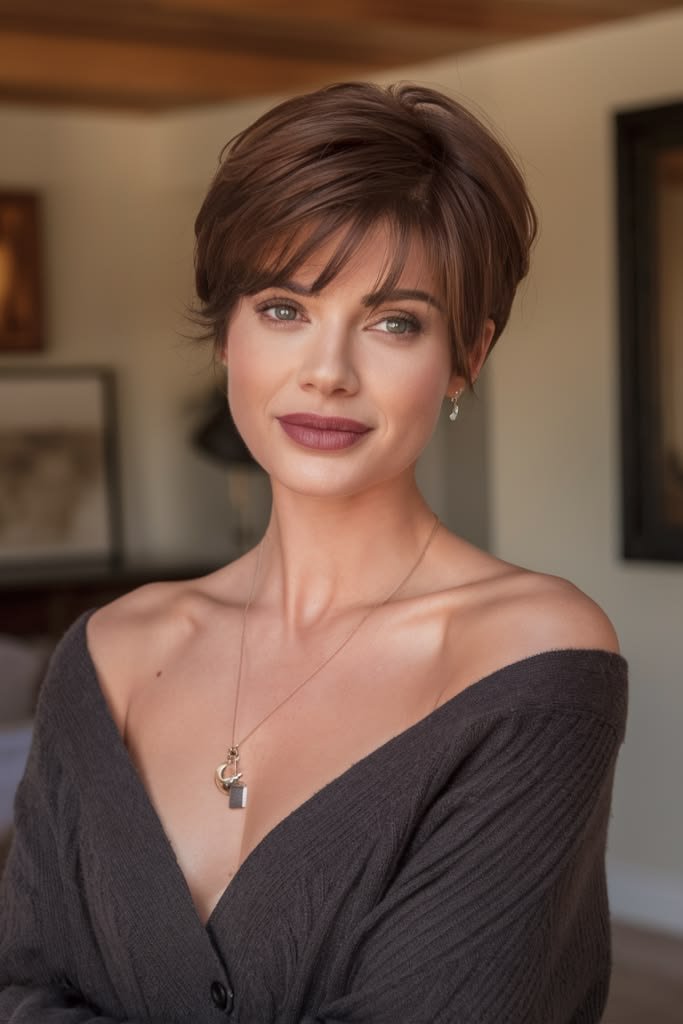
Adding babylights to a pixie bob on thin hair creates a visual dimension that makes the hair look thicker and more textured than it actually is. The very fine highlights add color variation and depth that give thin hair more apparent richness and fullness without any structural change to the cut.
Ask for babylights placed through the crown and mid-sections to add diffused brightness and dimension. Choose a tone that complements the natural base or gray rather than fighting against it. A gloss treatment every few weeks keeps the highlights looking fresh and the thin hair looking healthy.
11. Pixie Bob with Root Lift Layers
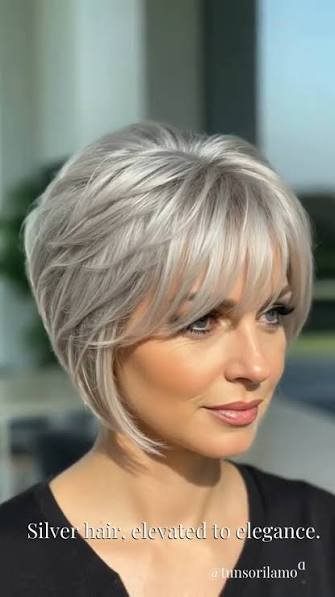
Invisible root-lift layers placed specifically through the crown and upper sections of a pixie bob address the flatness that thin hair develops at the base throughout the day. The layers are not visible as texture in the finished style, but make a significant difference to how much volume the hair holds.
Ask for invisible root-lift layering placed only through the crown and upper sections, leaving the lower sections and perimeter completely untouched. Blow-dry the roots upward with a round brush to activate the lift. The perimeter stays blunt and full.
12. Asymmetric Pixie Bob
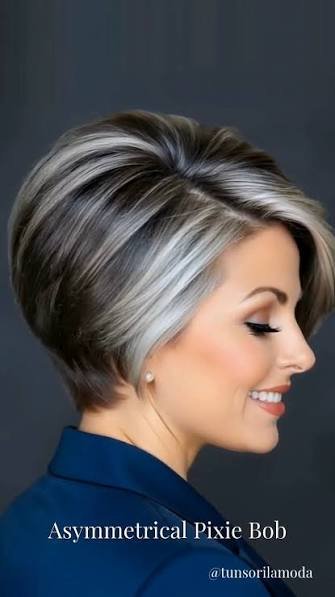
An asymmetric pixie bob with one side longer than the other creates a diagonal line that adds visual interest and reduces the circular symmetry of a rounder face. For thin hair, the asymmetry also concentrates more hair on the longer side, creating more apparent density than a symmetric cut of the same length.
Ask for one side sitting clearly longer than the other, with interior layering on both sides that preserves thin hair perimeter density. The diagonal line the asymmetry creates makes the thin hair look more intentional and considered than a symmetric style would.
13. Natural Wave Pixie Bob
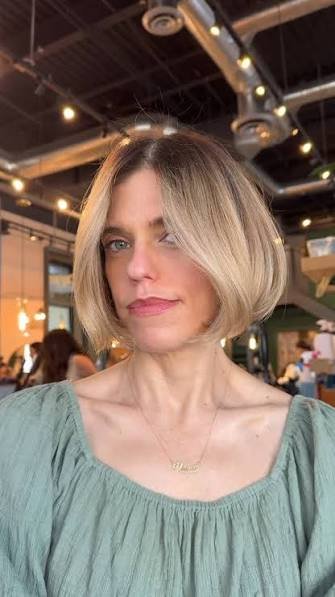
A pixie bob shaped around natural waves creates a style that air dries into a flattering shape with no daily styling effort. For thin hair with natural wave, this is one of the most practical and sustainable approaches because the wave adds volume and texture that straight thin hair has to work to create artificially.
Ask for the pixie bob shaped to work with your natural wave pattern rather than against it. A lightweight mousse scrunched into damp hair is all the styling product this version needs. Let it air dry without touching for the best wave definition.
14. Curly Pixie Bob
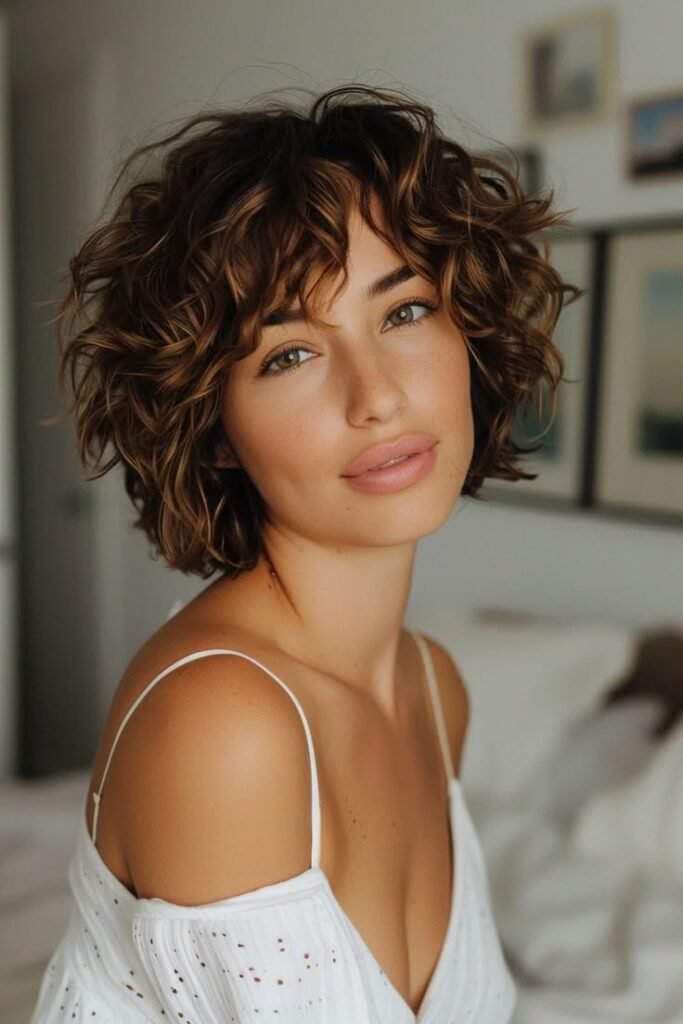
A curly pixie bob shaped around a natural curl pattern creates a style where the curl does the visual work of adding volume and texture that straight thin hair cannot generate. At cheekbone length, the curl is well-defined, and the overall silhouette looks full and intentional regardless of hair density.
Ask for the pixie bob shaped on dry or defined curls so the stylist can see how the pattern sits at that length. A moisturizing curl cream applied to damp hair and diffused on low heat gives the best definition and the most volume.
15. Sleek Pixie Bob
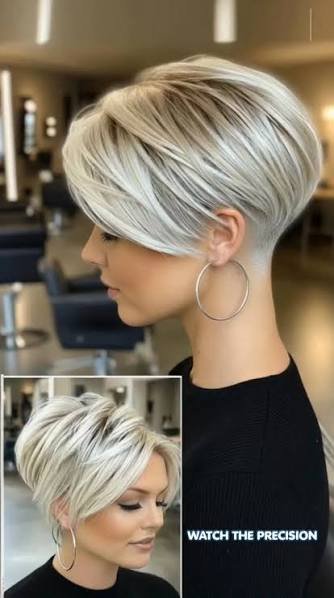
A sleek, smooth pixie bob styled with a flat iron or a round brush blowout creates a polished, graphic result that relies on the precision of the cut rather than the density of the hair to look intentional. For thin hair, the sleekness creates a clean, considered impression that works well in professional settings.
Use a light smoothing cream before blow-drying for shine. Keep the perimeter blunt and even for the sleekest result. A light-hold finishing spray keeps the surface smooth and the thin hair looking controlled through the day.
16. Pixie Bob with Undercut Nape
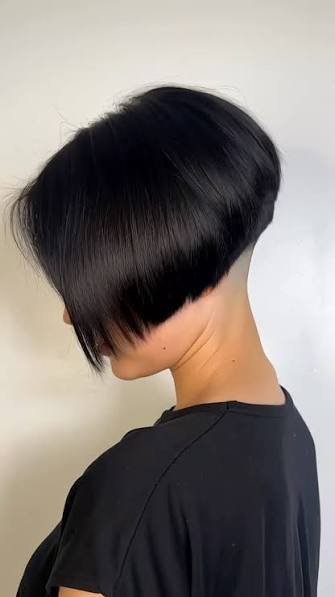
A soft undercut at the nape removes hidden weight from underneath the surface layers of a pixie bob without changing anything visible about the style. For thin hair that has become weighty or flat at the back, this undercut lightens the lower section and helps the upper layers sit with more lift and movement.
Ask for a soft undercut clipped closely at the nape underneath the surface layers. It should be invisible when the hair falls naturally. The weight reduction allows the pixie bob to move and hold its shape more effectively throughout the day.
17. Voluminous Crown Pixie Bob
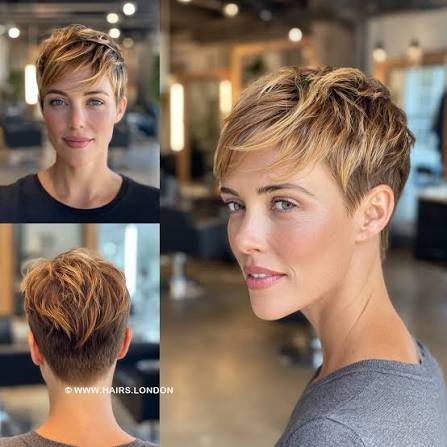
A pixie bob with significant crown volume created through targeted layering and blow-dry technique gives thin hair a bold, confident silhouette that draws the eye upward. The close sides keep the style proportional, and the crown volume is the entire focus of the look.
Ask for crown layering that creates maximum height and volume, close sides that balance the bold crown, and enough crown length to hold the lifted shape with minimal daily product. A root spray and a large, round brush at the crown build the volume. Keep the sides tight and clean.
18. Pixie Bob with Face-Framing Highlights
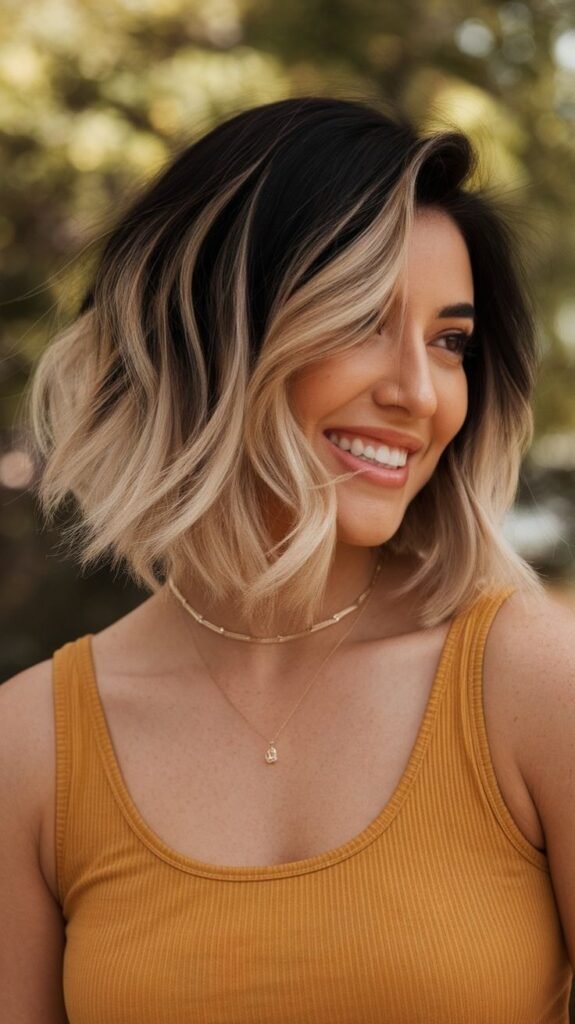
Face-framing highlights on a pixie bob draw attention to the center of the face and add visual dimension that thin hair lacks. The highlights create depth and color variation that makes the thin hair look more textured and full than a flat single color on the same cut.
Ask for highlights placed specifically through the face-framing sections at the cheekbones and jaw level. Choose a tone that adds brightness and dimension in a way that complements the natural base or gray. A gloss treatment keeps the highlights looking fresh.
19. Pixie Bob with Deep Side Part and Volume
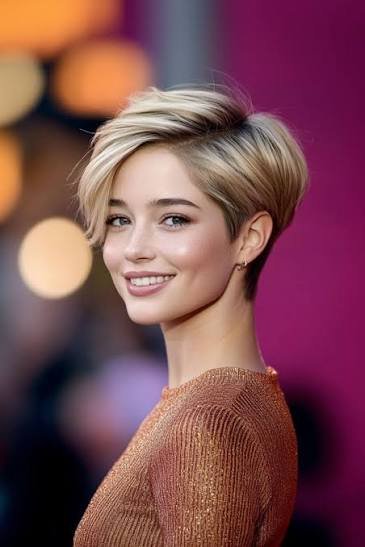
A deep side part combined with a blunt pixie bob creates the maximum possible crown volume for thin hair without any layering. The part concentrates the thin hair on one side, blow-drying the roots upward on the dominant side, and the blunt perimeter keeps the ends as full as possible.
Set the deep side part on damp hair and blow-dry the crown roots upward and over to the dominant side with a large round brush. A volumizing mousse at the roots before drying extends how long the volume lasts. Keep the perimeter maintenance tight with regular trims.
20. Soft Feathered Pixie Bob
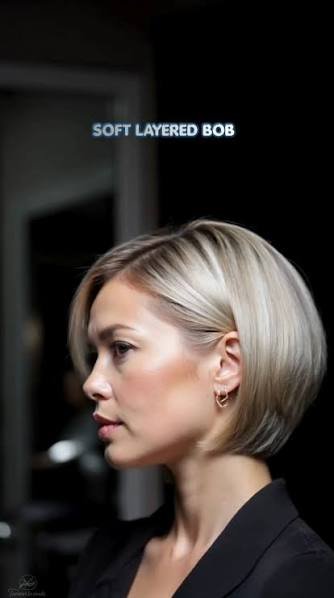
A feathered pixie bob uses very conservative, gradually diffused layering through the outer sections to create a soft, airy quality that suits thin hair. The feathering removes weight gently rather than sharply, giving the style a lighter, more natural feel without the abrupt density changes that aggressive layering leaves on thin hair.
Ask for very conservative feathered layering applied only through the outer sections, keeping the perimeter as full as possible. This is the right choice if you want some movement and softness in the pixie bob without the risk of the ends looking too thin or wispy.
21. Effortless Air-Dry Pixie Bob
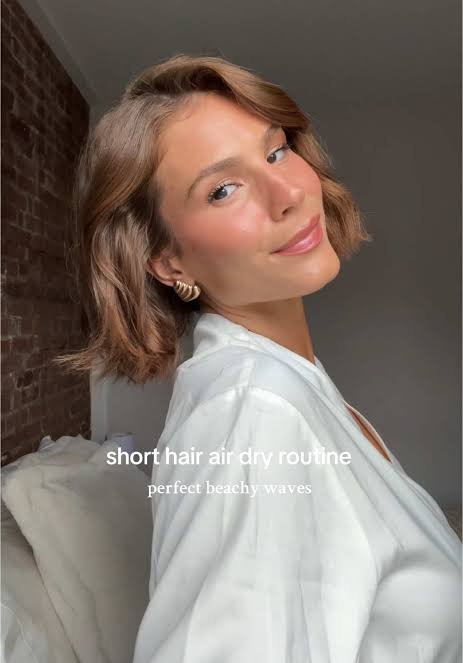
A pixie bob designed to look its best when thin hair air dries without heat tools or significant manipulation is the most genuinely low-maintenance option on this list. The cut is shaped around how the thin hair naturally falls and settles when dry, so the daily result looks flattering without any styling routine.
Ask for the pixie bob shaped around how your thin hair behaves when it dries completely naturally without product or tool intervention. A light volumizing mousse applied only at the roots before air drying is the whole routine. The shape comes from the cut, not from daily effort.
FAQs
Is a pixie bob good for very thin hair?
Yes, and it is often one of the most flattering choices. The shorter length concentrates the thin hair’s limited density in a small area, where it creates a more apparent presence than it would at a longer length. The key is keeping the perimeter blunt and full and avoiding aggressive layering or thinning through the ends.
What is the difference between a pixie bob and a regular bob for thin hair?
A pixie bob sits shorter than a standard bob, typically at cheekbone length, which means the thin hair density is concentrated in a smaller perimeter where it has more visual impact. A regular chin-length or collarbone-length bob spreads the same limited density over a longer perimeter, where it can look thinner and more sparse.
How often does a Pixie Bob need trimming for thin hair?
Every five to six weeks. The shorter length means the shape changes more visibly as the hair grows, and the blunt perimeter that thin hair needs to look full starts to lose its precision quickly. Regular trims are the single most important maintenance step for keeping a pixie bob looking intentional on thin hair.
What products work best for a pixie bob on thin hair?
A volumizing mousse or root-lifting spray applied to damp roots before blow drying is the most effective product for adding body. Dry shampoo at the roots between washes adds grip and extends the volume. Light-hold finishing spray keeps the shape without weighing thin hair down. Avoid heavy waxes, thick creams, and serums on the lengths.
Wrapping Up
A pixie bob for thin hair is one of those cuts where the details really matter. The perimeter finish, the placement of any layering, and the specific length all make a significant difference to whether the thin hair looks full and intentional or sparse and undone.
Save two or three versions from this list that match your face shape and your styling routine. Tell your stylist you want fullness and minimal thinning through the ends. Those two instructions alone will get you significantly closer to the result you are looking for. With the right version of the pixie bob, thin hair can look genuinely full, modern, and completely on purpose.