23 Stacked bob hairstyles for fine hair
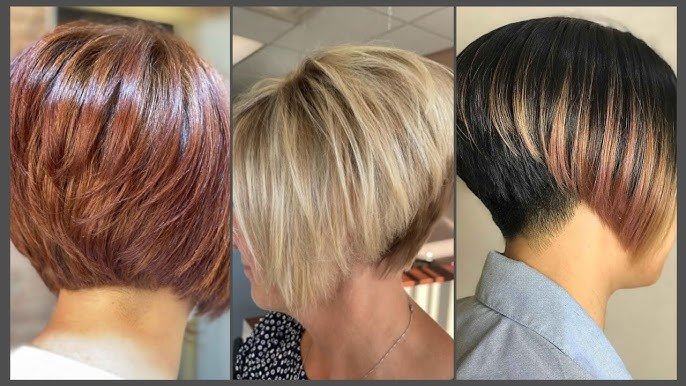
Fine hair and a stacked bob have a relationship that most people do not fully appreciate until they experience it firsthand. The stacking at the back does something structural that fine hair cannot achieve on its own. It builds volume and lift through the construction of the cut rather than through the density of the hair. The shape is built in. The fine hair just has to fill it.
That is the fundamental advantage of a stacked bob for fine hair over almost every other cut at this length. Other volume-creating approaches rely on product, technique, or density. The stacked bob creates volume architecturally. The graduation at the back lifts the crown from behind, and that lift holds regardless of how fine the hair is because it is the shape doing the work.
What to tell your stylist: more stacking than you think you need, conservative layering through the front sections, and keep thinning shears away from the ends. Those three instructions will get fine hair significantly closer to the result it is looking for in a stacked bob.
1. Classic Stacked Bob
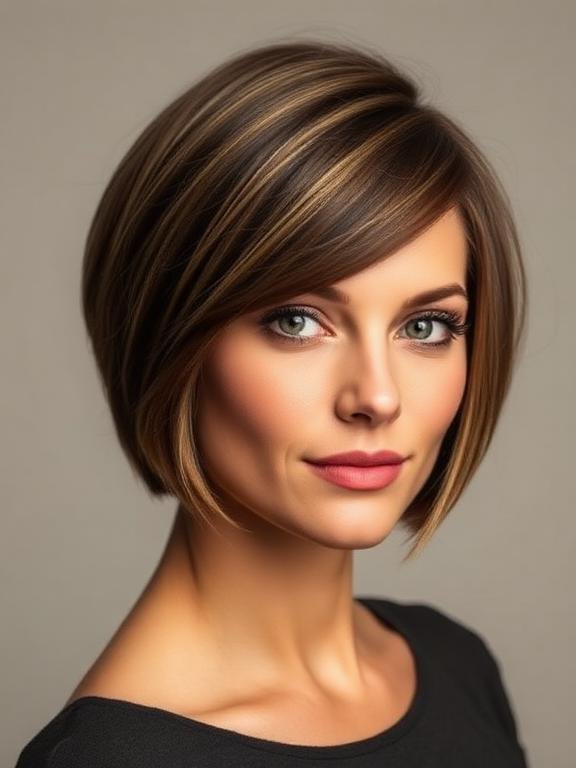
The foundation version. Close layering concentrated at the back builds a rounded, lifted crown profile while the front sections stay longer and frame the face at chin length. The stacking is the volume. Everything else in the style follows from that.
Ask for the stacking to be built with multiple close layers at the back rather than just one or two. The more layers in the stacked section, the more lift the fine hair gets, and the more the rounded back profile holds its shape between appointments.
2. A-Line Stacked Bob
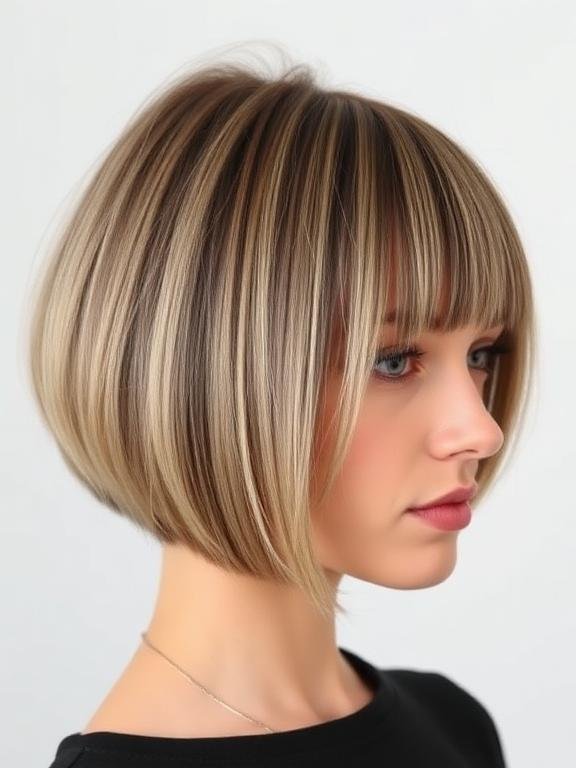
An A-line stacked bob combines the structural lift of the stacking at the back with the elongating vertical line of the A-line angle through the front. Two structural elements are working simultaneously. The stacking creates crown height, and the A-line creates face length.
The longer front sections of the A-line should stay as full and blunt as possible to maximize the end density of the fine hair. The structural work of the A-line angle means the front does not need layering to look interesting.
3. Stacked Bob with Side Part
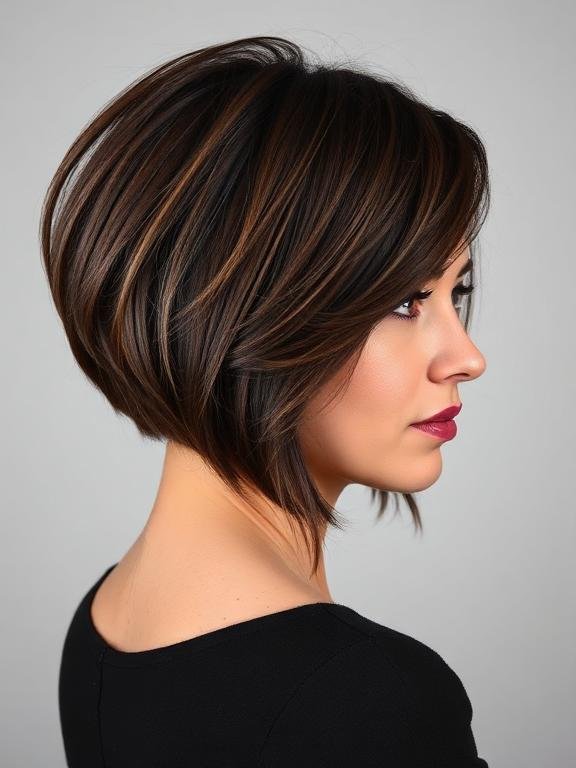
A deep side part on a stacked bob creates immediate crown volume on the heavier side that works alongside the structural lift of the stacking to create a style with volume from two separate directions simultaneously. The stacking lifts the back. The side part lifts the front.
Blow-dry the roots on the heavier side upward and over with a round brush to maximize the volume the side part creates. The stacked back holds its shape regardless of styling. The side part volume is where the daily effort pays off most.
4. Stacked Bob with Curtain Bangs
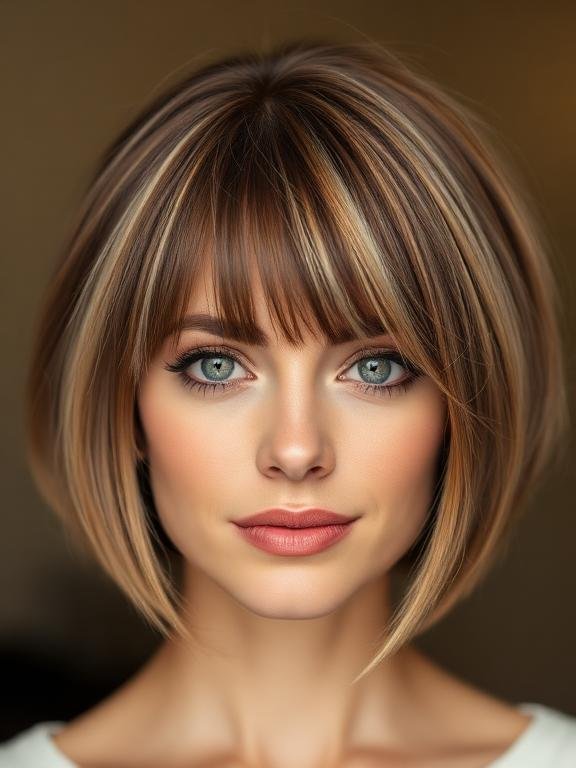
Curtain bangs on a stacked bob add face-framing interest at the forehead level that the stacked back structure alone does not provide. The curtain bangs draw attention to the eyes while the stacked back creates crown height, and the combination addresses the face from multiple levels simultaneously.
Keep the curtain pieces airy and separated for fine hair. A small round brush forward, then swept outward, keeps them sitting correctly without demanding the density the fine hair does not have. The bob body should stay as full as possible.
5. Inverted Stacked Bob
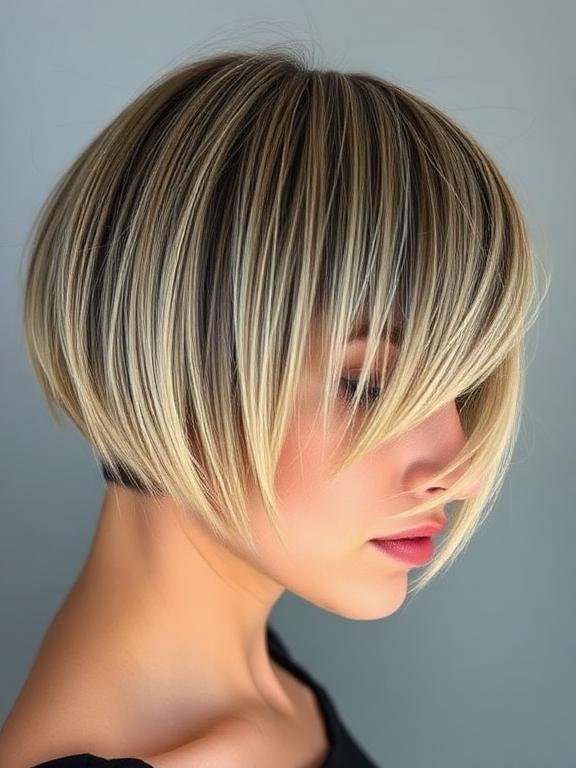
An inverted stacked bob has a strong, sharp angle from a very close back into a noticeably longer front. The angle is more dramatic than a standard A-line, and the stacking at the back is particularly concentrated and close. The result is one of the most graphic and structurally defined versions of this cut.
This version is bold and requires regular maintenance. The stacking needs freshening every four to five weeks to stay sharp. The fine hair fills the structure, and the stacking is beautiful because there is less weight working against the graduated layers.
6. Soft Stacked Bob
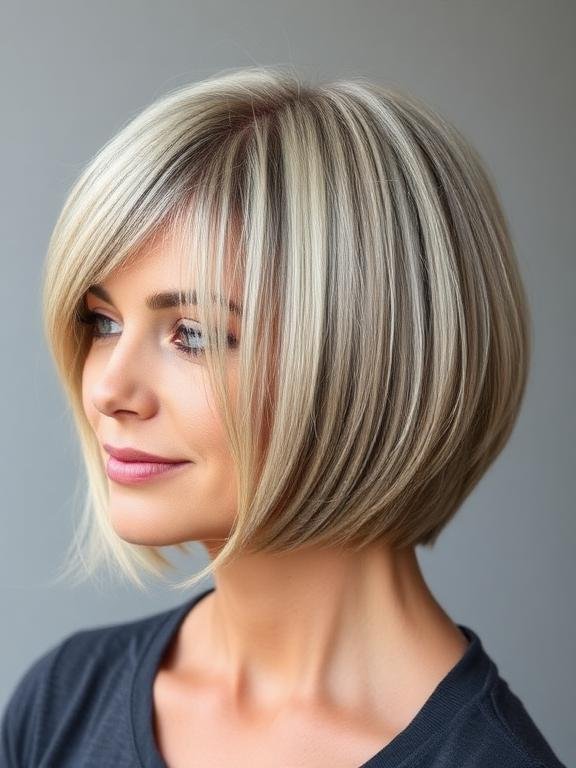
A softer version where the stacking is less aggressively graduated, and the front sections have a slightly more blended, less angular quality. The volume is real, but the overall impression is rounder and more relaxed than the classic or inverted versions.
Good for women over 40 with fine hair who want the structural lift of stacking without the sharp, graphic quality of a strongly angled cut. Ask for the stacking to be blended more gradually than standard, so the transition from the close back to the longer front feels soft rather than architectural.
7. Stacked Bob with Wispy Fringe
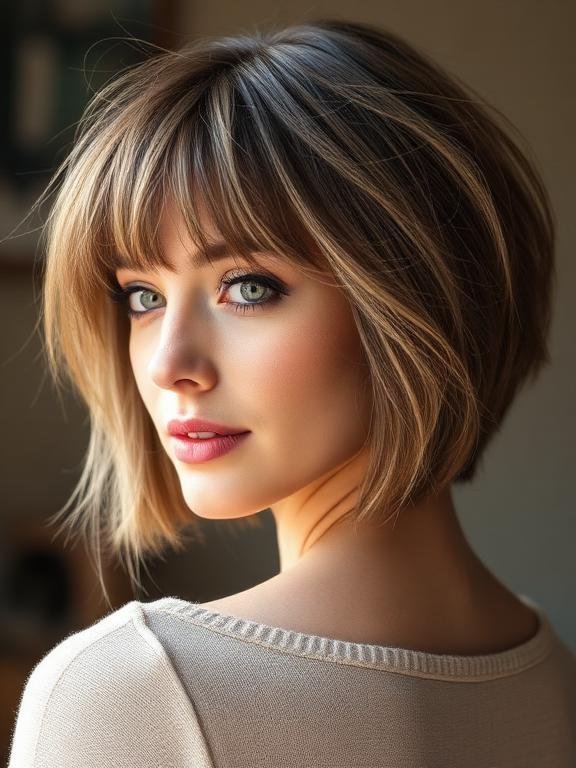
A wispy fringe on a stacked bob gives fine hair a soft focal point at the forehead that adds styling intention to the front of the cut. The wispy quality is essential for fine hair. It does not demand the density that hair cannot provide, and does not go completely flat by midday, the way a full fringe would.
The fringe should look deliberately light rather than accidentally thin. Keep it separated and airy. Dry shampoo at the roots of the fringe adds grip. The stacked back provides the volume, and the wispy fringe provides the face-framing.
8. Stacked Bob with Root Lift Layers
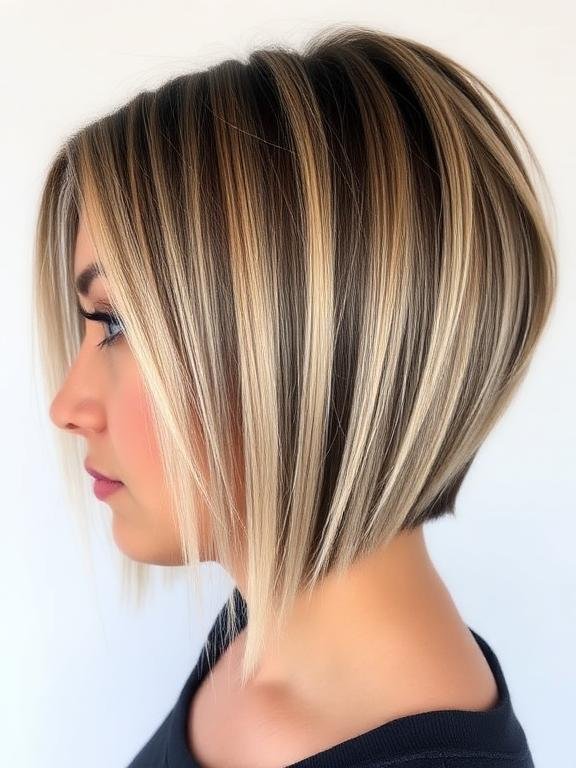
Adding invisible root-lift layers specifically through the crown and upper sections alongside the structural stacking at the back creates a style where both the cut and the layering are working on volume simultaneously. The stacking lifts from behind, and the root layers lift from above.
Ask for the root-lift layering to be placed only through the crown and upper sections, leaving the lower front sections and perimeter completely untouched. The perimeter needs to stay as full and dense as possible for fine hair.
9. Wavy Stacked Bob
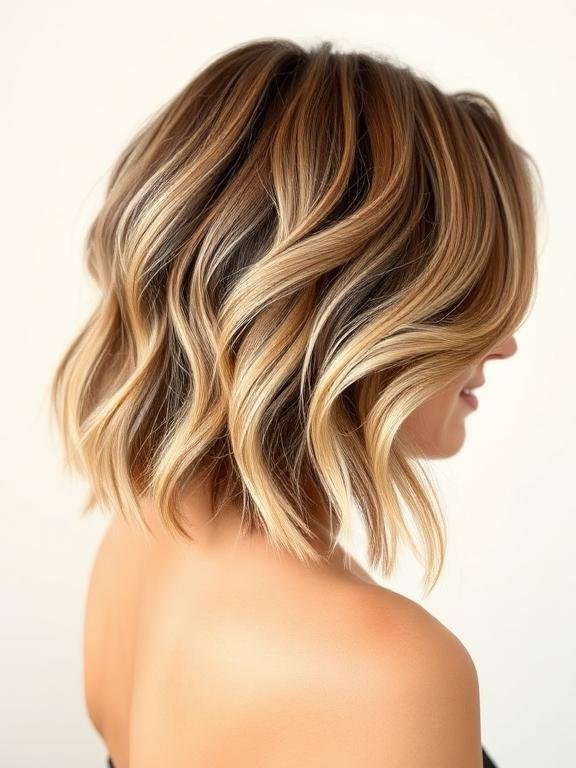
A stacked bob styled with natural or styled waves adds texture and apparent fullness that straight fine hair cannot generate on its own. The stacking provides the structural shape, and the waves provide the surface dimension. The two elements together create more apparent volume than either achieves alone.
Use a medium barrel iron for waves that suit the shorter length of a stacked bob. Avoid the last half inch of each section for a relaxed, undone finish. A lightweight texture spray through the waves after they have cooled adds dimension without weight.
10. Stacked Bob with Babylights
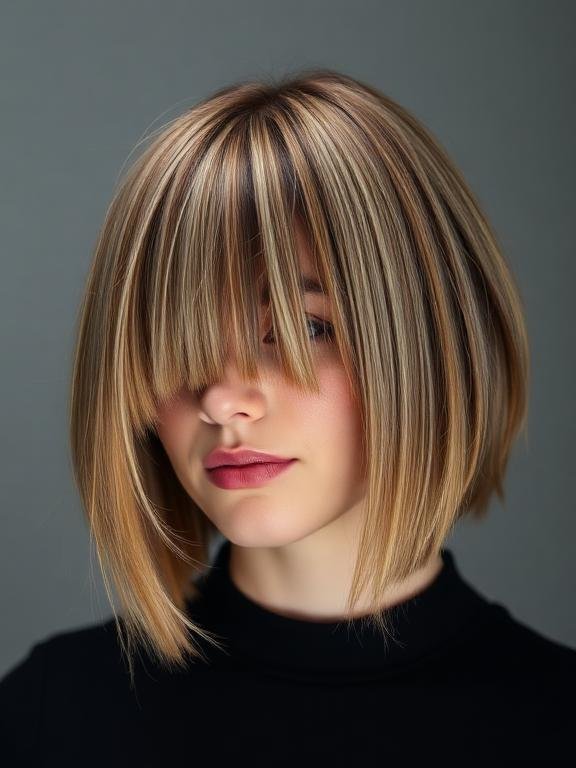
Babylights added to a stacked bob on fine hair create visual dimension and depth that the limited texture of fine hair cannot produce through the cut alone. The fine highlights add color variation that makes fine hair look thicker and more textured, and the stacking adds structural volume. Together, they address both the visual thinness and the physical flatness of fine hair simultaneously.
Ask for babylights placed through the crown and surface sections where they will interact most visibly with the stacked volume. A warm gloss treatment every four to six weeks keeps the babylights looking fresh and maintains the dimensional quality.
11. Short Stacked Bob
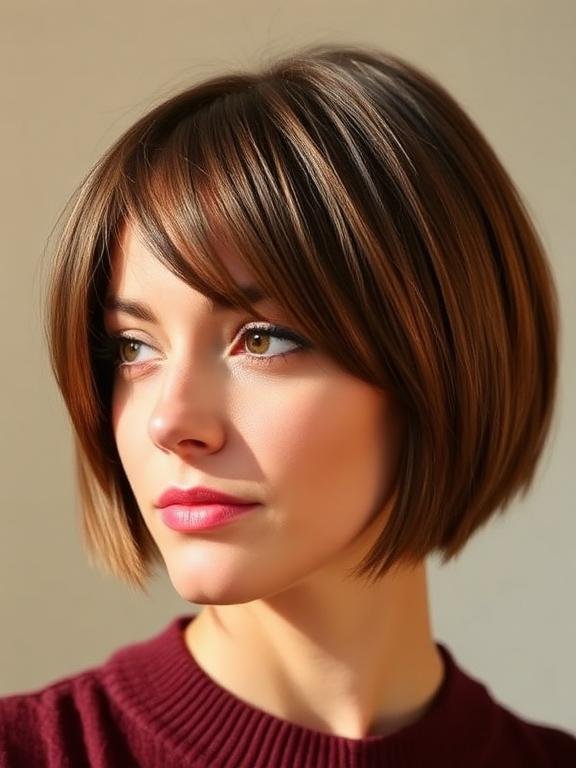
A stacked bob cut shorter than the standard chin-length version, sitting above the chin or at the cheekbone level, concentrates the fine hair density in a smaller, more compact area where it creates a more apparent presence. The stacking at a shorter length can be more aggressively built because there is less length weighing it down.
Ask for close, concentrated stacking at the back and a blunt, clean perimeter through the front and sides. At this length, the fine hair density creates a convincing, full-looking result that would be harder to achieve at a longer length with the same density.
12. Stacked Bob with Blunt Perimeter
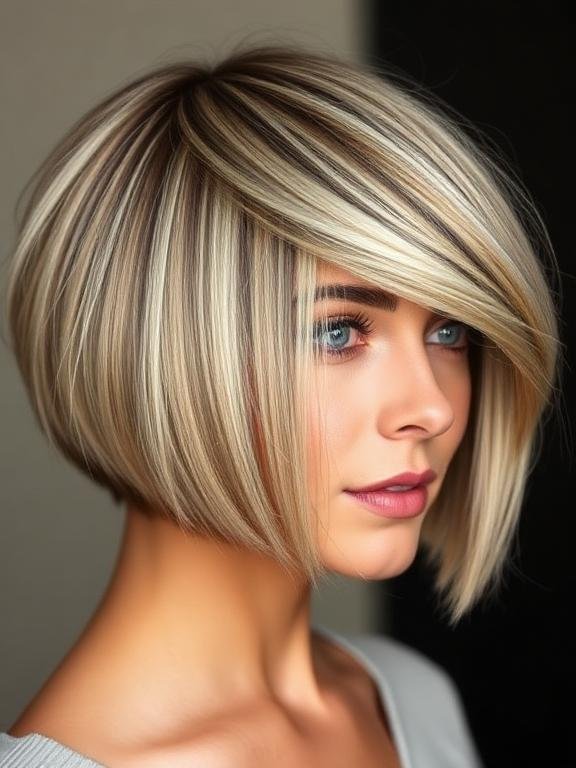
A stacked bob where the perimeter stays deliberately blunt throughout the front and sides creates the maximum possible end density for fine hair at this length. The stacking creates the back volume, and the blunt perimeter creates the front and side fullness.
Ask specifically for no thinning through the perimeter. The blunt edge makes the fine hair look thicker at the tips than any textured or razored perimeter would on the same density. This is the most reliable version for very fine hair that collapses quickly at the ends.
13. Stacked Bob with Face-Framing Highlights
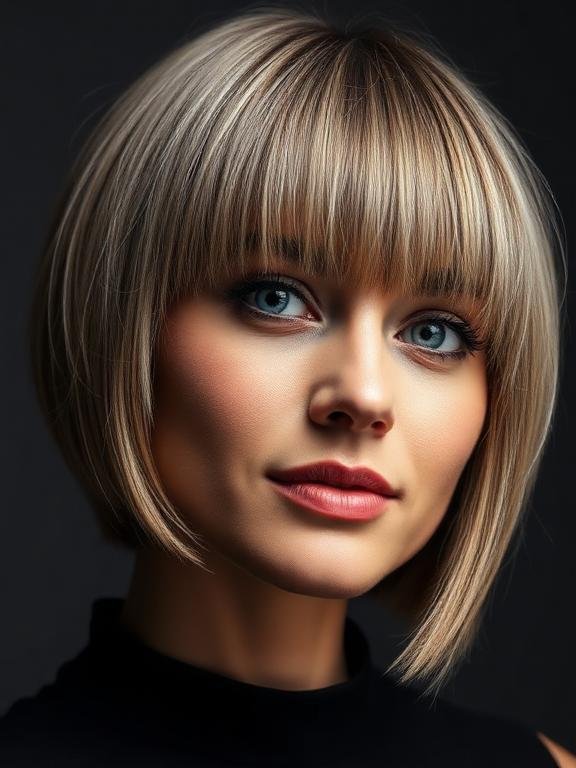
Face-framing highlights on a stacked bob add visual brightness right at face level that draws attention to the center of the face and adds dimension that fine hair’s texture cannot create on its own. The color does the visual work that the density cannot.
Ask for highlights placed through the face-framing sections at the cheekbone level that add brightness and the impression of more depth. A gloss treatment maintains the highlights and adds the shine that makes fine hair look healthier and more substantial.
14. Stacked Bob with Deep Side Part
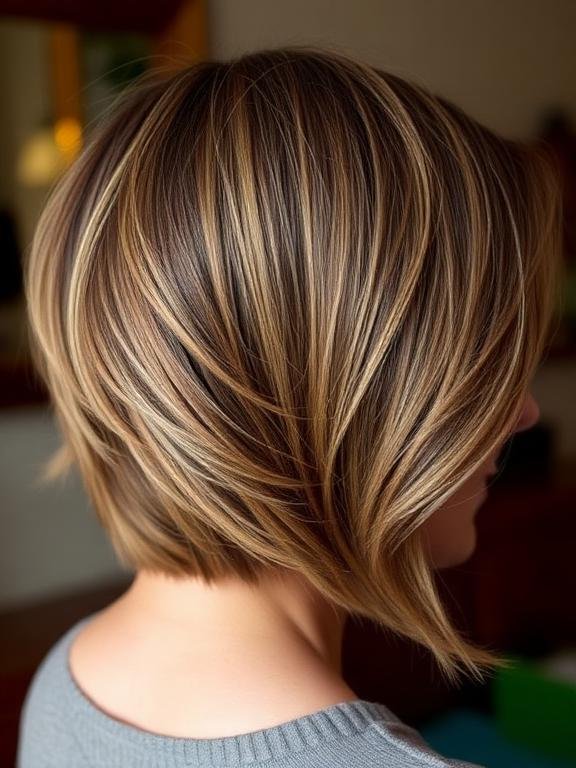
A very deep side part taken further across the head than a standard side part creates even more volume and asymmetry on the heavier side. For fine hair, this additional asymmetry concentrates even more hair to one side, creating more apparent density than a standard side part would achieve on the same fine hair.
Blow-dry the roots on the dominant side upward and across before the stacking at the back is styled. The combination of the deep side part volume at the front and the stacking lift at the back creates a style that addresses fine hair volume from every direction.
15. Stacked Bob with Side Sweep
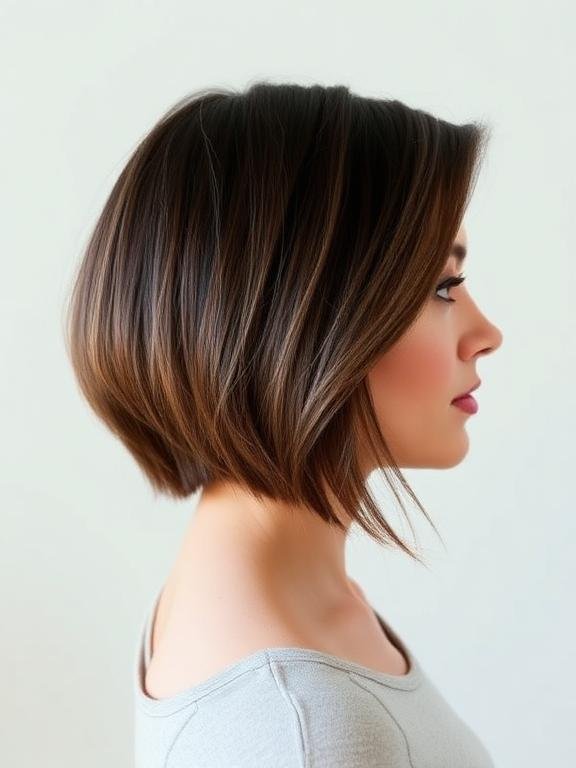
A side-swept front on a stacked bob creates a directional, polished quality at the front that works alongside the structural volume of the stacking at the back. The sweep creates asymmetry and apparent density on the heavier side, while the stacking maintains the crown lift from behind.
Ask for the front sections to be long enough to sweep naturally to one side without needing to be pinned or held in place. A light-hold spray sets the direction. The stacked back holds itself, and the swept front provides the face-framing directional element.
16. Graduated Stacked Bob
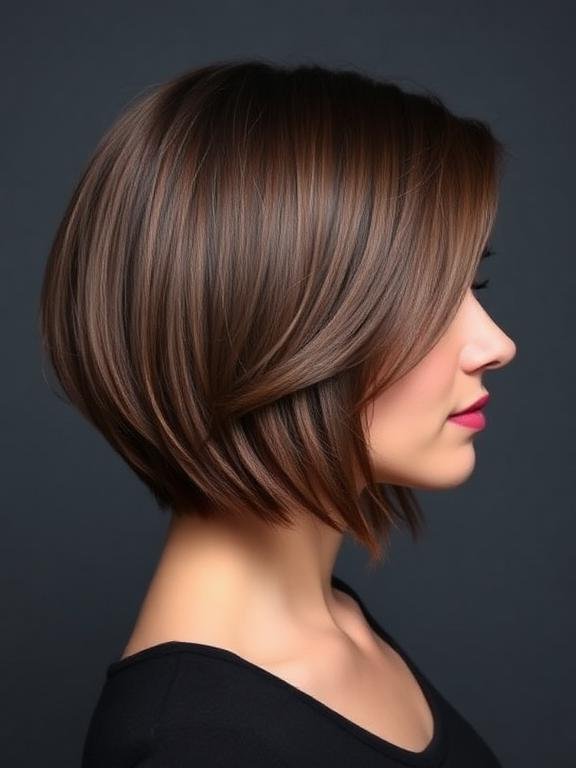
A graduated stacked bob uses a very gradual, multi-step graduation from bare skin or very short at the nape through multiple lengths up into the stacked section and finally into the longer front sections. The graduation is more detailed and nuanced than a standard stacked bob and creates a smoother, more refined silhouette.
This version requires a highly skilled cut because the multiple graduation steps need to blend seamlessly. The result is one of the most polished and precisely executed stacked bob versions available, and it holds its shape particularly well on fine hair because the gradual graduation provides consistent lift through multiple levels.
17. Stacked Bob with Undercut Nape
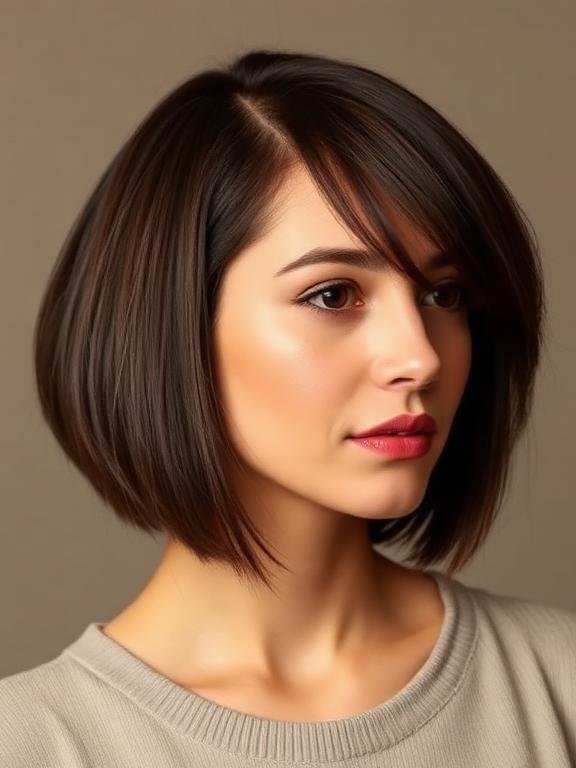
Adding a soft undercut at the nape underneath the stacking removes hidden weight from the very lowest section of the cut without changing anything visible about the style. For fine hair that has become heavier or more dense through repeated coloring or heat use, this undercut lightens the base and allows the stacked layers above to lift more effectively.
Ask for the undercut to be clipped closely at the very nape underneath the surface of the stacking. It should be invisible when the hair falls naturally. The weight reduction allows the stacked sections to sit higher and hold their lift more effectively throughout the day.
18. Stacked Bob for Thin Fine Hair
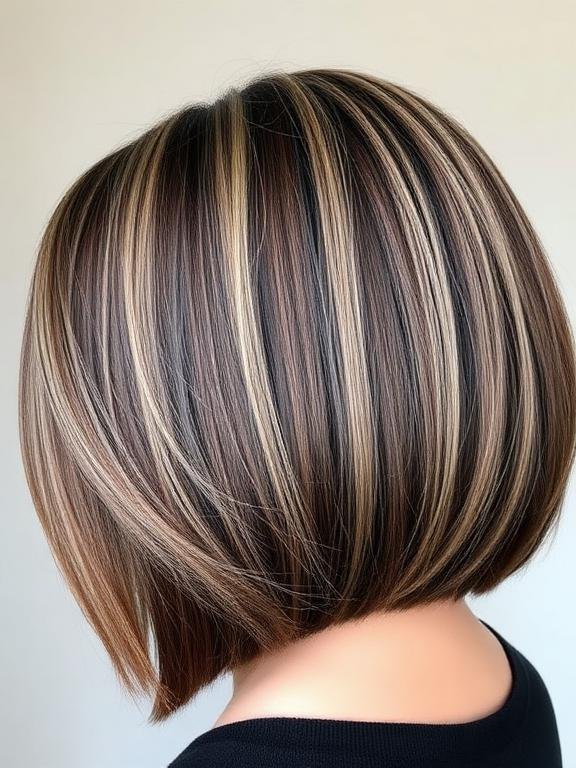
A stacked bob specifically designed for very thin or very fine hair uses the most aggressive stacking available, building as many graduated layers as possible into the back section to create the maximum structural lift. The front sections stay completely blunt and unthinned to protect every strand of end density.
Ask for maximum stacking at the back, combined with zero thinning through the front perimeter. The front sections rely entirely on the blunt edge for their fullness. The back relies entirely on the stacking for its volume. Neither element asks the fine hair to create something it cannot produce on its own.
19. Stacked Bob with Natural Texture
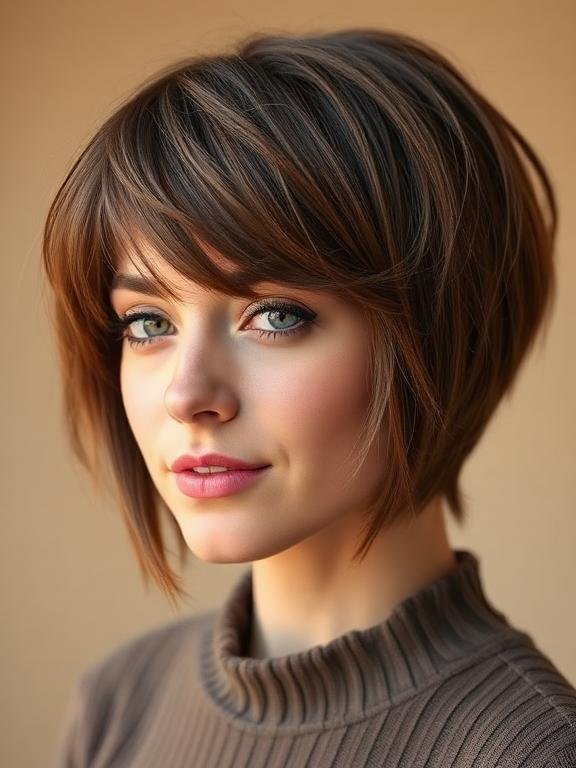
A stacked bob, shaped and styled around the natural texture of fine hair rather than blow-dried into a smooth, controlled shape, creates a more relaxed, organic version of the cut. Even fine hair has a natural texture, and a cut shaped around that texture produces a more consistent and lower-maintenance daily result.
Ask for the stacked bob to be shaped and finished to show how the fine hair behaves when it dries naturally, rather than being blown dry into a different shape. A lightweight mousse at the roots before air drying is the entire styling routine for this version.
20. Stacked Bob with Asymmetric Front
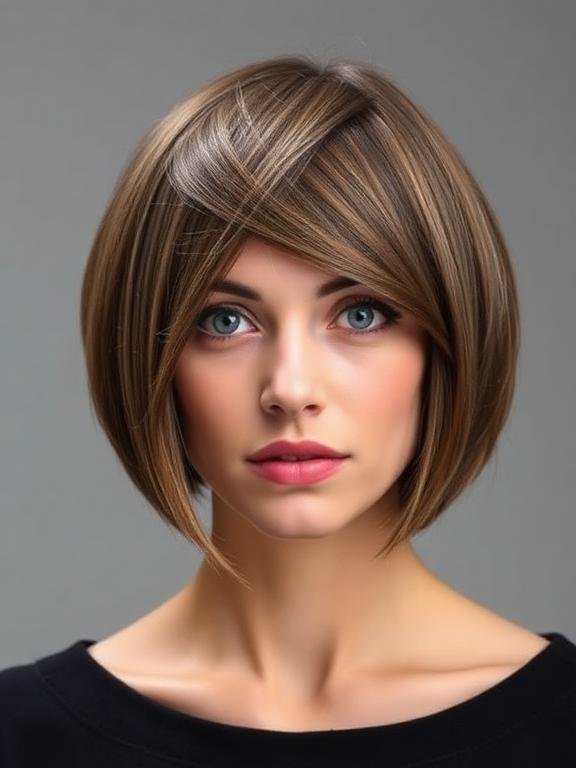
One side of the stacked bob front sits noticeably longer than the other, creating an asymmetric diagonal element that adds visual interest and reduces the circular symmetry of a rounder face. For fine hair, the asymmetry also concentrates more hair on the longer side, creating more apparent density on that side.
Ask for one front section sitting clearly longer than the other with a blunt perimeter on both sides that preserves the fine hair end density. The asymmetry provides the visual interest, and the blunt perimeter provides the end fullness. Neither layering nor texturing is needed.
21. Stacked Bob with Volume Spray
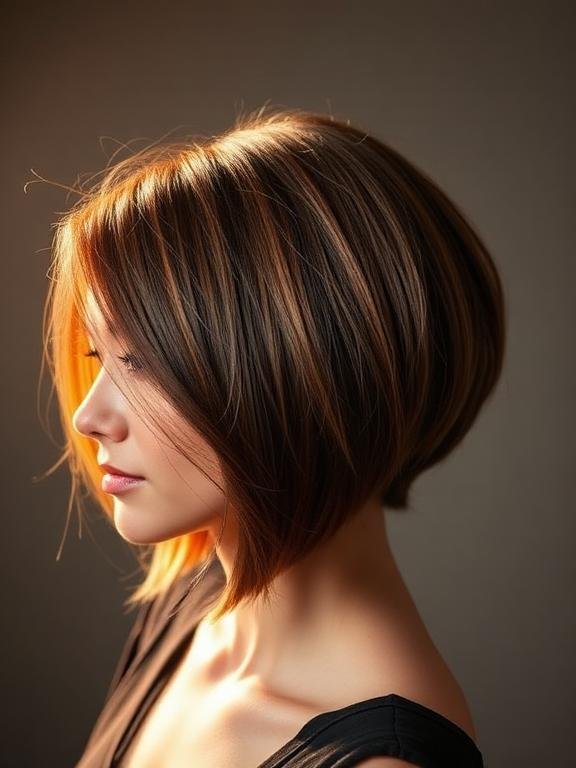
A stacked bob on fine hair elevated with a root volume spray applied before blow drying creates a combination where the structural stacking and the volumizing product are working on the same goal from different directions. The stacking lifts the shape. The volume spray lifts the roots within that shape.
Apply a root-lifting spray specifically to the crown and upper nape area before drying. Use a medium round brush directed upward at the roots during drying. The stacking holds the overall shape, and the product maximizes the lift within each individual section.
22. Collarbone Stacked Lob
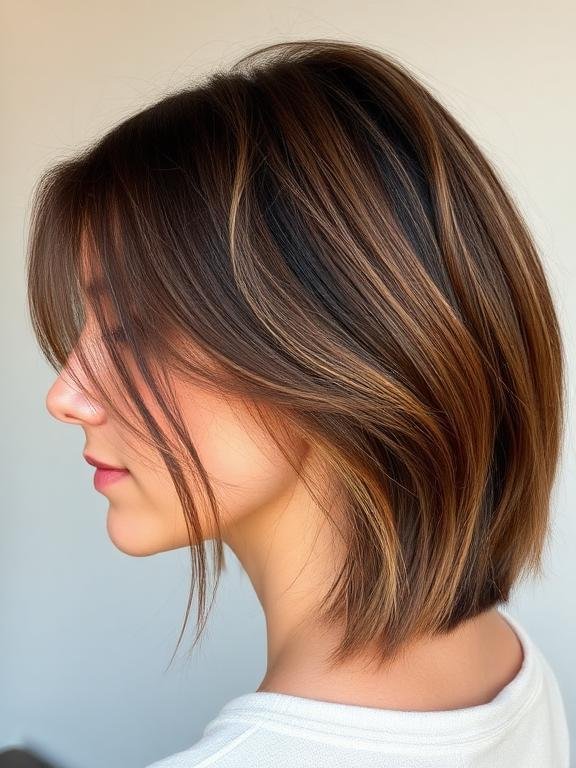
A stacked lob at collarbone length gives fine hair the structural benefits of stacking at a longer length that preserves more end density through the front sections. The stacking is at the back, the length is at the front. More length means more perimeter density, which is exactly what fine hair needs.
Ask for stacking concentrated at the back for crown lift with the front sections sitting at collarbone length with a blunt or near-blunt perimeter. The longer front sections stay as full as possible, while the stacked back creates the structural volume from behind.
23. Effortless Air-Dry Stacked Bob
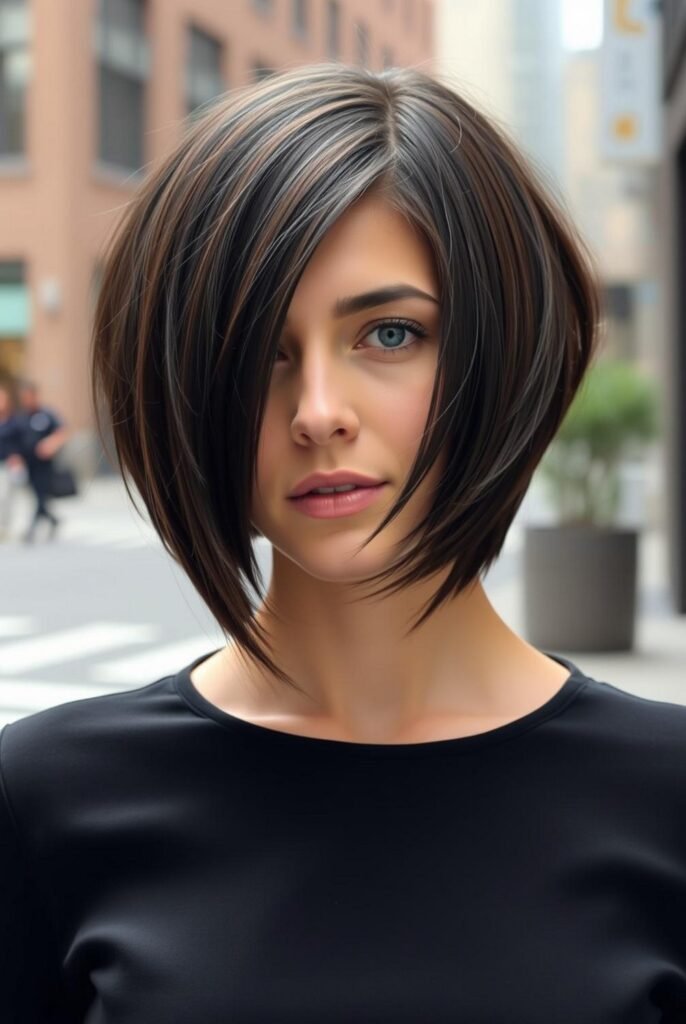
A stacked bob designed specifically to look its best when fine hair air dries without heat tools is the most genuinely low-maintenance version on this list. The stacking creates the structural shape, and the cut is shaped around the natural behavior of the fine hair when dry, so the air-dried result is consistently flattering without any daily styling effort.
Ask for the stacked bob shaped around how the fine hair behaves when it dries naturally. A lightweight volumizing mousse applied only at the roots before air drying is the whole product routine. The stacking does the work. The fine hair fills the structure. The daily result takes care of itself.
FAQs
Why does a stacked bob work better for fine hair than a regular bob?
A regular bob relies on the density of the hair to create volume and fullness. A stacked bob builds volume into the shape of the cut itself through the layered graduation at the back. Fine hair fills the stacked structure more easily than it creates volume on its own, which is why the stacked bob consistently outperforms a standard bob on fine hair.
How often does a stacked bob need trimming on fine hair?
Every five to six weeks. The stacking grows out faster than a flat cut because the multiple graduated layers grow at different rates, and the shape starts to lose its lift and precision quickly. Fine hair in particular shows the grow-out more visibly because there is less density to absorb the change in shape as the layers lengthen.
Should the stacked bob be blow-dried or air-dried for fine hair?
Both work, but blow-drying with a round brush directed upward at the roots produces more volume than air-drying on fine hair. The structural lift of the stacking is present either way, but blow drying activates the root lift more effectively. An air-dry finish works best when a lightweight mousse is applied at the roots before drying, and the natural texture of the fine hair is allowed to define the surface.
What products work best in a stacked bob for fine hair?
A volumizing mousse or root spray at the roots before blow drying. A lightweight texture spray through the surface sections after drying for dimension. A light-hold finishing spray to set the shape. Nothing heavy through the lengths. Heavy products weigh fine hair down and cancel out the structural lift that the stacking is creating.
Wrapping Up
A stacked bob for fine hair is one of the most reliable haircut decisions available at this length. The volume is structural rather than product-dependent. The shape is built into the cut rather than created from scratch every morning. And the blunt perimeter options protect the end density that fine hair most needs to look full and intentional.
Pick the version that suits your face shape and your daily routine. Go classic if you want the most reliable, proven result. Go A-line or inverted if you want more structure and angle. Go for a soft or natural texture if you want something more relaxed and low effort. Whatever version you choose, tell your stylist maximum stacking, minimum thinning. Those two instructions are the foundation of every great stacked bob for fine hair.