21 Golden Blonde Balayage Ideas
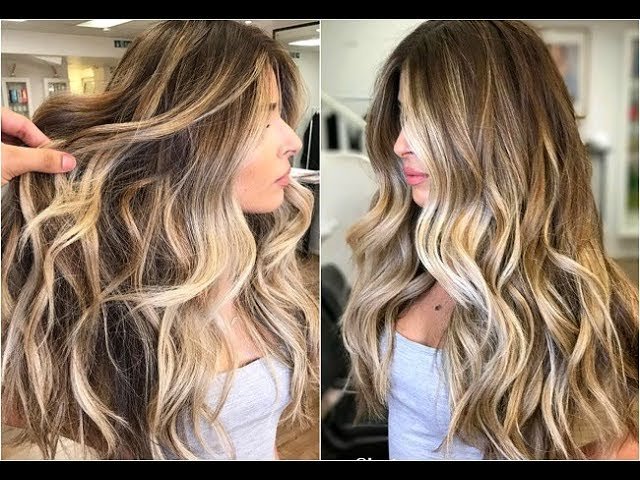
Golden blonde balayage is one of those colours that just works. It photographs well, grows out gracefully, and adds warmth to almost every skin tone without the high-maintenance drama of a full blonde.
Before you book anything, here’s the most important tip: tell your stylist your skin’s undertone before they pick your gold. A stylist matching your gold to your complexion, not just your hair, is what separates a truly flattering result from something that just looks like highlights.
1. Honey Gold Balayage
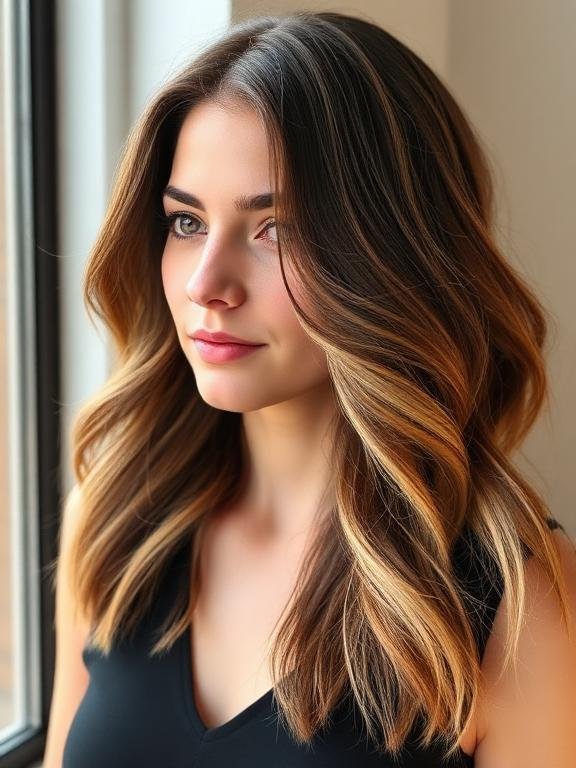
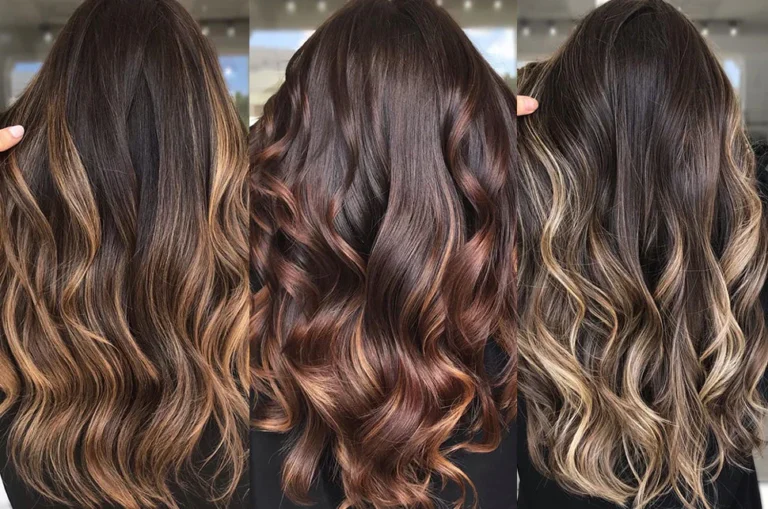
Honey gold sits in that sweet spot between brown and blonde, where the colour reads warm and rich without crossing into brassy territory. On medium to dark brunette bases, it creates a gentle contrast that looks completely natural in any lighting. The overall effect is less “I got my hair done” and more “I just got back from somewhere sunny.”
Ask your colorist for honey and caramel tones blended rather than a single lightener. A single tone tends to read flat. The blend is what creates that layered, dimensional warmth that makes honey gold so wearable season to season.
2. Caramel Kissed Blonde
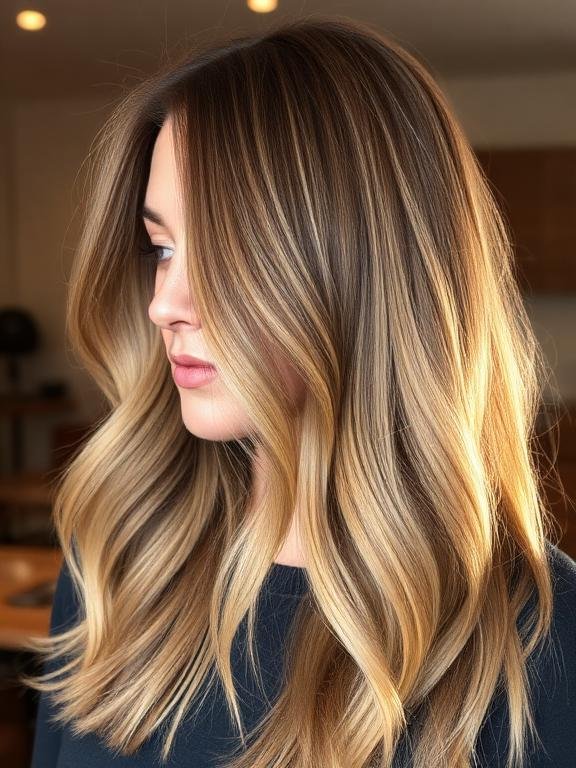
Caramel kissed blonde keeps things richer and deeper than a traditional golden blonde, which is exactly why it suits people who want noticeable colour without committing to anything light near the roots. The caramel tone has enough depth to look intentional and enough warmth to still read as blonde in good lighting.
Face-framing pieces are where this colour really earns its keep. Concentrate the brightest, most golden caramel through those sections and let the rest of the hair carry a slightly deeper version. That contrast between the face frame and the body is subtle but genuinely flattering.
3. Sun-Kissed Bronde Balayage
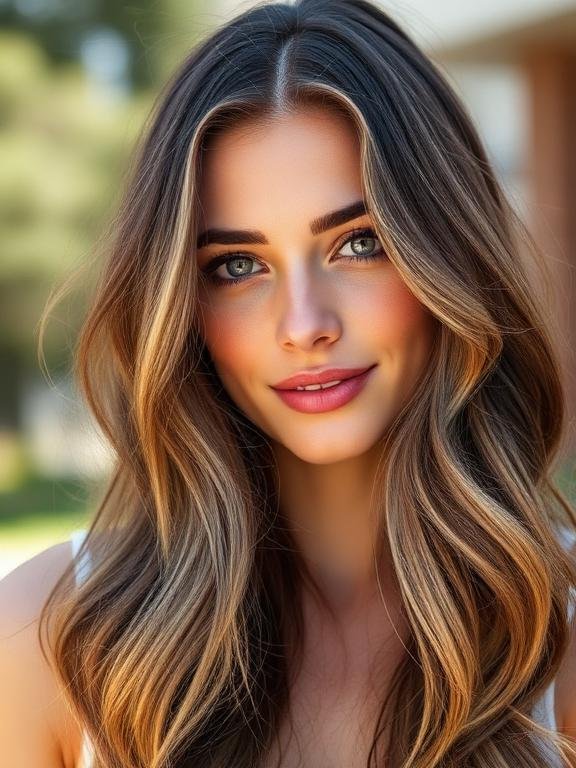
Bronde is the natural middle ground between brown and blonde, and golden undertones are what stop it from reading muddy or undecided. This is the lowest-maintenance option on the list because the root blend is almost seamless from day one. You can genuinely go months without a retouch, and it still looks intentional.
Request babylights scattered through the hairline in addition to the main balayage pieces. Those fine, close-to-the-scalp lights are what create the genuine sun-kissed finish. Without them, blonde can look more like an unfinished colour than a deliberate style choice.
4. Golden Vanilla Blonde
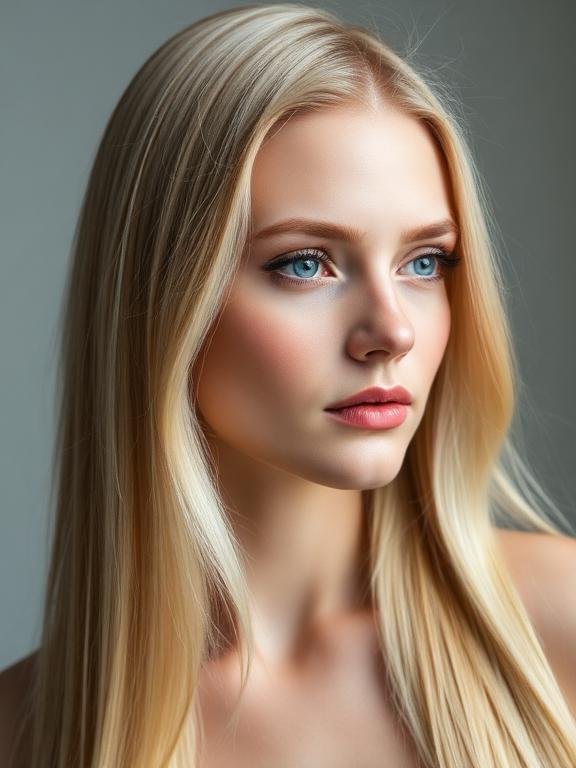
Golden vanilla is a softer, creamier expression of golden blonde that leans pale without going cold. It suits fair to medium skin tones particularly well and has a delicate, almost ethereal quality in natural light that richer golds don’t achieve. Think warm cream rather than deep gold.
Use a purple toning shampoo no more than once a week. The temptation is to use it more often to keep the colour clean, but overdoing it on a warm vanilla shade strips the golden undertone you’re actually trying to preserve. Once a week is enough to manage any brassiness without flattening the warmth.
5. Warm Butterscotch Balayage
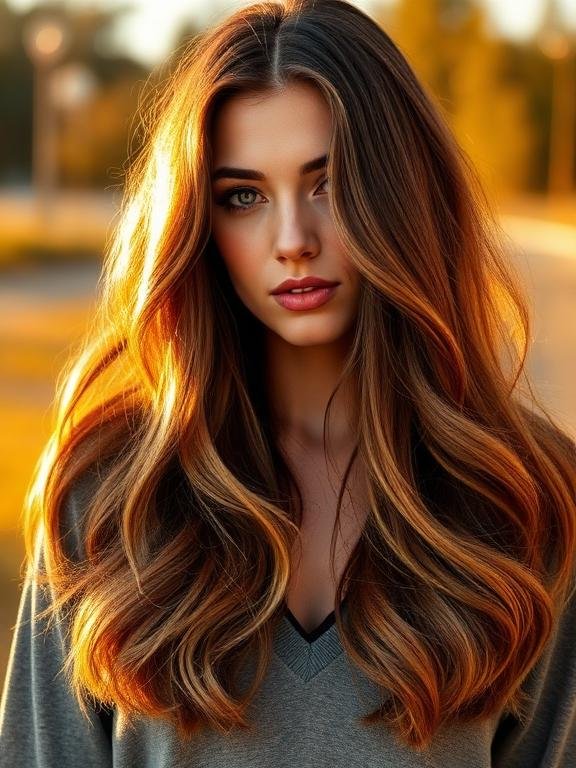
Butterscotch balayage is deeper and more saturated than most golden blondes, which makes it the best pick for autumn but genuinely wearable in any season. It has a richness to it that cooler blondes can’t touch, and it photographs especially well in warm or golden hour light. On dark bases, it creates serious depth and movement.
Gloss treatments every four to six weeks are the maintenance move that keeps butterscotch looking fresh. Without regular glossing, this tone tends to fade into a dull, muted version of itself fairly quickly. The gloss between appointments is what keeps the saturation alive.
6. Golden Blonde On Dark Base
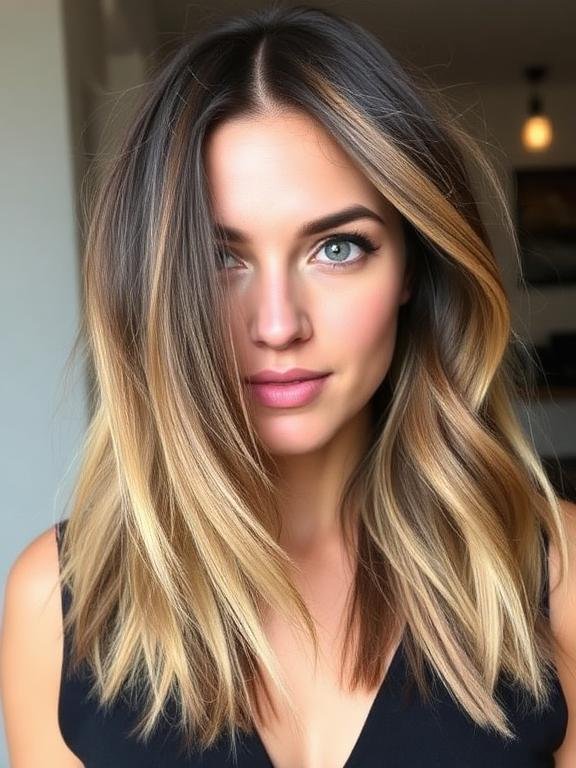
Keeping your natural dark base and layering golden pieces through it is the most low-commitment way to wear golden blonde. The roots grow in looking intentional rather than neglected, and you never have to worry about that hard demarcation line that makes some colour look obviously grown out. It’s designed to evolve.
Tell your stylist you want placement concentrated on the mid-lengths and ends with a few face-framing pieces for brightness near the front. Keeping the golden work away from the root zone is exactly what makes this look grow out so gracefully, and why it’s the best option if you want long stretches between salon visits.
7. Face-Framing Golden Pieces
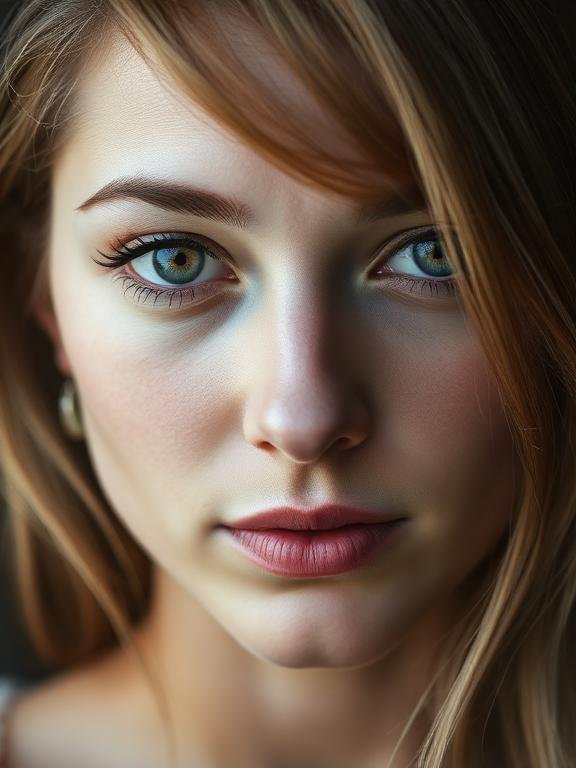
Sometimes the right move isn’t a full balayage. A few well-placed golden pieces around the face brighten your complexion and add enough visual interest to make a real difference without touching the rest of your hair. It’s the most targeted version of golden blonde and the easiest to maintain long term.
Ask specifically for highlights that begin one to two inches back from your part and angle them to wrap slightly around the face. Starting too close to the part makes this look more like a skunk stripe than a frame. That slight offset is what makes the brightening effect look natural and deliberate.
8. Golden Blonde On Curls
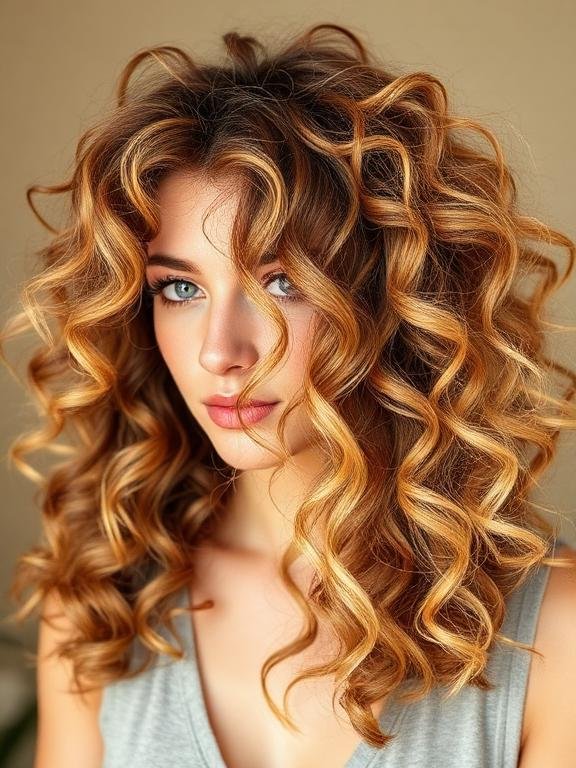
Curly hair and golden balayage are a genuinely underrated pairing. Every curl catches light at a slightly different angle, so the colour creates dimension and movement that looks far more complex than it actually is. On tight or loose curls alike, golden tones add warmth and brightness without the need for much contrast.
Diffuse dry rather than air drying whenever possible. Diffusing keeps the curl definition sharp and prevents the colour from looking washed out or faded, which can happen when curls dry flat and limp. Apply a curl cream on soaking wet hair before diffusing to lock in definition and make the golden tones really pop.
9. Rooted Golden Blonde
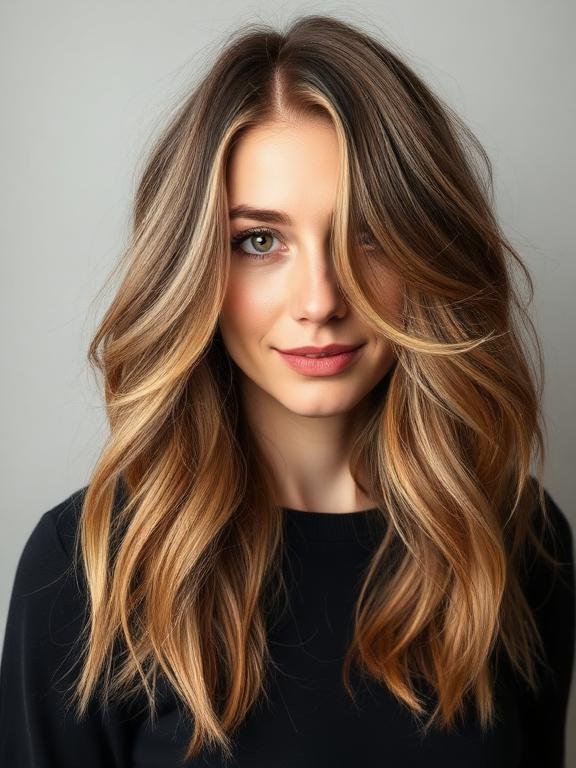
A rooted golden blonde is exactly what it sounds like: your natural or darker colour kept intact near the scalp with golden blonde blended through from mid-length to ends. The contrast is soft, the grow-out is almost invisible, and the overall effect is dimensional without being high maintenance. It’s a genuinely clever way to wear blonde.
Tell your stylist you want the root shadowed softly, not sharply defined. A hard line between the dark root and the golden length looks unfinished. A soft, melted transition is what makes this look expensive and intentional rather than like colour that simply hasn’t been touched up yet.
10. Golden Blonde Bob
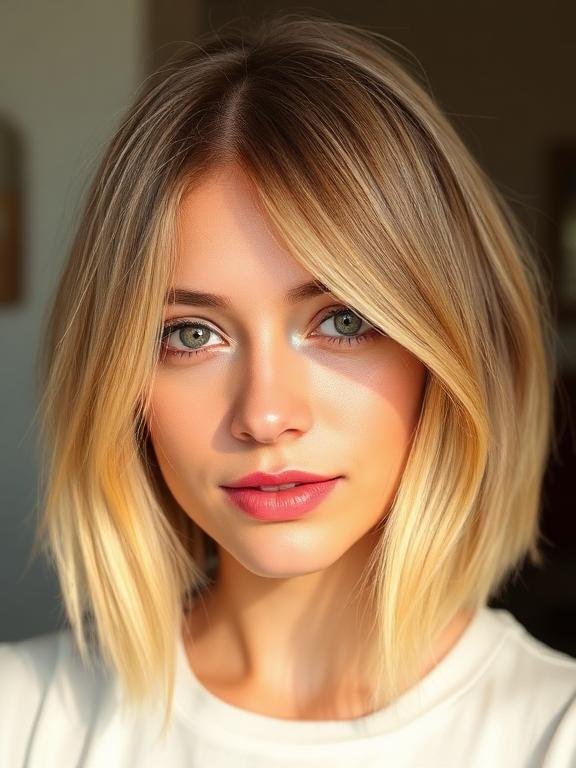
Balayage on a bob or lob often gets overlooked, but shorter hair actually shows off golden colour more efficiently because there’s less length for the lightness to travel through. The warmth sits closer to your face and has an immediate brightening effect that longer styles sometimes dilute. It’s a quick, high-impact option.
Focus the lightest and brightest pieces at the ends and through the part area, since those are the sections that catch the most light on shorter cuts. Keeping the golden pieces concentrated in high-movement zones is what makes balayage work on shorter hair rather than just looking like a few random highlights.
11. Champagne Gold Balayage
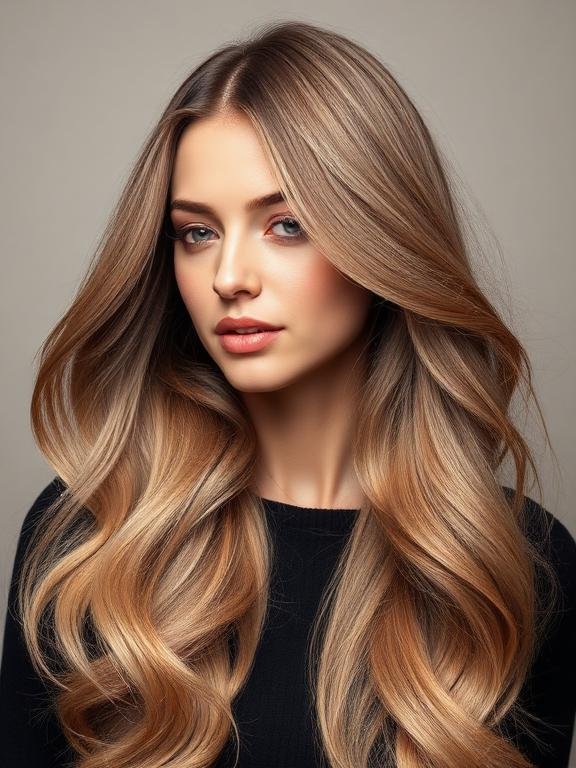
Champagne gold is the most polished and refined version of golden blonde on this list. It sits between warm gold and cool champagne, which gives it a versatility that richer, more saturated golds don’t always have. It reads more elevated in formal settings while still feeling effortless in casual ones. A genuinely flexible colour.
A glossing treatment over the top is essential for keeping champagne gold from drifting too warm or too cool between appointments. Ask your colorist to use a neutral-to-cool gold gloss when you go in for touch-ups. That small tonal adjustment at each visit is what keeps Champagne gold looking intentional rather than faded.
12. Golden Blonde Ombre
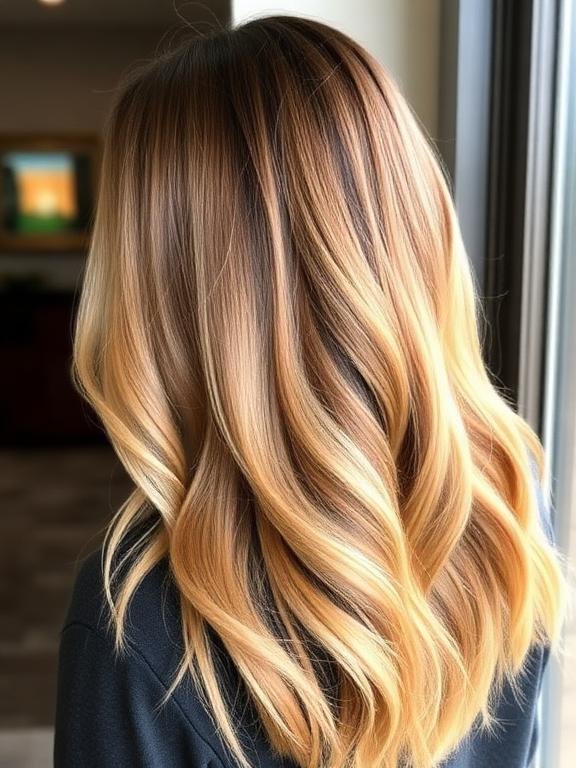
A golden ombre takes the gradual light-to-dark transition and saturates the ends with rich golden blonde rather than pale or ashy tones. It’s a bigger visual commitment than a standard balayage because the colour shift is more pronounced, but the golden finish keeps it warm and flattering rather than stark. The warmth softens what could otherwise feel like a strong contrast.
This works best when you’re lifting at least two to three shades lighter than your natural colour. Any less and the transition doesn’t read as clearly ombre. If you’re starting from a dark base, plan for multiple sessions. Rushing a full golden ombre in one sitting is the fastest way to end up with damaged, uneven colour.
13. Toasted Almond Blonde
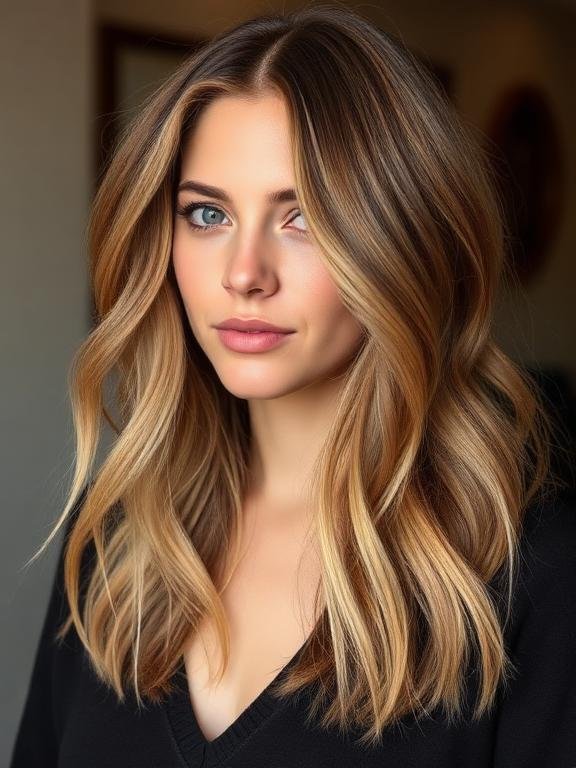
Toasted almond sits slightly deeper and nuttier than a classic golden blonde, with a natural-looking warmth that doesn’t feel overly styled or obviously coloured. It’s the kind of shade people assume is your natural colour, which is either the best compliment or the most underrated quality a hair colour can have, depending on your perspective.
Toning appointments every two to three weeks are what keep toasted almond in its best version of itself. Without regular toning, this shade tends to drift warmer and brassier as it fades, which pushes it away from the nuanced almond tone and toward something more orange. The maintenance is simple, but the timing matters.
14. Strawberry Gold Balayage
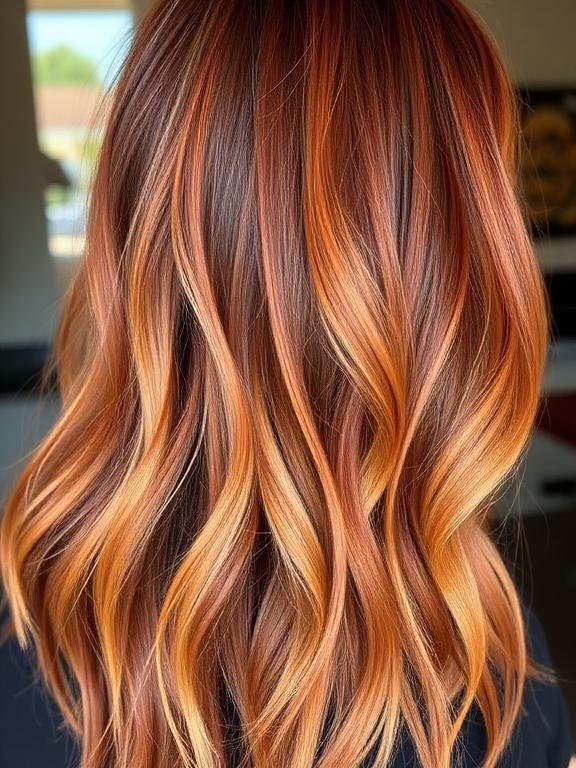
Strawberry gold is built for natural redheads and auburn-based hair. Rather than fighting the natural warmth of the base, this approach leans into it, blending golden tones that complement the red rather than neutralising it. The result is a rich, layered warmth that looks entirely natural while still being noticeably brighter and more dimensional than undone hair.
Ask specifically for gold and copper toner blended rather than a standard blonde toner. Applying a straight blonde toner over red or auburn hair almost always pulls slightly green or ashy because of how those underlying pigments interact. The copper component in the mix keeps everything warm and cohesive.
15. Golden Blonde For Gray Blending
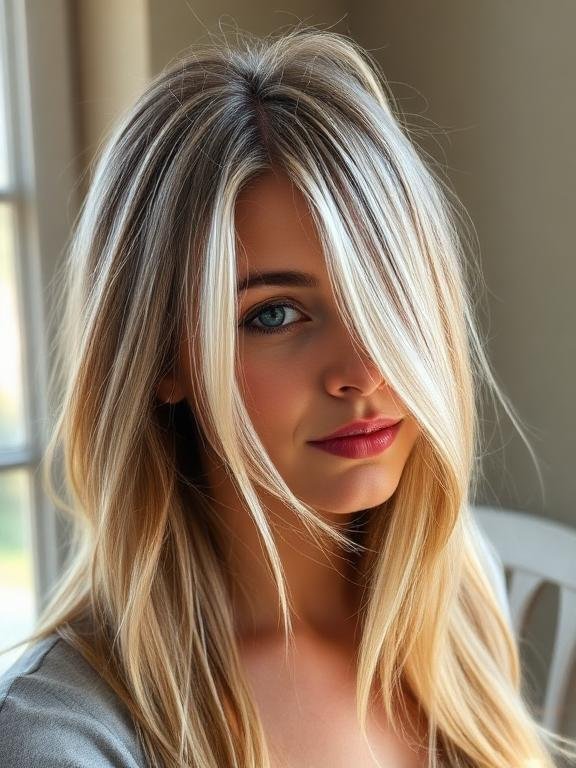
Golden balayage is one of the most flattering tools for blending gray without committing to a full cover. The warm golden tones sit close enough in brightness to gray that they camouflage it naturally, creating a blended effect rather than the harsh contrast you sometimes get with cooler blondes placed over gray strands. It’s a smart, low-commitment approach.
Layer a demi-permanent gloss treatment over the balayage at each appointment to soften the transition between gray and golden sections. A demi gloss adds shine and unifies the overall tone without covering the gray completely, which is exactly the point if you’re going for a blended rather than covered result.
16. Golden Money Piece
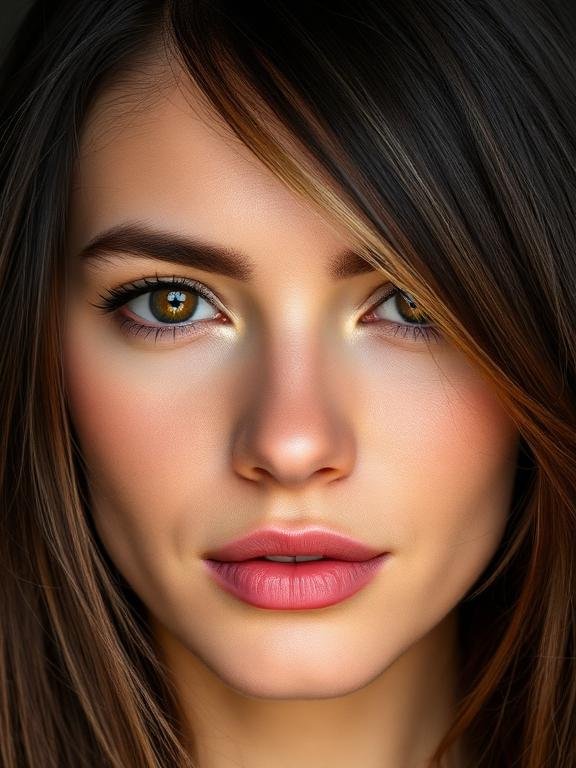
A money piece is just two bold, bright golden sections framing your face, and it’s the fastest way to add impact without touching the rest of your hair. On darker bases t, he contrast is striking. On already lightened hair, it adds a brightening focal point right where you want it most. Either way, it takes one short salon visit and lasts for months.
The placement is everything. Ask for pieces that start right at the hairline and stay within the first inch or so on either side of your face. Anything wider than that starts crossing into full face-framing territory. A true money piece is narrow, targeted, and immediately noticeable without taking over the whole look.
17. Golden Blonde For Fine Hair
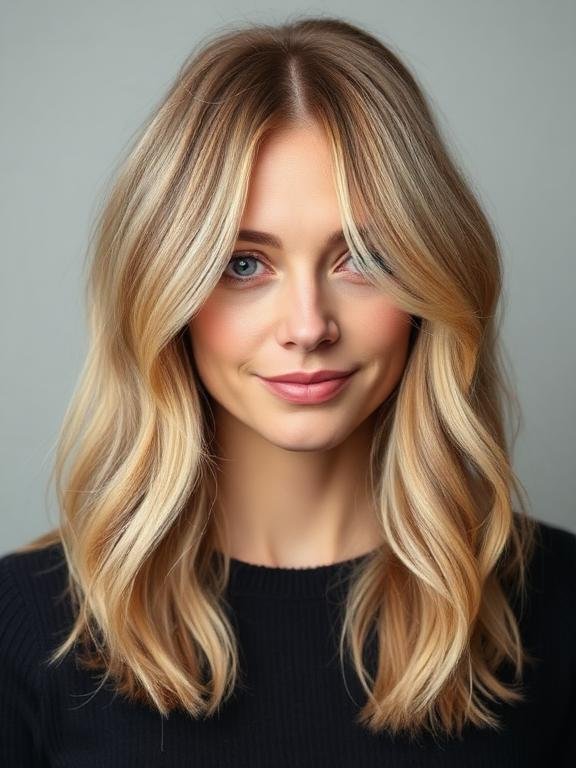
Heavy, high-contrast highlights on fine hair tend to make it look thinner rather than more textured. Golden balayage done with fine, feathered pieces solves that by adding the visual impression of thickness and movement without weighing anything down or creating lines that chop the hair visually. It’s a more thoughtful application that genuinely suits the hair type.
Skip anything chunky. Request fine, closely spaced pieces distributed throughout the hair rather than a few bold sections. The goal is an overall warm glow rather than a distinct light and dark contrast. That even distribution reads as natural body and fullness, which is exactly what fine hair needs from a colour technique.
18. Full Golden Blonde Transformation
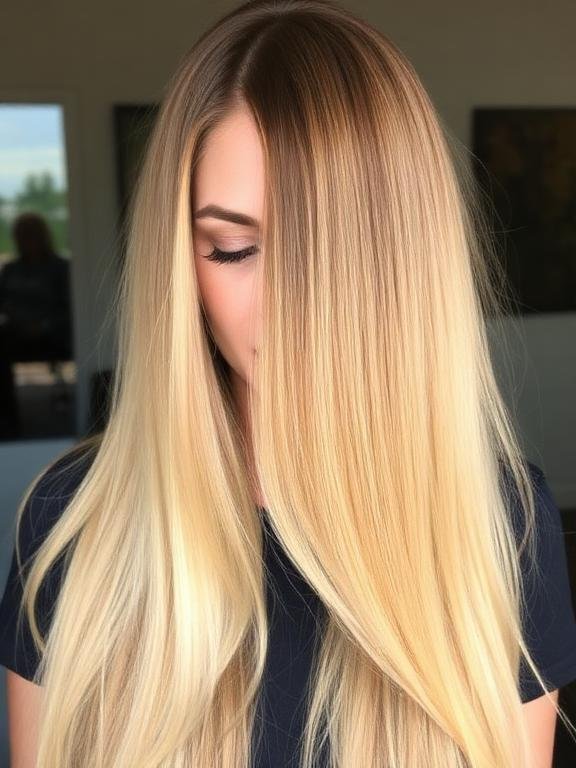
Going from a dark or medium base to a full, all-over golden blonde is the most dramatic option on this list and the one that requires the most planning. The colour payoff is stunning, but the process almost always spans multiple sessions depending on where you’re starting from. Trying to get there in one appointment is how hair ends up damaged and unevenly lifted.
Budget for two to three sessions spaced at least four to six weeks apart. This gives your hair time to recover between lifts and lets your colorist adjust the tone at each stage rather than chasing a result in one go. A staged approach also means your hair stays in better condition throughout, which matters a lot once you’re maintaining a full blonde.
19. Golden Blonde With Lowlights
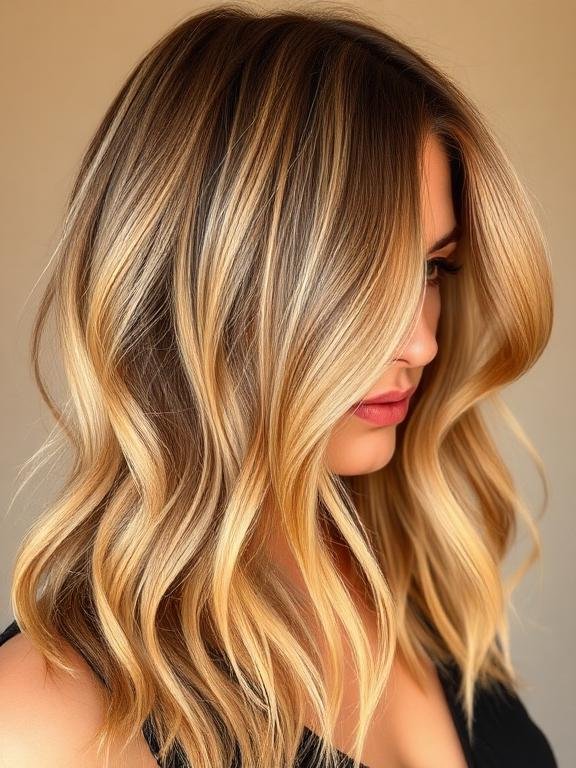
Adding a few carefully chosen lowlights back into a golden blonde is what separates colour that looks expensive from colour that looks flat. The lowlights create shadow and depth that all-over lightness simply can’t achieve on its own. Even a small amount of dimension changes how the colour moves in different lighting and makes the whole result feel more layered and considered.
Keep the lowlights only one to two shades deeper than your lightest golden pieces. More contrast than that, and the lowlights start competing with the blonde rather than complementing it. The goal is for the viewer to see the overall warmth and depth first, not individual streaks of colour.
20. Golden Blonde Beach Waves
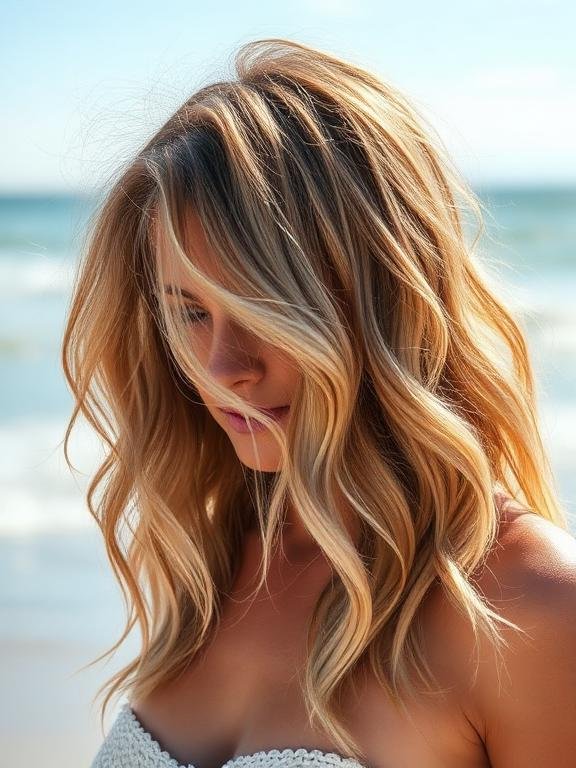
This is a look built on texture. Loose, undone waves with golden balayage running through them create a relaxed, effortless warmth that flat or overly polished styles don’t achieve. The movement of the waves and the movement of the colour work together, which is why this pairing consistently performs so well both in person and in photos.
Apply a sea salt texturising spray on damp hair before diffusing or air drying. The salt spray enhances wave formation and adds a subtle matte texture that makes the golden tones read as more natural and sun-touched rather than styled. Avoid glossy finishing products on this look since they flatten the texture that makes it work.
21. Golden Blonde On Deeper Skin Tones
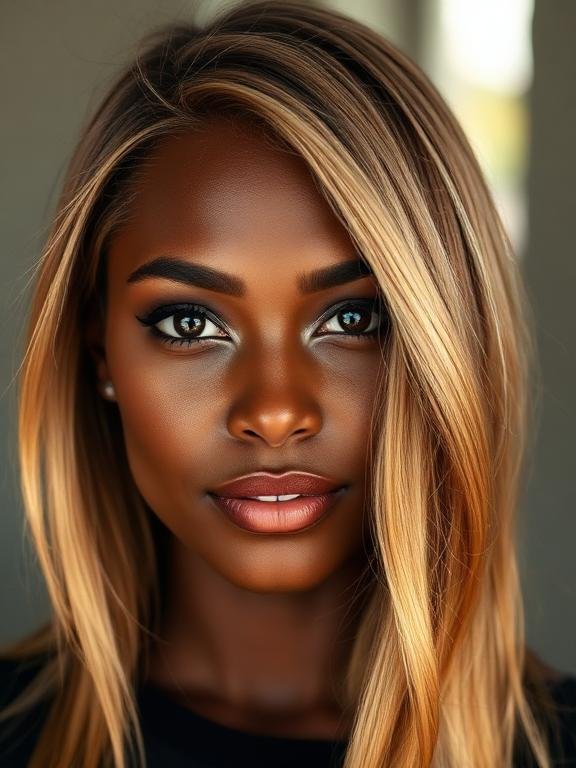
Rich, warm golden blonde against deeper skin tones creates a genuinely stunning contrast. The key is making sure the gold is warm enough to complement rather than clash, which means leaning toward amber and golden tones rather than pale, icy, or cool blonde. Warm gold lifts the complexion. Cool blonde on deeper skin tends to read harsh instead of bright.
Ask your colorist explicitly for the warmest end of the golden spectrum, especially through the face-framing sections where the interaction between hair colour and skin tone is most direct. The difference between a golden amber tone and a pale golden tone might seem small on a colour swatch, but is immediately visible once it’s placed against deeper skin.
FAQs
Will golden blonde balayage work on very dark hair?
Yes, but it typically requires more than one session to lift dark hair to a true golden tone without damage. Talk to your stylist about a realistic multi-session plan before committing. Trying to reach golden blonde in a single appointment on a dark base almost always results in uneven, brassy results.
How often does golden balayage need touching up?
The balayage itself can go eight to twelve weeks between colour appointments because it’s designed to grow out softly. Toning is a separate conversation. Most people need a gloss or toner refresh every four to six weeks to keep the golden tone from drifting brassy or faded between full colour visits.
Does golden blonde suit every skin tone?
It’s one of the most universally flattering colour families, but the specific shade of gold matters. Lighter, creamier golds tend to suit fair skin best. Richer, deeper amber golds are more flattering on medium and deeper skin tones. Your stylist should be matching the warmth of the gold to your complexion, not just to your hair.
How do I stop golden balayage from going brassy?
Use a gold-correcting or purple toning shampoo once a week, apply UV heat protectant before spending time in the sun, and always use a heat protectant before any hot tool styling. Fading and brassiness are almost always caused by a combination of UV exposure and heat damage rather than one factor alone.
Wrapping Up
There’s a version of golden blonde balayage that works for your hair type, your base colour, your maintenance tolerance, and your budget. The range on this list goes from a single money piece that takes one short appointment to a full multi-session transformation, and everything in between.
Pick the two or three ideas that feel most like you, screenshot them, and bring them to your next consultation. Your stylist can tell you exactly which one suits your starting point best and build a plan from there.