23 Short Haircuts for women over 50
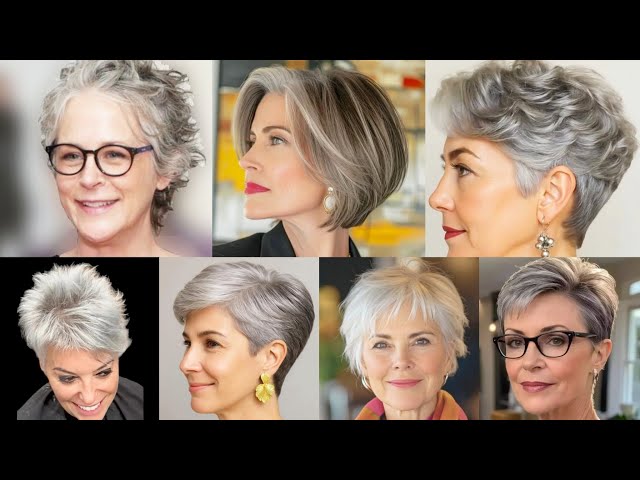
Short hair over 50 is not a default or a concession. For the right woman with the right cut it is the most flattering, the most liberating, and the most genuinely low-effort choice available. The face gets more attention, the cut does more work, and the daily routine gets dramatically simpler without the style getting any less interesting.
The one thing that determines whether a short cut works or doesn’t: the cut must be designed for the face shape, the hair texture, and the lifestyle simultaneously. A short cut that addresses all three is transformative. One that addresses only the trend is just short hair.
1. Classic Blunt Bob
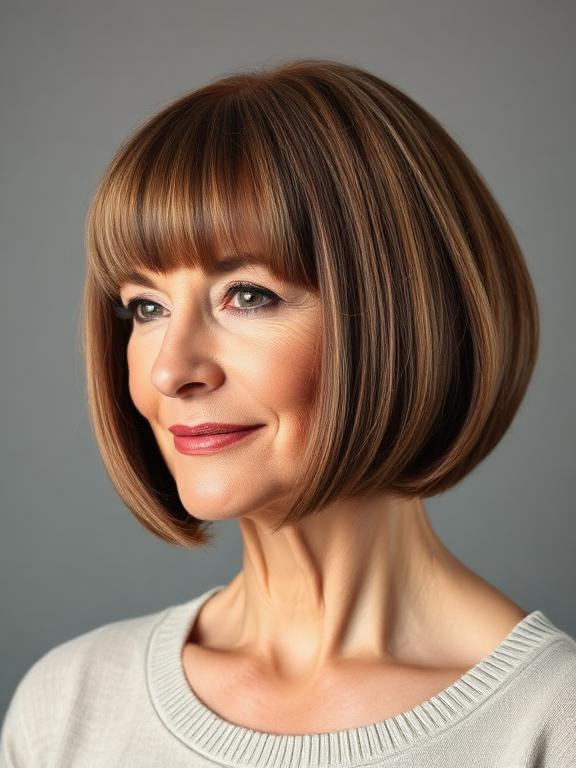
The blunt bob is the most reliably flattering short cut for women over 50 with fine or thinning hair. The unbroken edge creates visual density that layering never replicates. It reads as deliberately full and healthily weighted rather than thin or sparse.
Ask for point cutting at the tips to soften the edge slightly without removing real weight. Blow dry with a large round brush pulling outward at the ends to prevent flicking and maintain the clean, weighted finish the cut depends on.
2. Textured Pixie
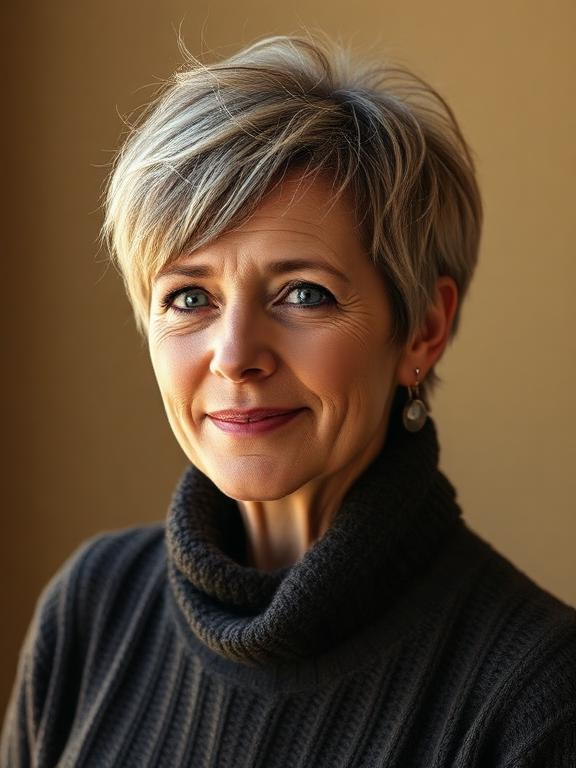
A textured pixie removes the weight that pulls fine hair flat and replaces it with structure and movement built directly into the cut. On fine or thinning hair over 50 the transformation is immediate and significant. The thinness that was visible at longer lengths simply stops being a factor.
Style with a matte texturising clay on dry hair using fingers only. A very small amount is enough. More product than necessary collapses the volume the cut structure has already created.
3. Layered Bob
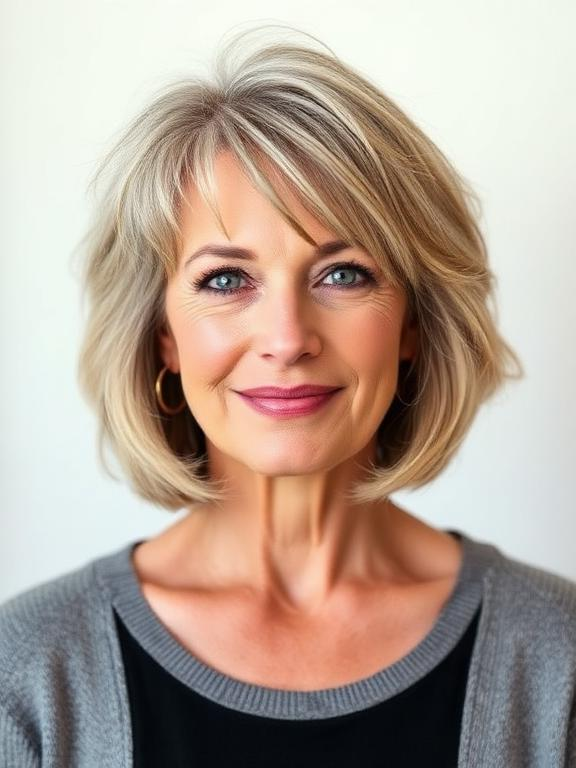
A layered bob with long, gradual layers beginning at the collarbone gives hair movement and softness without stripping the perimeter weight that keeps it looking full. It’s the middle ground between a blunt bob and a fully layered cut and suits women who want a bob with personality rather than precision.
Tell your stylist explicitly no layers above the collarbone. Short layers on fine hair over 50 remove bulk from exactly where it’s needed most. Long, targeted layers add behaviour without creating the sparse, wispy ends that over-layering produces.
4. Silver Pixie
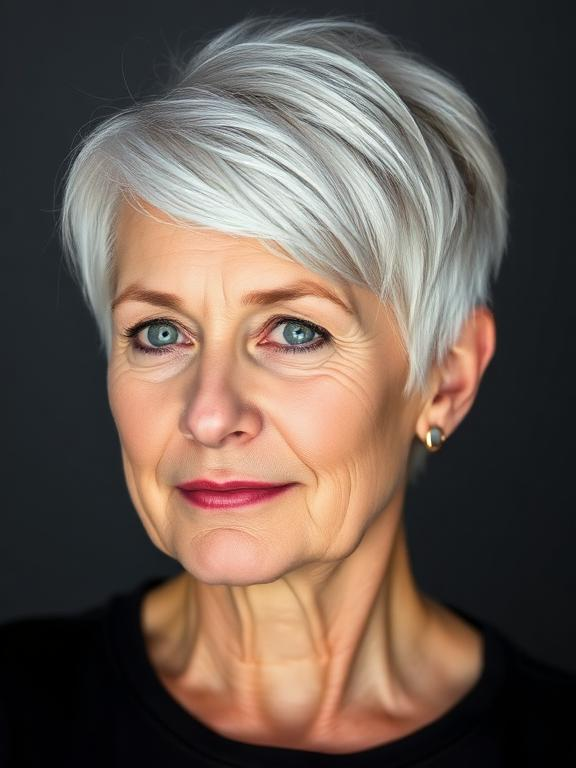
Natural silver in a short pixie is one of the most striking and most completely intentional looks available for women over 50. The silver colour adds its own luminosity and dimension to the cut without any colour service, and the pixie’s short length focuses all attention on the face and the hair’s natural beauty.
Keep the pixie freshly tapered every two to three weeks. A silver pixie with a grown-out taper loses its entire impact. The sharpness of the cut is what makes the silver colour look celebrated rather than simply present.
5. Short Shag
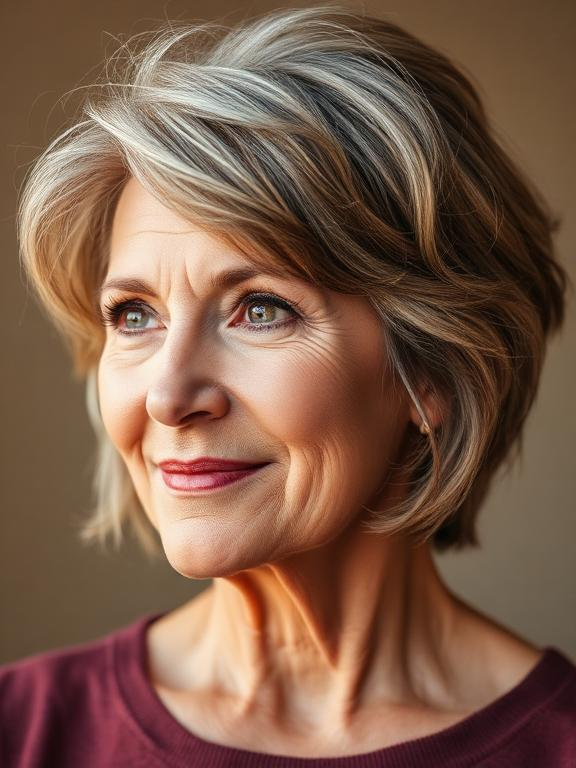
A short shag on fine hair creates volume from almost nothing. The layers, the texture, and the face-framing elements work together to produce more visual fullness than the actual density of the hair would suggest is possible. It’s the cut that makes women with genuinely thin hair feel like they have hair again.
Use a volumising mousse on damp hair before diffusing on low heat. The less manipulation during drying on fine hair, the more volume and texture survives. Touching it constantly while damp is what flattens the texture before it has a chance to set.
6. Bixie Cut
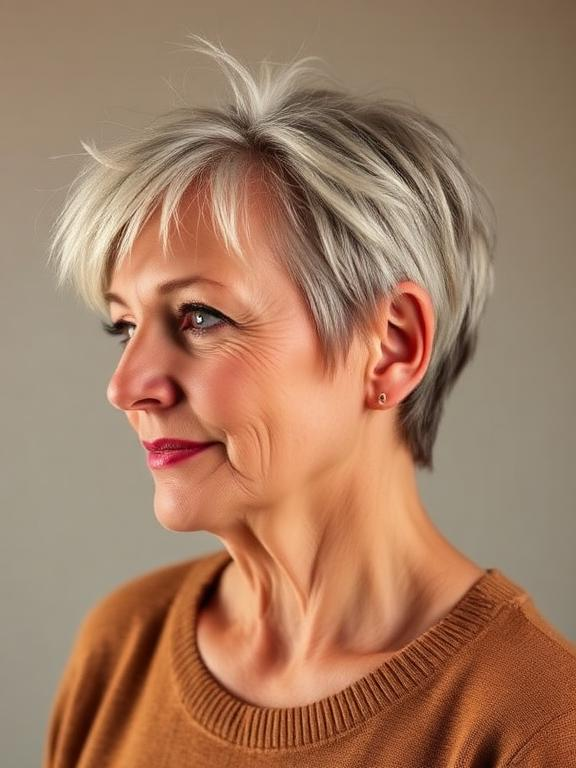
A bixie sitting between the ear and jaw is one of the most volume-efficient cuts for women over 50. The length removes gravitational drag while the layered structure creates dimension and movement. It suits almost every face shape and grows out gracefully into either a pixie or a bob depending on preference.
Ask for piece-y, textured ends throughout rather than a clean blunt finish. The texture at the tips is what makes fine hair read as full and dimensional rather than exposing the thinness that a smooth, precise finish tends to reveal.
7. French Bob
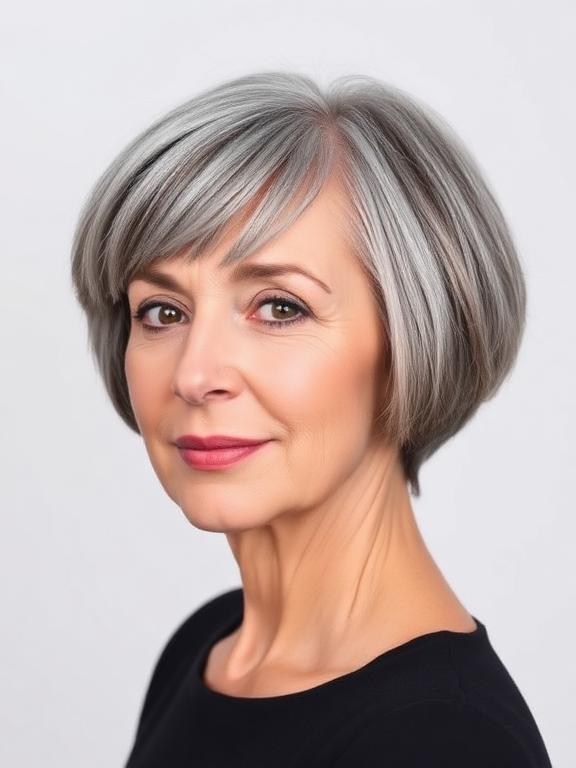
A French bob at jaw length with a clean blunt finish and often paired with a fringe is an inherently chic, precise cut that suits the old money aesthetic naturally. The structured quality of the cut reads as deliberately sophisticated rather than simply short, which is a distinction that matters significantly over 50.
A French bob needs trimming every four to five weeks without exception. At jaw length, even two weeks of growth visibly softens the precision that defines the cut. The trim frequency is what keeps the French bob looking intentional rather than grown out.
8. Side-Parted Bob
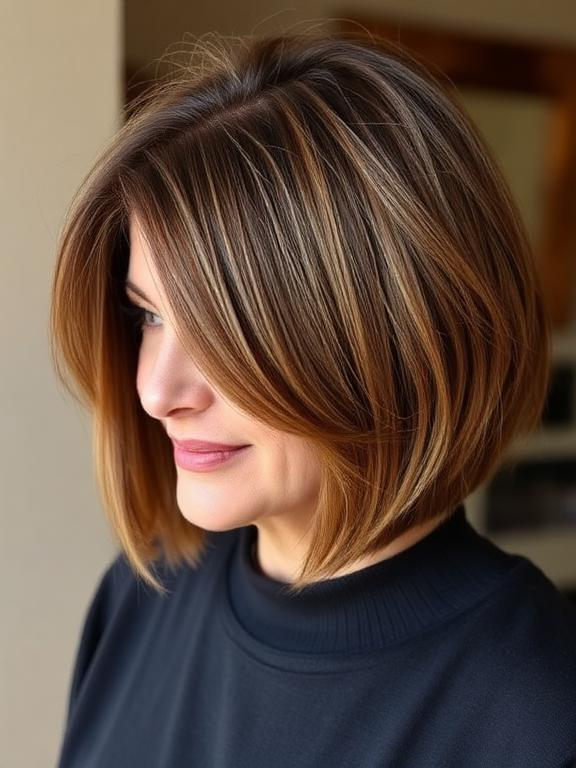
A deep side part on a bob is a classic volume trick that never stops working on fine hair over 50. The hair falling heavily to one side creates natural root lift on the opposite side without product, giving the style a volume boost that is entirely structural.
Blow dry with the head tipped toward the lighter side of the part during the first two minutes to build root lift before the hair sets. Once the roots are dry with lift, flip back and finish the lengths smoothly.
9. Stacked Bob
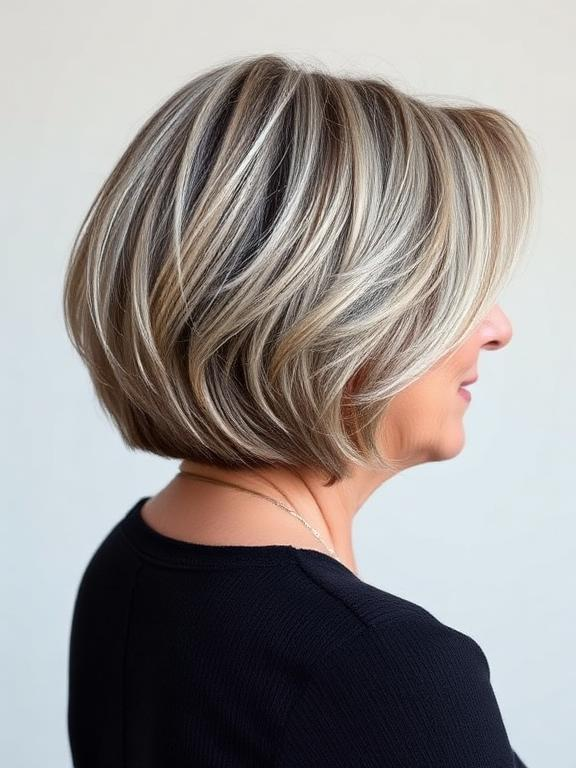
A stacked bob graduates the back upward with stacked layers that create a rounded, full silhouette at the nape. For fine hair over 50 the stacking creates visible volume exactly where flat, fine hair tends to be most visibly thin and lifeless. The rounded back profile is the defining feature.
The graduation needs to be steep enough to create genuine stacking rather than simply shortening the back uniformly. Ask your stylist to show you the back profile during the cut to confirm the fullness is actually building at the crown rather than simply reducing the length.
10. Cropped Pixie
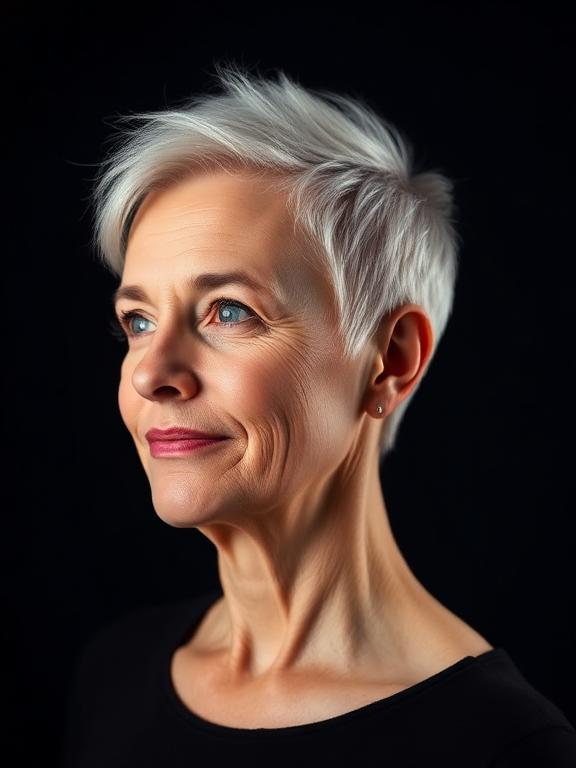
A very close-cropped pixie that keeps the hair short and even across the head creates a clean, sculptural silhouette that focuses entirely on the shape of the head and the quality of the face. It’s the boldest cut on this list and one that communicates the most complete confidence.
At this length the quality of the head shape matters more than at any other cut. A frank conversation with your stylist before committing is worth more than finding out afterward. Most women discover their head shape suits a cropped pixie better than expected but the conversation should happen first.
11. Pixie With Fringe
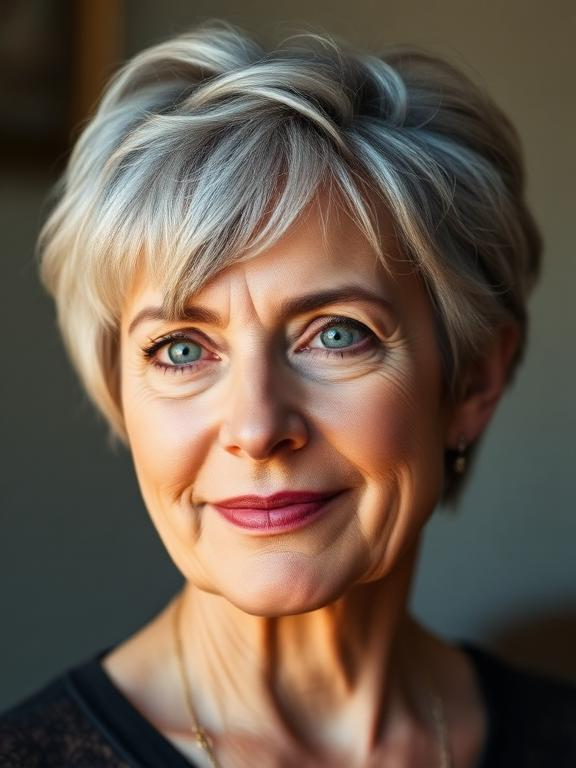
A pixie with a soft, wispy fringe adds a face-framing element that makes the short length look deliberate and flattering. The fringe draws attention to the eyes and softens the forehead, addressing the two most common concerns women over 50 have about going short.
Keep the fringe wispy rather than heavy. Fine hair over 50 cannot sustain a dense blunt fringe. Ask for aggressive point cutting through the fringe so it sits lightly on the forehead without the flatness that a straight scissor-cut produces on fine hair.
12. Asymmetric Bob
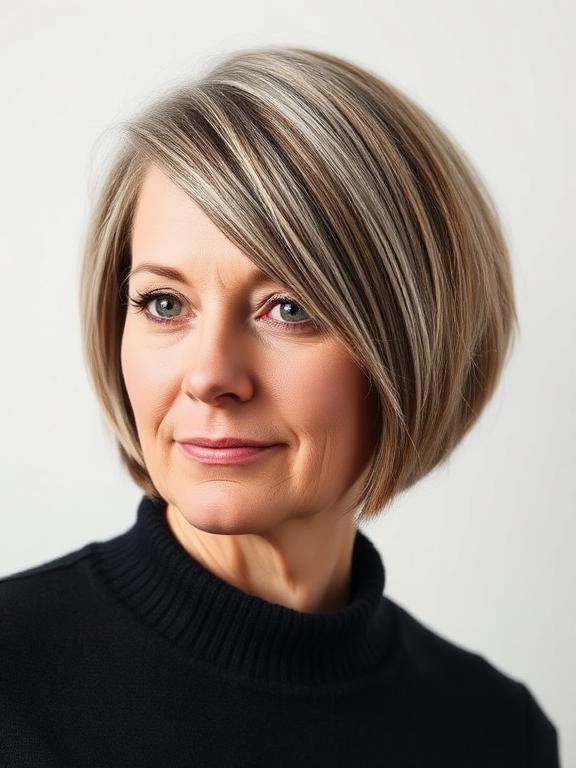
An asymmetric bob with one side longer than the other creates a diagonal visual line that draws the eye across the face rather than straight down. The asymmetry itself creates visual interest that makes fine hair appear denser and the overall style appear more considered and current than a symmetrical cut.
Go for one to two inches of difference between the two sides. More than that at bob length starts reading as exaggerated rather than stylish. Style the longer side smooth and the shorter side with slightly more texture so the asymmetry reads clearly as intentional.
13. Bob With Curtain Bangs
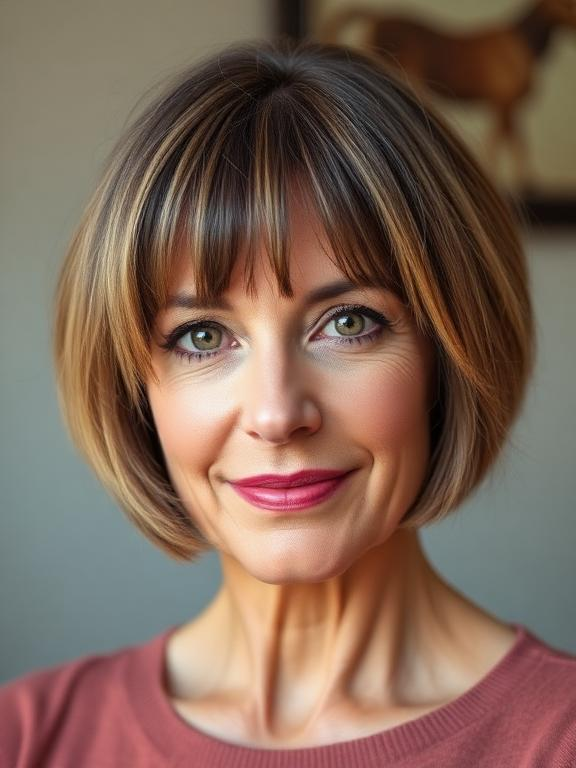
Curtain bangs on a bob add a face-framing element that suits almost every face shape and grows out gracefully. On women over 50 the curtain bangs soften the forehead and frame the eyes in a way that draws attention to the features rather than the length of the hair. It’s one of the most consistently flattering bang choices available.
Blow dry each side away from the centre using a small round brush while damp. Apply light-hold spray immediately while warm to set the direction. Fine hair over 50 loses the sweep within hours without the spray step.
14. Shaggy Pixie
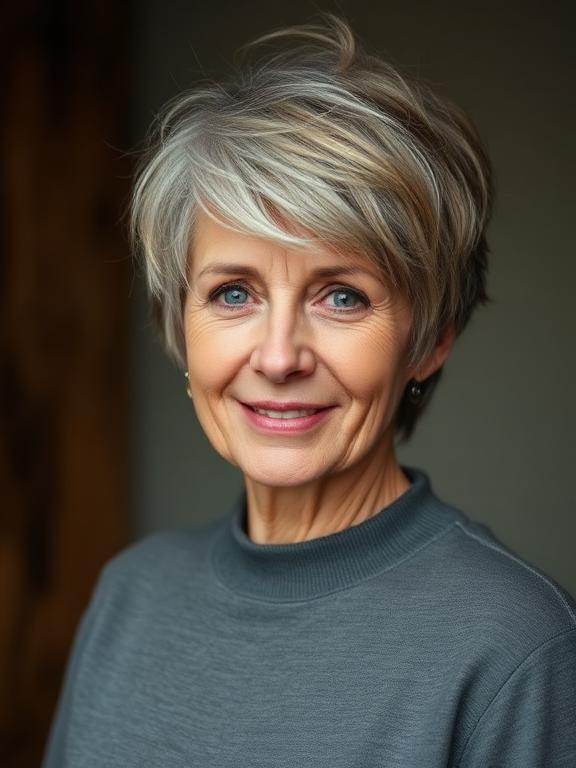
A shaggy pixie brings the shag’s layering philosophy to pixie length, creating a style with serious texture, movement, and volume at a very short length. On women over 50 with thinning hair it is one of the most volume-efficient cuts available because the layering creates fullness at precisely the length where fine hair has the least weight pulling it flat.
Style with a matte texturising clay worked through dry hair in multiple directions. Avoid any combing after product application. The multi-directional texture is the entire point and combing organises it back into something too neat to read as a genuine shag at this length.
15. Natural Curl Pixie
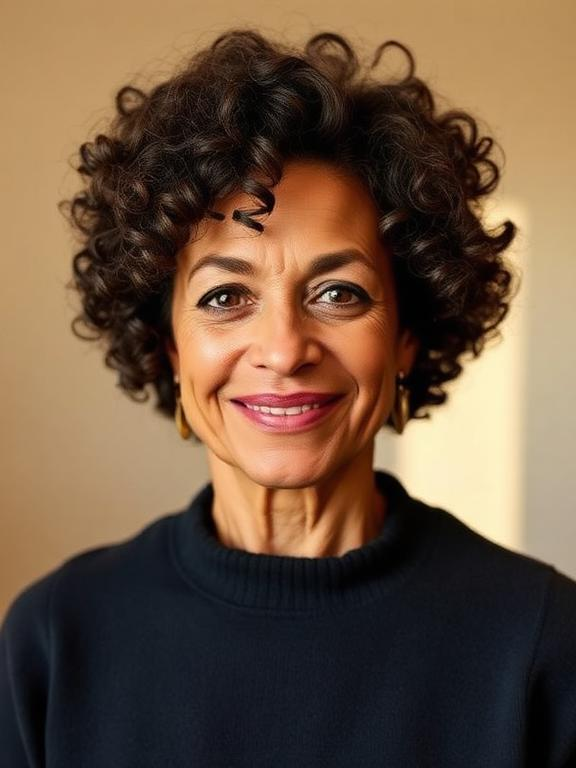
A pixie on natural curls reveals and celebrates curl patterns that longer hair was suppressing with its own weight. At shorter lengths natural curls have less to fight against and the result is a fuller, more defined curl pattern that often surprises women who thought their curls had changed with age. They hadn’t. They were just being pulled flat.
The cut must be done dry on the natural curl pattern. Cutting natural curls wet and expecting the layering to sit correctly once the curl contracts is the most common and most avoidable curly pixie mistake. Every layering decision needs to be made with the actual curl visible.
16. Gray Shag Bob
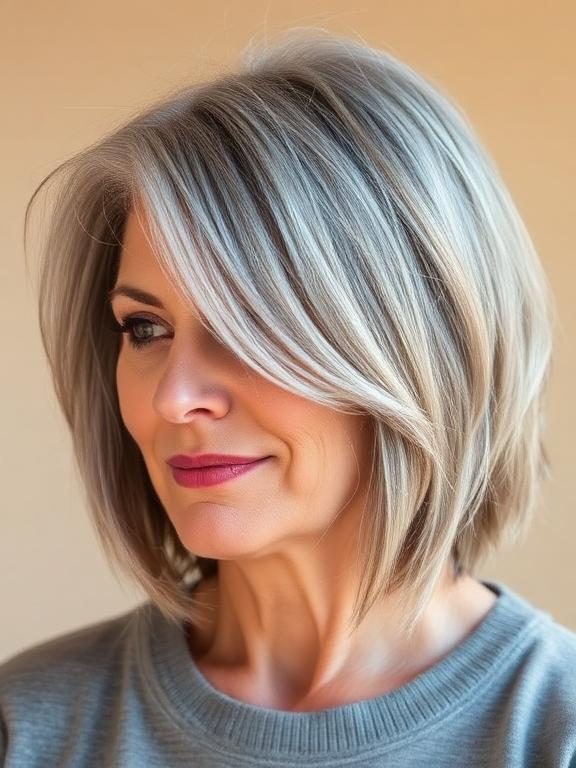
A gray shag at bob length combines the volume-creating power of the shag’s layering with the luminous quality of natural gray colour. The layers catch the light differently through each section, creating a colour dimension within the gray tones that makes the overall result look more complex and more intentional than either element achieves independently.
Finish with a shine spray over the completed style. On gray hair specifically the shine spray adds a luminosity that transforms the silver tones from flat grey to something genuinely striking. Apply from at least twelve inches away to avoid product buildup on the surface.
17. Sleek Lob
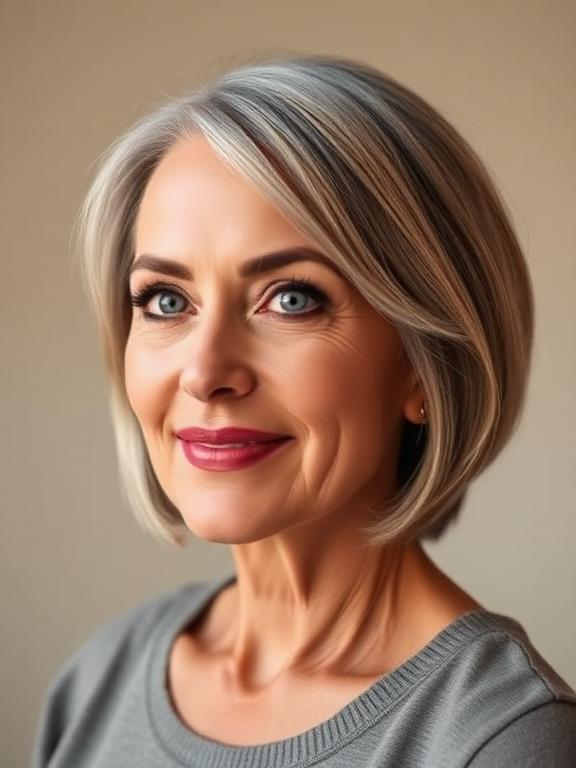
A sleek lob at shoulder length is the longest cut on this list and works specifically for women over 50 when it is kept one-length or very minimally layered and blow dried with a directional technique rather than worn flat. At this length the hair still has enough weight to look full when the blow dry is done correctly.
A boar bristle brush used through the surface after blow drying adds shine, distributes natural oils, and smooths flyaways in a single pass. The result looks healthy and polished without additional product required.
18. Rounded Lob
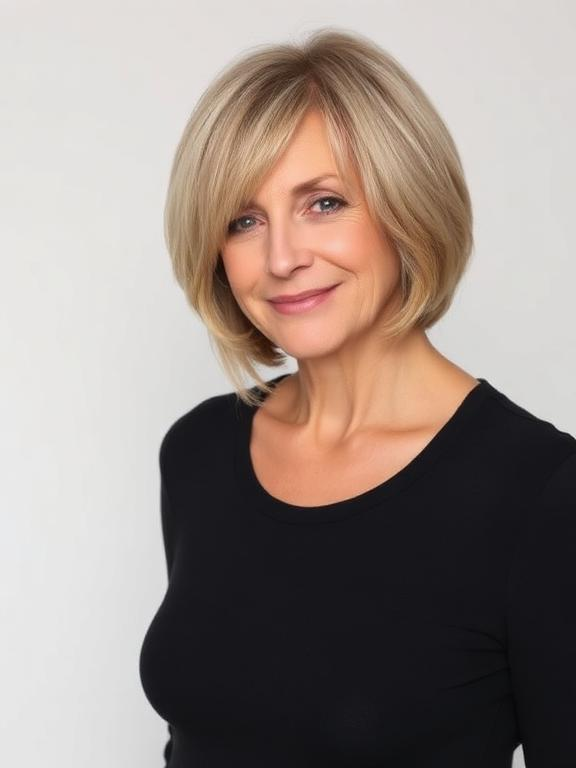
A rounded lob curves the ends slightly under rather than sitting in a straight horizontal line, creating a full, voluminous silhouette that flatters fine hair over 50 significantly. The curved bottom mimics thickness and gives the cut a polished finish that straight lobs don’t achieve on thinner hair types.
Achieve the curve using a large round brush during the blow dry, rolling the ends under in the final sections. Hold the heat directed at the ends for a few seconds before releasing. A setting spray on damp hair before drying helps the curve hold through the day.
19. Voluminous Blowout Bob
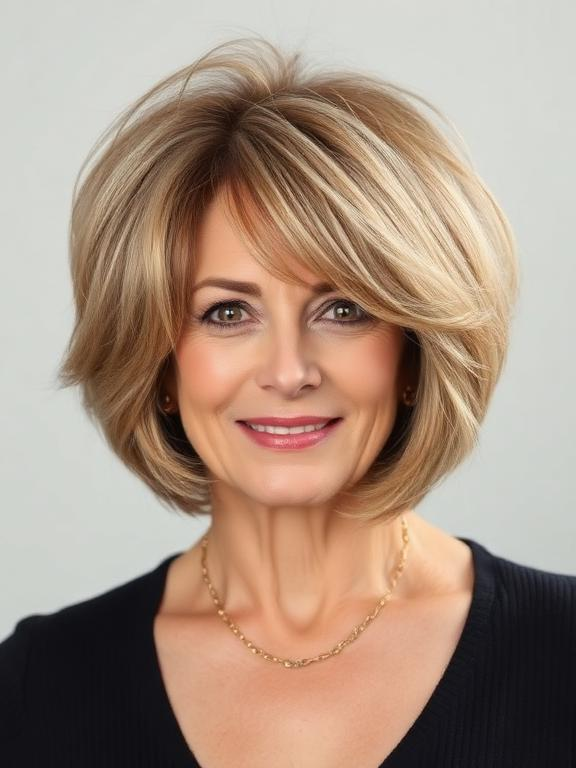
A bob specifically blown out for maximum volume using the right technique and product looks dramatically fuller than the same cut worn flat. Fine hair over 50 that is blow dried correctly looks like a completely different hair type from fine hair that simply air dries.
Apply a volumising root spray section by section on damp hair and blow dry each section upward with a large round brush, starting at the nape and working toward the crown. The crown section dried last retains the most lift because nothing is subsequently dried on top of it.
20. Chic Micro Bob
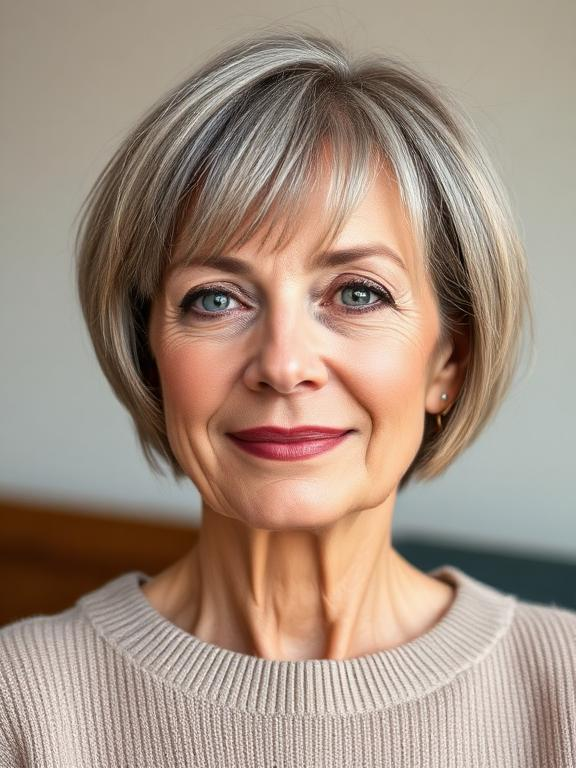
A micro bob sitting above the jaw at chin length or shorter is a bold, precise cut that reads as completely deliberate and entirely current. On women over 50 the micro bob communicates a clarity of personal aesthetic that longer, softer styles sometimes don’t. It is a cut that knows exactly what it is.
A micro bob needs trimming every three to four weeks without exception. At this length even two weeks of growth visibly affects the clean line that defines the cut. There is no styling trick that compensates for a micro bob that has grown past its shape.
21. Bob With Highlights
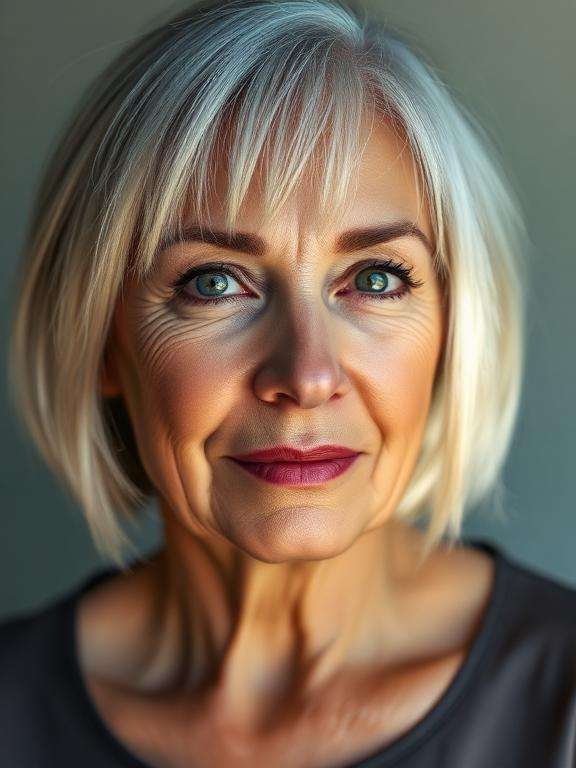
Adding fine babylights through the face-framing sections of a bob creates the optical illusion of thickness and dimension simultaneously. When different sections reflect light differently the eye reads that variation as fullness. Colour does what product often cannot, which is create the genuine impression of density.
Ask for fine, closely placed babylights rather than chunky foil sections. Fine lights distributed evenly create natural luminosity that reads as fullness. Chunky highlights on a bob over 50 look striped rather than dimensional and expose the lack of density rather than disguising it.
22. Tapered Nape Bob
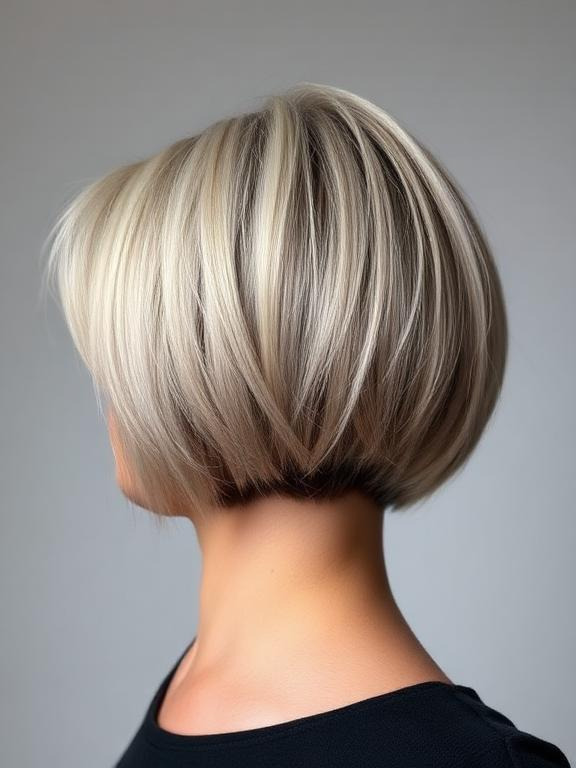
A bob with a clean taper at the nape rather than a blunt perimeter all the way around creates a refined, polished silhouette that is inherently modern. The taper removes bulk at the nape where fine hair has the least density and creates a clean line that reads as deliberate and carefully considered from the back and sides.
The taper needs touching up every four to five weeks to stay sharp. A grown-out nape taper makes the bob look heavy and undefined rather than clean and modern. Most women find the taper is the detail they notice most in the final result and the detail they most regret skipping maintenance on.
23. Low Maintenance Wash-And-Go Bob

A bob designed specifically to air dry into a wearable, intentional shape on fine hair over 50 is the most practical cut on this list. The styling success lives entirely in the quality of the cut rather than in any product or technique applied afterward. When the cut is right the drying process is the styling process.
Ask your stylist explicitly for a wash-and-go bob designed for your natural texture, assessed dry before cutting. A cut designed against the natural texture will never be genuinely low maintenance. A cut designed with it dries into something that looks good whether styled further or not.
FAQs
What short cut is most flattering for women over 50?
There is no single answer because face shape, hair texture, and lifestyle all matter significantly. However, a layered or blunt bob at chin to collarbone length is the most consistently flattering across the widest range of face shapes and hair types. For women with fine or thinning hair specifically, a textured pixie or bixie creates volume through structure in a way that longer cuts simply cannot.
Will short hair make me look older?
The wrong short cut can. A shapeless, grown-out, or unstyled short cut reads as older than a well-maintained short cut at any length. A short cut that is designed for the face shape and kept consistently trimmed looks more flattering than the same hair worn long and neglected. The quality and the maintenance of the cut matter far more than the length itself.
How do I find the right short cut for my face shape?
Oval faces suit almost every short cut. Round faces benefit from cuts that create height at the crown rather than width at the sides. Square faces suit softer, textured cuts that avoid harsh horizontal or vertical lines. Heart-shaped faces suit cuts with volume at the jaw rather than at the crown. Bring these guidelines to a consultation and let a skilled stylist apply them to your specific proportions.
How often do short cuts need trimming over 50?
More frequently than most women expect. Pixie and cropped cuts every three to four weeks. Bob and bixie cuts every five to six weeks. Lobs every six to seven weeks. Fine hair at short lengths shows split ends and loss of shape faster than thick hair. Consistent trimming is the single most underestimated factor in keeping short hair over 50 looking its best.
Wrapping Up
Twenty-three short cuts for women over 50 and every single one of them is a genuine option rather than a compromise. The range goes from a closely cropped pixie that requires almost nothing daily to a sleek lob that requires a proper blow dry and everything in between.
Pick the one that honestly suits your face, your texture, and the amount of time you actually want to spend styling each morning. Take it to a consultation rather than directly to a cutting appointment. That fifteen-minute conversation with the right stylist is the difference between a short cut that transforms and one that simply reduces the length.