18 Haircuts for Thinning Hair over 50
Thinning hair over 50 is one of the most common hair concerns and one of the most consistently mishandled ones. The instinct is to add layers, add product, add volume spray, add everything. The reality is that the right cut on thinning hair does more than any product ever will, and the right cut is almost always about what the stylist leaves in rather than what they take out.
One instruction worth giving before any appointment: tell your stylist specifically where the thinning is most visible. Crown thinning, temple thinning, and overall fine density all require different approaches. A stylist who knows exactly where the problem lives makes better decisions throughout the entire cut.
1. Blunt Bob
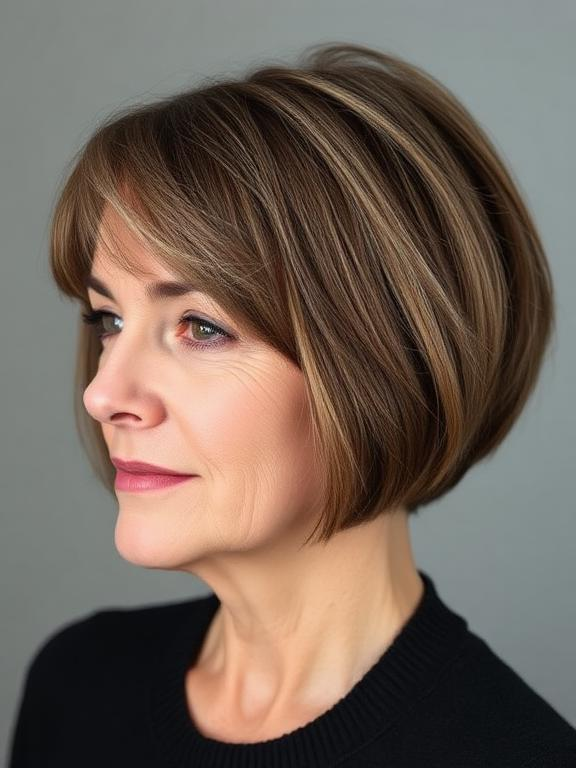
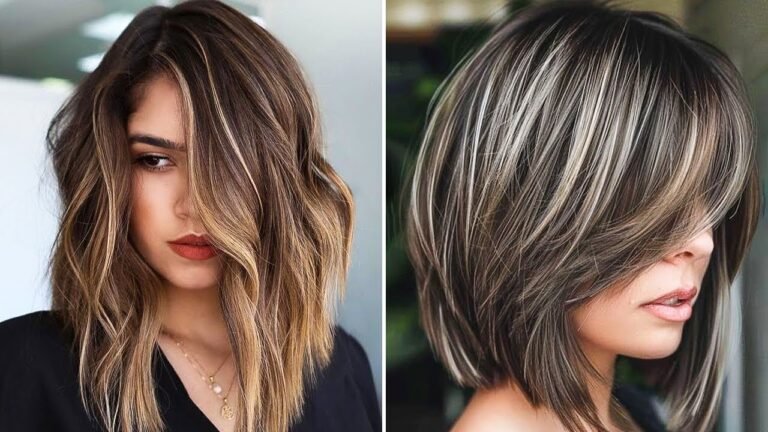
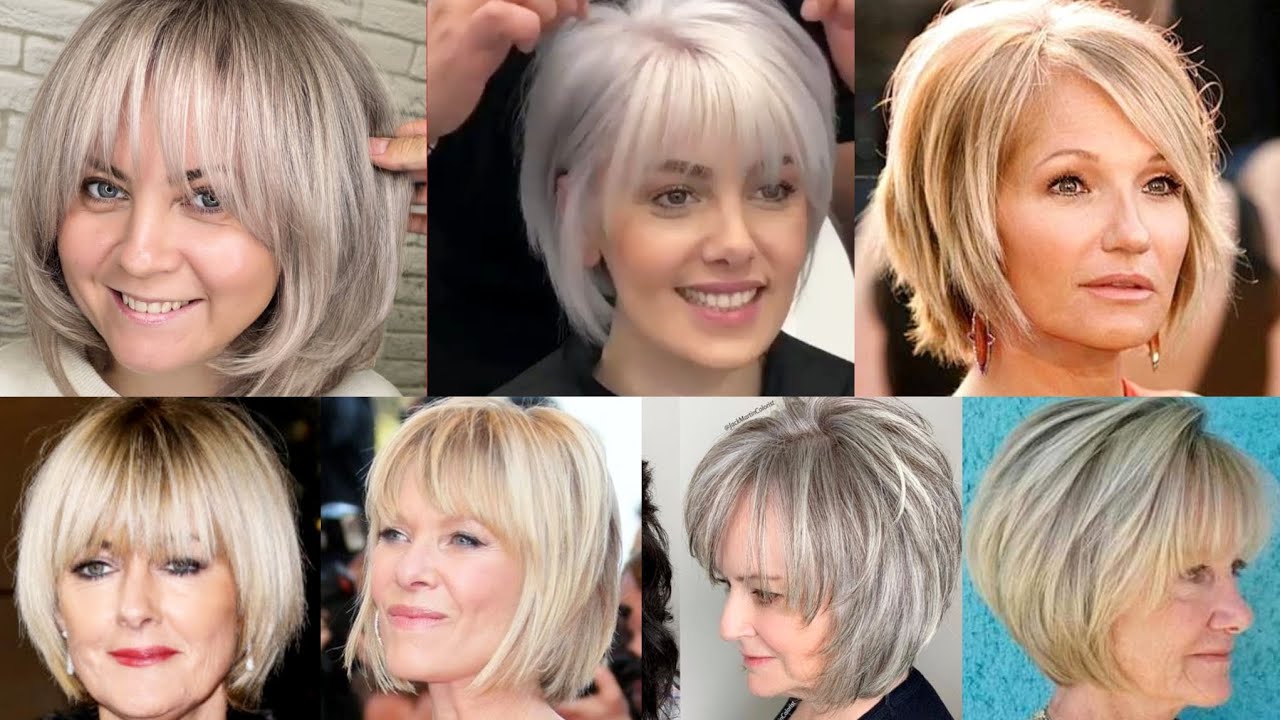
A blunt bob is the single most effective cut for thinning hair at any age. The unbroken perimeter edge creates visual density that no layered cut can replicate. Hair that looks sparse and wispy at longer lengths immediately appears fuller at a clean blunt bob length because the weight is concentrated rather than dispersed.
Ask for point cutting at the tips only to soften the very edge without losing any real weight. Pair with a volumising blow dry using a large round brush pulling outward at the ends. The technique preserves the density the blunt cut has already built into the style.
2. Textured Pixie
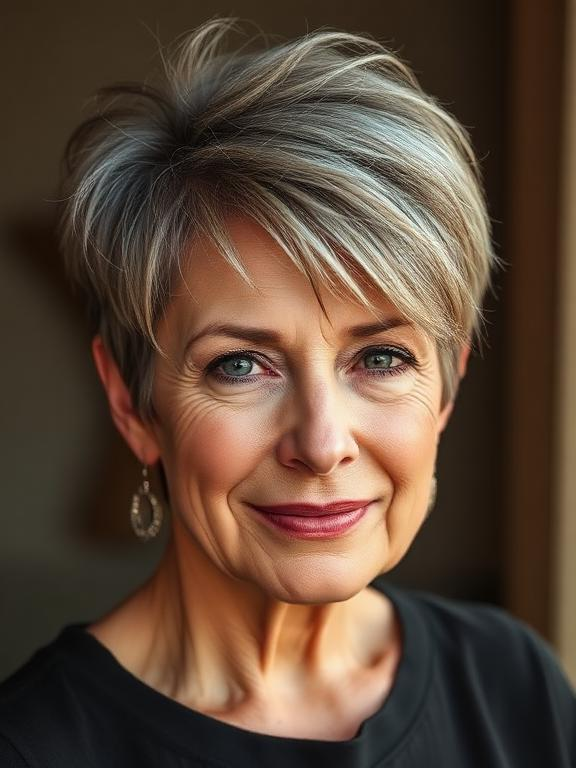
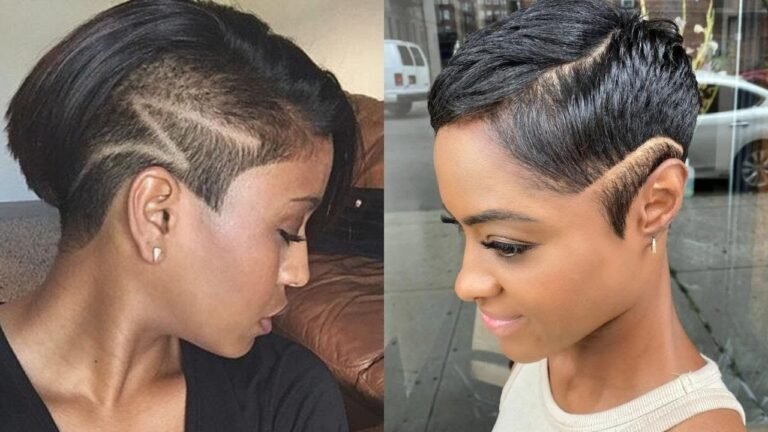
The textured pixie is the most volume-efficient cut available for thinning hair over 50. By removing the length entirely, the cut removes the gravitational force pulling thin hair flat. What remains is lighter, shorter, and structurally supported by the cut itself rather than relying on the hair’s density to hold a shape.
Style with matte texturising clay on dry hair using fingers only. A pea-sized amount creates the textured finish without collapsing the volume the cut structure has built. Anything more product than this on thinning hair at pixie length immediately flattens the style.
3. Bixie With Texture
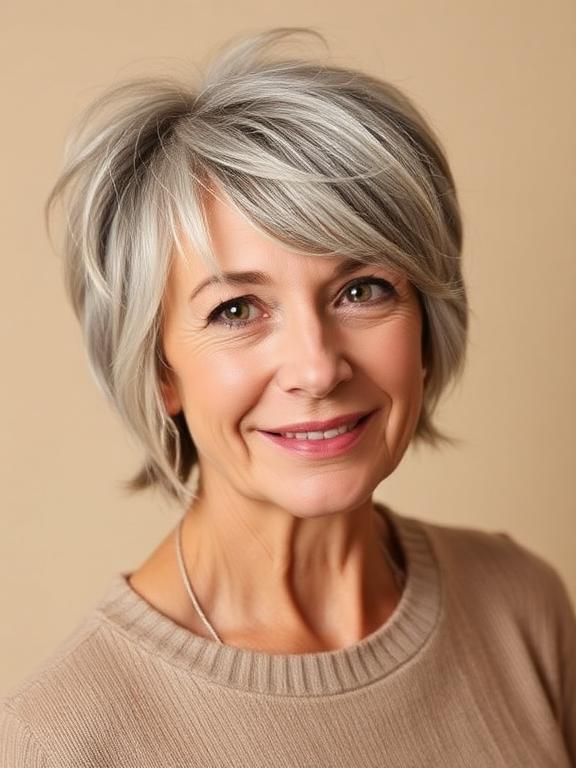
A bixie on thinning hair sits at the ideal length for maximum volume with minimum effort. Short enough that gravity stops pulling the hair flat, long enough that some styling versatility remains. The piece-y, textured ends create the visual impression of thickness that smooth, polished finishes on thinning hair actively undermine.
Ask for disconnected, piece-y ends rather than anything blended or smoothed. The texture creates visual interest and the impression of density. A smooth, polished bixie finish on thinning hair reads the same as a smooth, polished longer cut: thin.
4. Soft Layered Lob
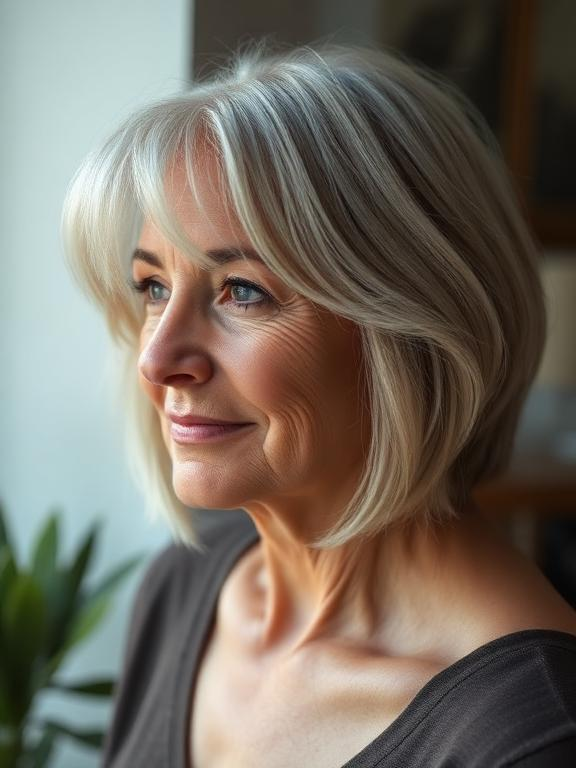
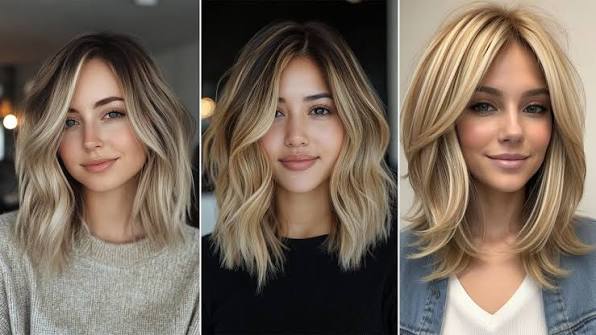
A soft layered lob at collarbone length with long, gradual layers is the most appropriate longer option for thinning hair over 50. The length keeps some weight in the hair while the minimal layering adds enough movement to prevent the cut from looking flat and lifeless. It works because the layers are targeted rather than pervasive.
Keep layers starting at the collarbone or below without exception. Any layer above the collarbone on thinning hair removes bulk from the sections that need it most. One wrongly placed layer can make the difference between a lob that looks full and one that looks sparse.
5. Stacked Bob
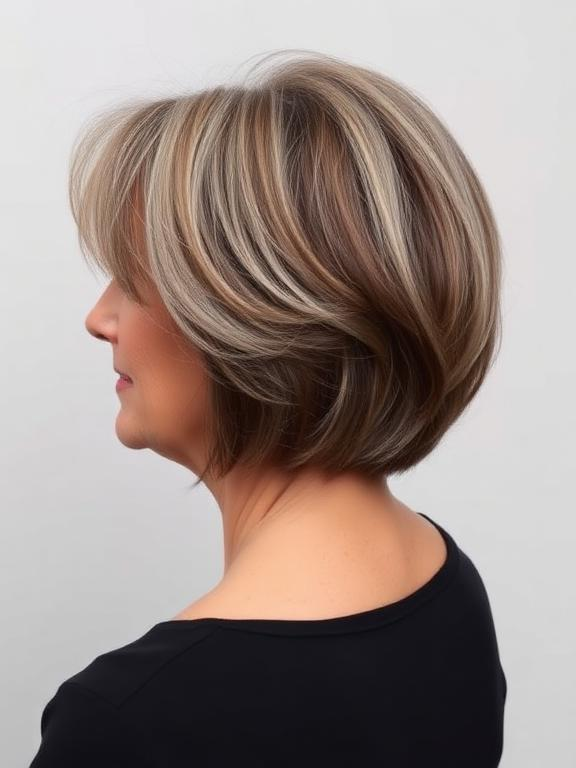
A stacked bob uses internal graduation to build rounded volume at the nape and crown, creating a full silhouette through structural technique rather than through the density of the hair itself. For crown thinning specifically, the stacked graduation is one of the most targeted and most effective structural solutions available.
Ask your stylist to show you the back profile during the cut to confirm the stacking is creating fullness at the crown rather than simply shortening the back. The back silhouette is the defining feature of a stacked bob and needs to be deliberately shaped throughout the cutting process.
6. Short Shag
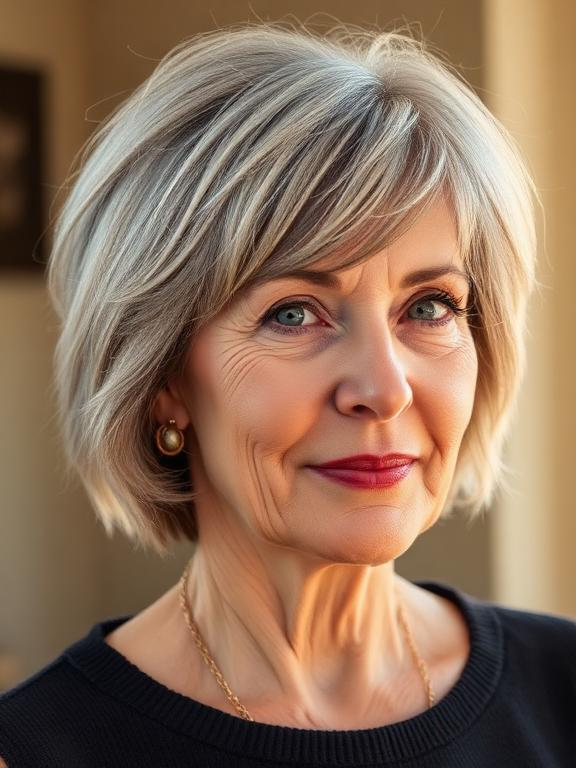
A short shag on thinning hair creates volume through layering, texture, and face-framing elements working together. The layering needs to be significantly more restrained than on thick hair because over-layering on thinning hair exposes the density problem rather than solving it. The shag works when it is cut with precision and restraint.
Tell your stylist you want face-framing layers as the priority and minimal internal layering through the body of the cut. Face-framing adds the visual interest and the flattery while the body of the cut retains enough weight to look full rather than sparse.
7. Rounded French Bob
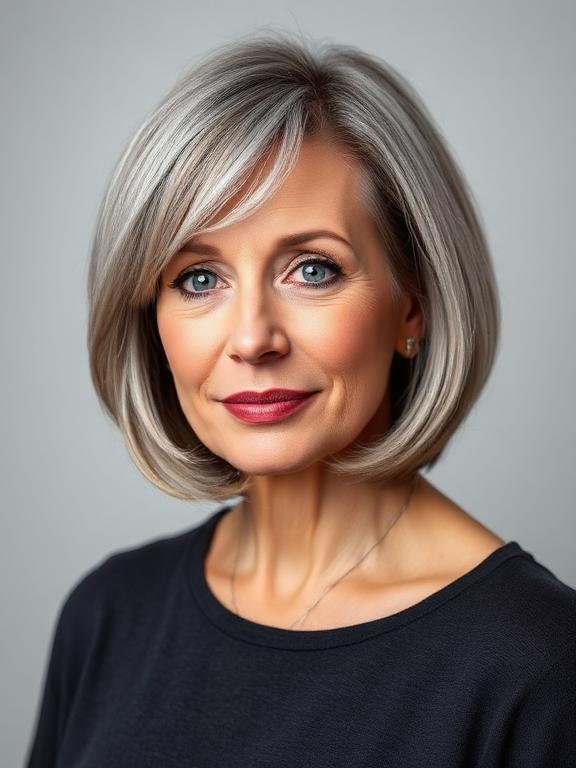
A rounded French bob at jaw length with the ends curving slightly under creates a full, voluminous silhouette that flatters thinning hair significantly. The rounded shape mimics thickness in a way that straight, blunt-ended cuts sometimes don’t, and the jaw length keeps the weight concentrated at the most flattering point.
The rounded shape develops during the blow dry with a large round brush rather than through the cut itself. The cut creates the foundation. The blow dry creates the shape. A setting spray applied before drying holds the curve through the day without requiring restyling.
8. Pixie With Crown Layers
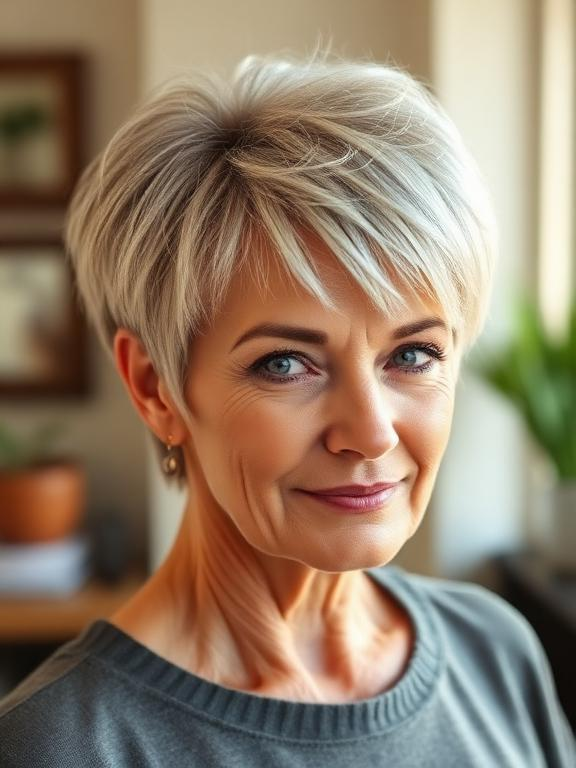
A pixie specifically cut with shorter internal layers through the crown to push hair upward addresses the crown thinning that many women over 50 experience most visibly. The shorter crown layers act as internal structure, creating lift at the top of the head where thinning is most apparent and most difficult to disguise with styling alone.
Ask specifically for shorter internal layers through the crown combined with slightly longer surface pieces. The internal layers create lift. The surface pieces create the textured appearance. The two work in combination rather than one compromising the other. This distinction needs to be communicated clearly before the cut begins.
9. Side-Swept Bob
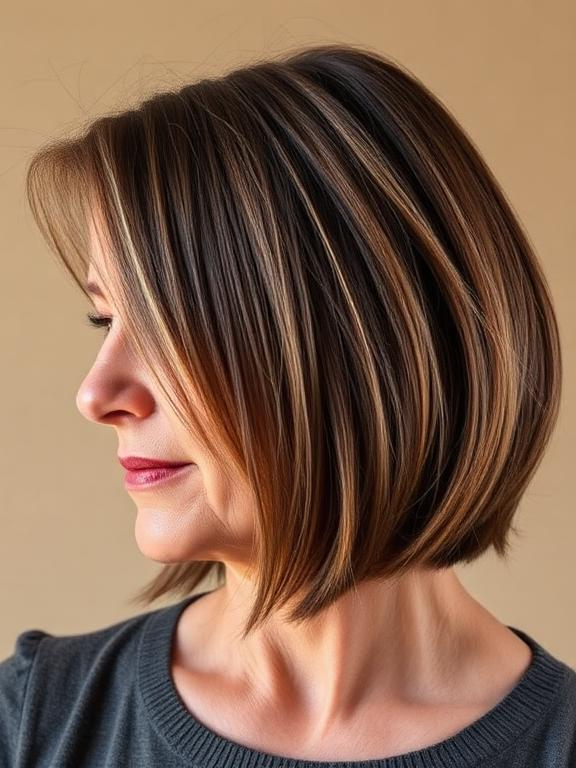
A deep side part on a bob redirects the visual weight of the hair to one side, creating natural root lift on the opposite side without any product. For thinning hair over 50 this structural lift from the part is more reliable and longer lasting than any volumising spray applied to the roots.
Set the side part on damp hair during the blow dry and dry the roots on the parted side upward before finishing the lengths. Roots that dry in a lifted position stay lifted through the day. Attempting to create lift on hair that has already dried flat rarely produces a lasting result regardless of product.
10. Voluminous Blowout Bob
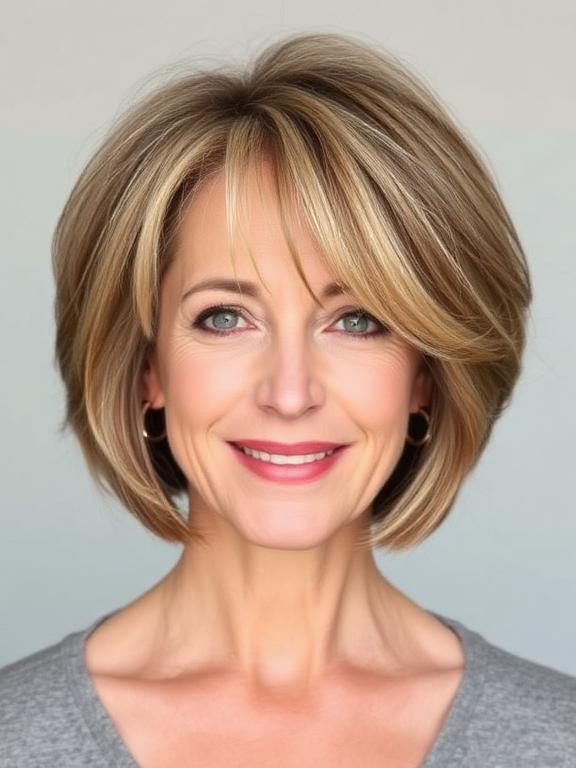
The blowout technique applied to a bob on thinning hair creates a result that looks dramatically fuller than the same hair air-dried. The technique matters more than the product on thinning hair. A correctly executed volumising blowout on even significantly thinning hair produces a visible and lasting fullness that no styling product achieves on its own.
Apply volumising root spray section by section on damp hair and blow dry each section upward with a large round brush, beginning at the nape and finishing at the crown. The crown dried last retains the most lift because nothing is subsequently dried on top of it and the heat sets the volume before the hair cools.
11. Feathered Cut
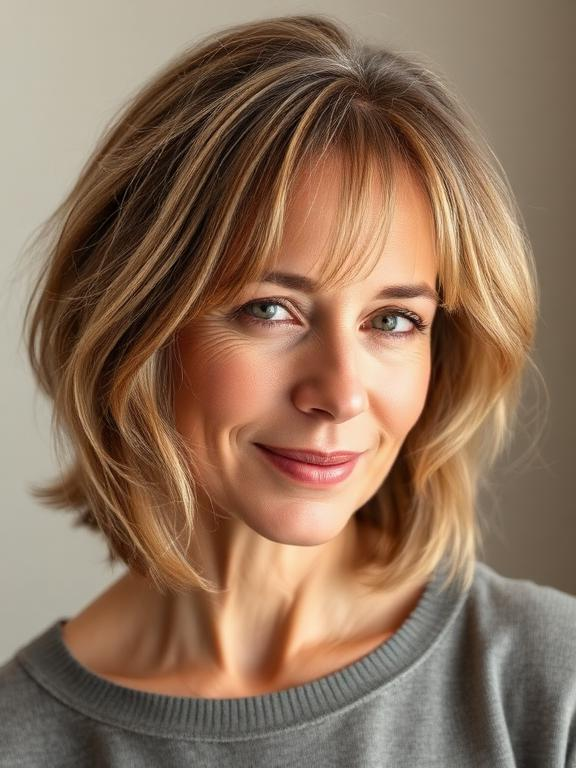
A feathered cut uses shear-over-comb technique to create soft, airy ends that move naturally rather than sitting in heavy, defined sections. On thinning hair the feathering creates the impression of movement and lightness without removing the weight from the perimeter that thinning hair needs to look full. It’s a softer alternative to both blunt cuts and layered cuts.
Ask specifically for shear feathering rather than razor cutting. Razor cutting on thinning hair creates ends that are too thin and split too quickly. Shear feathering achieves the same soft quality with significantly more control over the degree of thinning and better long-term condition of the ends.
12. Bob With Face Framing
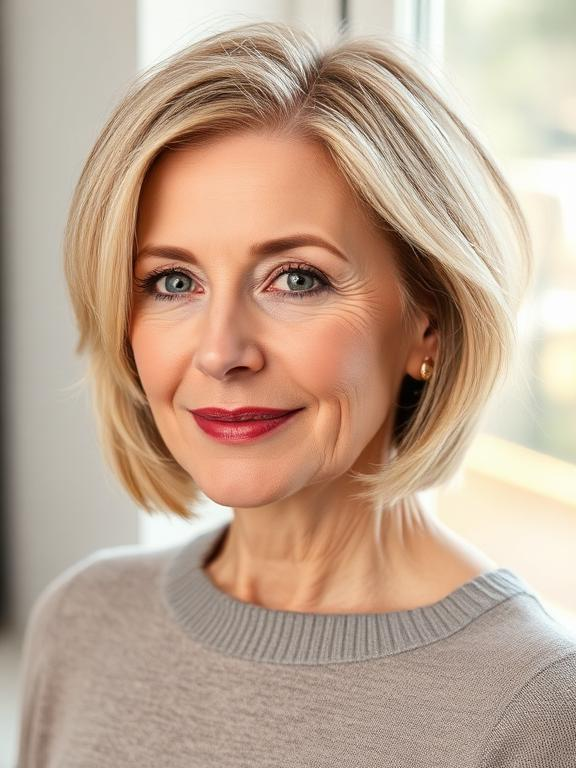
A one-length or minimally layered bob with two or three targeted face-framing layers at the front is the most surgical approach to adding flattery to a bob without sacrificing the perimeter weight that thinning hair needs. The face frame does the visual work at the most important zone while the body of the cut stays intact.
Tell your stylist to keep the face-framing layers starting at the cheekbone or below and blending gradually into the length. Layers that start above the cheekbone begin removing weight from the top section of the head where thinning hair is most vulnerable and most visible.
13. Short Natural Curl Cut
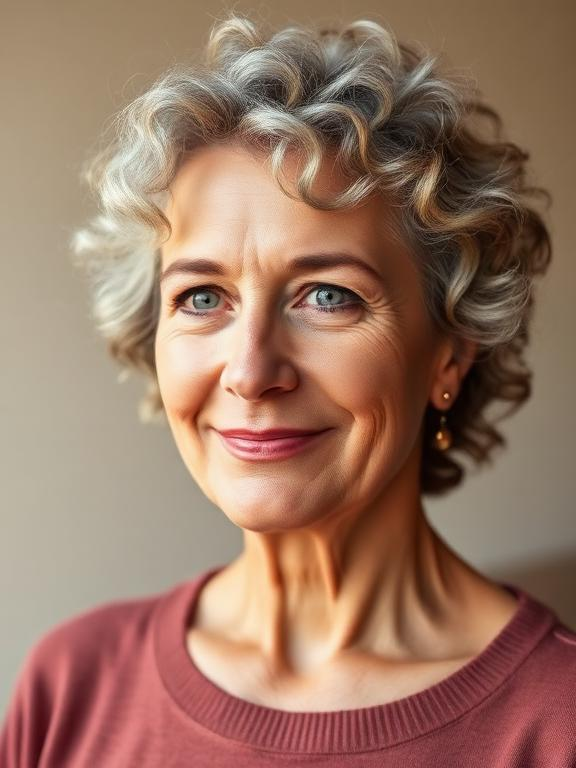
Naturally curly hair that is thinning benefits enormously from a short cut that removes the weight pulling the curls flat. At shorter lengths the natural curl has less gravitational force working against it, and the result is a fuller, more defined pattern than the same hair achieves at longer lengths. Thinning curly hair at short length often looks fuller than it did at medium length.
Ask for the cut to be done dry on the natural curl pattern. Thinning curly hair cut wet produces layers that sit completely differently once the curl springs back. The curl contraction is significant and every layering decision needs to be made with that contraction visible rather than guessed at on stretched wet hair.
14. Tapered Pixie
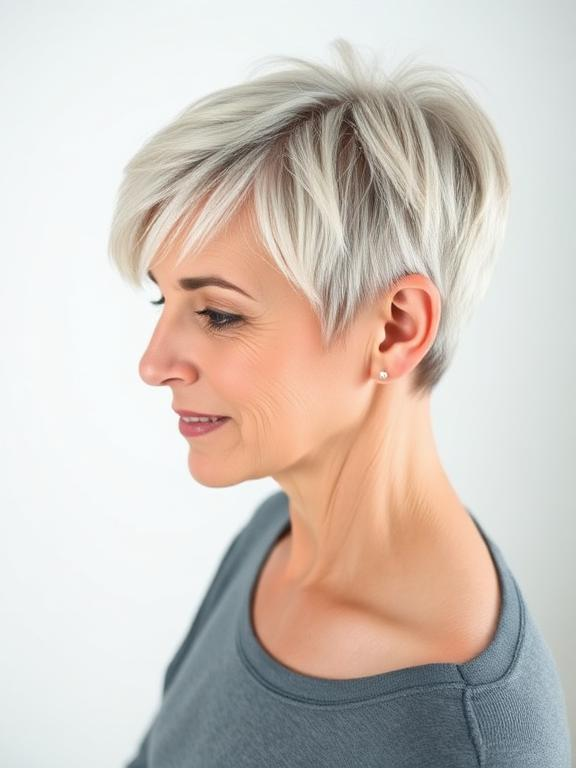
A tapered pixie that is close at the nape and sides with more length through the crown concentrates whatever volume exists where it is most visually impactful. The taper removes the sparse, thin sections at the perimeter where thinning hair looks worst and focuses attention on the crown where the remaining density can create a fuller-looking silhouette.
The taper needs touching up every two to three weeks. A grown-out taper on thinning hair looks particularly unflattering because the regrowth at the nape and sides immediately draws attention to the sparseness that the taper was specifically designed to remove from view.
15. Invisible Layer Bob
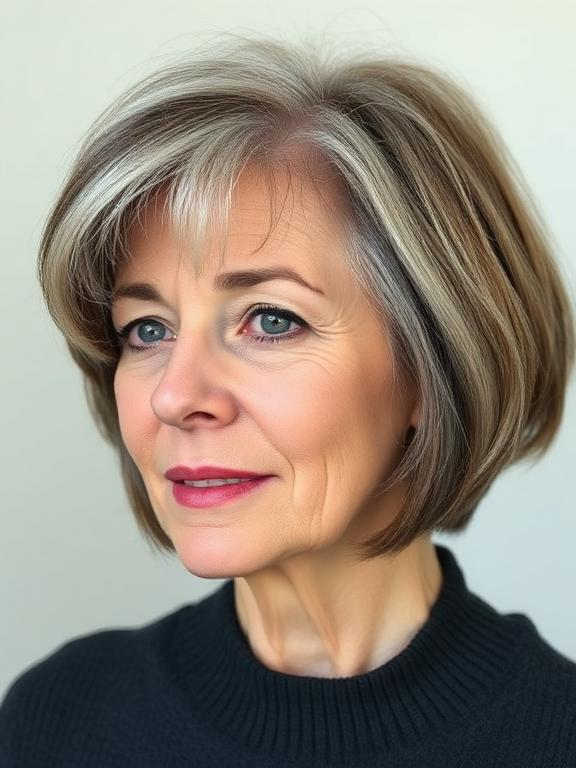
Invisible layers cut underneath the surface of a bob rather than through the visible sections give thinning hair internal movement without any visible reduction in the density the cut displays from the outside. The surface looks full and blunt. The interior has enough movement to prevent the style from sitting flat and lifeless against the head.
The phrase to use with your stylist is internal point cutting underneath the surface rather than standard layering through the top. This is a precise technical instruction. Confirm before the cut begins that the stylist understands the goal is fullness on the surface with movement underneath rather than visible layers throughout.
16. Choppy Pixie Bob
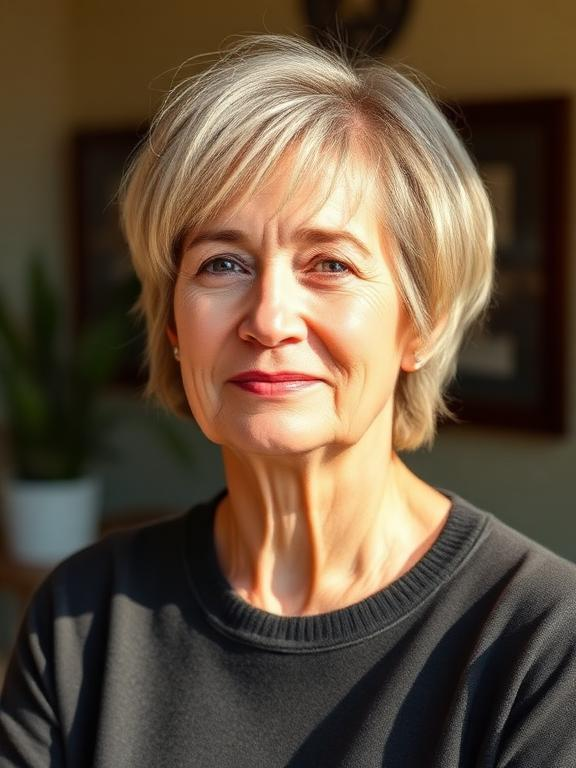
A pixie bob with choppy, disconnected ends sits at the length that works best for thinning hair over 50 and uses the texture of the choppy ends to create visual interest and the impression of density simultaneously. The disconnected sections read as deliberate personality rather than sparse, thin ends when the choppiness is cut with intention.
The choppiness needs to be cut into the ends rather than simply texturised with product. Product-created texture on thinning hair washes out and needs daily reapplication. Structure built into the cut by the scissor work holds through washing, humidity, and daily movement without requiring constant product reinforcement.
17. Gray Embracing Bob
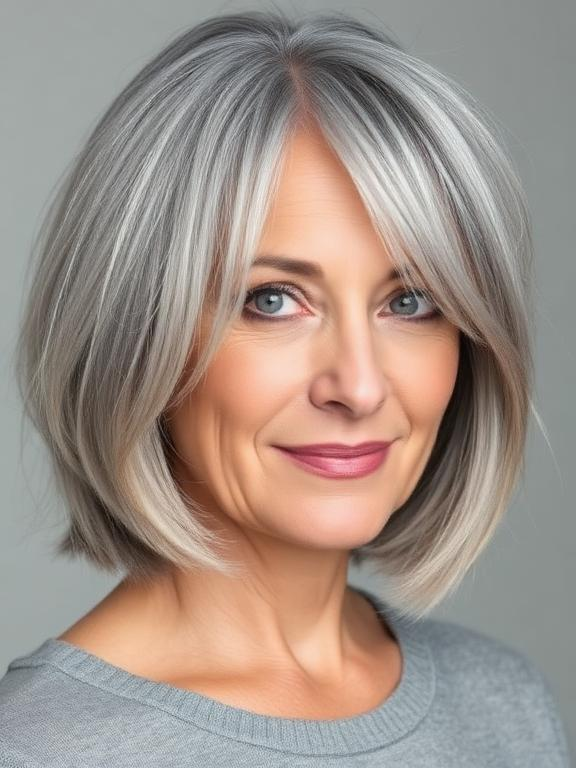
For women with significant gray coming through, a bob that works with the natural gray rather than covering it uses the tonal variation within the gray hair to create a colour dimension that reads as thickness. The visual variation between white, silver, and deeper gray sections within a single bob creates the impression of depth and density that single-process colour flattens.
A professional toning gloss applied over the natural gray adds shine and unifies the tones without flattening the variation. At home a weekly violet toning shampoo keeps the silver bright and luminous. Luminous gray hair reads as fuller than dull, yellowish gray at the same density.
18. Low Maintenance Wash-And-Go
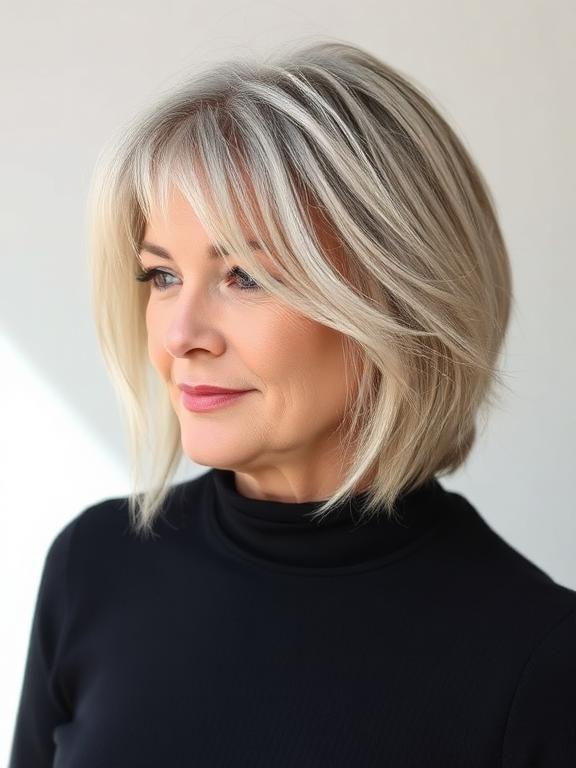
A cut designed specifically to air dry into a full, wearable shape on thinning hair is the most practical option on this list for women who want great hair without significant daily effort. The entire success of this approach depends on the quality of the cut and whether it was designed around the natural texture and growth patterns rather than against them.
Ask your stylist to assess the hair completely dry before cutting and design the cut around what the hair does naturally. A cut that fights the natural behaviour will never air dry into anything flattering on thinning hair regardless of how well it is executed technically.
FAQs
What is the best haircut for thinning hair over 50?
A blunt bob at chin to collarbone length is the most consistently effective cut for thinning hair because the perimeter weight creates visual density the hair can’t create on its own. For women ready to go shorter, a textured pixie or bixie removes the gravitational drag that keeps thinning hair flat and creates volume through cut structure rather than relying on density.
Should thinning hair over 50 be layered?
Very minimally and very carefully. Long, gradual layers below the collarbone can add movement without stripping weight. Short layers above the collarbone remove the bulk that thinning hair needs at the perimeter to look full. The instruction for every stylist is: preserve weight at the perimeter and layer only where the movement is specifically needed.
What styling products help thinning hair over 50?
A volumising root spray applied on damp hair before blow drying is the most effective product for thinning hair. A lightweight mousse for curly or wavy thinning hair and a matte texturising clay for straight thinning hair are the two most reliable daily product choices. Avoid anything heavy, oily, or marketed as smoothing or nourishing near the roots since all of these flatten thinning hair faster than anything else.
Does cutting hair shorter help with thinning over 50?
Yes, in most cases. Shorter length means less gravitational weight pulling thin hair flat, less surface area for the thinness to be visible across, and more opportunity for the cut to create structural volume. The cut at shorter lengths does the work that the hair’s density cannot do at longer lengths. Most women with thinning hair find that going shorter than they initially intended produces a better result than they expected.
Wrapping Up
Thinning hair over 50 is a structural problem that requires a structural solution. The right cut addresses it more effectively and more lastingly than any product, any technique, or any styling routine applied to the wrong cut. The investment is in finding a stylist who understands thinning hair specifically and who approaches the cut as a problem to be solved rather than a style to be delivered.
Go to the consultation with specific information about where the thinning is most visible, what your daily styling tolerance actually is, and what has and hasn’t worked in previous cuts. That specificity gives the stylist what they need to produce a result that genuinely addresses the concern rather than one that simply looks good in the salon chair.