16 Braided Hairstyles for Older Black Women
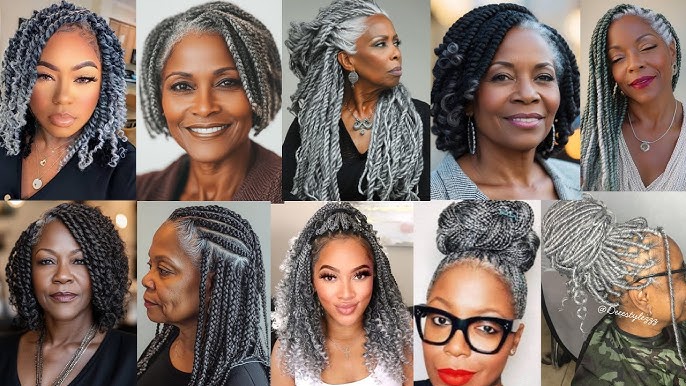
Braids are not a young woman’s style. They never were. For older Black women specifically, braids offer something that most other styles simply don’t: protective coverage, low daily manipulation, and a dignity and beauty that only deepens with age. The right braid style at any age is the one that makes you feel most like yourself.
One practical note before anything else. As hair thins or the scalp becomes more sensitive with age, installation tension matters more than it ever did before. Always tell your stylist to keep it gentle, especially around the edges and temples. A style that pulls is never worth keeping.
1. Classic Box Braids
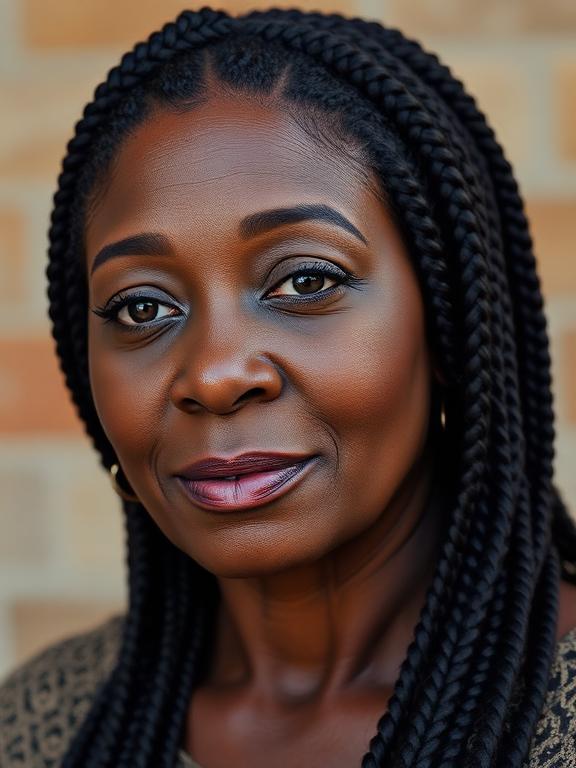
Box braids remain one of the most versatile and reliably flattering protective styles for older Black women. The neat, squared sections and uniform braid pattern create a clean, structured look that works equally well worn loose, pinned up, or tied back. At shoulder length or below, they have a timeless quality that never reads as trendy or age-specific.
Ask your stylist to install them at a medium thickness rather than very thin or very thick. Medium box braids are gentler on the scalp than micro braids, less heavy than jumbo braids, and grow out more gracefully than either extreme. A lightweight braid spray applied daily keeps both the braids and the scalp moisturised through the wear period.
2. Knotless Box Braids
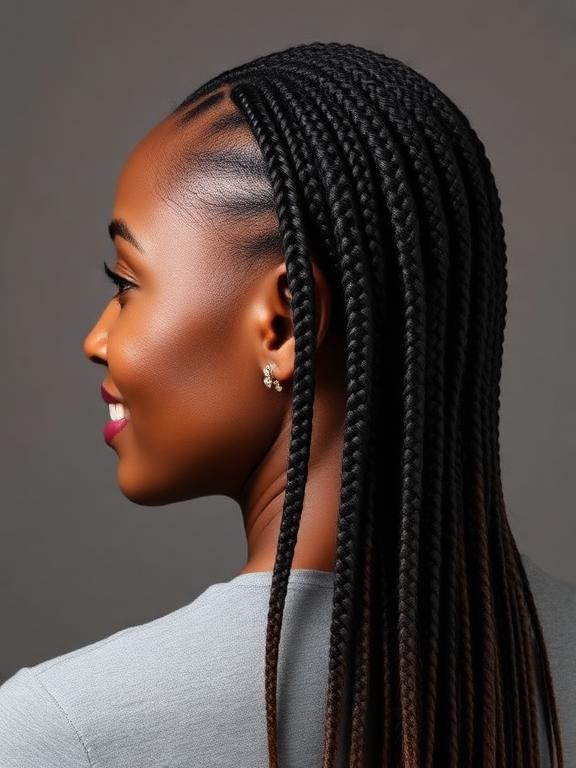
Knotless braids start with your natural hair and gradually add extension hair further down the braid rather than starting with a knot at the root. The result is significantly less tension at the scalp from the very first day of installation. For older women with thinning edges or a sensitive scalp, this is the single most important technical difference to know about and ask for.
The reduced tension of knotless installation makes them the recommended choice over traditional knotted box braids for anyone with scalp sensitivity or edge thinning. They also lay flatter at the root for the first few weeks, which gives the style a sleeker, more natural appearance straight from the chair.
3. Fulani Braids
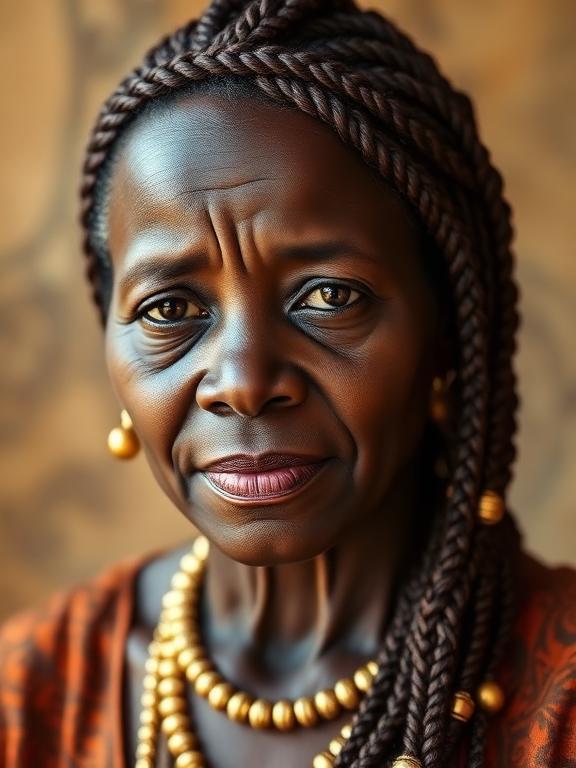
Fulani braids combine a centre-parted cornrow along the top of the head with box braids or individual braids falling from the sides and back, often with beads or rings incorporated into the style. The traditional pattern has a structure and intentionality to it that looks considered and culturally rich rather than simply decorative.
The cornrow section at the centre stays flat and close to the scalp, which keeps the style looking neat with minimal daily effort. Ask for beads in gold or wooden tones for a classic Fulani finish. Avoid heavy bead clusters near the temple or hairline since the weight can stress the edges over an extended wear period.
4. Silver Goddess Braids
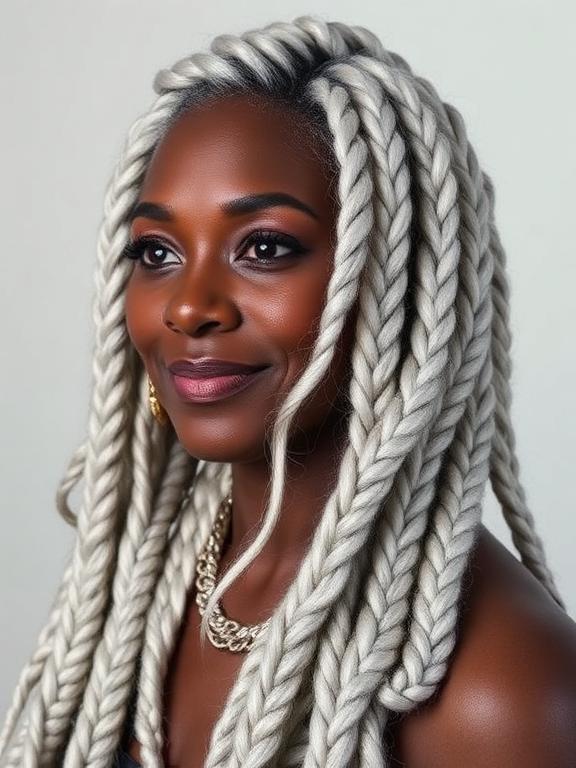
Goddess braids installed using silver or grey extension hair embrace and celebrate natural silver or salt-and-pepper growth rather than concealing it. The large, flowing braids with their wavy, textured goddess finish take on a completely different and genuinely stunning quality in silver tones that darker extension colours don’t achieve. Silver goddess braids on an older Black woman are nothing short of regal.
Ask your stylist to blend silver and white extension hair rather than using a single flat silver tone. The blend creates dimension and natural variation that mirrors the way real silver and white hair grows in. A light sheen spray over the finished braids adds luminosity to the silver tones without making them look oily or artificial.
5. Cornrow Updo
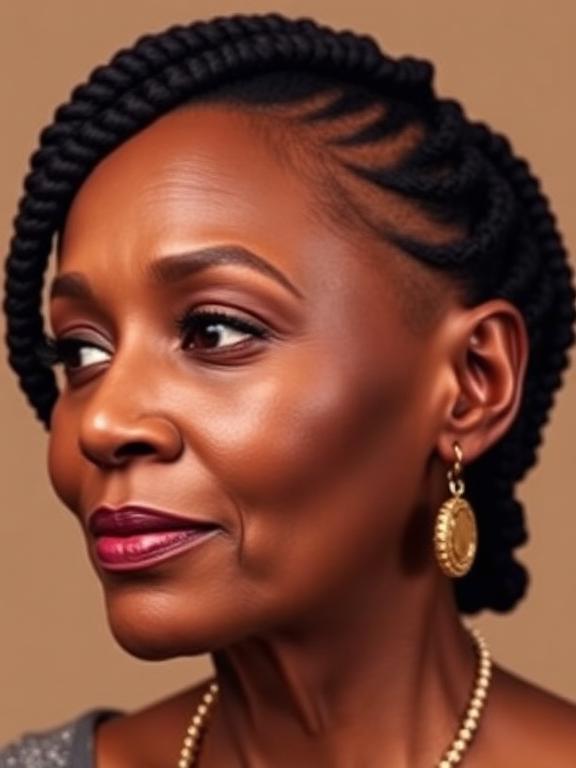
A cornrow updo sweeps all the braided sections toward the crown or back of the head, creating a structured, elegant style that keeps hair completely off the face and neck. For older women who prefer a neat, polished look that requires no daily restyling, a cornrow updo offers weeks of clean, low-maintenance wear with a genuinely refined appearance.
Ask your stylist to design the cornrow pattern intentionally rather than simply sweeping everything straight back. Curved or angled cornrow sections that follow the shape of the head create a more sculptural, artful result than a standard straight-back cornrow. Wrap with a satin scarf nightly to maintain the edges and keep the style looking fresh.
6. Senegalese Twists
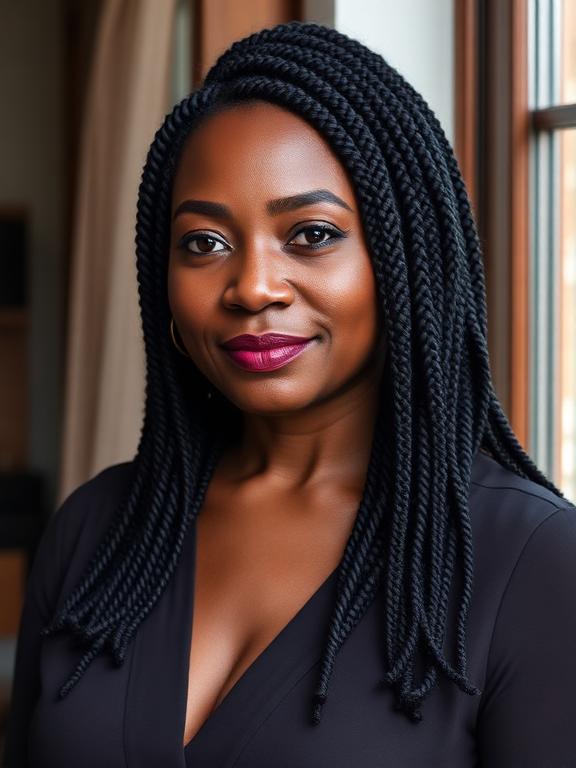
Senegalese twists use a two-strand twist technique with smooth, silky extension hair that creates a sleek, rope-like finish entirely different in texture from box braids. The smooth finish looks polished and sophisticated, suits formal occasions as naturally as it suits everyday wear, and sits lightly on the scalp in a way that heavier braided styles sometimes don’t.
Medium-length Senegalese twists, falling around the collarbone to mid-back, are the most versatile and manageable length for older women. Long enough to pin up or style in different ways, short enough to avoid putting significant weight on the scalp and edges over the wear period. Seal the ends with warm water dipping rather than burning to avoid damage to the extension hair.
7. Crown Braid
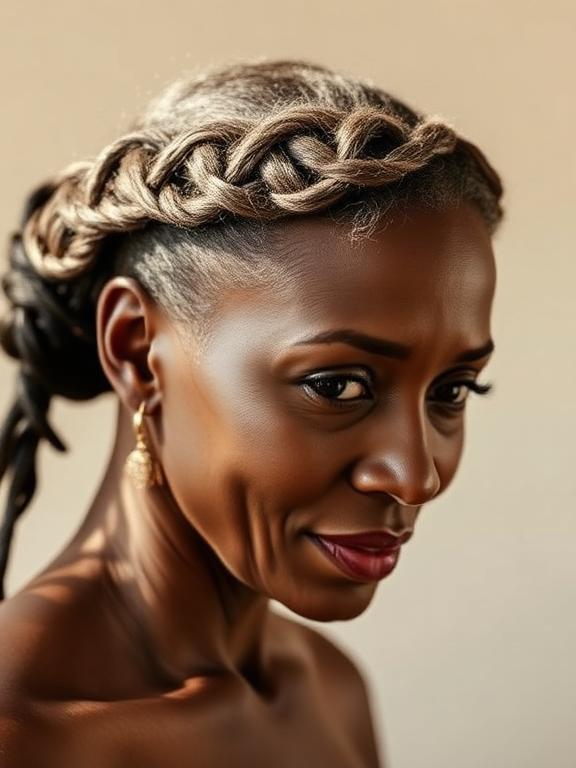
A crown braid wraps around the head like a halo, pinned at the back or sides to sit continuously around the perimeter of the head. It’s an inherently elegant style that suits older women beautifully, carrying a quiet authority and grace that younger styling trends rarely match. It works on both natural and relaxed hair and requires no extensions if the natural hair has enough length.
The key to a flattering crown braid is keeping the braid loose and slightly textured rather than pulled tight. A tight crown braid puts stress on the hairline all the way around the head, which is hard on edges over time. A slightly relaxed braid with gentle volume through the top reads as romantic and intentional rather than severe.
8. Marley Twists
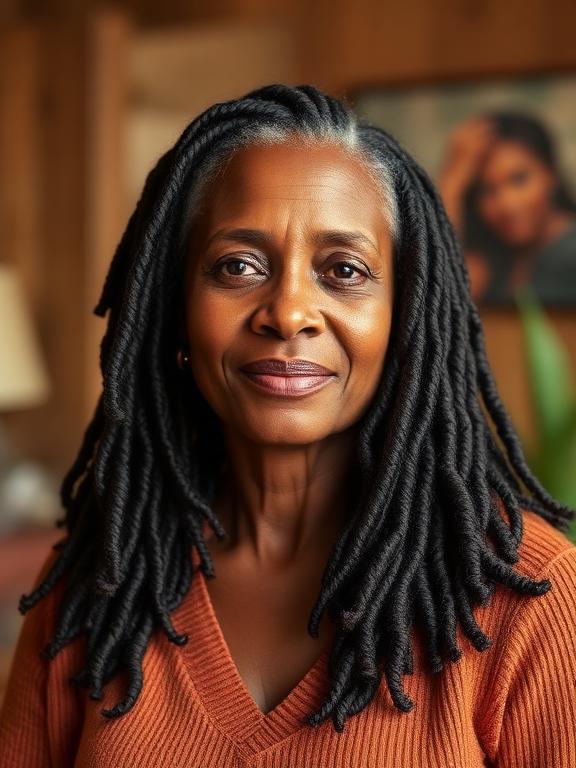
Marley twists use Marley hair extension, a thick, textured, natural-looking fibre, to create chunky, voluminous twists that have a full, earthy, and natural appearance. The texture of the Marley hair mimics natural afro texture closely, which gives the finished style a genuinely organic quality that smoother extension types don’t replicate. They’re bold, full, and undeniably beautiful.
Keep the length at shoulder length or just below for the most manageable and scalp-friendly result. Longer Marley twists become very heavy over the wear period and can put significant tension on roots and edges. Moisturise the scalp through the parts every three to four days with a lightweight oil to keep natural hair healthy underneath.
9. Flat Twist Updo
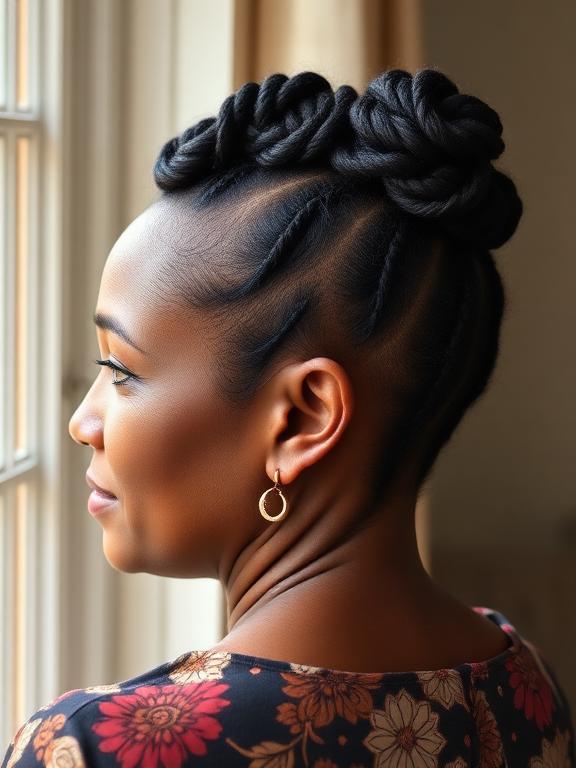
Flat twists lie against the scalp in a two-strand pattern, similar to cornrows in placement but with a rounder, more textured appearance. An updo created from flat twists has a softer, more organic quality than a cornrow updo while providing the same practical benefits of keeping hair off the face and requiring no daily restyling.
A flat twist updo works particularly well on natural hair without extensions, making it one of the most accessible styles on this list for women who prefer not to use extension hair. Style on freshly moisturised, slightly damp hair using a light-hold styling butter to define the twists and keep them smooth without stiffness or buildup.
10. Lemonade Braids
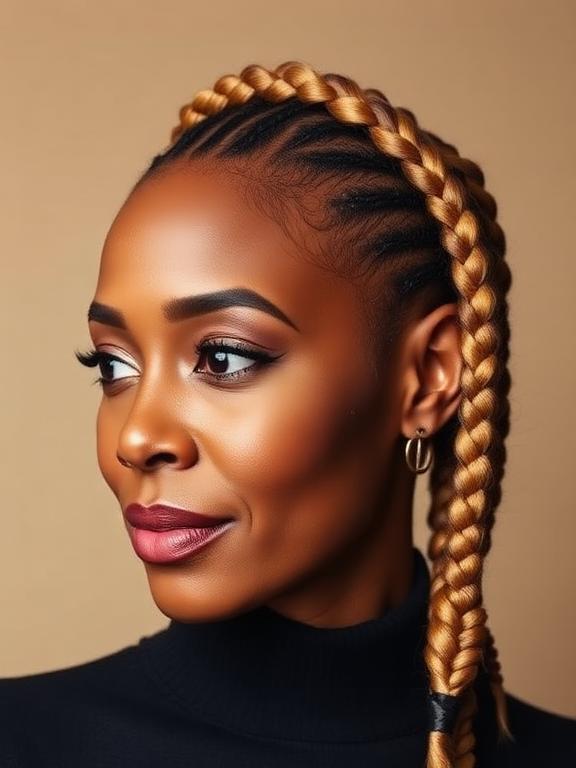
Lemonade braids are cornrows braided to one side in a clean, sleek, dramatically swept pattern. The bold directionality of the style gives it a modern, editorial quality while the cornrow technique itself keeps the style protective and low maintenance. On older Black women, the structured sweep has a particularly elegant and confident energy.
Ask your stylist to keep the cornrow tension even throughout rather than tighter at the front and looser toward the back, which is a common installation issue that causes discomfort and uneven wear at the hairline. A satin-lined sleep cap rather than just a scarf preserves the sleekness of lemonade braids better through the night.
11. Passion Twists
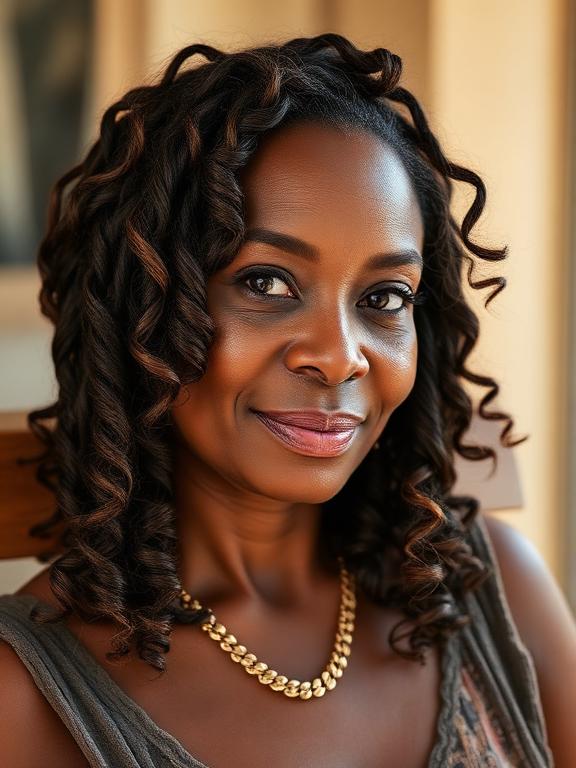
Passion twists combine a two-strand twist base with curly, springy extension hair that gives the finished style a romantic, bohemian quality unlike any other twist style. The ends are loose and curly rather than sealed, which adds volume and movement at the tips that makes the overall style feel soft and feminine. They’re one of the most flattering protective styles for older women who want something less structured and more flowing.
Install at a medium to large thickness for the most comfortable wear. Very thin passion twists at high volume take significantly longer to install and put more individual tension points on the scalp. Refresh the curly ends with a light moisturising spritz every few days to keep them from drying out and losing their spring.
12. Two Strand Twists
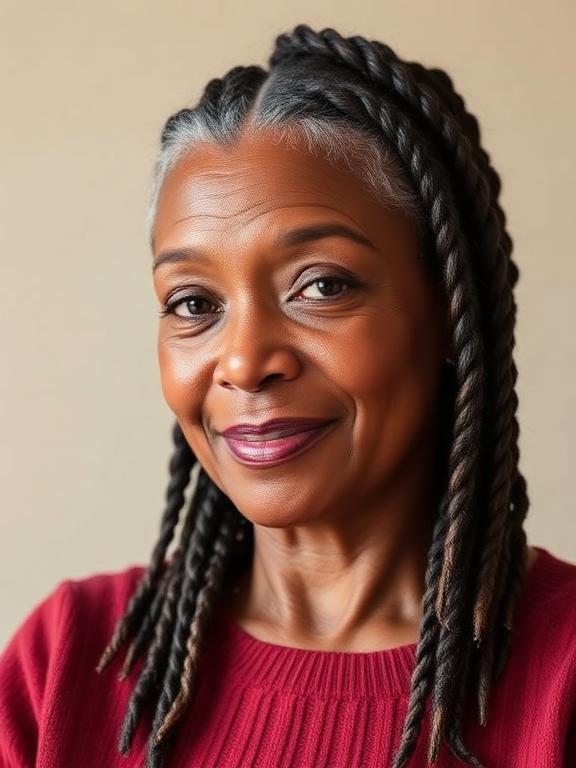
Two-strand twists done on natural hair without extensions are one of the simplest, most accessible, and most beautiful styles available for older Black women with natural hair. The style celebrates the natural texture completely, requires no extension hair, no chemicals, and no heat, and can be worn as twists or unravelled into a twist out for an entirely different look with the same style.
Apply a defining cream or butter to small sections of damp hair before twisting from root to tip for the most defined and long-lasting result. The moisture level of the hair at installation time is the single biggest factor in how well the twists hold and how defined the unravelled twist out will be if you choose to wear it that way.
13. Boho Goddess Braids
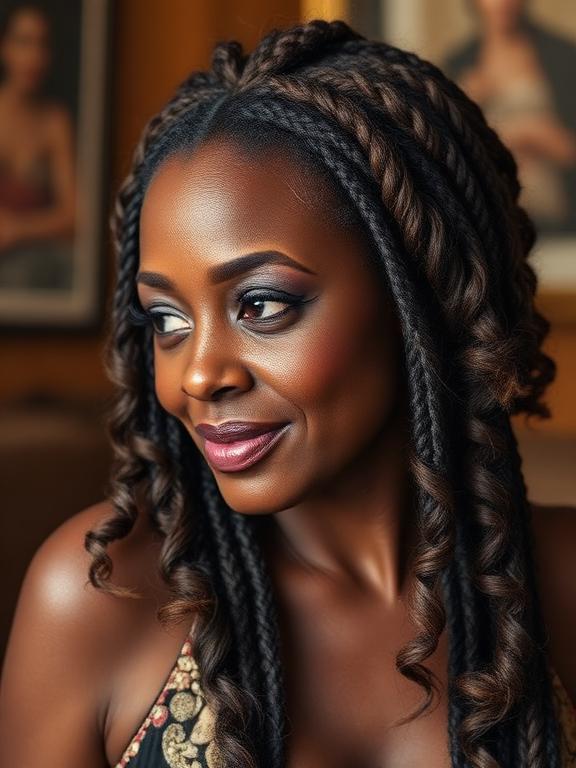
Boho goddess braids weave curly extension hair into sections of the braid at intervals, so the finished style has loose, flowing curly pieces peeking out between the braided sections. The effect is romantic, dimensional, and undone in a deliberate way that looks simultaneously effortless and considered. It’s one of the most beautiful and current braid styles available.
The loose curly pieces are what give boho goddess braids their character, so ask your stylist not to braid too tightly through the sections where the curly hair will be incorporated. Too tight a braid compresses the curly sections and flattens the romantic, flowing quality that makes the style work. The looseness is not an error; it’s the point.
14. Jumbo Braids
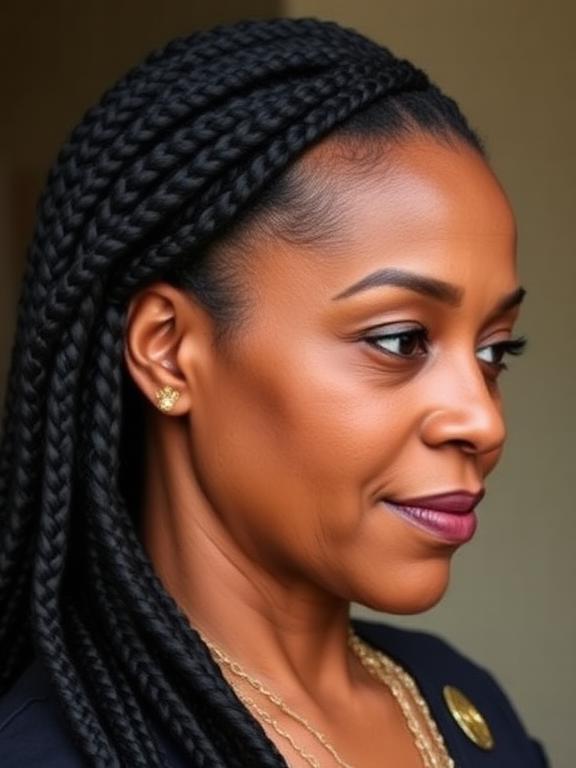
Jumbo braids are large, bold individual braids that install faster, sit more lightly on the scalp relative to their visual impact, and create a statement silhouette with less weight than an equivalent number of smaller braids. For older women concerned about scalp sensitivity or installation time, jumbo braids are a genuinely practical choice that still delivers serious visual impact.
Keep the number of braids to between twelve and twenty for a true jumbo effect. Fewer braids means each braid is larger and the style is bolder. More than twenty starts crossing into large box braid territory. A braid mousse or edge control along the parting lines keeps the scalp sections looking neat throughout the wear period.
15. Halo Braid With Natural Hair
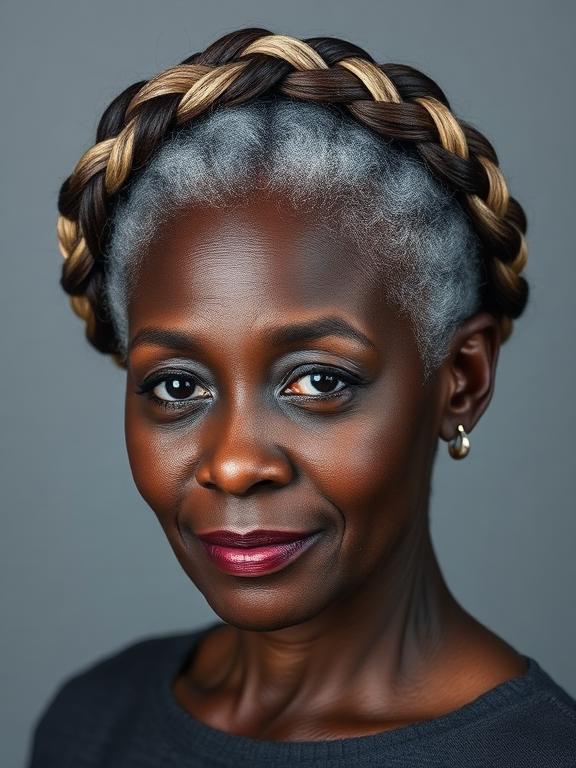
A halo braid on natural hair uses one continuous braid wrapped around the head and pinned into place, creating a crown of texture that sits beautifully on natural afro hair without any extension hair required. On older Black women with natural silver or salt-and-pepper hair, a halo braid in the natural colour is one of the most stunning and dignified styles possible.
Natural hair needs to be at least four to six inches long for a successful halo braid without extensions. Braid on slightly damp, well-moisturised hair and pin with bobby pins that match the hair colour for an invisible finish. A light mist of shine spray over the finished braid adds luminosity without disrupting the texture.
16. Protective Bob Braids
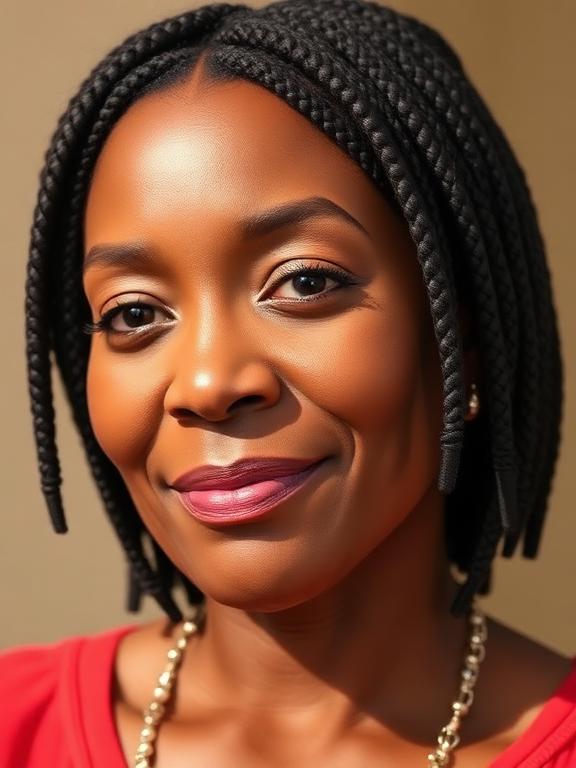
Bob braids are box braids or individual braids cut or installed to sit at chin-to-jaw length, giving the style the silhouette of a bob haircut with all the protective benefits of braiding. On older Black women, the bob braid length is elegant, neat, and incredibly flattering, sitting close to the face and brightening the complexion in the same way a well-cut natural bob does.
Ask your stylist to taper the braids very slightly at the ends rather than leaving them blunt, which gives the bob silhouette a more natural, finished quality. The slight taper mimics the natural end of a braid rather than looking like the extension hair was simply cut straight across, which can look unfinished at shorter lengths.
FAQs
Are braids safe for older Black women with thinning edges?
Yes, when installed with the right technique and tension. Knotless braids and loose styles like flat twists and two-strand twists are the safest options for thinning edges. Avoid any style installed tightly at the hairline. Always tell your stylist about edge sensitivity before they begin and check in during the installation if anything feels uncomfortable.
How long should braids be kept in for older hair?
No longer than six to eight weeks for most braid styles. Older hair and scalps can experience more dryness and sensitivity during extended wear. Keeping the style in too long allows for significant matting at the root, which causes breakage when the braids are removed. Shorter wear periods also give the scalp a proper rest between styles.
What is the best way to moisturise the scalp while wearing braids?
Use a lightweight scalp oil or diluted leave-in conditioner spray applied directly through the parts every three to four days. Thick oils and butters sit on the surface of the braids rather than penetrating to the scalp. A spray bottle with a mixture of water and a lightweight oil like jojoba or sweet almond oil is one of the most effective and affordable options.
Can older Black women with relaxed hair wear braids?
Absolutely. Relaxed hair can be braided just as natural hair can. The main consideration is that relaxed hair tends to be more fragile at the point where the relaxed hair meets any new growth, so tension at the root needs to be kept especially gentle. Knotless installation is strongly recommended for relaxed hair at any age.
Wrapping Up
The right braid style is the one that works for your hair, your scalp, your lifestyle, and your sense of self. The options on this list range from simple and natural to bold and statement-making, and every single one of them is completely appropriate and genuinely beautiful on older Black women.
Go to a stylist who listens to your concerns about tension and scalp sensitivity before recommending a style. A stylist who prioritises your comfort and hair health alongside the aesthetic result is the one worth returning to every time.