20 Short Hairstyles for Fine Hair Over 50
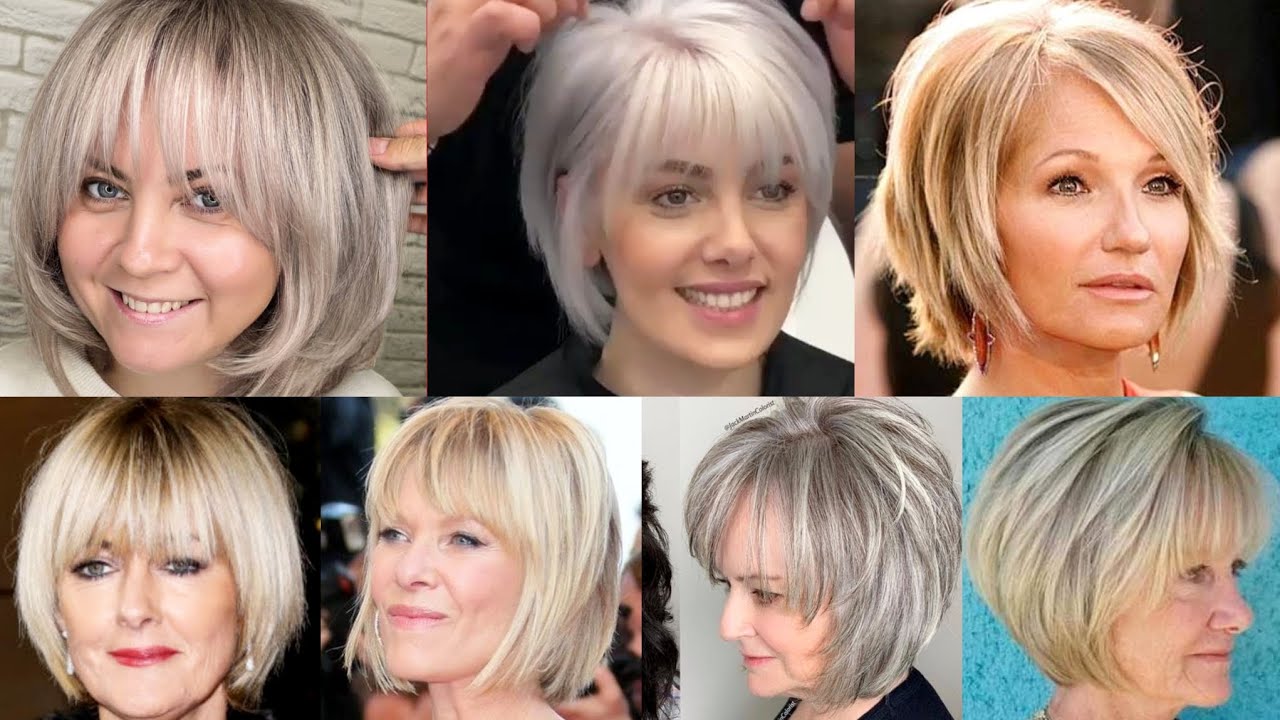
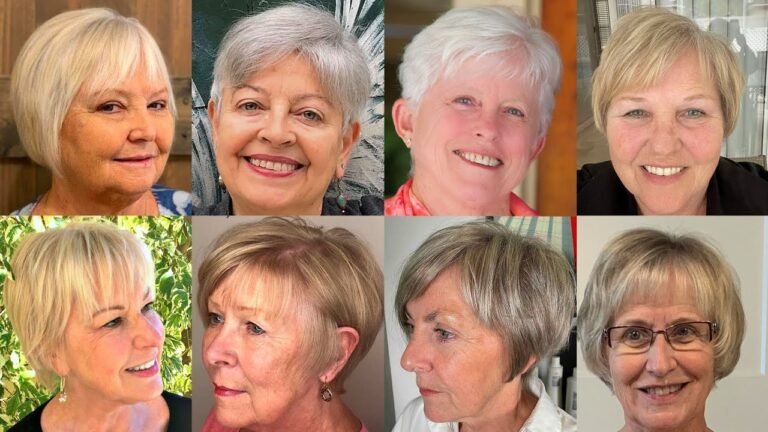
Fine hair over 50 and short cuts are a genuinely excellent pairing and not nearly enough women know it. The shorter the length, the less weight pulling the hair flat, the more the cut itself can create the volume and shape that product alone never consistently delivers. The frustration with fine hair at longer lengths almost always disappears at shorter lengths when the cut is right.
The one instruction worth giving every stylist before they start: preserve weight at the perimeter. Over-layering is the most common and most damaging mistake made on fine hair at any age. A stylist who layers with restraint and precision produces a result that looks fuller than one who layers aggressively throughout.
1. Blunt Chin-Length Bob
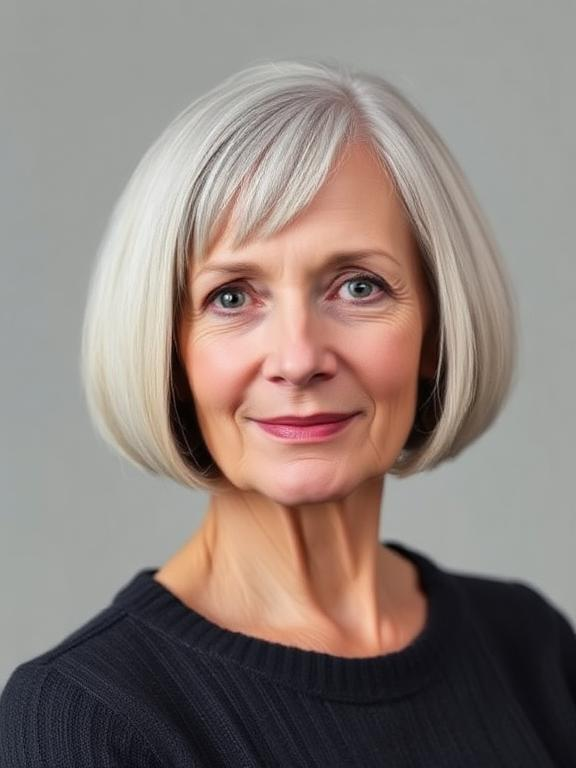
A blunt bob at chin length is the single most effective cut for making fine hair look thicker. The unbroken edge across the bottom creates visual density that no amount of layering replicates. It reads as deliberately full rather than simply short.
Ask for point cutting at the very tips to soften the blunt line slightly without removing any real weight. A straight scissor edge can look too severe on some face shapes. Point cutting keeps the density while giving the ends a marginally more natural finish.
2. Textured Pixie
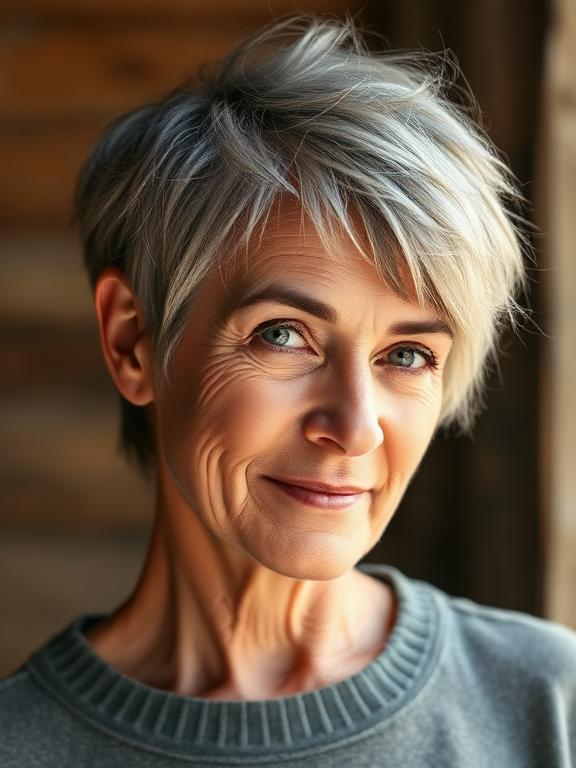
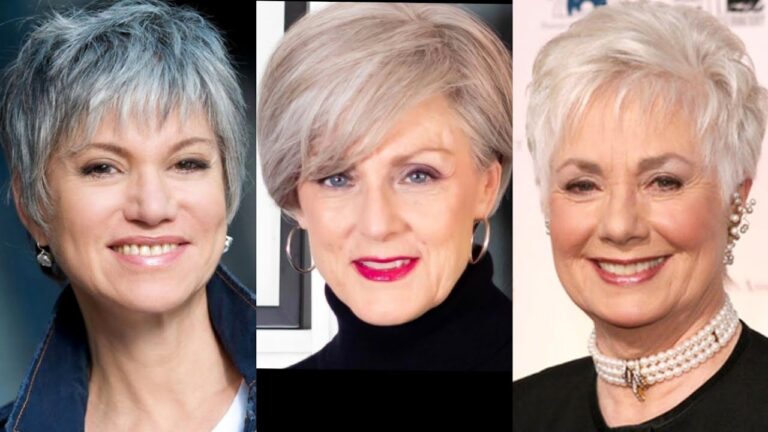
A textured pixie removes the weight that pulls fine hair flat and replaces it with a cut that creates its own volume through structure. On fine hair over 50 this length is genuinely transformative. The thinness that was visible at longer lengths simply stops being a factor.
Style with a matte texturising clay worked through dry hair. A very small amount applied with fingers is all this cut needs daily. More product than necessary collapses the volume the cut has already built into itself.
3. Soft Layered Bob
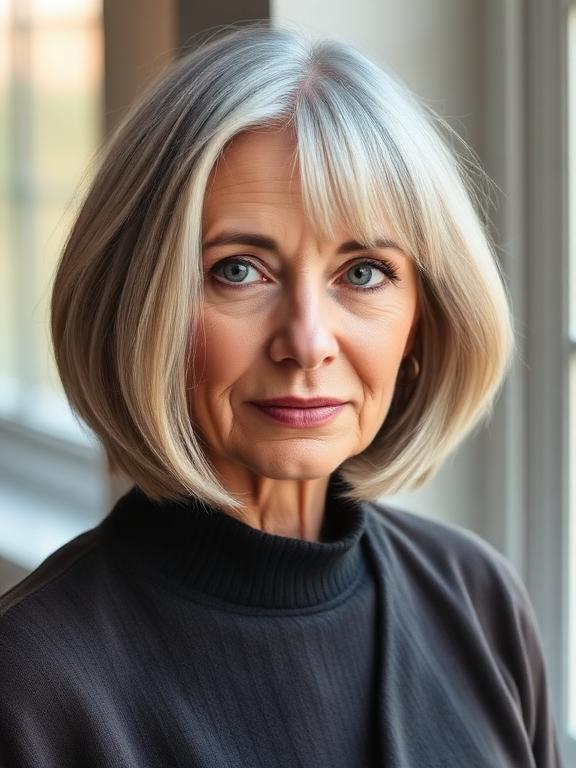
A layered bob with long, gradual layers beginning at the collarbone gives fine hair movement without stripping the perimeter weight it needs. The layers add behaviour and softness while the bob’s overall density stays intact. It’s the middle ground between a blunt bob and a fully layered cut.
Tell your stylist no layers above the collarbone. That single instruction prevents the most damaging mistake on fine hair, which is short layers that remove bulk from precisely where fine hair needs it most.
4. Bixie Cut
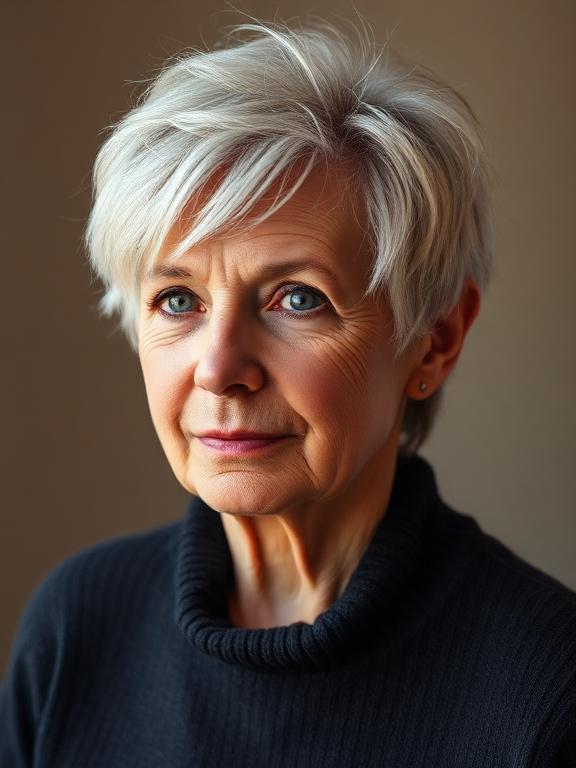
A bixie sitting between the ear and jaw on fine hair is one of the most volume-efficient cuts available. The reduced length removes the gravitational drag that keeps fine hair flat and the layered structure creates the dimension and movement that fine hair struggles to achieve at longer lengths.
Ask for piece-y, textured ends rather than a clean blunt finish. The texture at the tips is what gives the bixie its personality and what reads as fullness rather than thinness on fine hair.
5. Side-Parted Sleek Bob
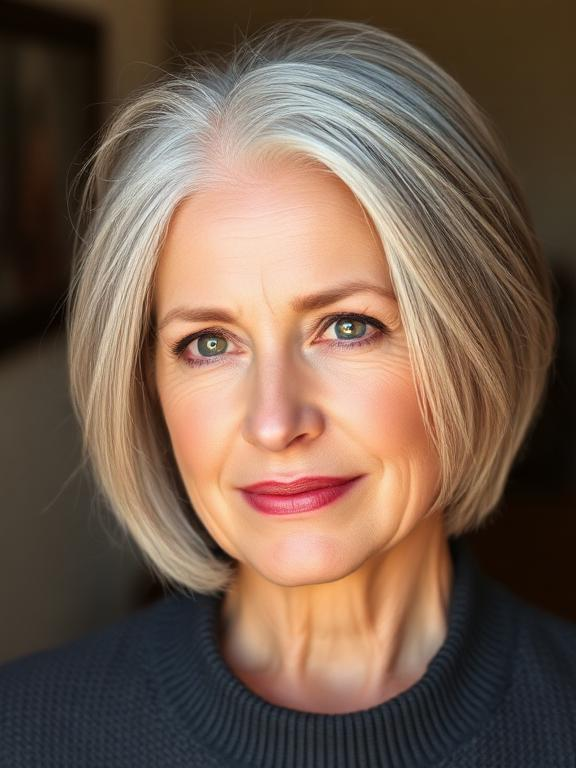
A deep side part on a bob creates natural root lift on the heavier side without any product or technique. The hair falling heavily to one side lifts naturally at the opposite root, giving fine hair a volume boost that is entirely structural rather than product-dependent.
Blow dry with the head tipped toward the lighter side of the part during the first two minutes of drying to build root lift before the hair sets. Once the roots are dry with lift, flip back and finish the lengths with a large round brush.
6. Short Shag
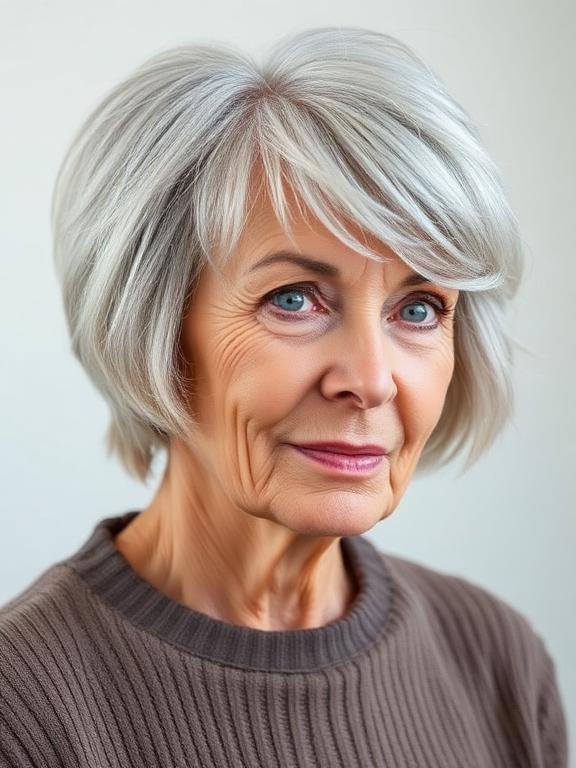
A short shag on fine hair is one of the most effective cuts for creating volume from almost nothing. The layers, the texture, and the face-framing elements all work together to create more visual fullness than the density of the hair would suggest is possible. It’s the cut that makes fine hair look like it has secrets.
Use a volumising mousse on damp hair before diffusing on low heat. Avoid touching the hair while it dries. The less manipulation during drying on fine hair, the more volume and texture survives to the finished style.
7. Pixie With Curtain Fringe
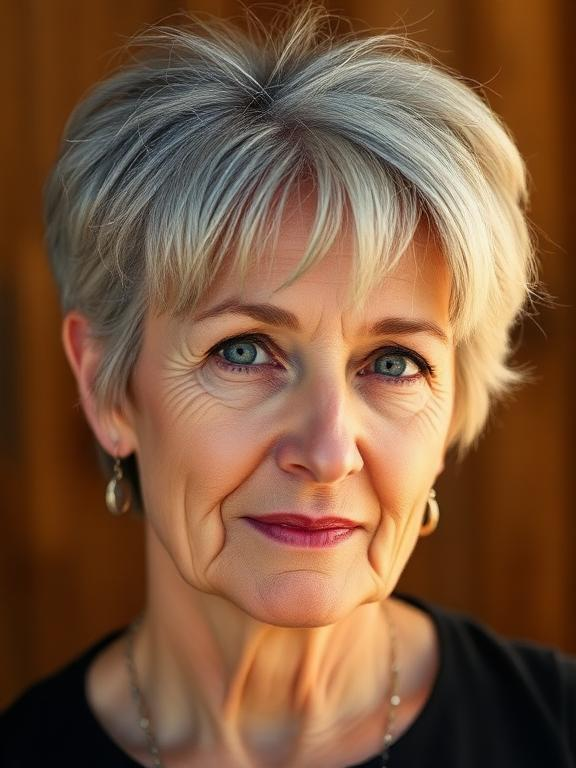
Adding a curtain fringe to a pixie on fine hair adds a face-framing element at the front that makes the short overall length look deliberate and flattering. The fringe creates movement near the face without requiring any additional density since curtain bangs work specifically because of their wispy, swept quality.
Keep the curtain fringe wispy rather than thick. Fine hair cannot sustain a dense, heavy fringe at any length. Ask for aggressive point cutting through the fringe so it sits lightly on the forehead without the weight that makes fine hair fringes look sparse and flat.
8. Voluminous Blowout Bob
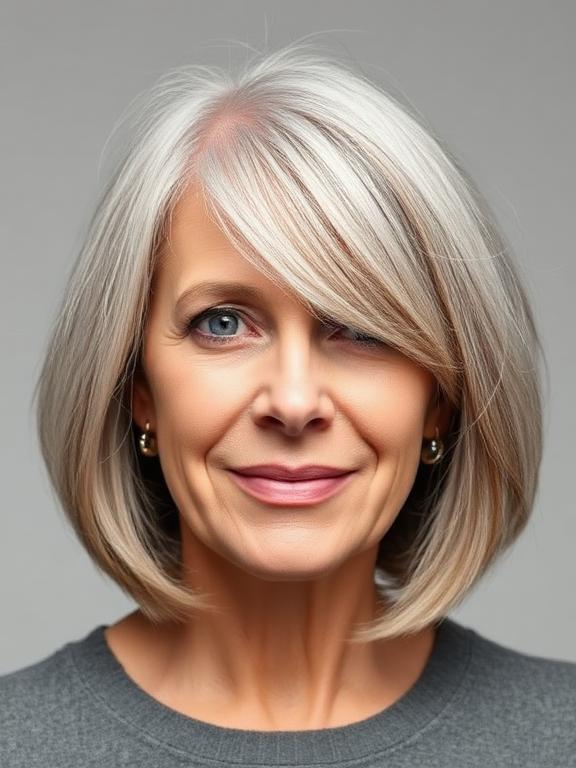
A bob specifically blown out for maximum volume using the right technique looks significantly fuller than the same cut air-dried flat. The blow dry technique, not the density of the hair, is what creates the volume in this style. Fine hair that is blow dried correctly looks dramatically different from fine hair that is not.
Apply a volumising root spray section by section on damp hair and blow dry each section upward with a large round brush. Start at the nape and work toward the crown. The crown section, dried last, retains the most lift because nothing is dried on top of it afterward.
9. Rounded French Bob
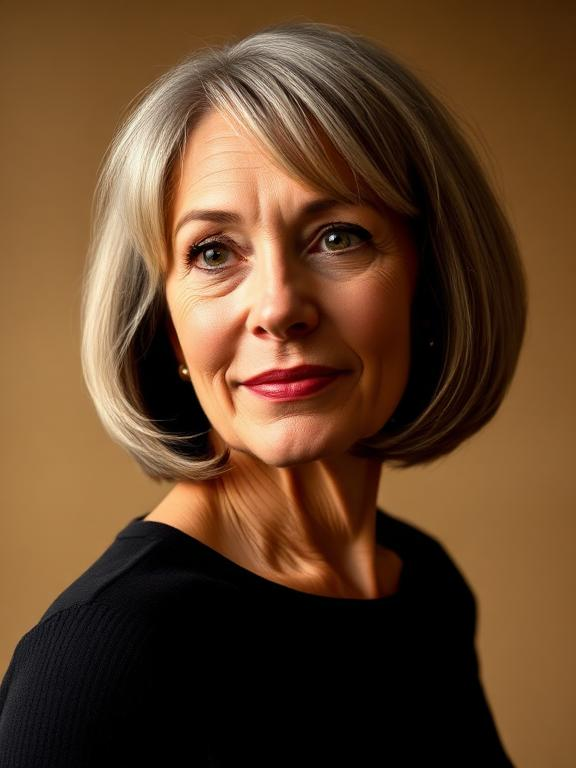
A rounded French bob at jaw length with the ends slightly curving under creates a full, voluminous silhouette that flatters fine hair specifically. The rounded shape at the bottom mimics thickness and gives the cut a polished finish that a straight blunt bob doesn’t achieve on finer hair types.
Create the rounded shape using a large round brush during the blow dry, rolling the ends under in the final section. Hold the heat directed at the ends for a few seconds before releasing. A setting spray applied before drying locks the curve in significantly longer.
10. Short Tapered Cut
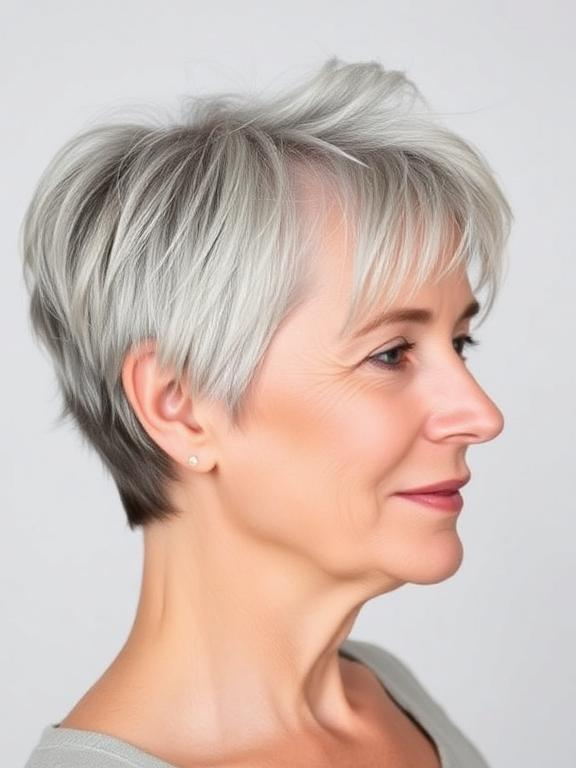
A short tapered cut that is close at the nape and sides with slightly more length and texture through the crown creates a clean, modern silhouette that suits fine hair over 50 particularly well. The taper removes the bulk at the perimeter where fine hair has the least density and concentrates what volume exists at the crown where it matters most.
The taper needs touching up every two to three weeks to maintain its precision. A grown-out taper immediately loses the clean, modern quality that makes it flattering on fine hair. The maintenance schedule is frequent but the daily styling effort is almost nothing.
11. Bob With Face-Framing Highlights
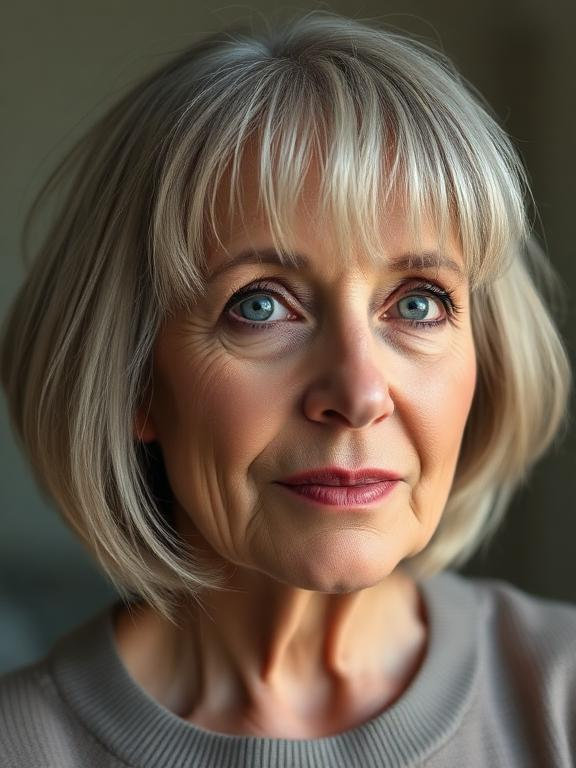
Adding fine babylights through the face-framing sections of a bob creates the optical illusion of thickness. When different sections reflect light differently the eye reads that variation as depth and density. Colour does what styling products often cannot, which is create the genuine impression of more hair.
Ask for fine, closely placed babylights rather than chunky foil sections. Fine highlights blend more naturally and create more dimensional fullness. Chunky highlights on fine hair look striped rather than dimensional and draw attention to the lack of density rather than disguising it.
12. Pixie Bob
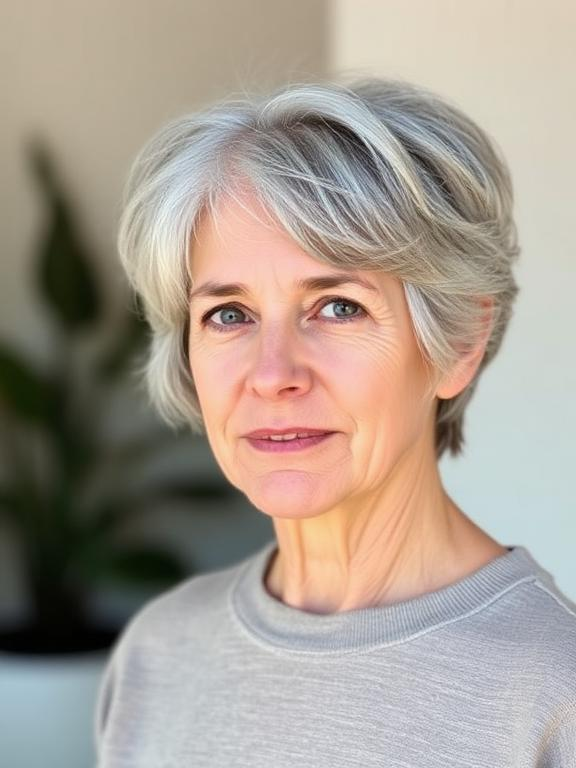
A pixie bob, slightly longer than a traditional pixie but shorter than a standard bob, gives fine hair a length that maximises volume without the styling effort of maintaining a full bob. The in-between length suits fine hair because it removes enough weight to allow natural lift while keeping enough length for a few different styling options.
Style with a lightweight texturising spray on towel-dried hair and diffuse or air dry without further manipulation. The pixie bob’s length suits a genuinely wash-and-go approach on fine hair when the cut is designed around the natural texture and growth pattern.
13. Bob With Invisible Layers
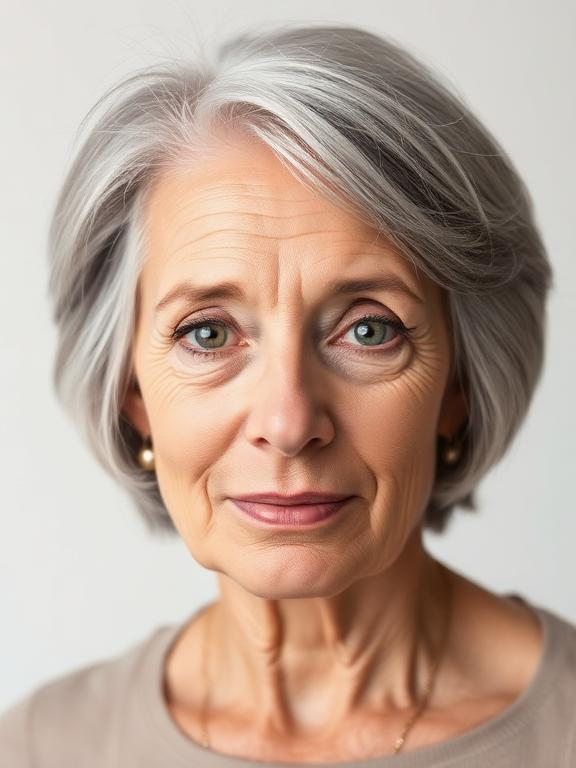
Invisible layers cut underneath the surface of the bob rather than through the visible top sections give fine hair movement and internal lightness without any visible reduction in density. From the outside the bob looks full and blunt. Underneath, there is enough internal texture to prevent it from lying completely flat.
Ask specifically for internal point cutting underneath the surface rather than standard layering through the top sections. This precise technical instruction requires a stylist who understands the goal. A rushed interpretation of this request produces standard layering rather than true invisible internal texture.
14. Wispy Ended Bob
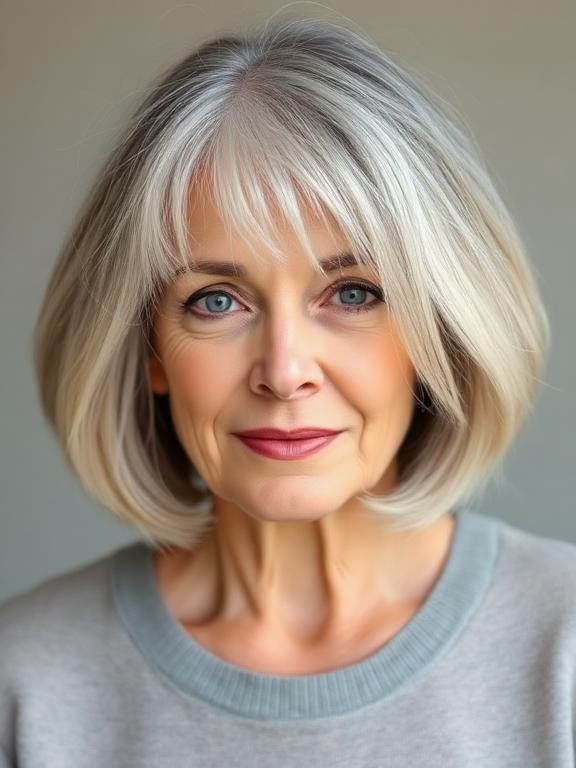
Wispy, softly tapered ends on a bob give fine hair an airy, natural finish that suits the hair type when the body of the cut still carries enough weight. The wispiness reads as delicate and intentional rather than sparse, particularly when the mid-lengths remain relatively full and the thinning is limited to the very tips.
Ask for shear point cutting at the tips only, not through the body of the cut. Razor cutting on fine hair creates ends that split and thin out quickly and unpredictably. Point cutting at the tips achieves the same wispy quality with better long-term condition and more control over the final result.
15. Short Curly Cut
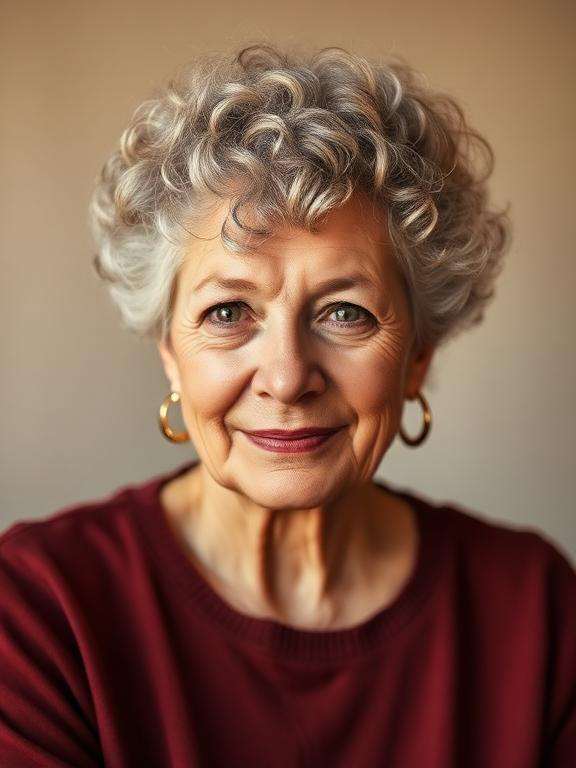
Fine hair that is naturally curly benefits enormously from a short cut that removes the weight pulling the curls flat. At shorter lengths the natural curl has less to fight against and the result is a fuller, more defined curl pattern than the same hair achieves at longer lengths. Fine curly hair at short length often reveals texture that was hidden entirely at longer lengths.
Ask for the cut to be done dry on the natural curl pattern. Cutting fine curly hair wet produces layers that sit completely differently once the curl springs back up on drying. A dry cut ensures every layering decision is made with the actual curl behaviour visible rather than guessed at.
16. Stacked Bob
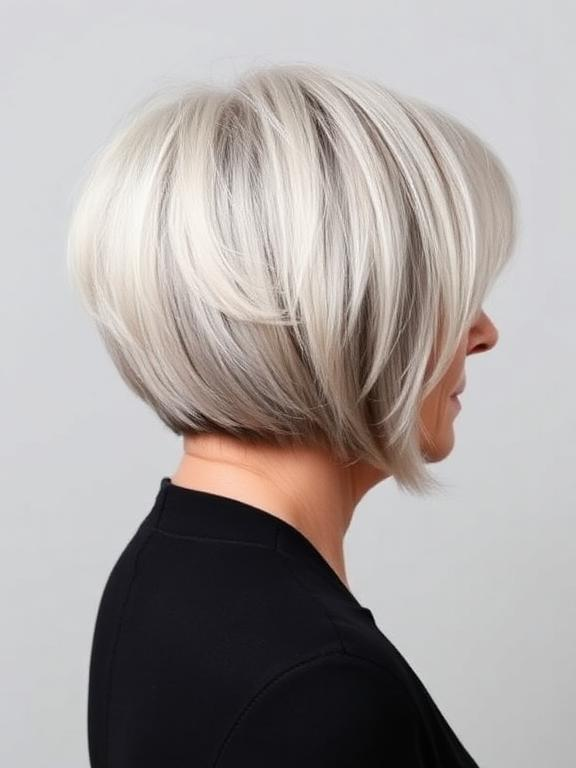
A stacked bob graduates the back upward with stacked layers that create a rounded, full silhouette at the nape while the front sections remain longer. For fine hair over 50 the stacking creates visible volume and structure at the back where fine hair most often looks flat and lifeless. The rounded back silhouette is what makes fine hair look noticeably fuller.
The graduation needs to be steep enough to create genuine stacking rather than simply a slightly shorter back. Ask your stylist to show you the back profile during the cut to confirm the stacking is building the rounded fullness rather than simply reducing the back length uniformly.
17. Short Shag With Bangs
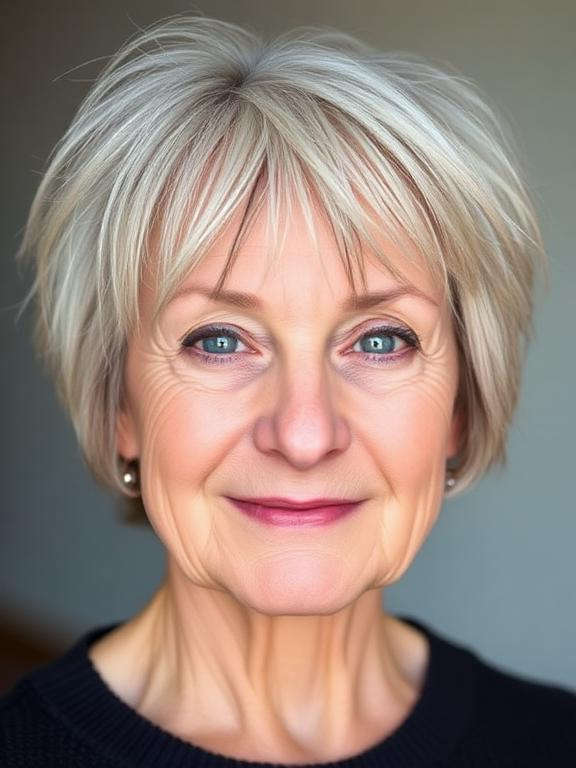
A short shag with wispy bangs on fine hair is one of the most volume-maximising combinations on this list. The shag layers create visual body throughout, the bangs add face-framing movement at the front, and the overall short length ensures the density of the hair never has to do more work than it is capable of doing.
Keep both the shag layers and the bangs lightly cut and wispy rather than dense. Every element of this style on fine hair needs to be adjusted for lower density than the same cut on thick hair. A shag cut as if the hair were thick immediately exposes the fine texture rather than disguising it.
18. Smooth Polished Lob
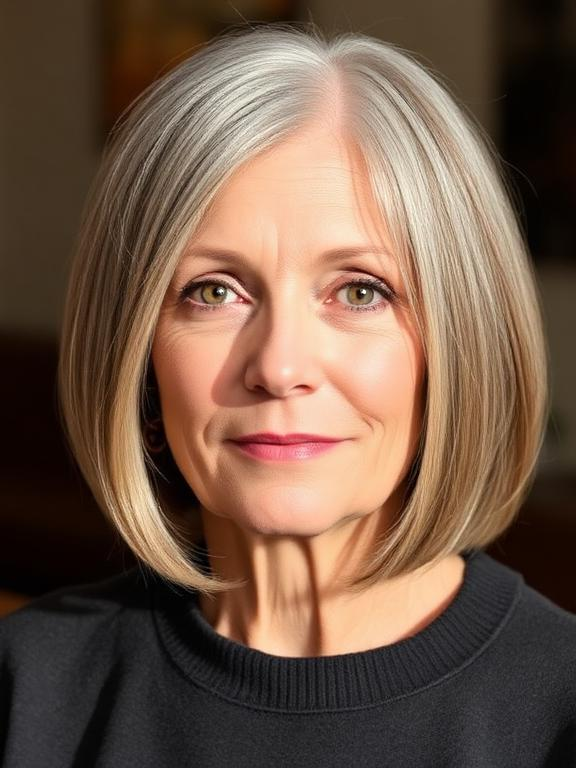
A smooth, polished lob at shoulder length is the longest style on this list and works on fine hair specifically when it is kept one-length or very minimally layered and blow dried for volume rather than worn flat. At this length the fine hair still has enough weight to look full when blow dried correctly.
A boar bristle brush used through the surface of the lob after blow drying distributes natural oils, adds shine, and smooths any remaining flyaways in a single pass. The result looks healthy and intentional without any additional product required.
19. Asymmetric Short Cut
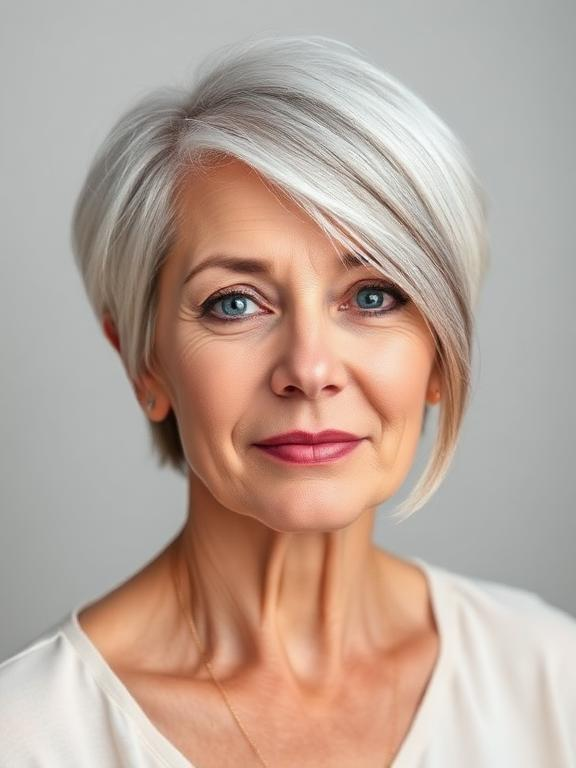
An asymmetric cut with one side longer than the other on fine hair creates a diagonal visual line that draws the eye across the head rather than down, which is a more flattering visual movement and one that makes fine hair appear denser. The asymmetry itself creates visual interest that distracts from the lack of density.
Go for one to two inches of difference between the two sides for the most flattering result. The contrast between the smoother longer side and the slightly more textured shorter side makes the asymmetry immediately readable as deliberate rather than grown out.
20. Low Maintenance Wash-And-Go Bob
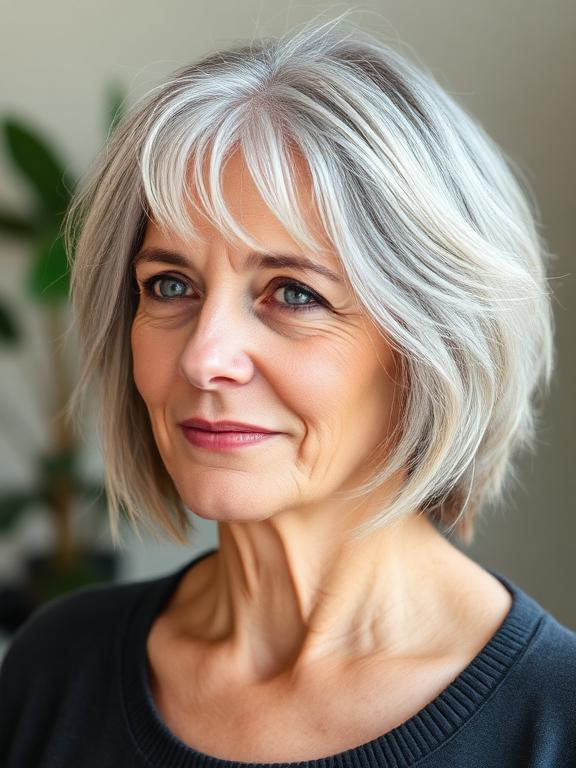
A bob specifically designed to air dry into a wearable, intentional shape on fine hair is the most practical style on this list. The cut is designed around the natural texture and growth pattern so the drying process produces a result that requires nothing further. Fine hair at bob length can genuinely be wash-and-go when the cut is right.
Ask your stylist for a wash-and-go bob designed for your specific natural texture. A bob that requires significant heat styling to look good is not a wash-and-go cut regardless of what it is called. The natural texture must be assessed dry before cutting and respected throughout every layering decision.
FAQs
What short cut is best for fine hair over 50?
A blunt or minimally layered bob is the most consistently flattering cut for fine hair over 50 because the perimeter weight creates visual density that fine hair lacks naturally. For those ready to go shorter, a textured pixie or bixie removes the weight that pulls fine hair flat and creates volume through structure rather than relying on the density of the hair.
Should fine hair over 50 be layered?
Minimally and carefully. Long, gradual layers starting at the collarbone or below add movement without stripping the weight fine hair needs at the perimeter. Short layers above the collarbone remove bulk from exactly where fine hair needs it most. The instruction to give every stylist is: preserve weight at the perimeter and layer with restraint rather than generosity.
What products work best for fine hair volume over 50?
A volumising root spray applied on damp hair before blow drying is the most effective starting point. A lightweight mousse for curly or wavy fine hair and a matte texturising clay for straight fine hair are the two most versatile daily styling products. Avoid anything heavy, oily, or marketed as nourishing near the roots since these flatten fine hair faster than anything else.
How often should fine hair be trimmed over 50?
Every five to six weeks for bob and lob lengths and every three to four weeks for pixie and bixie cuts. Fine hair shows split ends and loss of perimeter weight faster than thick hair, and a clean edge is what keeps short styles on fine hair looking full and intentional rather than scraggly and grown out. Trimming frequency is the most underestimated factor in keeping fine hair looking its best.
Wrapping Up
Fine hair over 50 and the right short cut are a combination that solves most of the frustrations that longer fine hair creates without solving. The volume, the fullness, the low daily effort, and the way the cut frames the face rather than disappearing around it all improve significantly when the length comes up and the cut is approached with the specific needs of fine hair in mind.
Pick the style that genuinely suits your lifestyle and your face shape, communicate the perimeter weight instruction clearly to your stylist, and give the short length a real commitment before judging it. Most women who go short with fine hair over 50 wish they had done it earlier.