18 Layered Bob Hairstyles for Fine Hair
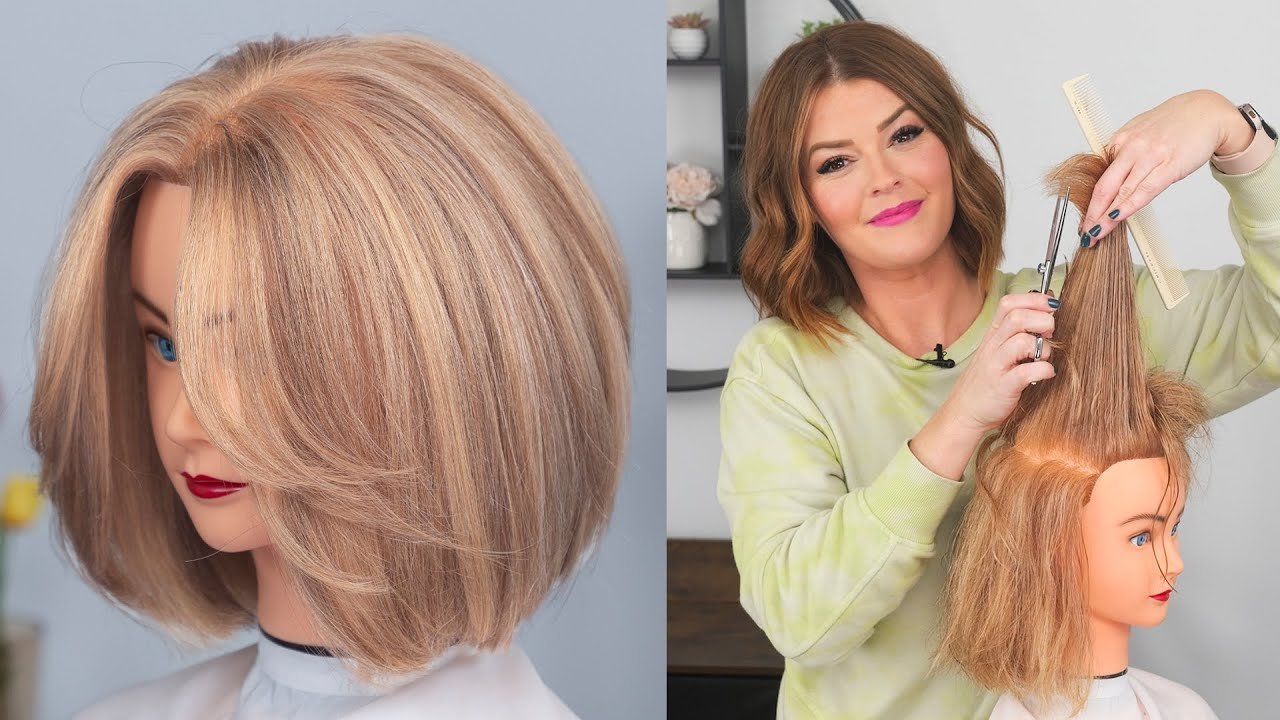
Fine hair and layered bobs have a complicated relationship that most people do not fully understand until they are sitting in the salon chair with a cut that went too thin at the ends. Layers can do a lot for fine hair when they are placed correctly. They can add movement, create volume at the roots, and stop the hair from lying completely flat. But layers in the wrong places, too many of them, too close to the ends, or cut too aggressively, can strip the little density fine hair has and leave the perimeter looking wispy and defeated.
The difference between a layered bob that works for fine hair and one that does not comes down to restraint and placement. Conservative layers through the upper mid-lengths that build root lift without sacrificing end density. Face-framing pieces that add interest without removing bulk from the perimeter. Internal shaping that creates movement without thinning the tips to nothing.
This list covers 18 layered bob hairstyles for fine hair that understand those distinctions and use them to create cuts that look genuinely full, intentional, and flattering without asking the hair to do something it cannot.
1. Blunt Bob with Upper Mid-Length Layers for Fine Hair
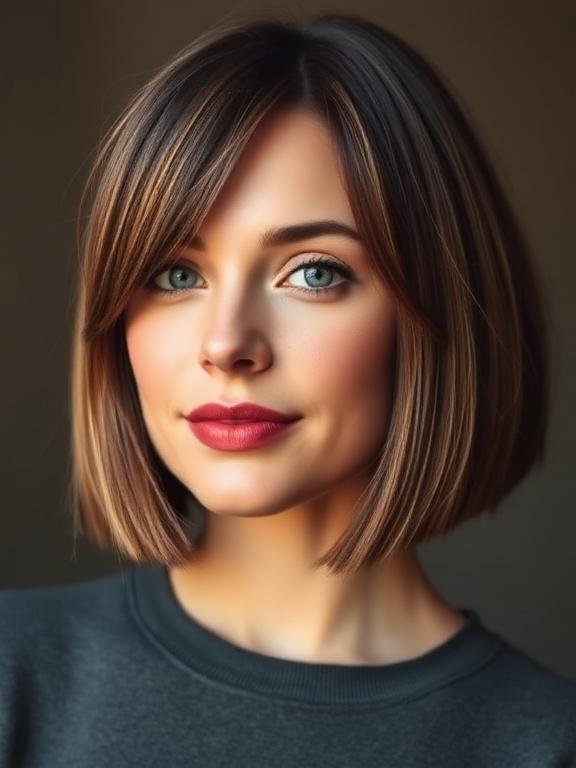
This bob keeps a clean, dense blunt perimeter but adds conservative layering specifically through the upper mid-lengths to create movement and root lift without touching the ends. The blunt perimeter maximizes density where fine hair needs it most, and the upper layers give the cut just enough internal shaping to stop it from lying flat.
Ask for a blunt bob perimeter with conservative layering placed only through the upper mid-lengths to create root lift and movement, leaving the lower mid-lengths and ends completely untouched to preserve as much perimeter density as possible.
2. Face-Framing Layered Bob for Fine Hair
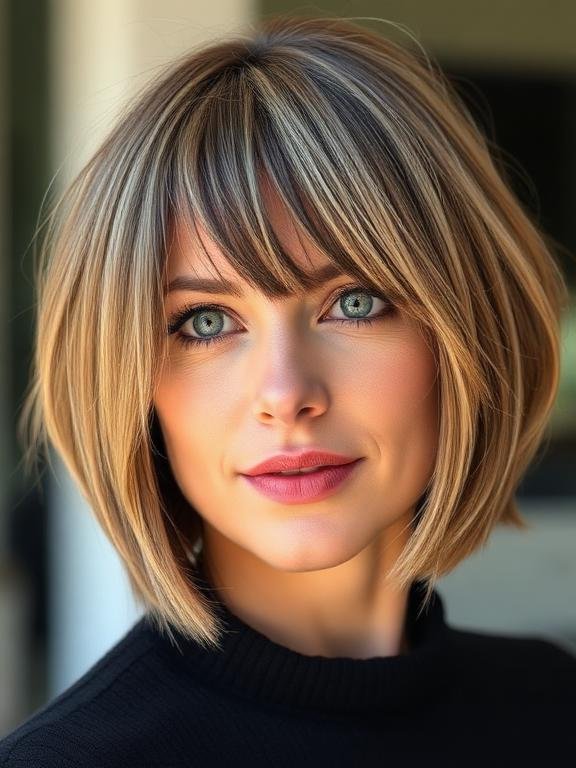
This bob uses layers specifically and only through the face-framing sections, cutting those pieces slightly shorter around the cheekbones to frame the face and add interest at the front. The rest of the bob stays as full and dense as possible, so the face-framing layers do their job without compromising the density through the body of the cut.
Ask for a bob with face-framing layers cut slightly shorter around the cheekbones, blending into the rest of the cut at the sides, with the body and back of the bob kept as full and even as possible for fine hair.
3. Graduated Layered Bob for Fine Hair
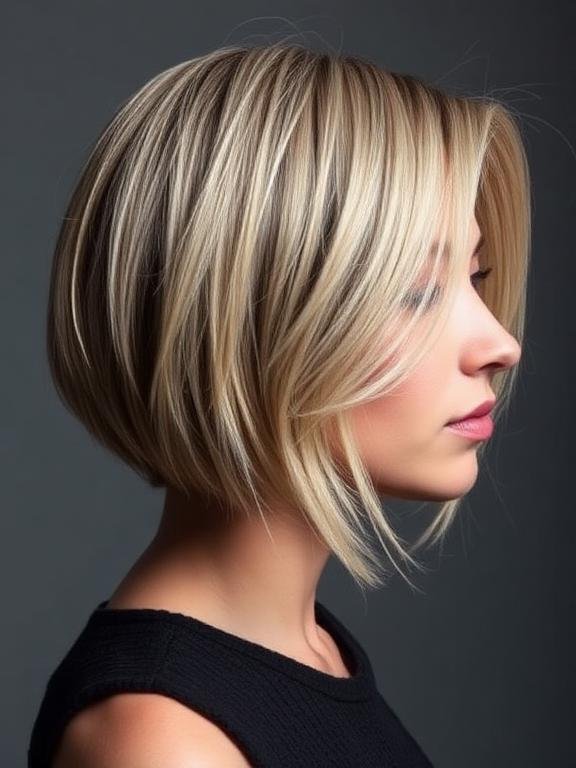
A graduated bob with light interior layering creates structural lift at the back of the head through the graduation itself rather than relying entirely on layers to build volume. For fine hair, this is useful because the graduation does the shaping work while the layering stays conservative, preserving end density while still giving the cut shape and movement.
Ask for a graduated bob with a shorter back and longer front sections, with conservative interior layering that adds movement through the upper mid-lengths without thinning the ends or removing density from the perimeter.
4. Curtain Bang Layered Bob for Fine Hair
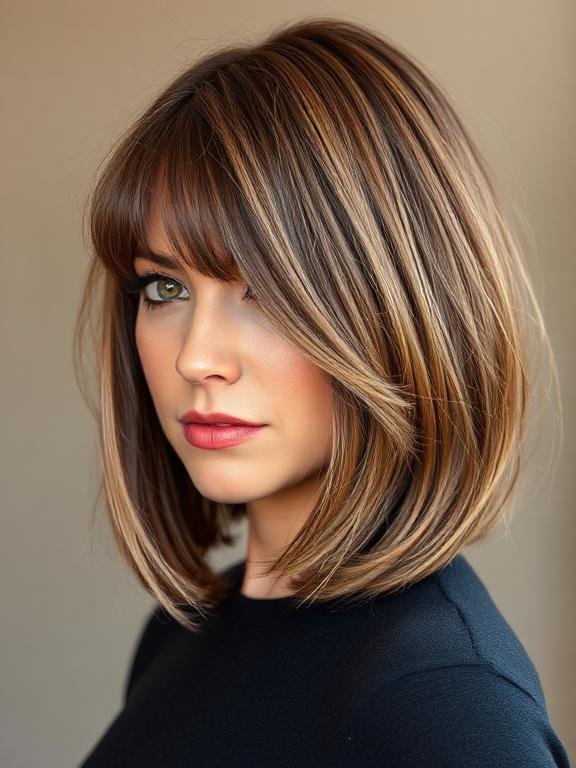
Curtain bangs add a layered element at the front of the cut without requiring aggressive layering through the rest of the bob. For fine hair, this is an efficient approach because the curtain bangs create face-framing interest and some visual fullness at the front, while the body of the bob stays as dense and full as possible underneath.
Ask for a bob with curtain bangs that blend into conservative face-framing layers at the sides, with the body of the bob kept full and the layering through the mid-lengths placed high enough that the ends retain their density.
5. Soft Layered Bob with Wispy Ends for Fine Hair
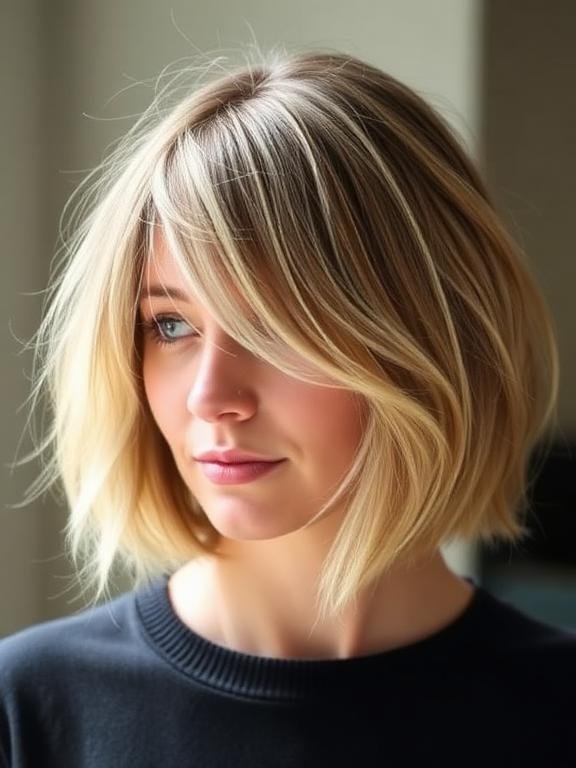
This bob uses very light layering through the mid-lengths combined with minimal point cutting at the very tips to create wispy, softly separated ends rather than a fully blunt edge. The point cutting at the tips adds just enough visual texture to make the bob look more dimensional without removing enough density to make the perimeter look thin.
Ask for a bob with soft conservative layering through the mid-lengths and very light point cutting at the tips only, creating a slightly wispy rather than fully blunt perimeter that adds visual texture while keeping density as high as possible for fine hair.
6. Side-Parted Layered Bob for Fine Hair
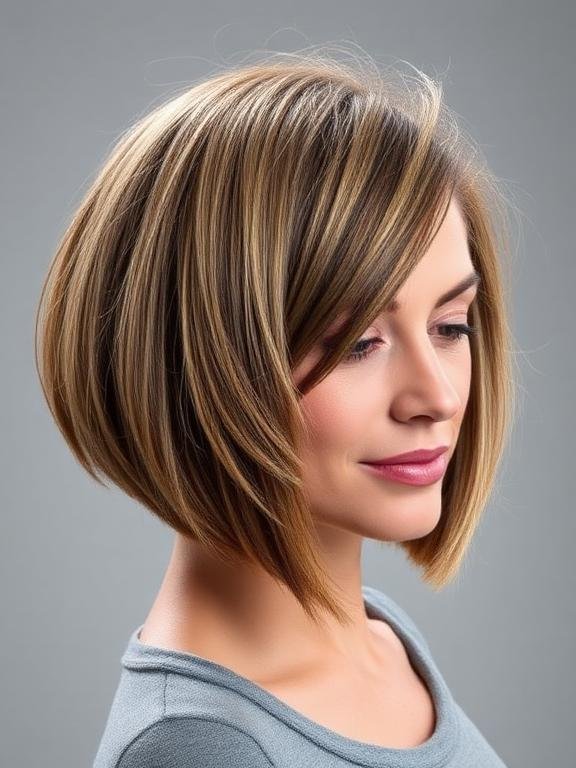
A side part combined with conservative layering through the upper mid-lengths creates two benefits for fine hair at once. The side part creates immediate volume on the heavier side of the part and gives the hair a clear direction, and the upper layering encourages root lift through the crown, where fine hair goes flattest. The ends stay blunt and dense.
Ask for a bob with a defined side part and conservative upper mid-length layering that encourages crown volume and root lift, with a blunt or minimally textured perimeter that keeps the fine hair as dense and full as possible at the ends.
7. Textured Layered Bob for Fine Hair
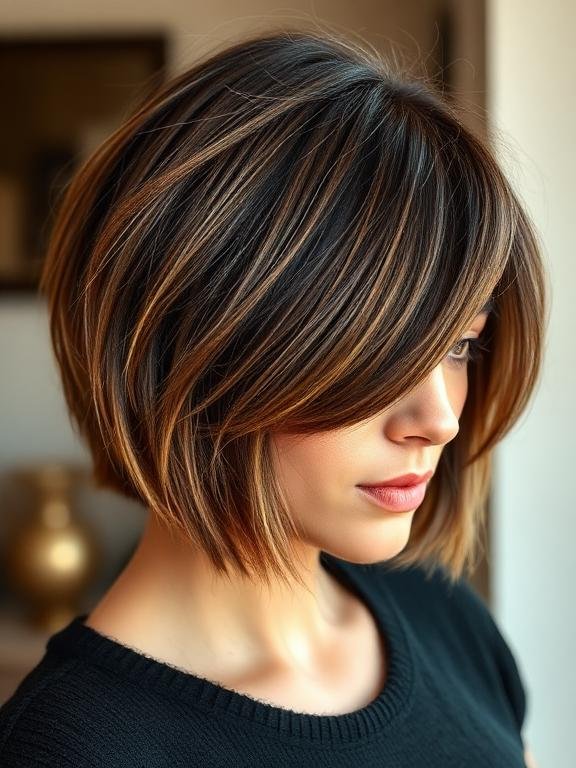
This bob uses point cutting through the mid-lengths to create visible texture and movement that makes fine hair look more dimensional than it is. The point cutting creates small, irregular breaks in the hair that separate and catch light differently, giving the impression of more strands and more density without actually adding any.
Ask for a bob with point-cut texturing through the mid-lengths that creates visible movement and dimension, with the layering placed high enough that the ends of the bob retain as much density as possible for fine hair.
8. Stacked Layered Bob for Fine Hair
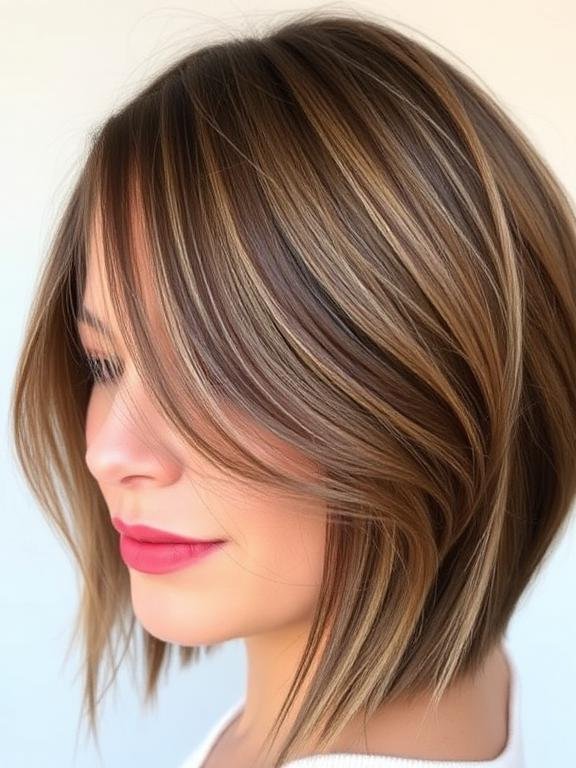
A stacked bob concentrates the layering at the back of the head to build crown volume through structure rather than through the density of the hair. For fine hair, this is an effective approach because the stacking creates a shape and lift that the hair itself cannot generate, and the front sections can stay longer and denser to frame the face and preserve perimeter fullness.
Ask for a stacked bob with close layering at the back that builds crown lift and volume, longer and fuller front sections that frame the face, and a perimeter kept as dense as possible for fine hair.
9. A-Line Layered Bob for Fine Hair
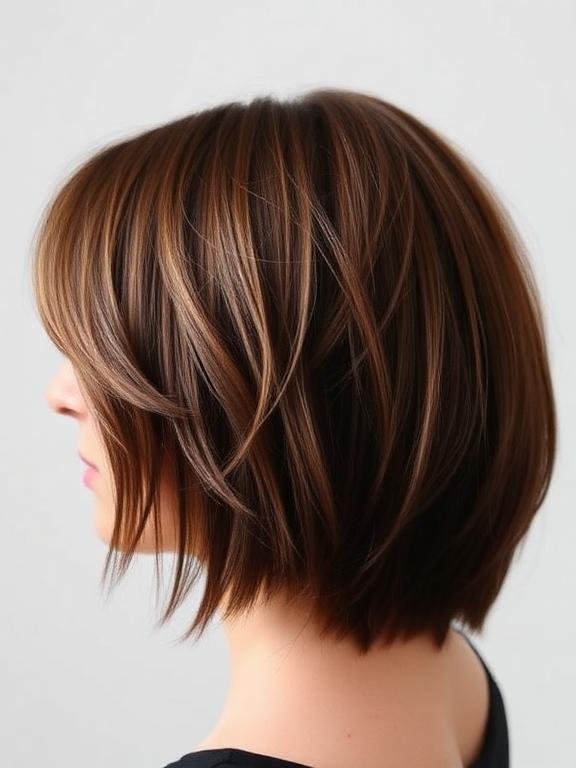
The A-line angle of this bob creates a built-in vertical line that adds length and movement to the style through the shape itself rather than through heavy layering. For fine hair, this is ideal because the structural work of the A-line means the layering can stay very conservative, preserving the density at the perimeter while still giving the cut a dynamic, interesting shape.
Ask for an A-line bob with a shorter back and longer front sections and conservative interior layering through the upper mid-lengths only, keeping the perimeter as full as possible for fine hair, while the angle of the cut provides the shape and movement.
10. Feathered Layered Bob for Fine Hair
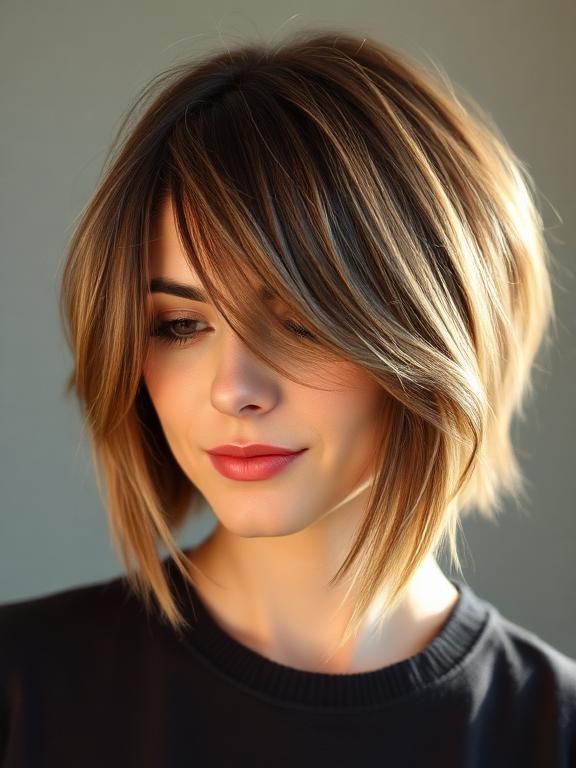
Feathered layering applied very conservatively through the outer mid-lengths of a bob adds a soft, airy quality to fine hair without removing significant density from the perimeter. The feathering is more gradual than sharp layering, which means it diffuses weight gently rather than creating abrupt changes in density that can make fine hair look thin.
Ask for a bob with very conservative feathered layering applied only through the outer mid-lengths, graduating gently toward the ends without creating sharp breaks in density or thinning the perimeter enough to make the fine hair look scraggly.
11. Layered Bob with Root Lift Layers for Fine Hair
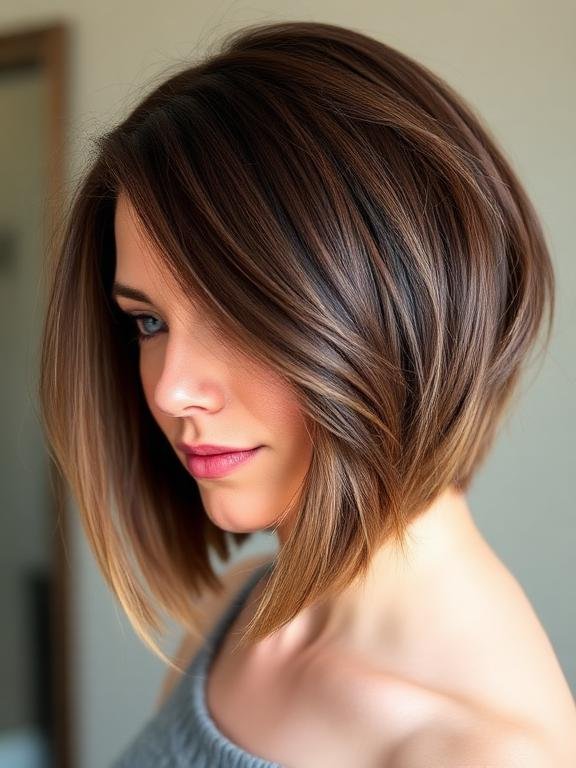
This bob places its layers specifically at the roots and upper sections to encourage maximum lift at the base, where fine hair goes flattest through the day. The lower mid-lengths and ends are left untouched to preserve density at the perimeter. The result is a bob that holds more volume at the crown throughout the day than a standard bob without root-specific layering.
Ask for a bob with layering placed specifically at the roots and upper sections to encourage crown lift and volume, leaving the lower mid-lengths and ends completely untouched to preserve perimeter density for fine hair.
12. Choppy Layered Bob for Fine Hair
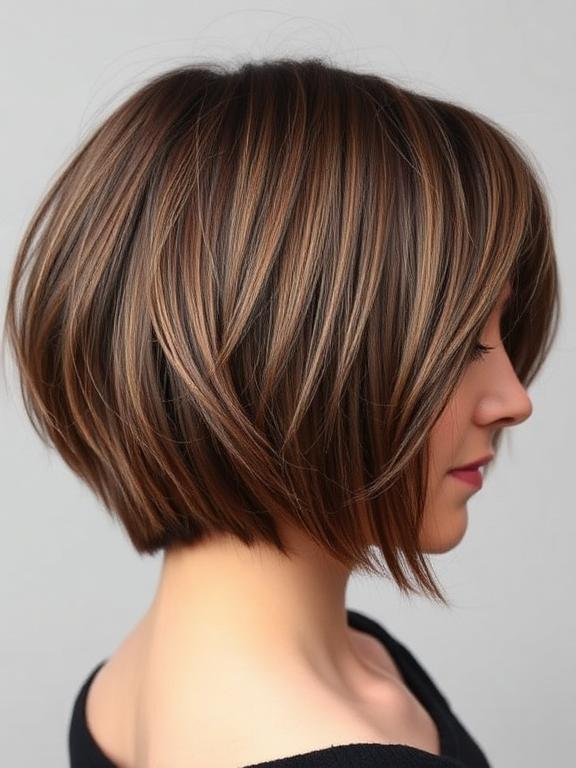
A choppy bob uses deliberate, visible texture through the ends to create the impression of more volume and density than fine hair naturally has. For fine hair, the choppiness needs to be applied conservatively, with enough texture to add visual interest without removing so much from the perimeter that the ends look thin and separated negatively.
Ask for a bob with choppy, visible texture through the ends applied conservatively enough that the perimeter still looks full and intentional rather than thin and wispy, with layering through the upper mid-lengths that supports the choppy finish at the bottom.
13. Layered Bob with Babylights for Fine Hair
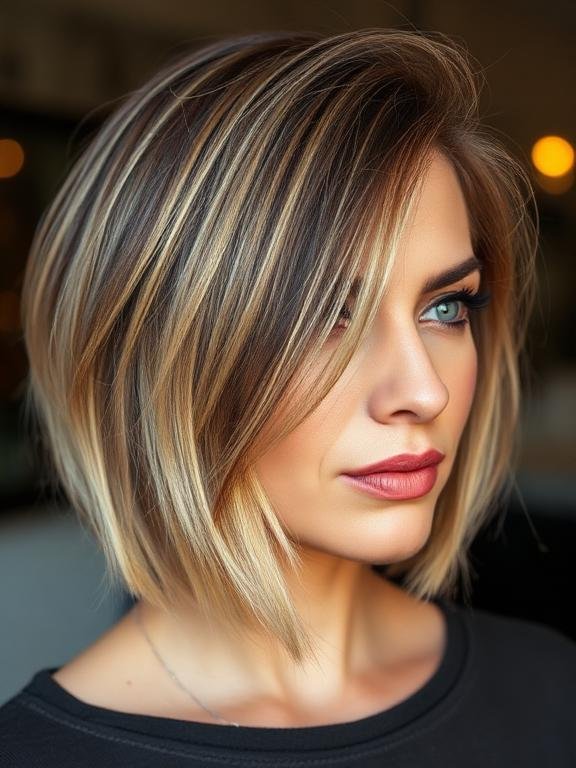
Babylights are very fine, closely placed highlights that add diffused brightness and visual dimension to fine hair without an obviously highlighted appearance. For a layered bob on fine hair, babylights add the impression of more depth and texture than the cut alone can achieve, making the hair look thicker and more dimensional in a way that works with the conservative layering rather than competing with it.
Ask for a layered bob with babylights through the mid-lengths and ends that add diffused brightness and dimension to fine hair, paired with conservative upper mid-length layering that preserves as much end density as possible.
14. Layered Bob with Side Sweep and Full Ends for Fine Hair
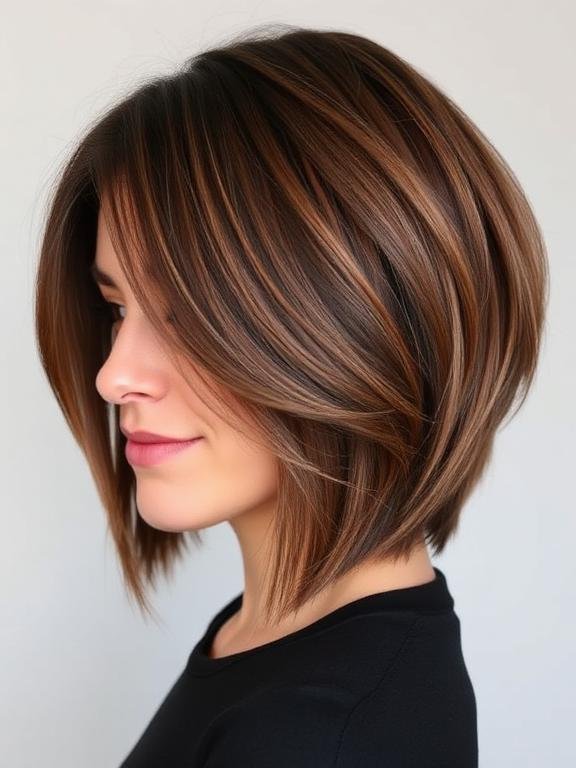
This bob uses a side sweep through the front to create directional movement and the impression of volume on one side, while the layering through the upper mid-lengths adds root lift at the crown. The ends are kept as full and blunt as possible so that the density at the perimeter compensates for the fine hair type throughout the rest of the style.
Ask for a bob with a side sweep through the front section, blending into conservative upper mid-length layering, with the ends kept full and as close to blunt as possible to preserve the perimeter density that fine hair needs.
15. Wavy Layered Bob for Fine Hair
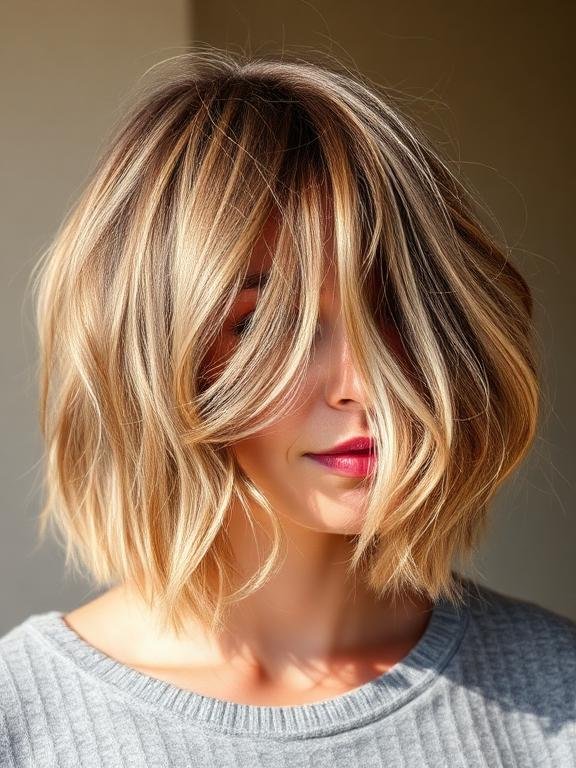
This bob is designed for fine hair with a natural wave or a willingness to create one with a wand or roller. The layers are placed to support and encourage the wave rather than override it, positioned through the mid-lengths where the wave pattern needs the most help to form and hold without the weight of unlayered hair pulling it flat.
Ask for a bob with layering placed through the mid-lengths specifically to support natural wave movement, with the lower sections kept fuller to give the wave something to work with at the ends, and the perimeter kept dense enough that the fine hair does not look thin when the wave forms.
16. Inverted Layered Bob for Fine Hair
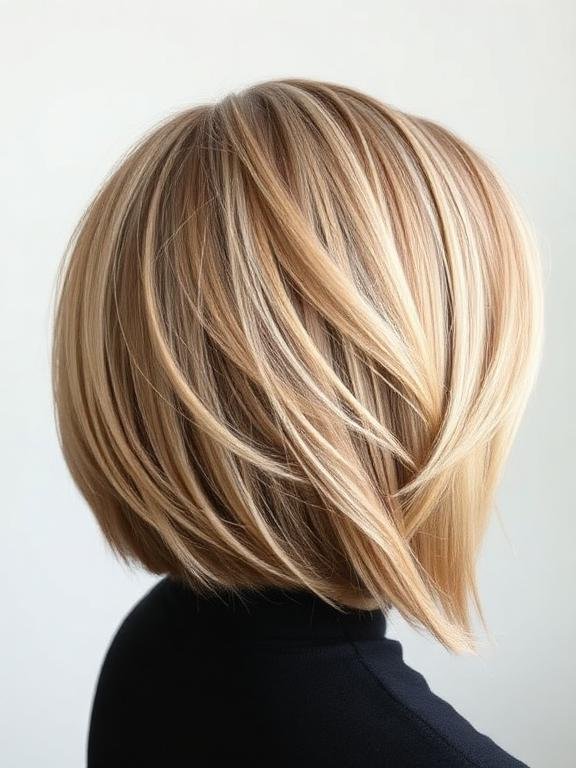
An inverted bob is cut shorter at the back than the front with a strong angle between the two. For fine hair, the inversion is useful because the shorter back section maximizes density and lift at the nape, while the longer front sections preserve length and fullness around the face. Conservative interior layering adds movement without compromising either benefit.
Ask for an inverted bob with a strong angle between a shorter back and longer front, with conservative interior layering through the upper mid-lengths of both sections that adds movement without thinning the fine hair at the perimeter of either length.
17. Layered Lob with Blunt Perimeter for Fine Hair
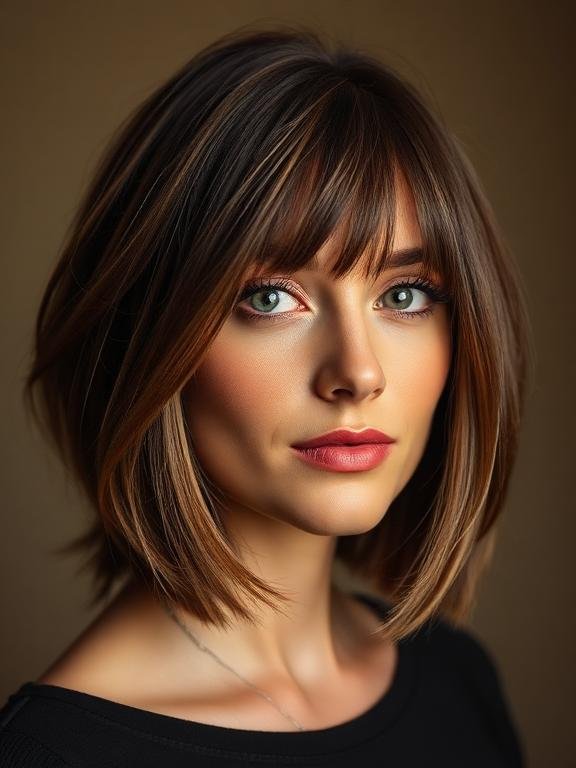
This sits at the longer end of the bob category, landing around the collarbone with a blunt perimeter and conservative interior layering that adds movement without sacrificing end density. For fine hair, a lob length gives the blunt perimeter more visual presence than a shorter bob because there is more length for the fullness to register as the eye travels down.
Ask for a collarbone-length lob with a blunt perimeter and conservative interior layering through the upper and mid-lengths that adds movement and root lift without thinning the lower mid-lengths or ends, where the fine hair needs density most.
18. Layered Bob with Strategic Thinning for Fine Hair
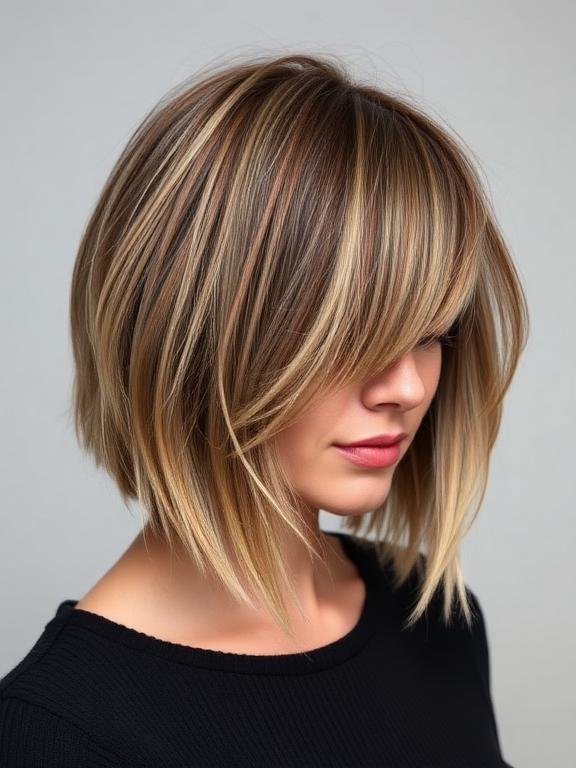
This bob uses thinning applied only at the points where fine hair most needs it, rather than through the whole cut. Light thinning at the crown encourages root lift and reduces any flatness at the top, while the mid-lengths and ends are left completely untouched to preserve the density that fine hair needs at the perimeter. The result is a bob that moves and sits better without sacrificing fullness where it counts.
Ask for a bob with strategic thinning applied only through the crown to encourage root lift and movement, leaving the mid-lengths and ends completely untouched to preserve as much perimeter density as possible for fine hair.
FAQs
How many layers should a bob for fine hair have?
Fewer than most people expect. Fine hair benefits from conservative, targeted layering rather than multiple layers running through the whole cut. One or two layers placed through the upper mid-lengths to create root lift and movement, combined with a full dense perimeter, will almost always produce a better result for fine hair than a heavily layered bob that thins the ends.
Is a layered bob or a blunt bob better for fine hair?
Both can work, but they work in different ways. A blunt bob maximizes end density and is the most reliable choice for very fine or thin hair. A layered bob adds movement and root lift that a blunt bob does not have, but requires careful placement to avoid thinning the ends. The best approach for many women with fine hair is a hybrid, a mostly blunt perimeter with conservative upper layering that adds movement without compromising the density at the tips.
Can fine hair have a choppy bob?
Yes, when the choppiness is applied conservatively. Fine hair can carry a choppy finish at the ends when the choppiness creates visual texture rather than actually removing significant density. Point cutting through the tips rather than heavy layering through the whole perimeter is the technique that gives fine hair a choppy look without making it thin.
What is the biggest mistake stylists make when layering fine hair in a bob?
Layering too close to the ends and removing too much density from the perimeter. Fine hair needs its density concentrated at the tips as much as possible. When layers are cut through the lower mid-lengths and ends, they strip the little fullness fine hair has at the perimeter and leave it looking thin and wispy. Layering for fine hair should stay in the upper sections and mid-lengths, where it adds lift without removing end density.
How often does a layered bob for fine hair need trimming?
Every six to eight weeks. Fine hair shows split ends and perimeter thinning earlier than thicker hair, and a layered bob on fine hair especially needs regular trims to keep the ends looking healthy and full. Waiting too long between trims can make the fine hair look scraggly at the tips, which undoes the work the conservative layering is doing to create the impression of more density.
Wrapping Up
A layered bob for fine hair is not about adding as many layers as possible and hoping the movement makes up for the lost density. It is about using layering precisely and conservatively, putting it only where the hair needs lift and movement, and keeping it away from the places where fine hair needs every strand it can hold onto.
The 18 styles on this list approach that balance from different angles. Some rely on structural elements like graduation or an A-line angle to do the shaping work, so the layering can stay minimal. Others use color to add the dimension that layering might remove, too much density to achieve. All of them understand that fine hair needs a bob that works with its limitations rather than pretending they do not exist.