17 Bandana Hairstyles for Braids
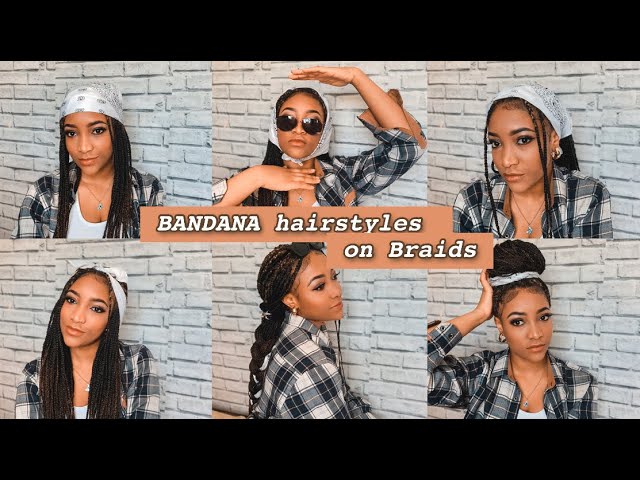
Bandanas and braids belong together in a way that feels completely natural. Both have texture. Both have pattern. Both carry cultural history. When they work together the result is layered and personal in a way that neither achieves independently. A bandana on box braids reads differently from the same bandana on straight hair. The braid texture adds dimension and the bandana adds color and intention simultaneously.
What makes braids specifically interesting as a bandana base is the structure. Braids have their own pattern and their own visual weight. The bandana needs to work with that existing pattern rather than competing with it. A bandana that fights the visual weight of thick box braids looks chaotic. A bandana that complements the braid texture and works with the overall silhouette creates something genuinely cohesive and striking.
Fabric choice matters more with braids than with any other hair type. A thin, lightweight bandana gets lost against the texture of thick braids. A bold, graphic pattern competes with the braid pattern. A rich solid color or a subtle pattern in a complementary tone tends to work best across most braid styles.
1. Box Braids with Hairline Wrap
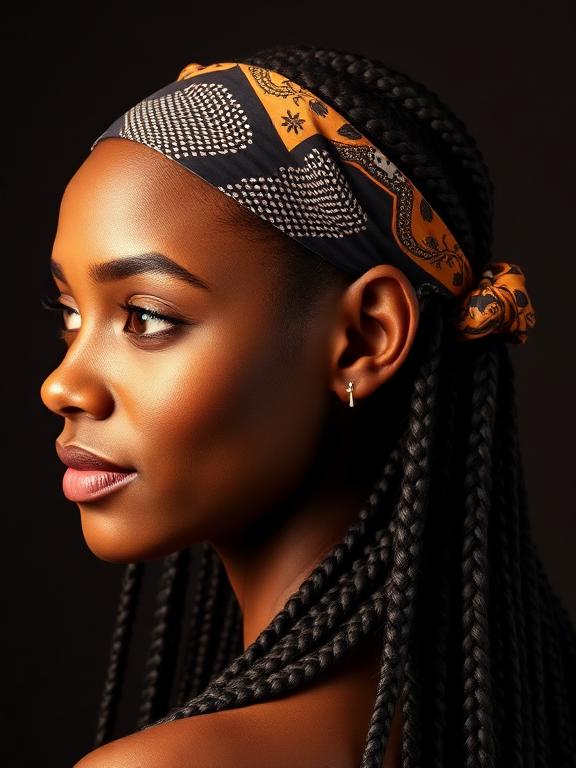
A narrow bandana folded into a strip and tied across the hairline in front of box braids that fall freely behind. The braids cascade from beneath the fabric and the bandana creates a clean, deliberate border between the forehead and the braid volume above and behind it. Simple and immediately striking.
Tie the knot at the back or side where it sits neatly between the braids rather than on top of them. The braid volume at the back naturally conceals the knot which creates a cleaner, more finished result than the same placement on non-braided hair.
2. Knotless Braids with Side Knot
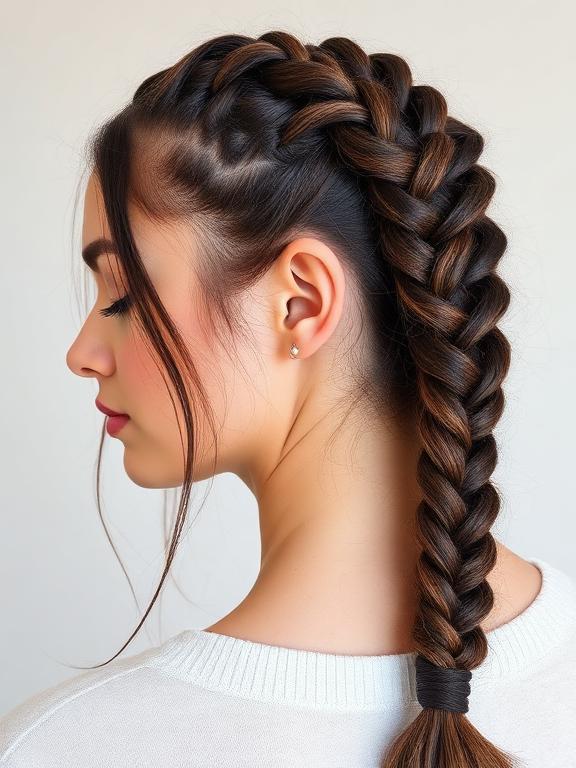
A bandana folded into a medium strip and tied at one side with the knotless braids worn down freely around it. The side knot sits just above or in front of one ear and the braids fall on both sides of the fabric. The asymmetric placement creates direction and personality that a centered placement would not.
Let the bandana ends hang loose below the knot rather than tucking them in. The hanging fabric ends add a deliberate accessory detail that suits the relaxed, natural quality of knotless braids particularly well.
3. Bandana with Braided Updo
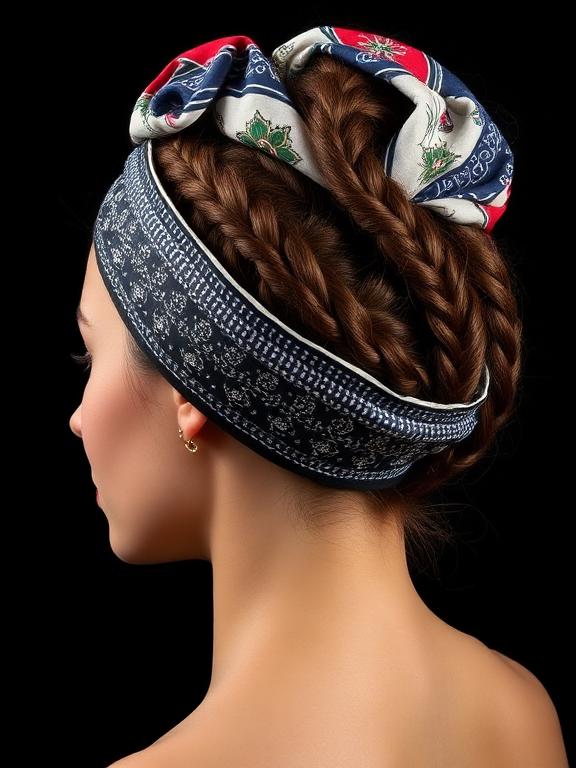
A bandana incorporated into a braided updo where the fabric wraps around the gathered braid sections at the crown or nape. The braids are gathered and the bandana wraps around the gathering point rather than around loose hair, which creates a much more secure placement because the structured braid sections hold the fabric firmly in place.
Use a wider fold for this placement because the braid volume at the gathering point needs more fabric to wrap around than a gathering of loose hair would. The bandana should wrap around the full gathered braid section at least twice before knotting.
4. Cornrows with Bandana Headband
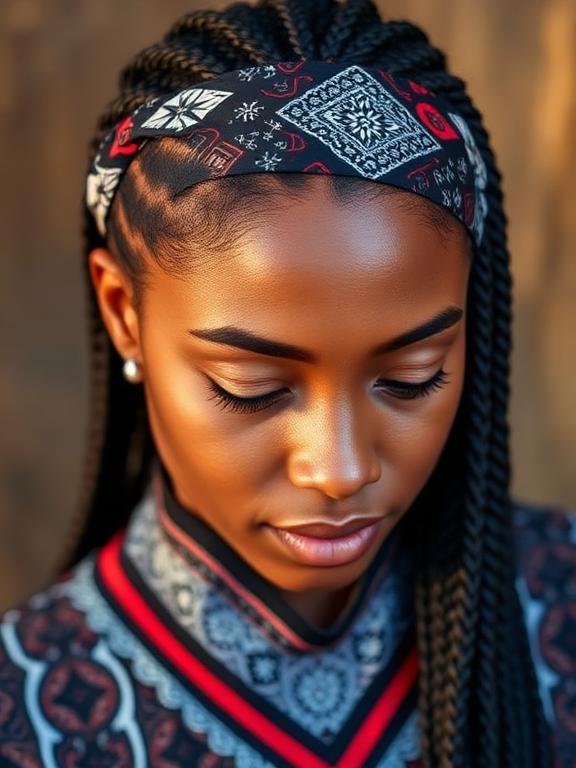
A bandana as a headband across the hairline in front of cornrows that run from the front hairline toward the back. The bandana sits at the very front of the cornrow pattern and creates a fabric border at the beginning of the graphic braid lines that extends back through the hair. The two patterns, the bandana and the cornrows, exist in complementary layers.
The bandana placement here needs to be precise and low at the hairline so the beginning of the cornrow pattern is visible above the fabric. The cornrow lines running back from the hairline read most graphically when the fabric does not cover their starting point.
5. Bandana Tied in Braids
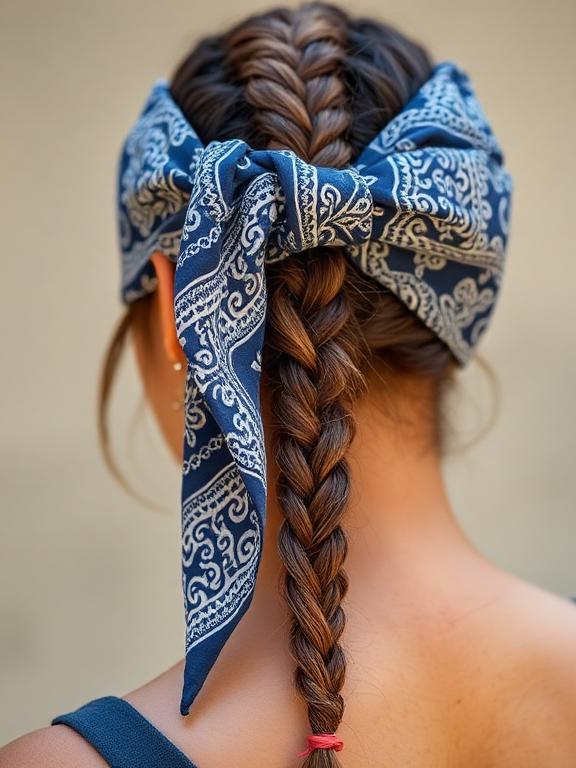
A narrow bandana or ribbon tied directly into one or more of the braids during the braiding process so the fabric becomes part of the braid structure itself. The fabric threads through the braid at intervals and the color or pattern appears at the surface of the braid throughout its length.
This requires incorporating the bandana during the installation rather than afterward. Ask the braiding stylist to weave a narrow strip of fabric into specific braids during the braiding process. Two or three braids with incorporated fabric and the rest left natural creates the most deliberate, curated result.
6. Box Braids High Puff with Bandana
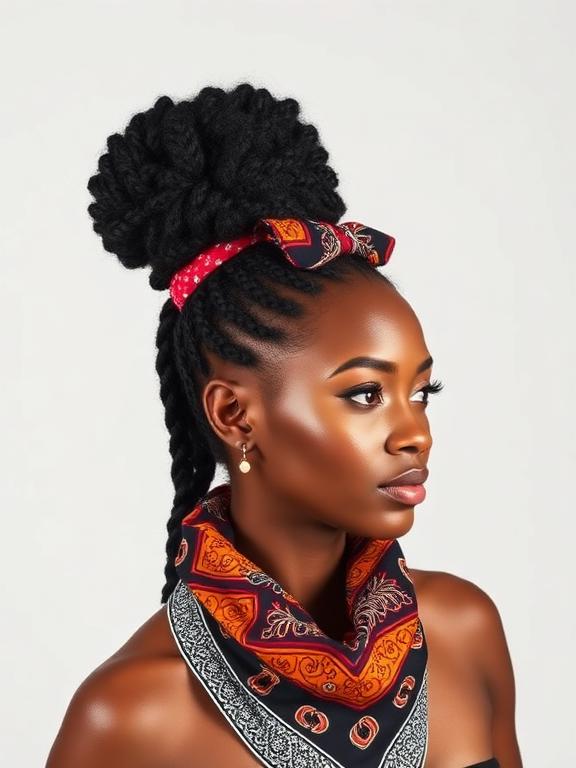
Box braids gathered into a high puff or pineapple shape at the crown with a bandana wrapped around the base of the gathered puff rather than across the hairline. The puff sits above the bandana and the fabric wraps around the gathering point creating a colorful, deliberate base for the voluminous braid puff above.
The gathered braid sections need to be secured with an elastic before the bandana is wrapped around them. The elastic does the structural work. The bandana wraps over the elastic and does the decorative work. The combination creates a braid updo with a genuinely considered finishing detail.
7. Passion Twists with Bandana Wrap
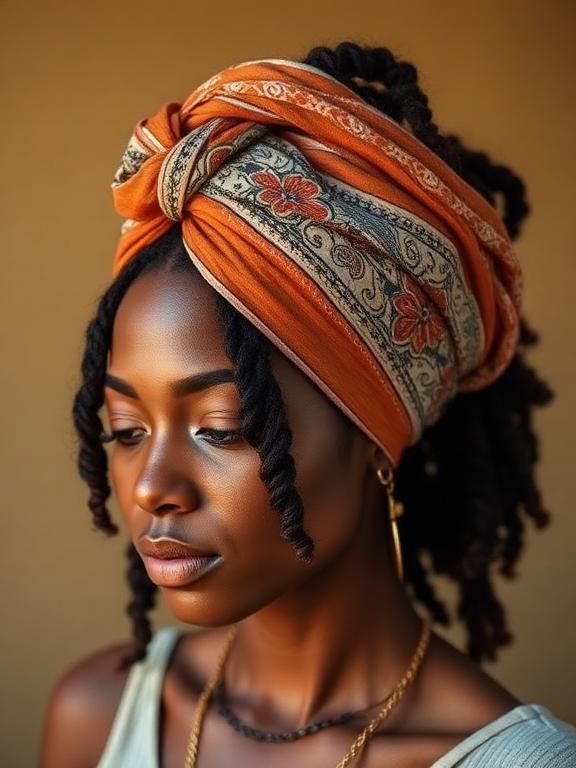
A bandana wrapped around the crown of passion twists with the softer, more bohemian texture of the passion twists visible above and below the fabric. The wrapped fabric and the fluffy, textured passion twist quality create a particularly beautiful combination because the softness of the twist texture contrasts with the crispness of the fabric.
Use a solid-colored bandana rather than a heavily patterned one with passion twists. The passion twist texture already has significant visual complexity and a busy bandana pattern competes rather than complements. A rich solid color adds decoration without visual chaos.
8. Senegalese Twists with Side Tie
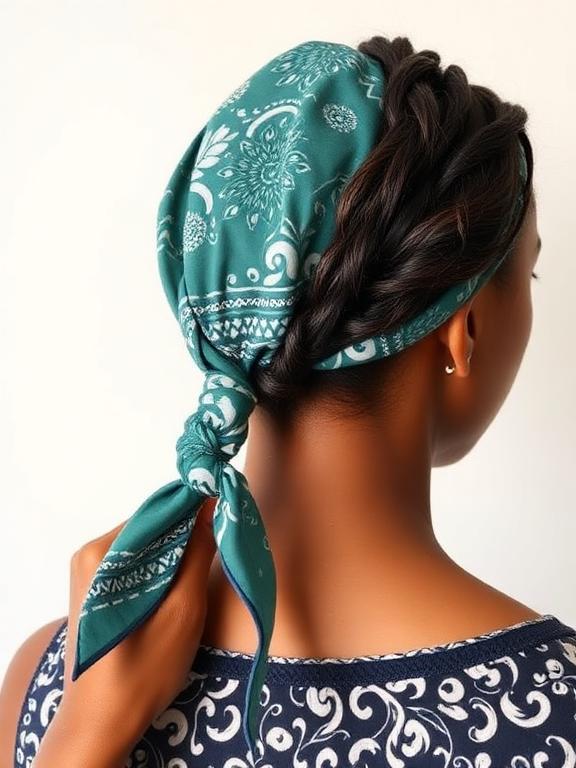
A bandana folded into a narrow strip and tied at one side with Senegalese twists worn down. The smooth, rope-like quality of Senegalese twists and the fabric sit in an interesting textural contrast that makes the bandana more visible than it would be against rougher braid textures.
The smooth surface of Senegalese twists means the bandana can sit more precisely than it would on textured braids. The placement can be more deliberate because the smooth twists do not disrupt the fabric position the way a rougher braid texture might.
9. Bandana with Fulani Braids
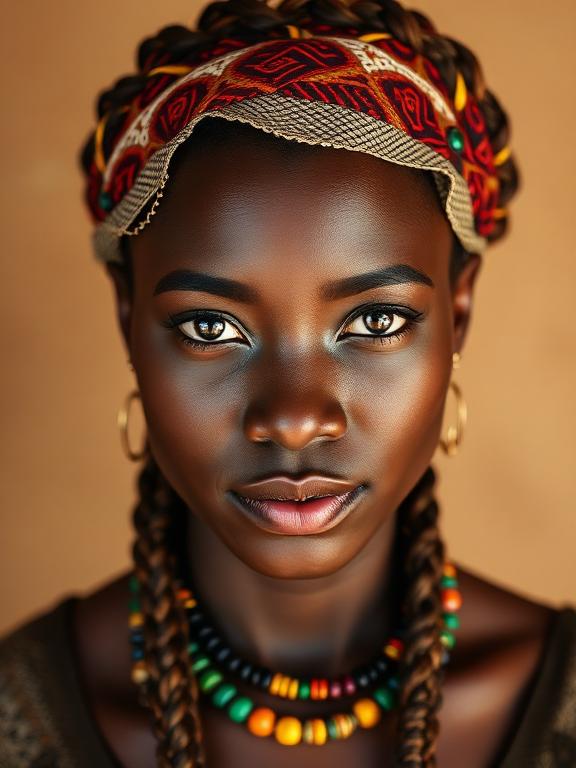
Fulani braids, which traditionally incorporate beads and accessories into the braid pattern, are a natural partner for bandana styling because the Fulani aesthetic already celebrates deliberate adornment and personal accessories. A bandana worn across the hairline in front of Fulani braids extends the accessory tradition of the style.
Choose a bandana that complements the color of any beads already incorporated into the Fulani braid pattern. The bandana should feel like part of the same deliberate accessory approach rather than a separate, unrelated element added on top.
10. Locs with Bandana Headband
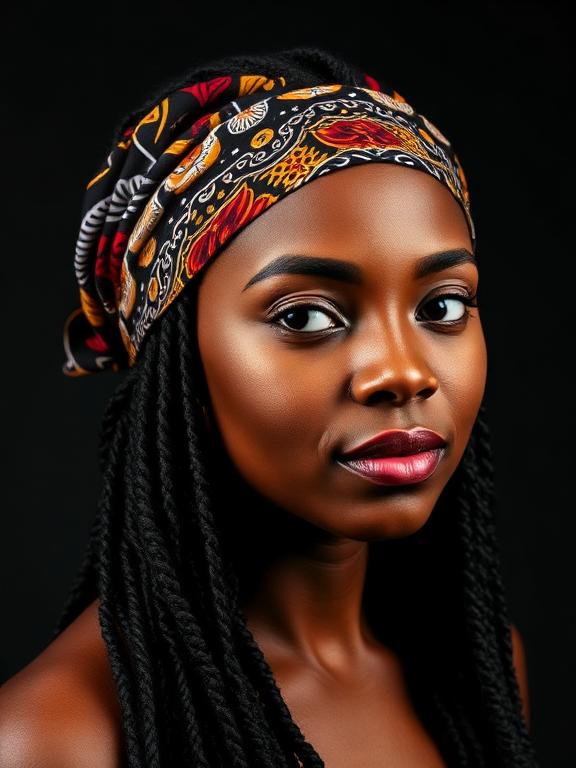
A bandana tied as a headband across the hairline in front of locs that fall or are gathered behind the fabric. The weight and texture of locs against the fabric creates one of the most striking bandana placements on braided or loc styles because the visual weight of the locs is substantial enough to balance a boldly patterned bandana.
A bold Ankara or African-print fabric works particularly well with locs because the cultural resonance of both elements creates a cohesive personal aesthetic. The locs behind and the patterned fabric at the front create a complete, considered style.
11. Braided Ponytail with Bandana
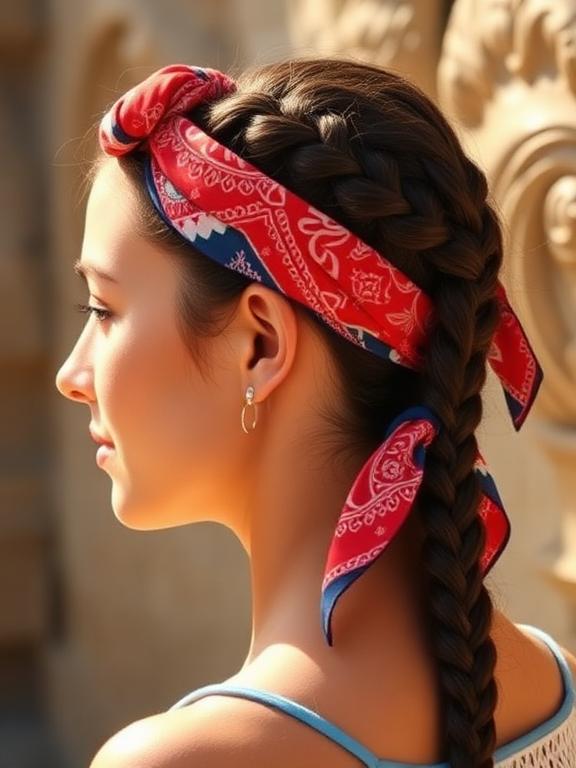
A braided ponytail gathered at the nape or mid-head with a bandana wrapped around the gathering point and tied in a bow or knot. The braid length falls below the fabric tie and the bandana wraps around the structured braid gathering rather than loose hair, creating a more secure and more deliberate result than the same placement on a non-braided ponytail.
The braid structure at the gathering point holds the bandana firmly without slipping. A wider fabric tie suits a thick braided ponytail in better proportion than a very narrow strip that would look small against the volume of gathered braids.
12. Bandana Across Braided Bun
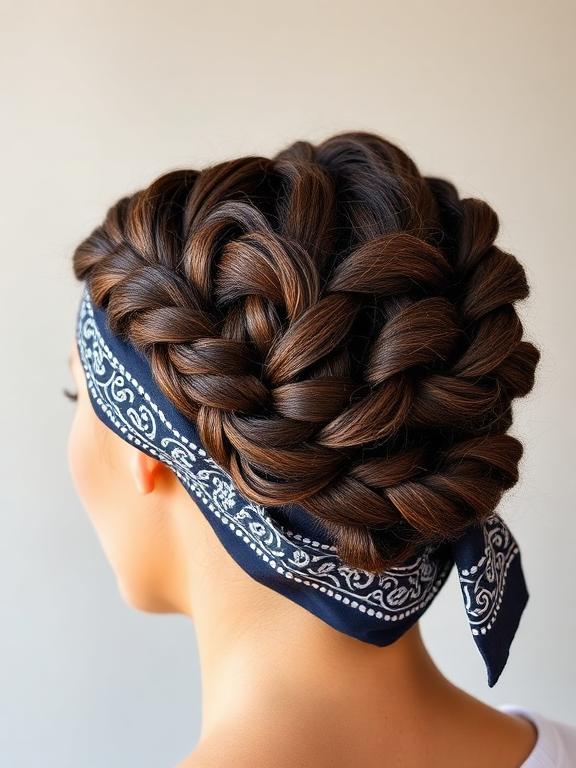
A braided bun created from box braids or knotless braids with a bandana wrapped around or across the bun itself rather than around the gathering point below it. The fabric wraps around the bun body and the braid texture of the bun shows above and below the wrapped fabric section.
Use a longer bandana or tie two bandanas together if the braid bun is very full. The braid volume of a bun made from full box braids is significantly larger than a bun made from loose hair and the bandana needs to be long enough to wrap around the full circumference comfortably.
13. Half-Up Braids with Bandana
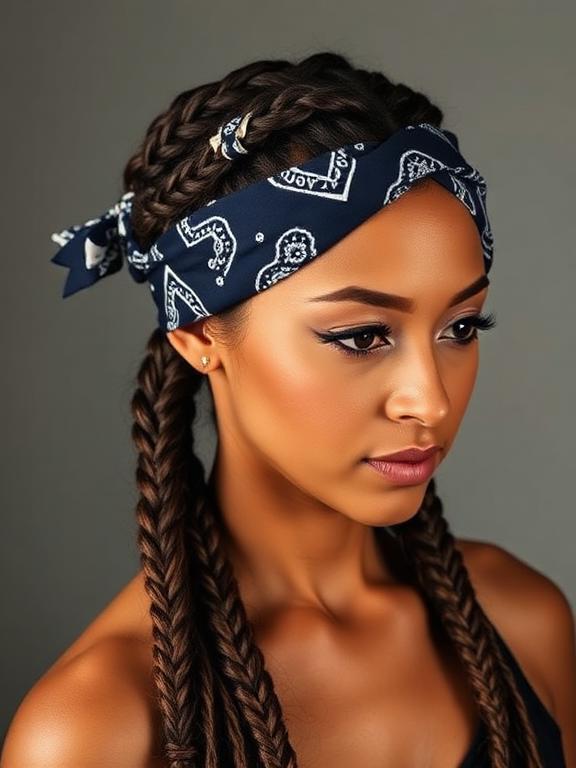
The top half of long braids gathered and the bandana tied around the gathered top section while the lower braids fall freely. The bandana secures the half-up gathering and adds a decorative detail at the back of the crown simultaneously. The lower braid length creates movement and drama below the fabric tie.
The gathered top section should be secured with an elastic first and then the bandana wrapped over the elastic. The braid structure of the gathered section holds the bandana more securely than a gathering of loose hair would, which means the half-up stays in place through a full day of wear.
14. Crochet Braids with Bandana
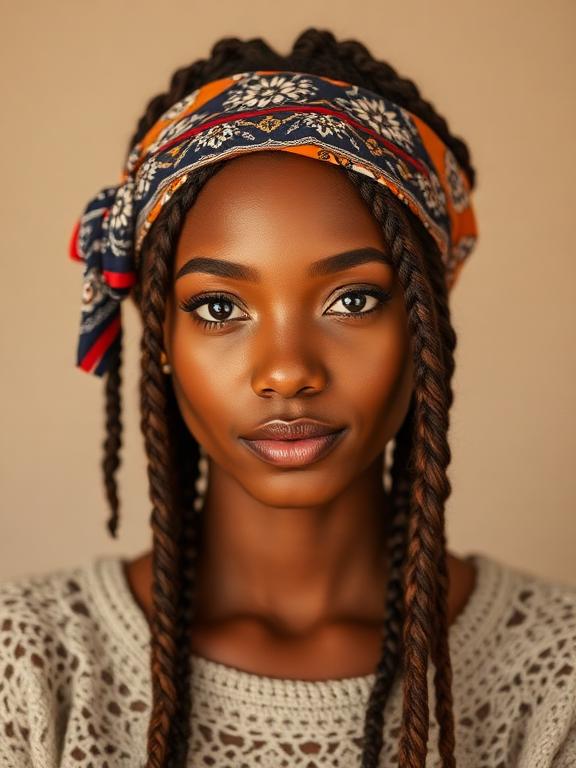
A bandana placed across the hairline in front of crochet braid hair creates a combination where the fabric covers the hairline where the crochet installation meets the natural hair, creating a cleaner, more deliberate overall result. The crochet texture behind the bandana and the fabric at the front create two layers of deliberate styling.
This placement has a practical as well as decorative benefit for crochet styles. The hairline where crochet hair is installed is sometimes the least polished part of the style. A bandana at the hairline creates a clean border that makes the overall crochet installation look more finished and intentional.
15. Goddess Braids with Scarf Wrap
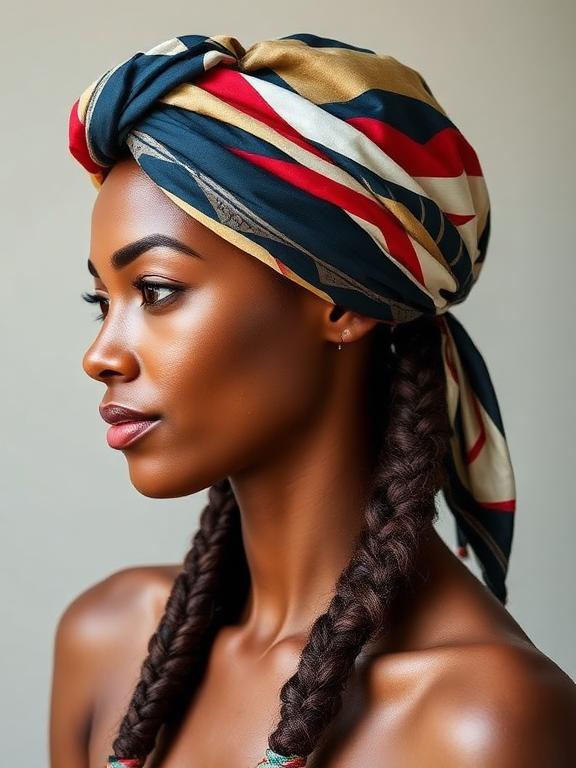
Goddess braids with a bold scarf or bandana wrapped around the head and tied at the front or side. The sculptural quality of goddess braids and the wrapped fabric create a combination with significant visual impact. The structured, elevated braid pattern and the deliberately wrapped fabric both carry visual weight and together they create a genuinely dramatic result.
The scarf should be wrapped around rather than simply tied across the head for goddess braids. The full wrap suits the substantial visual weight of goddess braids better than a simple headband placement that might look too minimal against the boldness of the braid style.
16. Micro Braids with Bandana
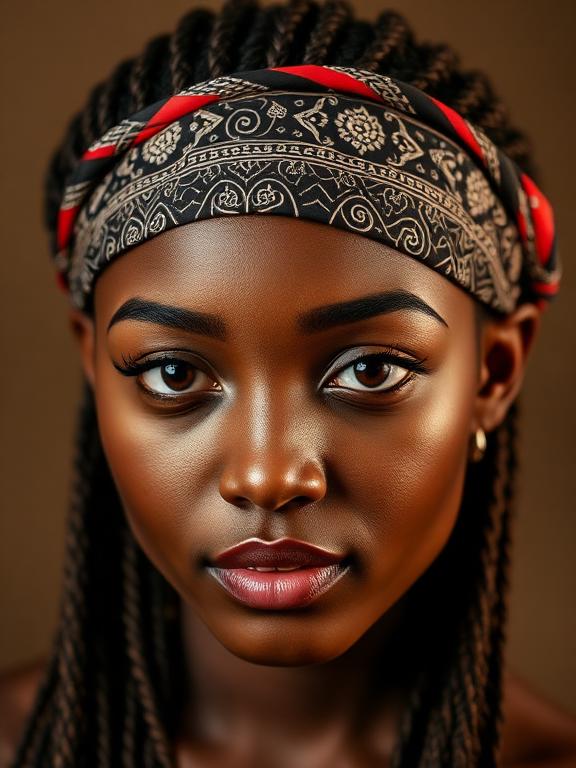
A bandana placed across the hairline in front of micro braids. The fine, delicate texture of micro braids creates a completely different bandana interaction from thick box braids. The micro braid texture is subtle enough that a patterned bandana does not compete with the braid texture and both elements can be bold simultaneously.
With micro braids a more elaborate bandana pattern works better than with thick braids because the fine texture of micro braids does not compete visually. A bold geometric or floral pattern sits against the fine micro braid texture and both elements remain clearly visible and deliberately considered.
17. Braids with Bandana and Accessories
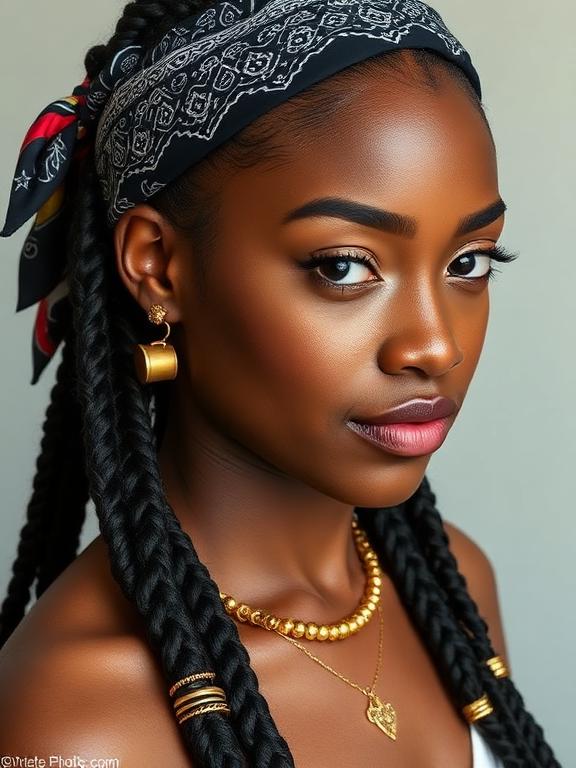
A bandana combined with additional accessories, beads, gold cuffs, or decorative pins, incorporated into the overall braid and bandana style to create a fully accessorized, layered look where the bandana is one element of a broader personal accessory approach. The braids, the fabric, and the additional accessories all contribute to a complete, deliberately considered style.
Layer the accessories within the braids or at the braid ends rather than on top of the bandana itself. The bandana occupies the hairline or crown level. The accessories occupy the braid length. The two accessory elements at different levels of the style create a complete, top-to-bottom considered result.
FAQs
What bandana fabric works best with braids?
A medium-weight cotton or canvas bandana holds its position best against the texture of braids. Very lightweight fabric slips against the smooth sections of certain braid types. Silk and satin fabrics look more luxurious but require more pinning to stay in place against braid textures. For loc styles specifically a heavier fabric with bold pattern suits the visual weight of locs best.
How do I keep a bandana in place on braids without it slipping?
The structural advantage of braids is that the fabric has more to grip against than it would on loose hair. Tie the bandana around the braid sections themselves rather than against the scalp where possible. Bobby pins placed through the fabric and around individual braid sections at the sides hold the bandana most securely. Tying with a firm knot rather than a loose bow also prevents slipping significantly.
Can a bandana damage braids or affect the protective style benefits?
No. A bandana tied gently around braids does not damage the braid structure and does not affect the protective benefits of the style. Avoid tying too tightly around the hairline area where tension can cause stress on the edges and the natural hair beneath the braids. A gentle, loose tie at the hairline is sufficient for placement without adding any tension that would compromise the protective quality of the style.
Wrapping Up
Bandanas and braids create a combination that is genuinely richer than either element on its own. The braid texture provides the base and the bandana adds the color, the cultural layering, and the personal detail that makes the overall style feel completely considered.
Pick the placement that suits the specific braid style and the occasion. Hairline placements for everyday wear. Crown wraps and full scarf wraps for occasions. A bold solid color for intricate braid patterns. A subtle pattern for simpler braid styles. The right combination turns a standard braid style into something that looks genuinely personal and deliberately chosen.