20 Medium Length Haircuts for Thick Hair
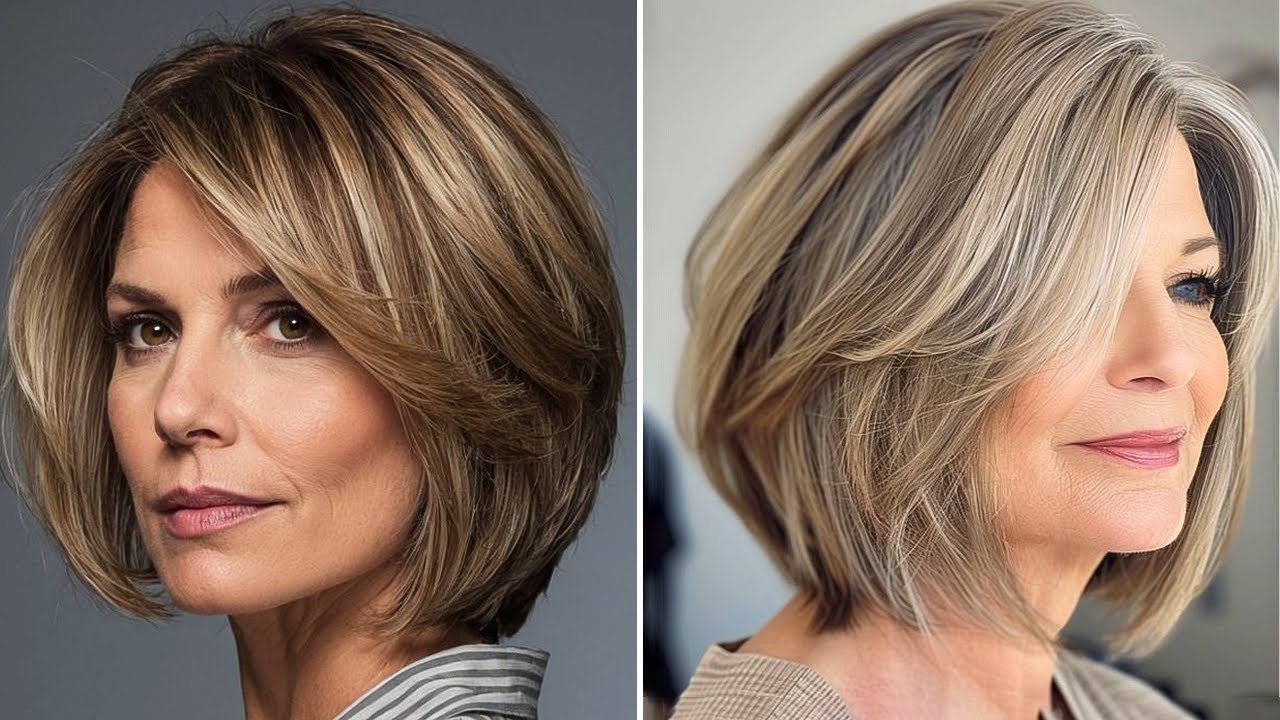
Thick hair is one of those things that sounds like an advantage until you are the one managing it every morning. The weight, the volume, the way it expands in humidity, the time it takes to dry, all of it adds up to a hair type that needs a specific kind of cut to behave well, rather than just any cut that looks good in a photo.
Medium length is often the best zone for thick hair. Long enough that the weight helps control some of the bulk, short enough that the styling does not take half the morning. The right cut at this length can transform thick hair from something that fights you into something that works with you.
What makes the difference is how the layering and internal shaping are handled. A blunt, one-length medium cut on thick hair tends to go wide, heavy, and hard to manage. A well-layered medium cut on the same hair can be lighter, more controlled, and genuinely easier to live with every day.
This list covers 20 medium length haircuts for thick hair that address the specific challenges of this hair type while still looking current and intentional.
1. Medium Layered Cut with Internal Weight Removal
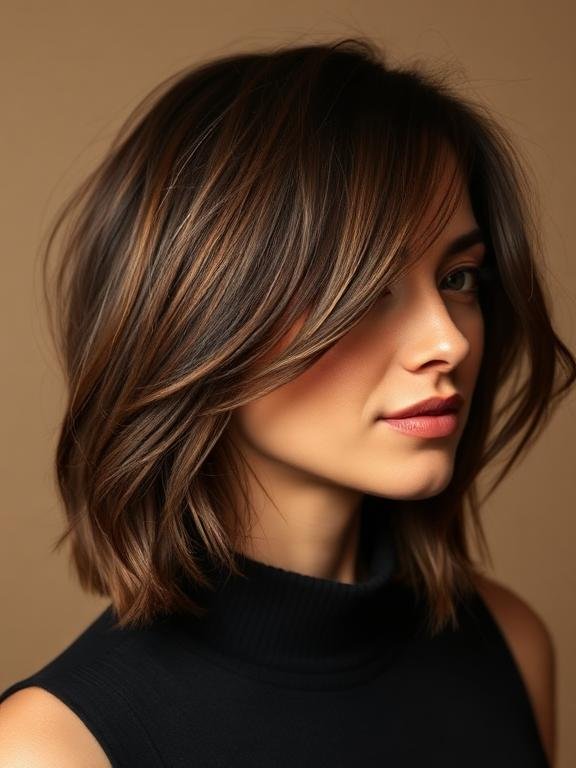
This is the foundation cut for thick hair at medium length. The outer shape stays clean, and the length sits around the collarbone, but interior layers are used specifically to remove weight from the mid-lengths where thick hair tends to go heaviest. The result is a cut that looks similar from the outside but behaves completely differently.
Ask for a collarbone-length cut with interior-only layering focused on weight removal through the mid-lengths, keeping the outer shape clean while reducing the bulk that makes thick hair hard to manage between washes.
2. Thick Hair Lob with Razored Ends
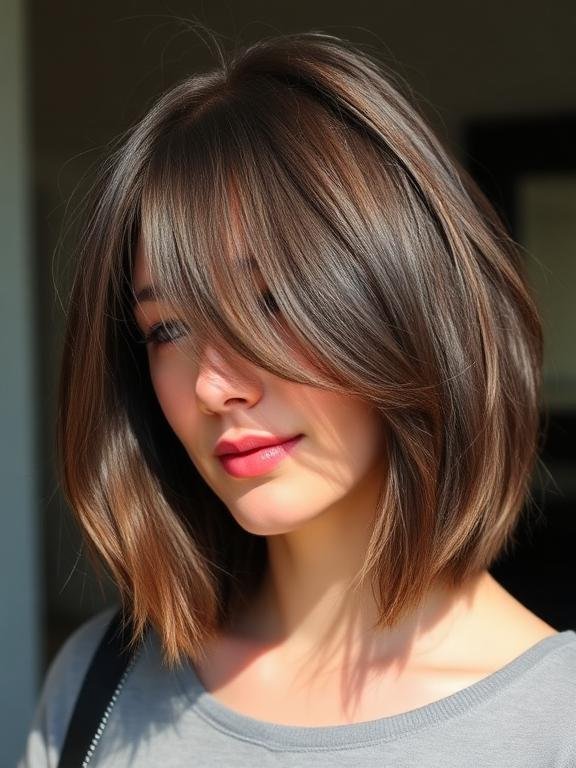
This lob uses razor cutting through the ends to thin and diffuse the perimeter rather than leaving it blunt. Blunt ends on thick hair can look and feel extremely heavy. The razor diffuses that weight and gives the ends a softer, more natural quality that thick hair rarely achieves with scissor cutting alone.
Ask for a shoulder-length lob with razored ends that thin and diffuse the perimeter rather than leaving a blunt edge, with interior thinning through the mid-lengths to match the lighter finish at the tips.
3. Medium Shag for Thick Hair
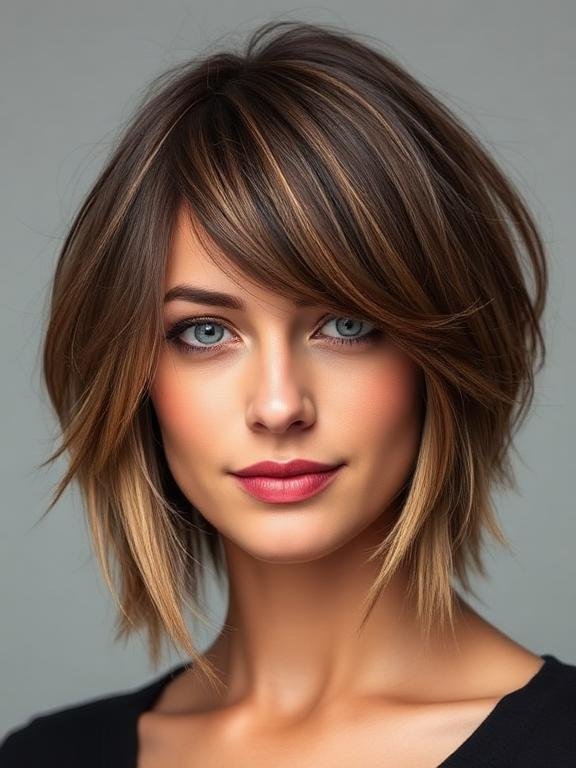
A shag cut is one of the best options for thick hair at medium length because the full-length layering distributes the weight more evenly from root to tip. Instead of all the bulk sitting at the bottom of the cut, layers through the mid-lengths and crown break it up and turn it into movement and texture rather than heaviness.
Ask for a medium shag with full-length layering from the crown to the ends that distributes weight evenly and turns the thickness into texture and movement rather than a heavy, expanding shape.
4. Graduated Bob for Thick Hair
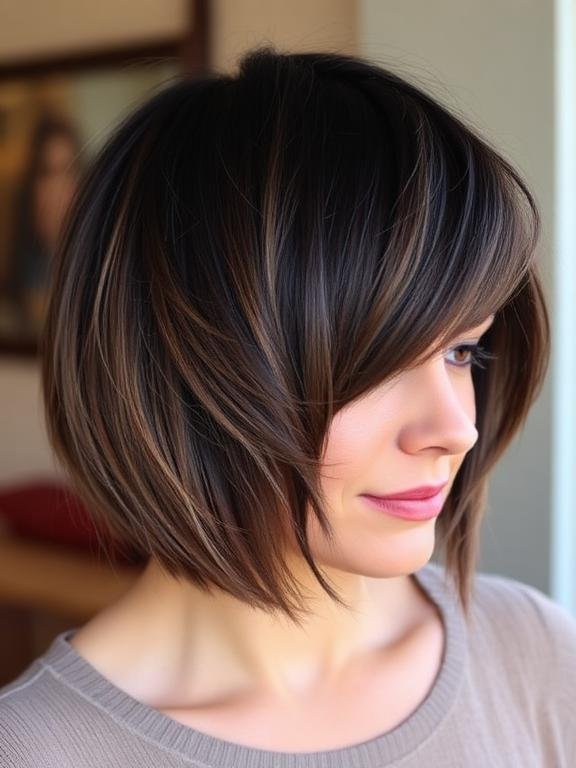
This graduated bob is shorter at the back and longer at the front, which helps manage the volume of thick hair by keeping the back section close and controlled. The graduation means less hair is sitting in one place at the same length, which reduces the likelihood of the cut going wide or boxy at the sides.
Ask for a graduated bob with a shorter nape and longer front sections, with interior layering through both sections that reduces weight and keeps the shape from going boxy or wide as the hair expands through the day.
5. Medium Curly Cut with Defined Layers
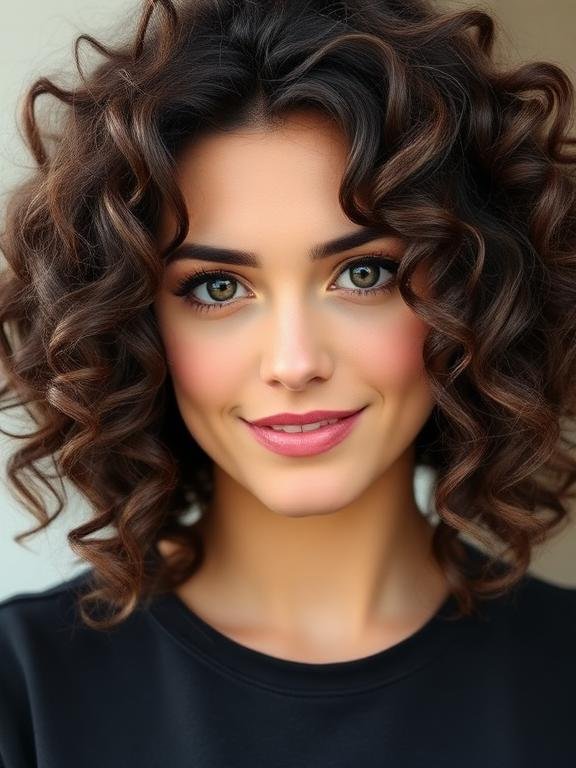
For naturally curly thick hair, defined layering is what separates a cut that looks full and intentional from one that just looks big. Layers placed through the crown and mid-lengths allow the curls to fall and spring individually rather than clumping together into one heavy mass at the bottom.
Ask for a medium curly cut shaped dry or curl by curl with defined layers through the crown and mid-lengths that allow individual curl movement rather than a single heavy clump of volume at the ends.
6. Soft Feathered Medium Cut for Thick Hair
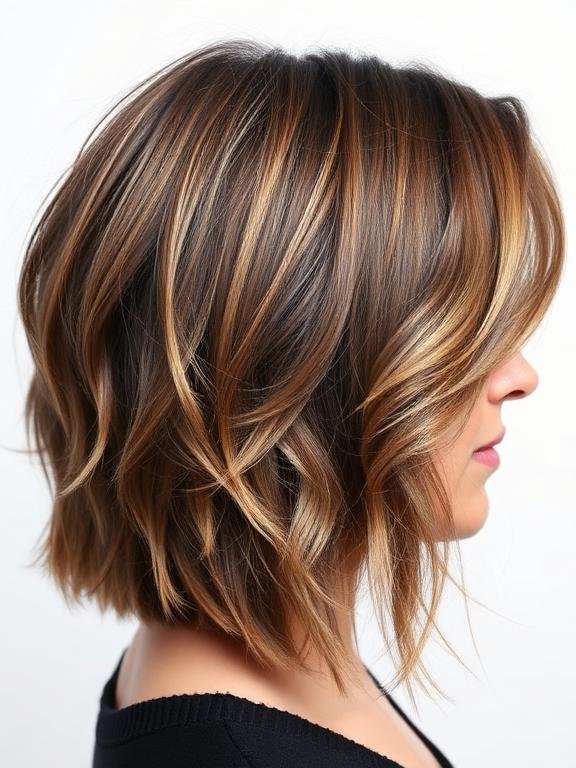
Feathered layering is particularly effective for thick hair because it removes weight gradually and creates a soft, diffused texture rather than an abrupt change in density. This medium cut uses feathered layering through the ends and mid-lengths to lighten the overall feel of the hair without dramatically changing the outer shape.
Ask for a medium-length cut with feathered layering through the mid-lengths and ends that gradually reduces density toward the tips, creating a softer, lighter finish than the hair would have with a blunt or minimally layered cut.
7. Medium Wolf Cut for Thick Hair
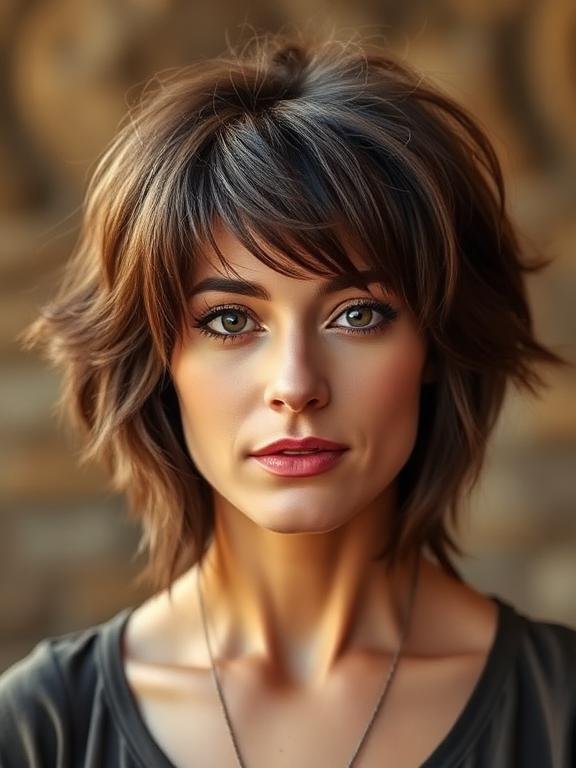
The wolf cut works especially well for thick hair because its heavy crown layering removes significant weight from the top, while the longer lengths through the mid-section and ends give the thickness somewhere to go. The result is a volume that looks intentional and styled rather than simply out of control.
Ask for a wolf cut at medium length with short, heavy crown layers that remove weight from the top and longer mid-section layers that give the thickness movement and direction rather than just bulk.
8. Side-Parted Medium Cut with Thinned Ends
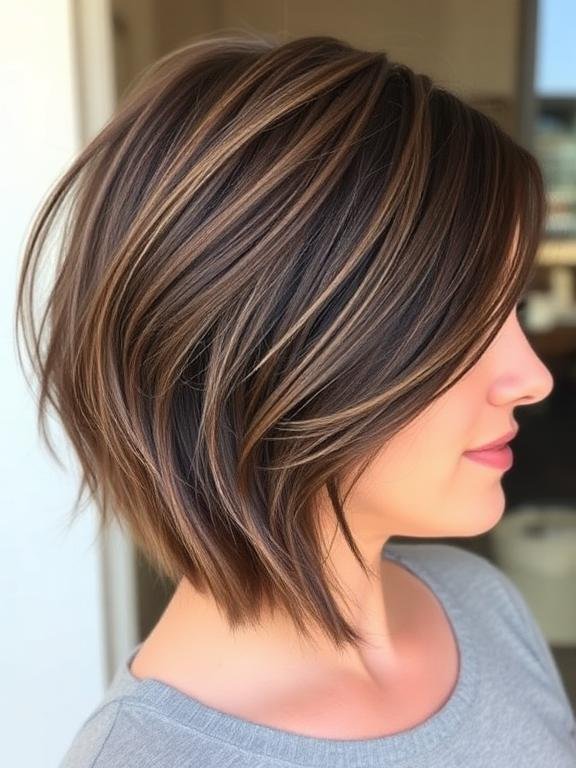
This medium cut uses a defined side part to give the hair a clear direction, which helps control thick hair that tends to sit evenly on both sides and go wide. Thinning through the ends with scissors or a thinning shear reduces the density at the perimeter where thick hair tends to look heaviest.
Ask for a medium-length cut with a defined side part and thinned ends using thinning shears or point cutting to reduce density at the perimeter without creating visible layers or changing the outer shape.
9. Medium Layered Cut with Curtain Bangs for Thick Hair
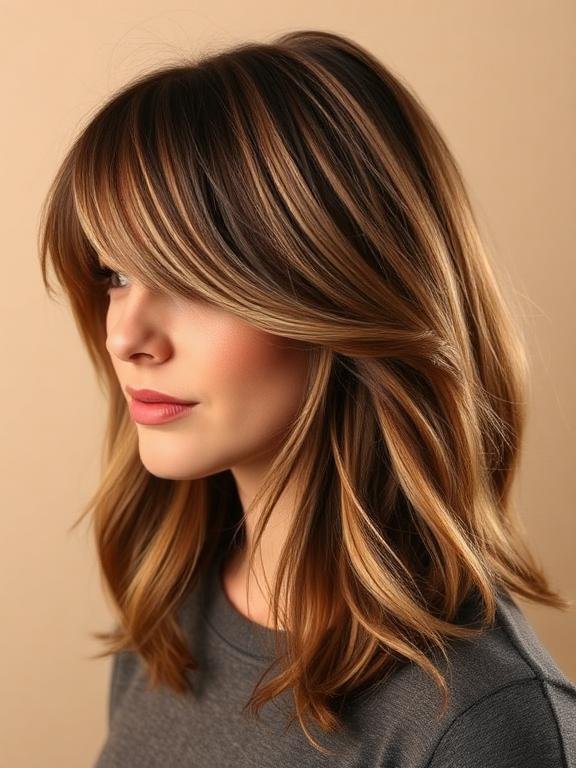
Curtain bangs work particularly well for thick hair because they use some of the front section to create a fringe, which redistributes the weight that would otherwise sit heavily around the face. The layers through the rest of the cut manage the thickness in the body of the hair, while the curtain bangs handle the front.
Ask for a medium layered cut with curtain bangs that use some of the front section weight to create a parted fringe, with interior layering through the body of the cut that reduces bulk and adds movement throughout.
10. Blunt Lob with Hidden Layers for Thick Hair
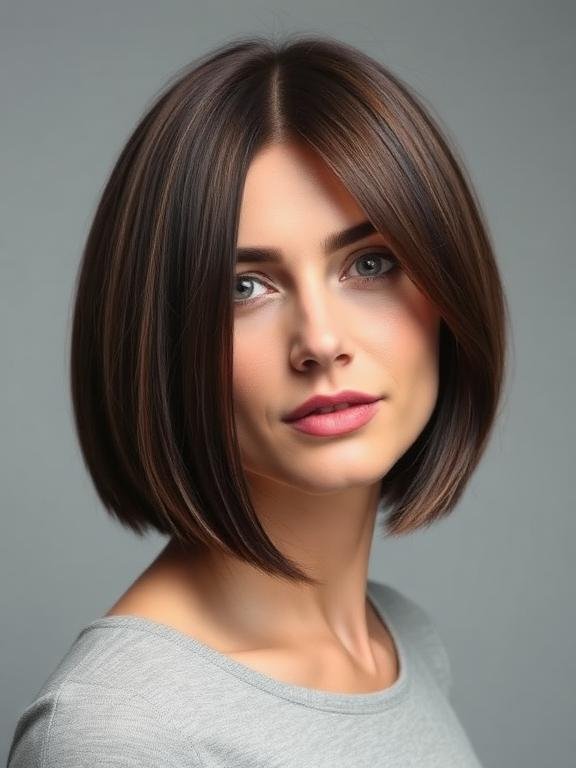
This cut looks blunt and clean from the outside, but has significant hidden layering built into the interior to control the weight of thick hair. It is a good option for women who like the look of a sleek, minimal bob but need internal shaping to make it sit properly with their hair type.
Ask for a shoulder-length lob with a clean, blunt perimeter and hidden interior layers that remove weight from the mid-lengths without breaking up the smooth, uniform appearance of the outside shape.
11. Medium Wavy Cut with Thinned Mid-Lengths
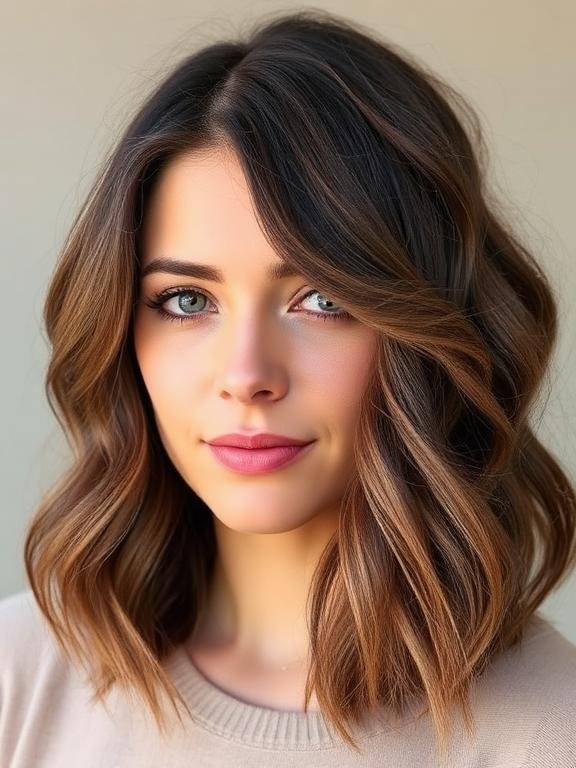
This cut is designed for thick hair with a natural wave, using thinning specifically through the mid-lengths to allow the wave to move more freely without being weighed down by the density of the hair. When thick, wavy hair is too heavy, the wave pattern flattens out. Thinning the mid-lengths lets the wave spring back up.
Ask for a medium wavy cut with thinning applied specifically through the mid-lengths to reduce density where it flattens the wave, with lighter thinning through the ends to keep the perimeter from looking too heavy.
12. Textured Medium Bob for Thick Hair
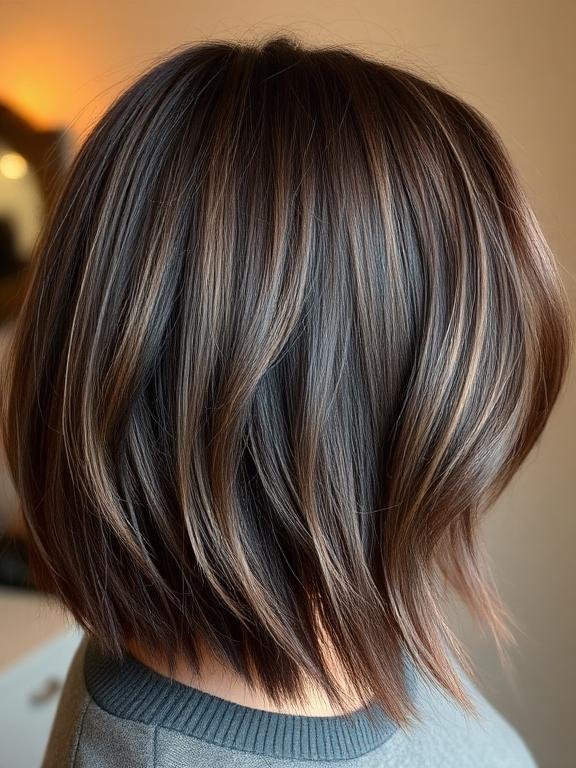
This medium bob uses visible texturing through the ends and mid-lengths to break up the density of thick hair and create a more manageable, interesting finish. The texturing is done with point cutting or thinning shears rather than standard layering, which creates a softer, more diffused result.
Ask for a medium bob with point cutting or thinning shear texturing through the ends and mid-lengths that breaks up the density of thick hair and creates a softer, more diffused finish rather than a blunt or heavily stacked edge.
13. Face-Framing Layered Cut for Thick Hair
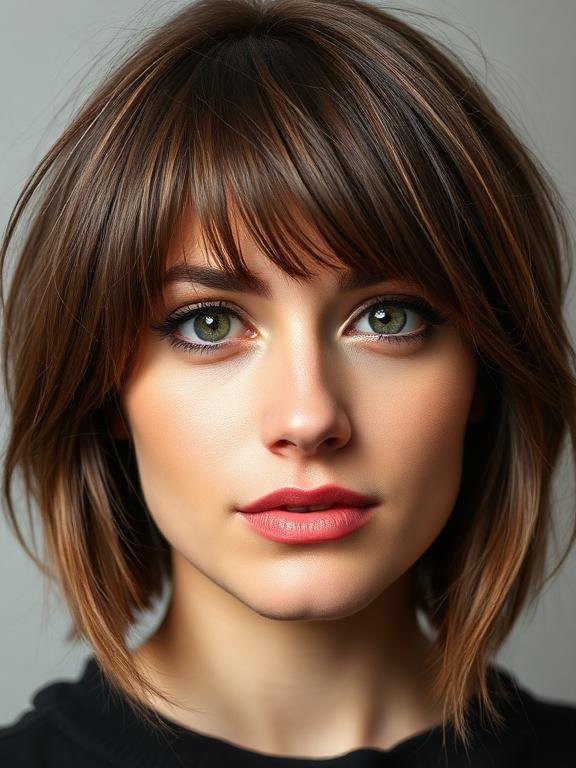
This cut uses strong, defined face-framing layers as the main tool for managing thick hair around the face. Thick hair without face-framing tends to frame the face very broadly, adding width around the jaw and cheeks. Defined face-framing layers redirect the hair downward and inward, narrowing the frame and giving the face more definition.
Ask for a medium-length cut with strong, defined face-framing layers cut to sit around the cheekbone level that redirect the thick hair inward and downward rather than outward, with interior thinning through the body of the cut to reduce overall bulk.
14. Medium Length Shaggy Bob for Thick Hair
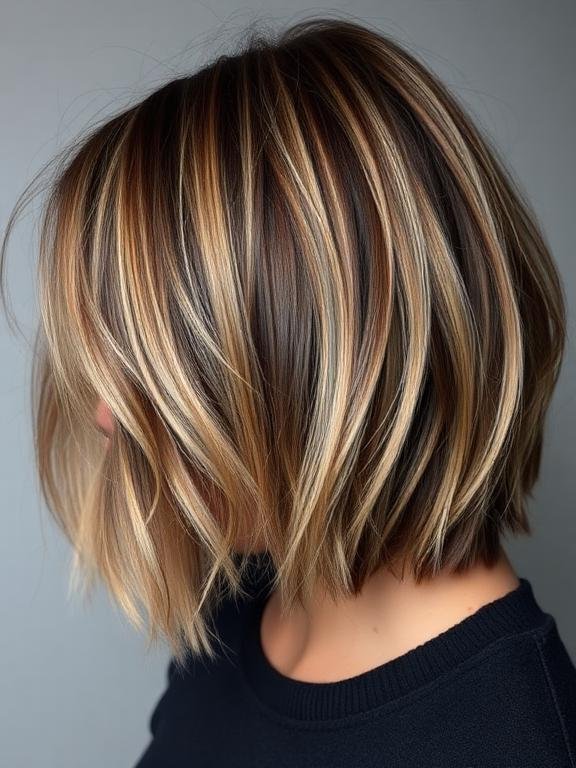
This shaggy bob uses the same principle as the full shag but is contained within a bob silhouette. The layering runs through the mid-lengths and ends within the bob shape, breaking up the density of thick hair and turning it into texture and movement that the cut can actually use rather than just carry.
Ask for a medium shaggy bob with layering through the mid-lengths and ends that breaks up the density of thick hair and gives the bob shape, movement, and texture rather than solid, heavy weight.
15. Disconnected Layers for Thick Hair
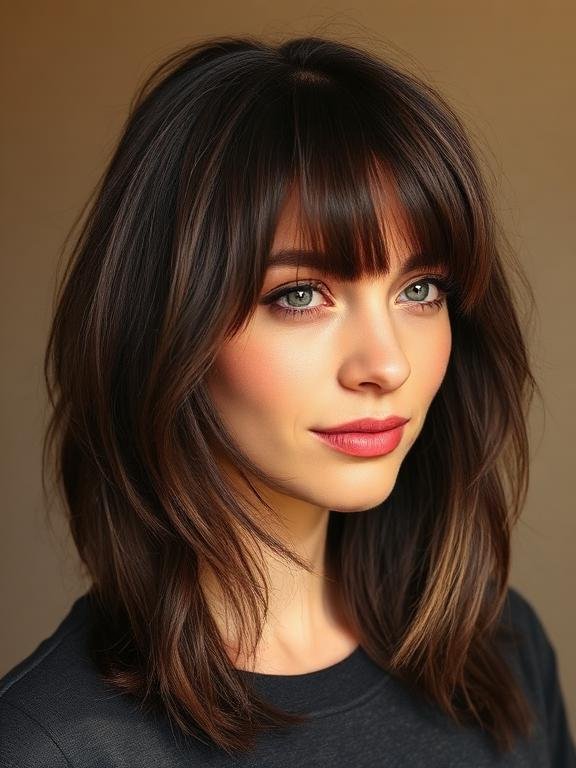
This cut uses deliberately disconnected layers to create visible weight reduction at specific points through the hair rather than blended layers that gradually thin from root to tip. The disconnection creates a clear contrast between sections that makes the thickness look more sculpted and intentional.
Ask for a medium-length cut with disconnected layers placed at specific points through the mid-lengths to create visible weight reduction and a sculpted quality that blended layering alone would not achieve.
16. Medium Straight Cut with Point-Cut Ends
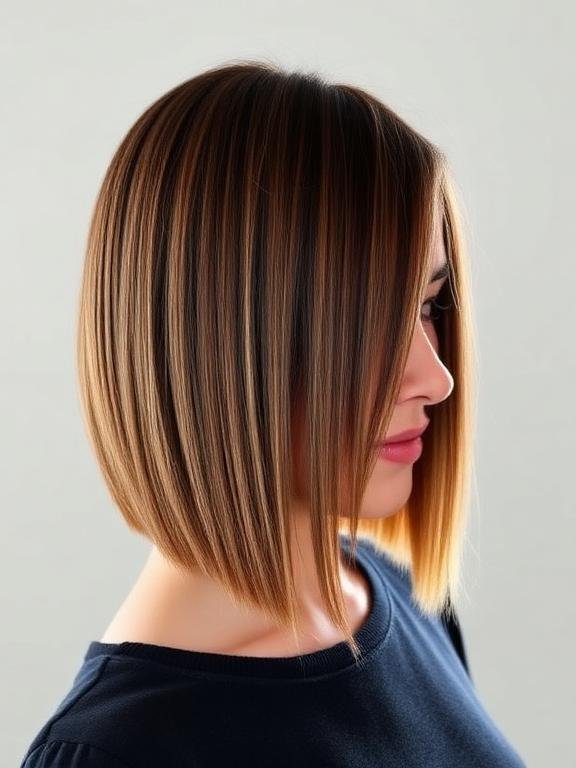
This cut keeps a relatively straight, clean silhouette at medium length but uses point cutting specifically at the ends to reduce the density of the perimeter. Point cutting creates small, irregular breaks in the edge of the hair that diffuse the heaviness of a blunt perimeter without creating visible layers.
Ask for a medium straight cut with point cutting applied at the ends to reduce density and diffuse the perimeter, keeping the overall shape clean while preventing the heaviness that thick blunt ends create.
17. Layered Medium Cut with Soft Undercut
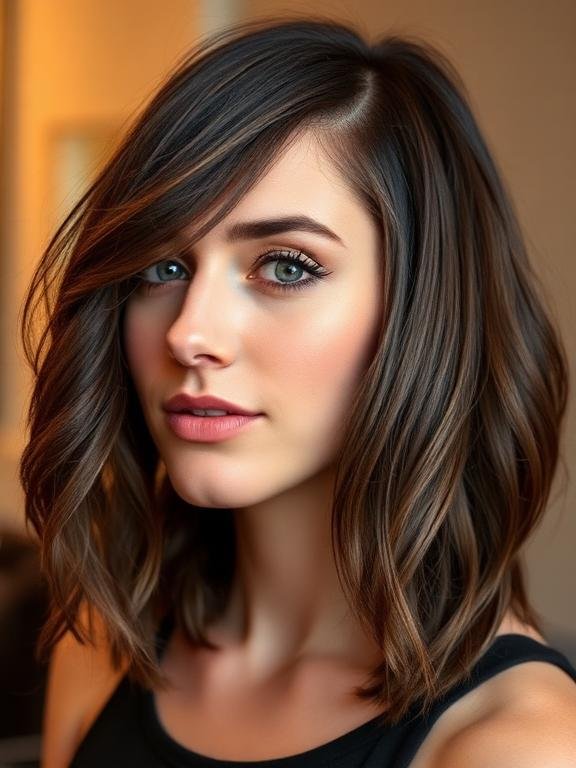
This cut uses a soft undercut at the nape and lower sections to remove significant weight from underneath the hair, which reduces the overall volume without changing anything visible on the surface. The undercut is hidden by the upper layers, so the cut looks the same from the outside but behaves very differently.
Ask for a medium layered cut with a soft undercut applied to the lower sections and nape to remove weight from underneath, keeping the surface layers clean and the overall shape unchanged while significantly reducing the volume and heaviness of thick hair.
18. Medium Curly Shag for Thick Hair
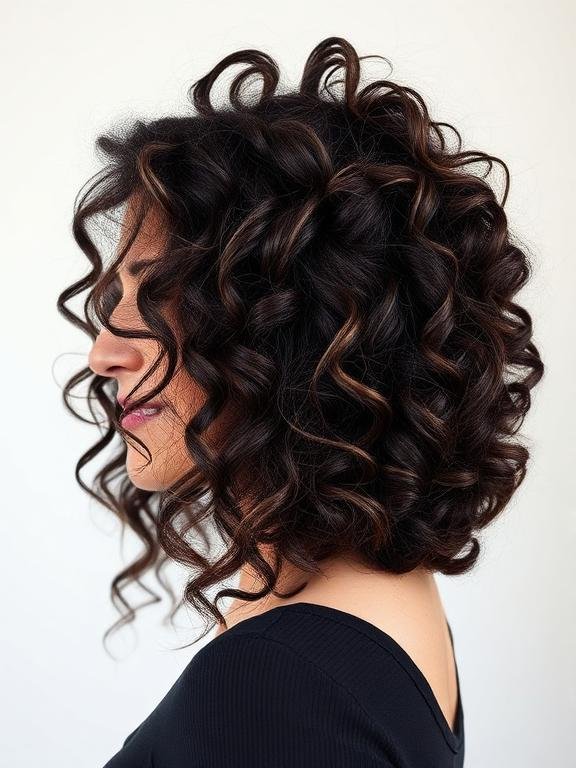
This cut combines the weight-distributing benefits of a shag with the texture-defining benefits of curl-specific layering. The shag gives the thickness somewhere to go through full-length layers, and the curl-specific shaping ensures that each section dries into a defined curl rather than a dense, heavy mass.
Ask for a medium curly shag with full-length layering distributed from the crown to the ends, cut dry or curl by curl so each layer supports the natural curl pattern rather than cutting across it and disrupting the curl definition.
19. Asymmetric Medium Cut for Thick Hair
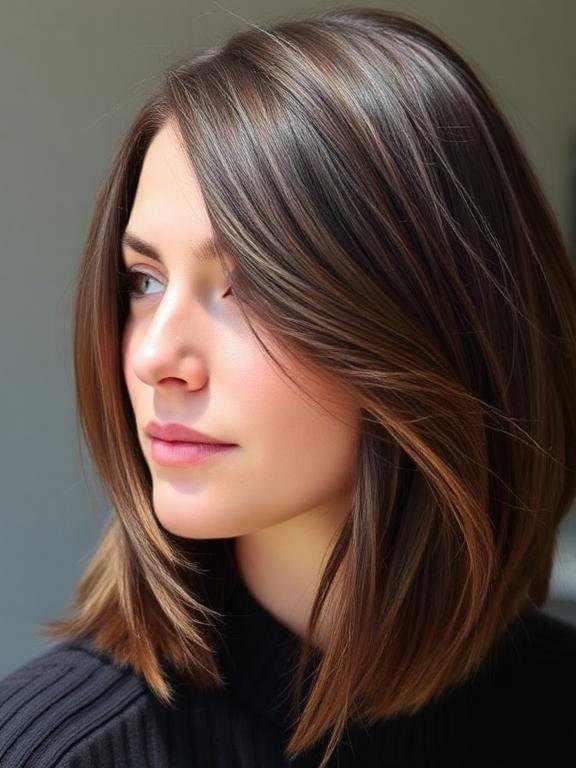
An asymmetric cut is a useful approach for thick hair because having two different lengths means the weight is naturally distributed across a wider range rather than all sitting at one level. The asymmetry also creates a sense of movement and intention that a symmetrical heavy cut does not always convey.
Ask for an asymmetric medium cut with one side sitting noticeably longer than the other, with interior layering on both sides that reduces weight at each length level and stops either side from going too heavy or wide.
20. Effortless Air-Dry Medium Cut for Thick Hair
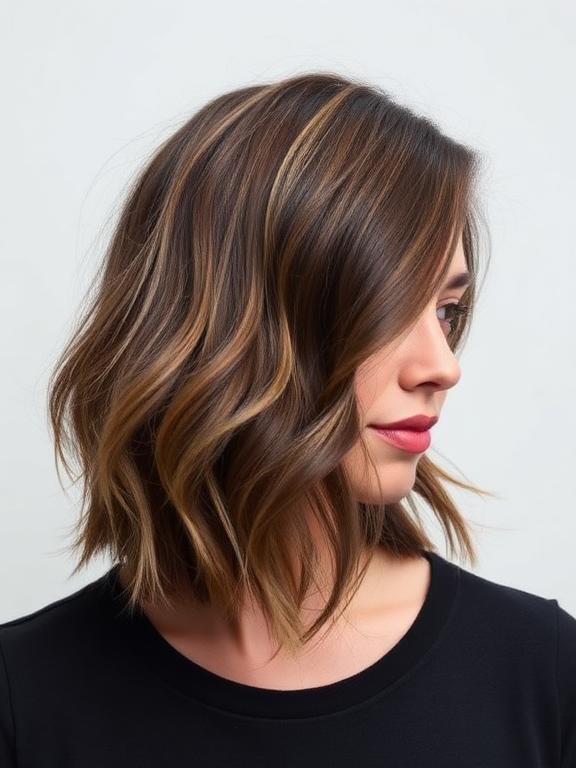
This cut is designed specifically to work with the natural behavior of thick hair when it air dries, which is typically to go wide, heavy, and unpredictable. The layering and internal shaping are placed to redirect that behavior into a shape that dries consistently and looks intentional without any heat tools.
Ask for a medium-length cut with layering and internal shaping placed specifically to control how your thick hair behaves when air dried, reducing the width and heaviness that typically comes with letting thick hair dry naturally and creating a shape that looks consistent and intentional every time.
FAQs
Why does thick hair need a different layering than fine hair?
Thick hair has more individual strands packed into the same space, which means it carries significantly more weight and tends to expand outward rather than downward. The layering for thick hair is focused on removing internal weight and redistributing density, while layering for fine hair is focused on creating the appearance of more volume. The goals are essentially opposite.
Can thick hair be too layered?
Yes. Over-layering thick hair, particularly through the ends, can make the tips look thin and stringy even though the roots and mid-lengths are still full. The skill is in removing weight from the right places, typically the mid-lengths and interior, while keeping enough density at the ends to maintain a healthy, full appearance.
Should thick hair be thinned with thinning shears?
Thinning shears can be very effective for thick hair when used correctly. The risk is using them too close to the roots or too heavily through one section, which can create an uneven texture that is difficult to fix. Applied carefully through the mid-lengths and ends, they are one of the most effective tools for managing thick hair without dramatically changing the outer shape.
How often does a medium cut for thick hair need trimming?
Every eight to ten weeks is typical. Thick hair tends to maintain its shape a little longer than finer hair, but the layering does grow out, and the weight starts to accumulate again over time. Regular trims keep the internal shaping doing its job and stop the cut from going heavy between appointments.
What is the easiest medium-length haircut to manage for thick hair every day?
The medium shag and the wolf cut are both strong candidates because their full-length layering does the most work to redistribute weight and create manageable movement. Both also tend to air dry reasonably well, which reduces the time commitment of daily styling for women with thick hair.
Wrapping Up
Thick hair at medium length is genuinely one of the most workable combinations when the cut is done right. The length helps control some of the volume naturally, and the right layering handles everything the length alone cannot. The result is hair that feels lighter, dries faster, holds its shape better, and asks less of you every morning.
The 20 cuts on this list approach the same challenge from different angles. Some focus on internal weight removal. Others use full-length layering to redistribute density. Some address the perimeter with razor cutting or point cutting. Finding the approach that suits your specific thickness, texture, and lifestyle is what makes the difference between a cut that manages your hair and one that transforms it.