20 Shoulder Length Hairstyles With Bangs For Thin Fine Hair
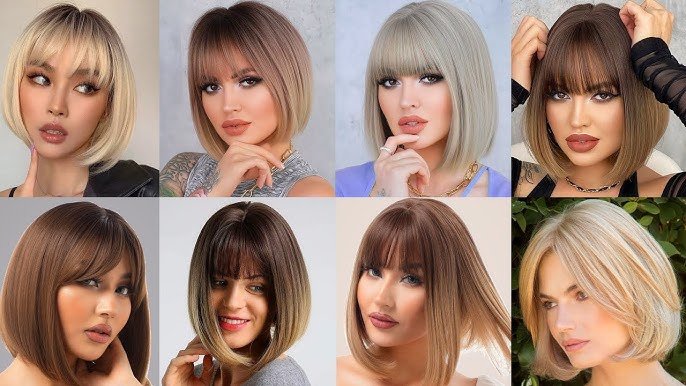
Bangs and fine hair have a complicated relationship. Done right, a fringe adds immediate visual fullness at the front of the face, creates a horizontal line that draws attention away from thinning areas, and gives the overall style a sense of intention and structure that fine hair can struggle to project on its own. Done wrong, a heavy or poorly cut fringe goes flat within an hour and makes the whole style look thinner than it did before.
The key is matching the type of bang to the weight and density of the hair. Fine hair rarely does well with a thick, blunt fringe that needs body it does not have. It tends to work much better with lighter, more transparent fringe options that create coverage and frame without demanding density the hair cannot deliver. Paired with the right shoulder length cut underneath, the result can look genuinely full and put together.
This list covers 20 shoulder length hairstyles with bangs for thin fine hair. Each one pairs a specific fringe type with a shoulder length shape in a way that works with the limitations of fine hair rather than against them.
1. Wispy Fringe with Blunt Shoulder Length Bob
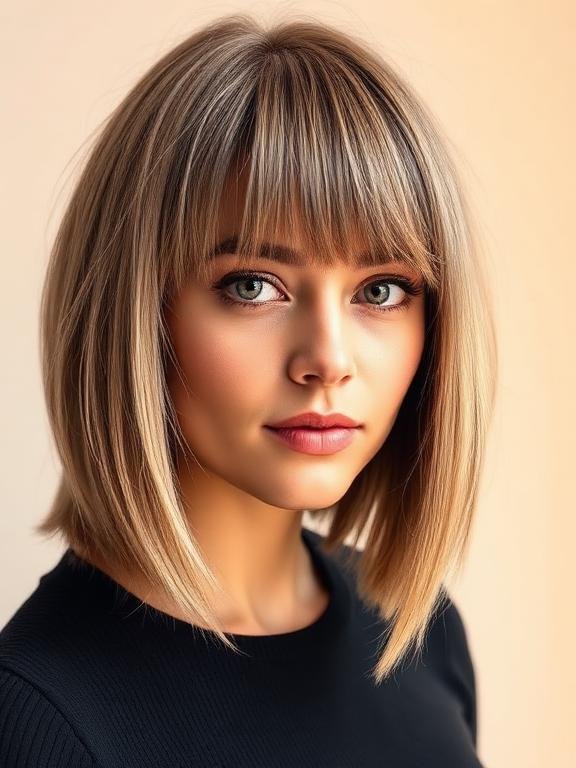
A wispy fringe is the most forgiving fringe option for fine hair. It sits lightly across the forehead with a transparent, feathered quality that does not demand density to look good. Paired with a blunt shoulder-length bob, the wispy fringe adds face-framing interest at the front while the blunt perimeter maximizes fullness at the ends.
Ask for a wispy, lightly textured fringe cut to sit softly across the forehead without a heavy edge, paired with a blunt shoulder-length bob that keeps the perimeter as full and dense as possible.
2. Curtain Bangs with Soft Layered Lob
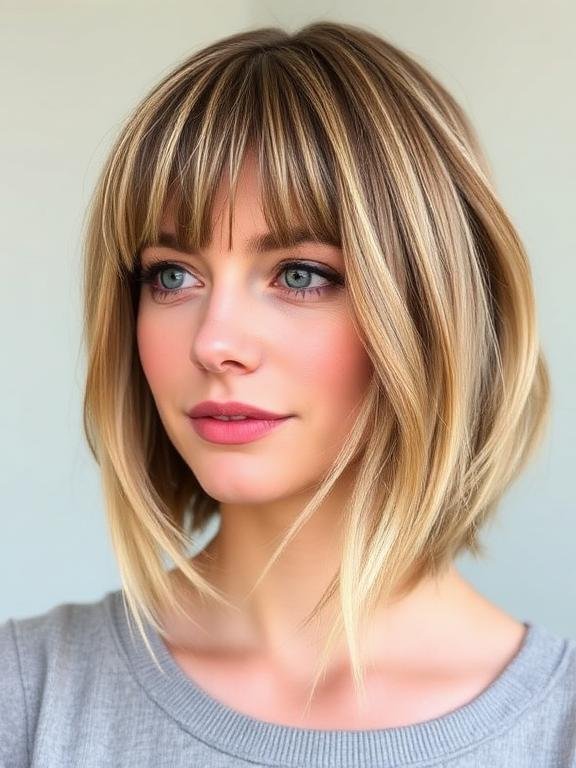
Curtain bangs are one of the best fringe choices for fine hair because they are naturally light and parted, which means they do not need as much density as a full fringe to look intentional. The parting in the middle keeps them from sitting flat on the forehead, and paired with a soft layered lob, they create a cohesive, face-framing style that photographs and wears well.
Ask for curtain bangs that part softly in the middle and blend into the face-framing layers at the sides, paired with a shoulder-length lob with conservative layering through the mid-lengths that keeps the ends as full as possible.
3. Side-Swept Bang with Blunt Collarbone Bob
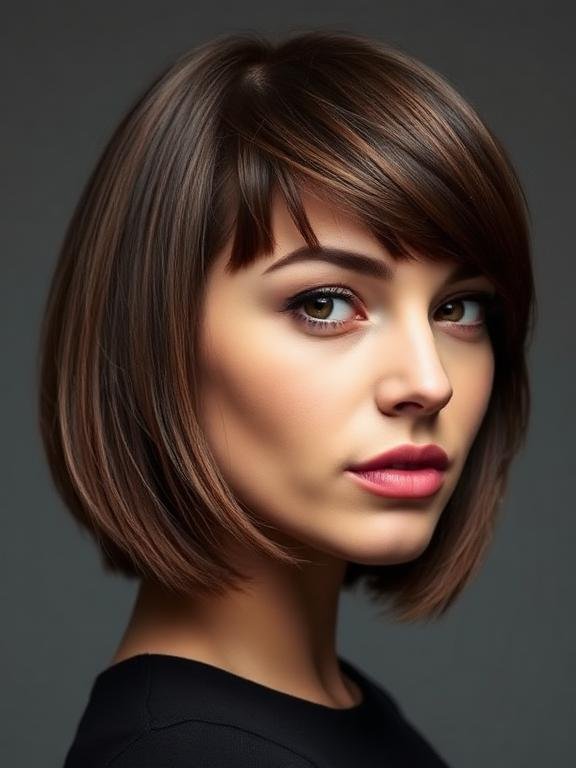
A side-swept bang is an ideal fringe for fine hair because its diagonal direction creates the illusion of more hair than a horizontal fringe would. The sweep naturally adds movement and direction at the front, and because it is not sitting flat across the forehead it does not go limp as quickly as a full fringe on fine hair.
Ask for a side-swept bang that covers most of the forehead and sweeps naturally to one side, paired with a blunt collarbone-length bob with a clean, even perimeter that maximizes end density.
4. Feathered Fringe with Shoulder Length Shag
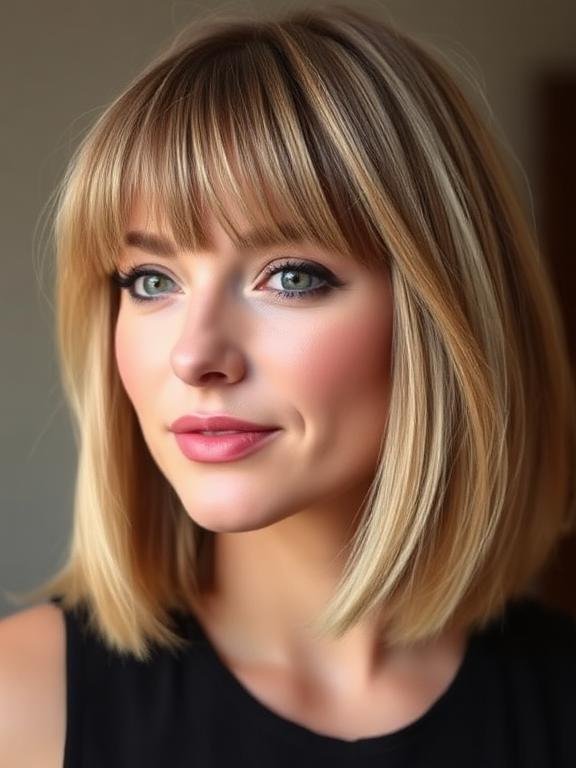
This combination works because the feathered fringe and the shag layering share the same relaxed, airy quality. The feathered fringe sits lightly across the forehead with soft, separated strands, and the light shag layering through the shoulder length body of the cut adds movement and texture without removing enough density to make the ends look thin.
Ask for a feathered fringe with soft, separated strands rather than a blunt or heavy edge, paired with a conservative shoulder-length shag with light layering through the mid-lengths that adds texture without thinning the ends dramatically.
5. Micro Fringe with Shoulder Length Blunt Cut
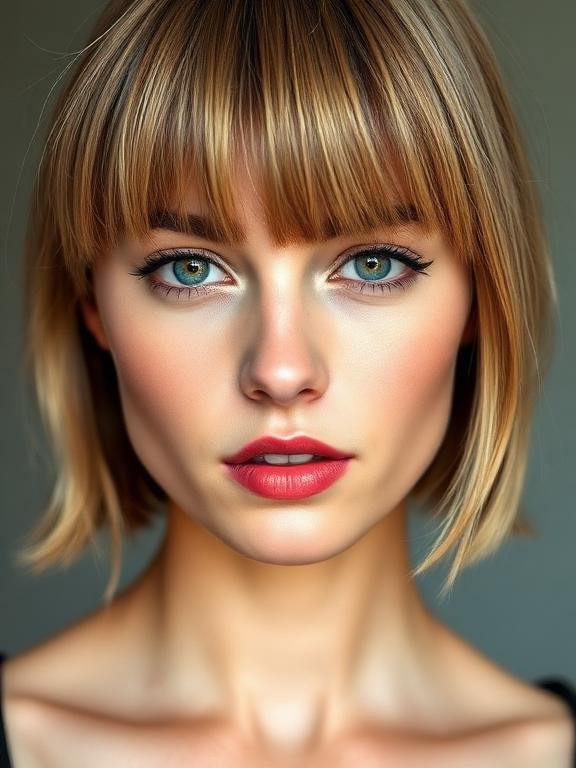
A micro fringe sits very short across the forehead, well above the eyebrows. For fine hair this can actually be an advantage because the shorter length means less hair is being used for the fringe itself, leaving more density in the body of the cut. Paired with a blunt shoulder-length cut it creates a striking, fashion-forward look with maximum end fullness.
Ask for a short micro fringe cut well above the eyebrows with a clean, even edge, paired with a blunt shoulder-length cut that keeps the perimeter dense and the ends as full as possible.
6. Curtain Bangs with Voluminous Blowout Lob
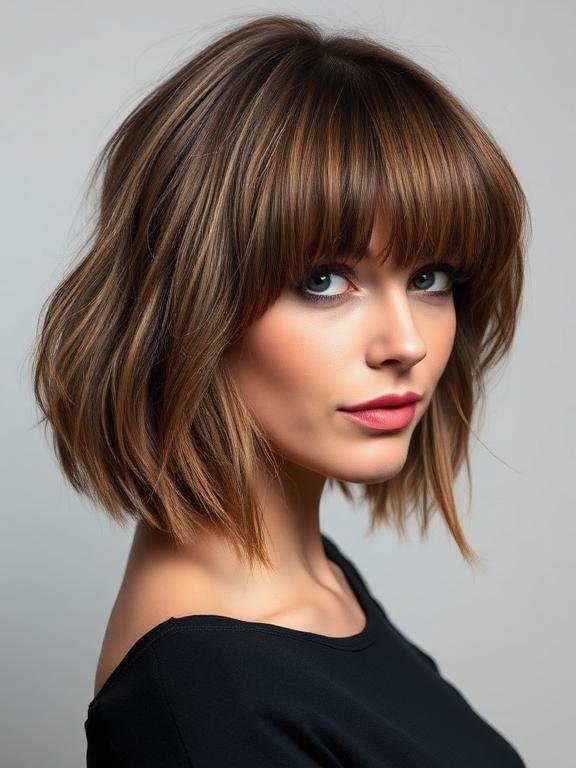
This combination is designed for women who blow dry regularly. The curtain bangs are light enough that they lift and separate easily during blow drying, and the lob underneath is shaped to maximize the volume a blowout creates. The result is a style that looks genuinely full and polished immediately after drying.
Ask for curtain bangs paired with a shoulder-length lob with light crown layering to encourage root lift during blow drying, and a clean perimeter that holds the blowout volume rather than letting it collapse through the day.
7. Wispy Side Part Bang with Layered Shoulder Length Cut
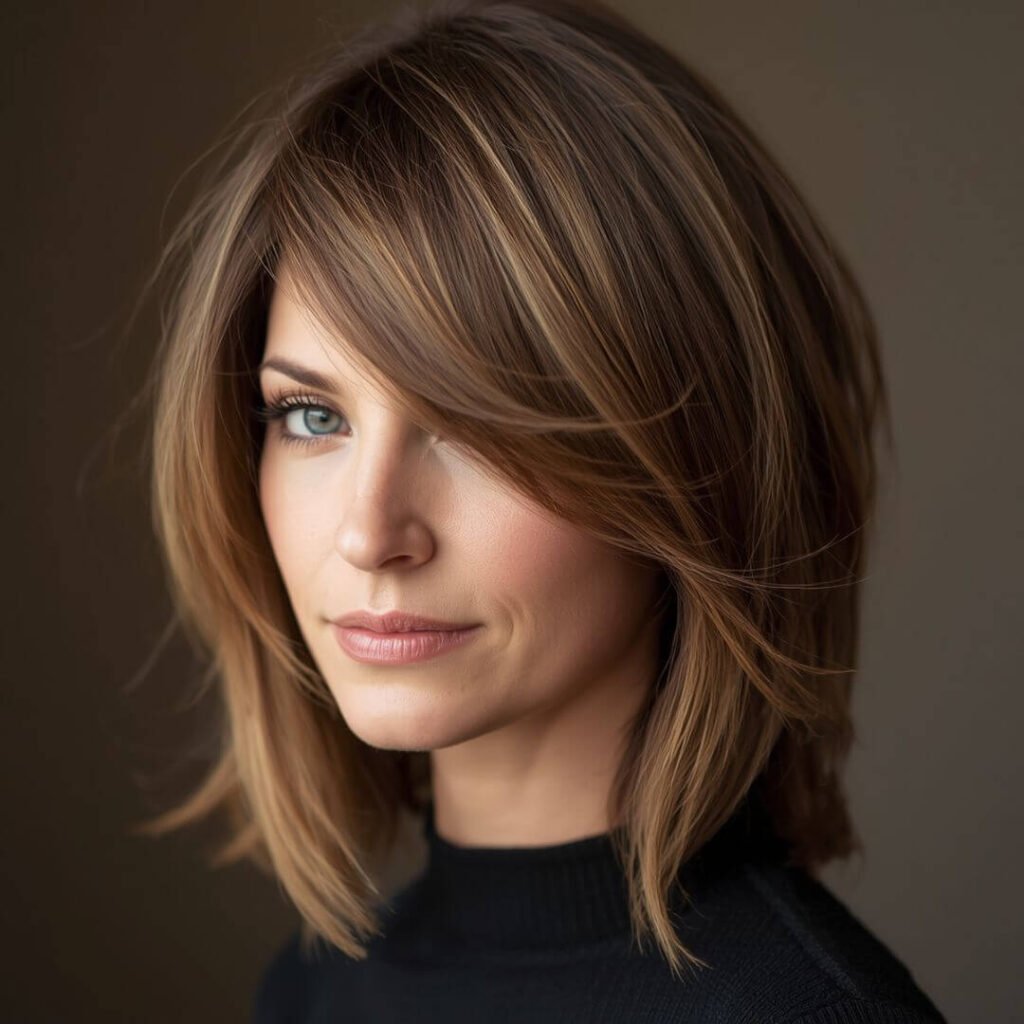
This style uses a wispy bang that starts from a side part and sweeps lightly across the forehead rather than sitting as a distinct section. The side part creates volume on the heavier side, and the wispy bang reinforces the direction of the part while adding soft forehead coverage that a standard side part alone would not provide.
Ask for a wispy side-parted bang that sweeps naturally from the part across the forehead, blending into the face-framing layers of a shoulder-length layered cut with conservative mid-length shaping that preserves end fullness.
8. Textured Fringe with Collarbone Length Lob
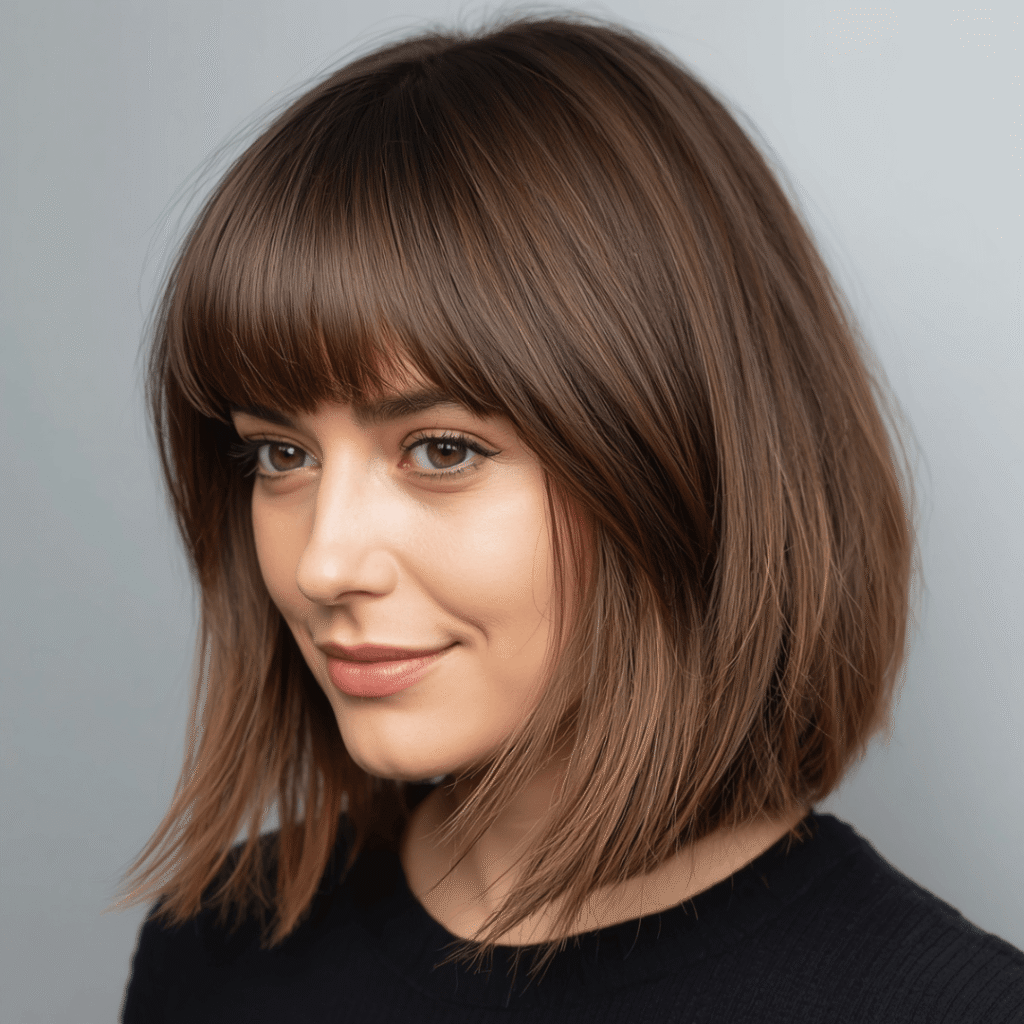
A textured fringe has visible separation and movement between the strands rather than sitting as a solid, uniform section. For fine hair this works better than a blunt fringe because the texture creates the impression of more individual strands and more volume than the hair actually has. Paired with a collarbone-length lob it gives the whole style a modern, deliberately effortless quality.
Ask for a textured fringe with visible separation between the strands, cut to sit across the forehead without a blunt or heavy edge, paired with a collarbone-length lob with conservative layering through the upper mid-lengths only.
9. Bottleneck Bangs with Shoulder Length Cut
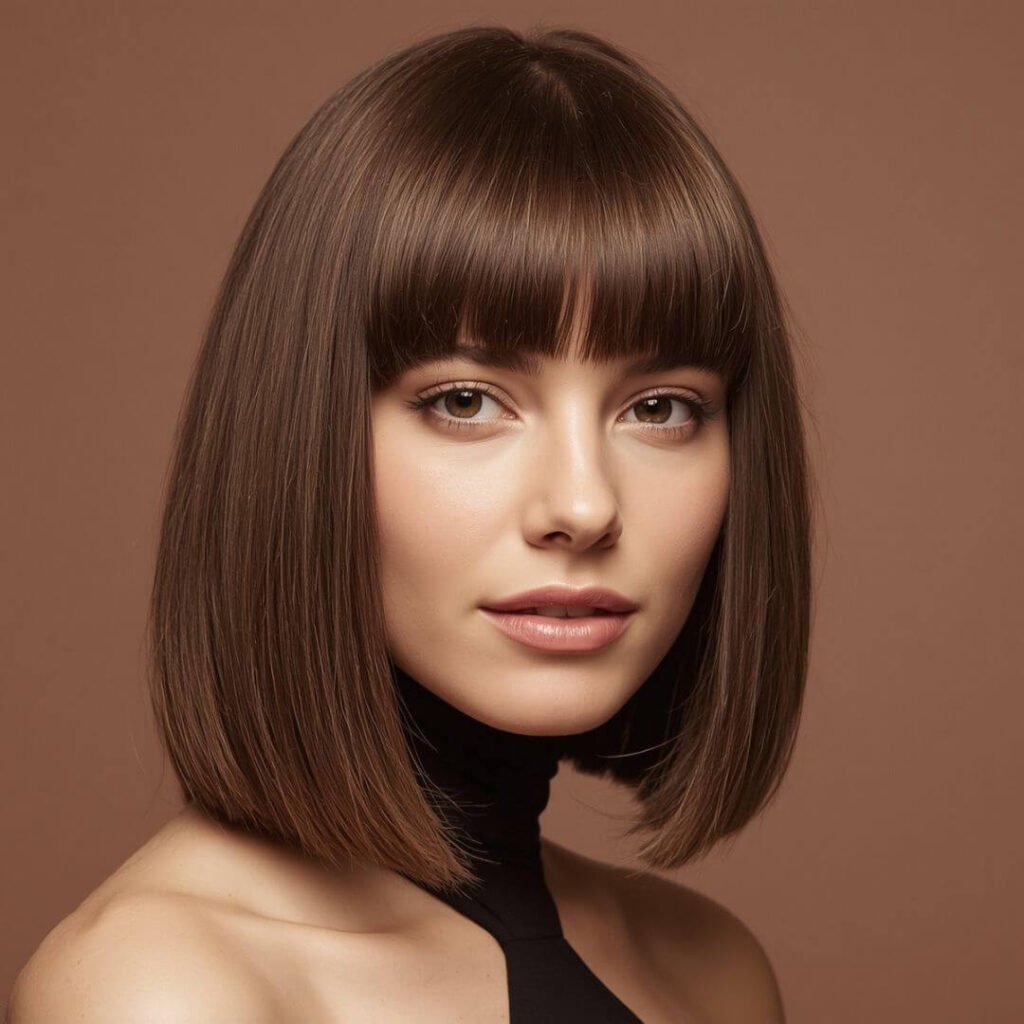
Bottleneck bangs are a wider curtain bang that parts in the middle and extends further toward the temples than a standard curtain bang. For fine hair they are particularly effective because the extra width at the sides creates more horizontal coverage at the forehead level, making the style look fuller from the front without requiring additional density in the bang itself.
Ask for bottleneck bangs that part in the middle and extend wider toward the temples than standard curtain bangs, blending into the face-framing sections of a shoulder-length cut with a full, clean perimeter.
10. Fringe with Middle Part Lob for Fine Hair
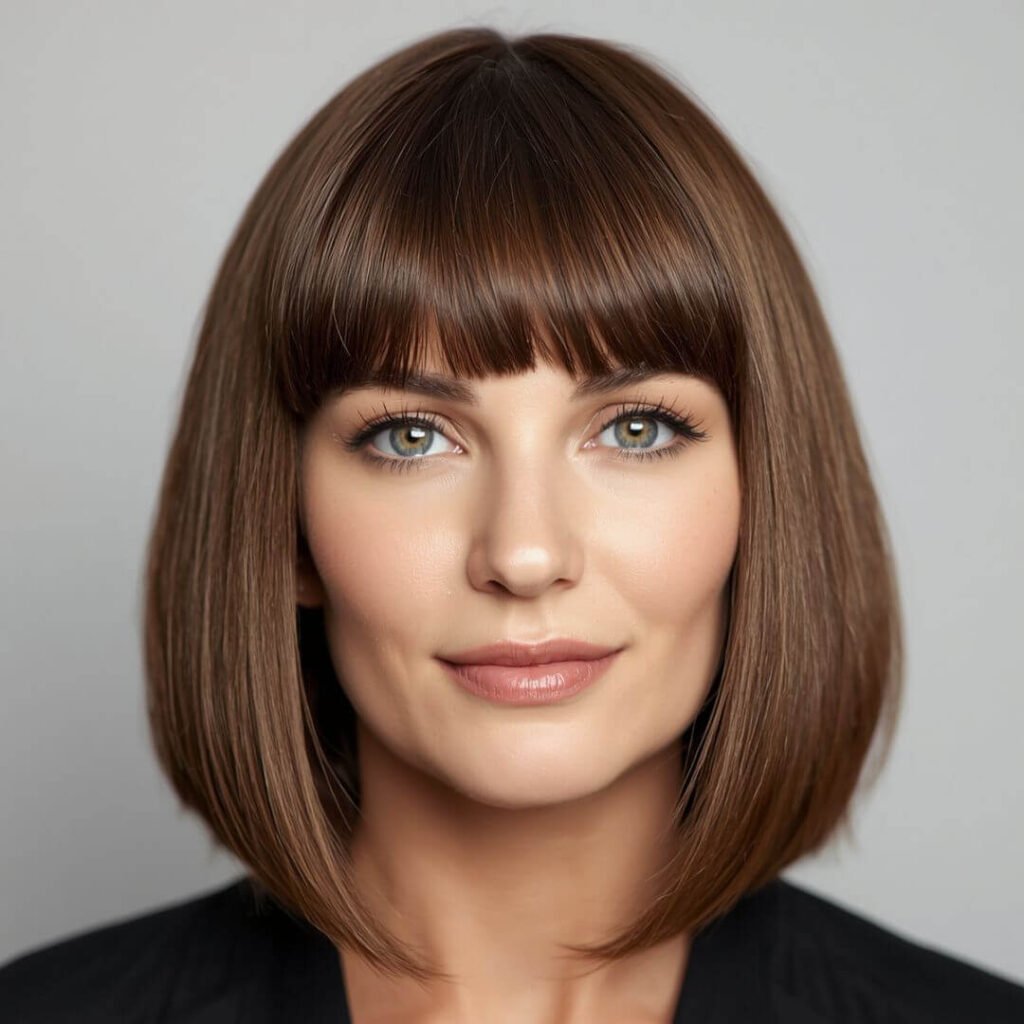
A full fringe combined with a middle-parted lob sounds counterintuitive for fine hair but can work when the fringe is cut conservatively and the lob underneath has a blunt, full perimeter. The fringe handles the front of the style while the blunt lob handles the sides and back, and the middle part of the lob creates a clean, symmetrical frame that works with the fringe rather than competing with it.
Ask for a conservative full fringe that sits at or just above eyebrow level without being too thick, paired with a middle-parted shoulder-length lob with a blunt perimeter and minimal interior layering.
11. Birkin Bangs with Soft Shoulder Length Layers

Birkin bangs are a full, slightly longer fringe that sits just at or slightly past the eyebrows with a soft, slightly imperfect quality rather than a razor-sharp edge. For fine hair, the slightly longer length and the softer edge mean the fringe has a little more movement and does not go as flat as a shorter blunt fringe would.
Ask for Birkin-style bangs cut to sit at the eyebrows with a soft, slightly imperfect edge rather than a sharp blunt line, paired with a shoulder-length cut with soft conservative layering through the mid-lengths that preserves end fullness.
12. Curtain Bangs with Graduated Shoulder Length Bob
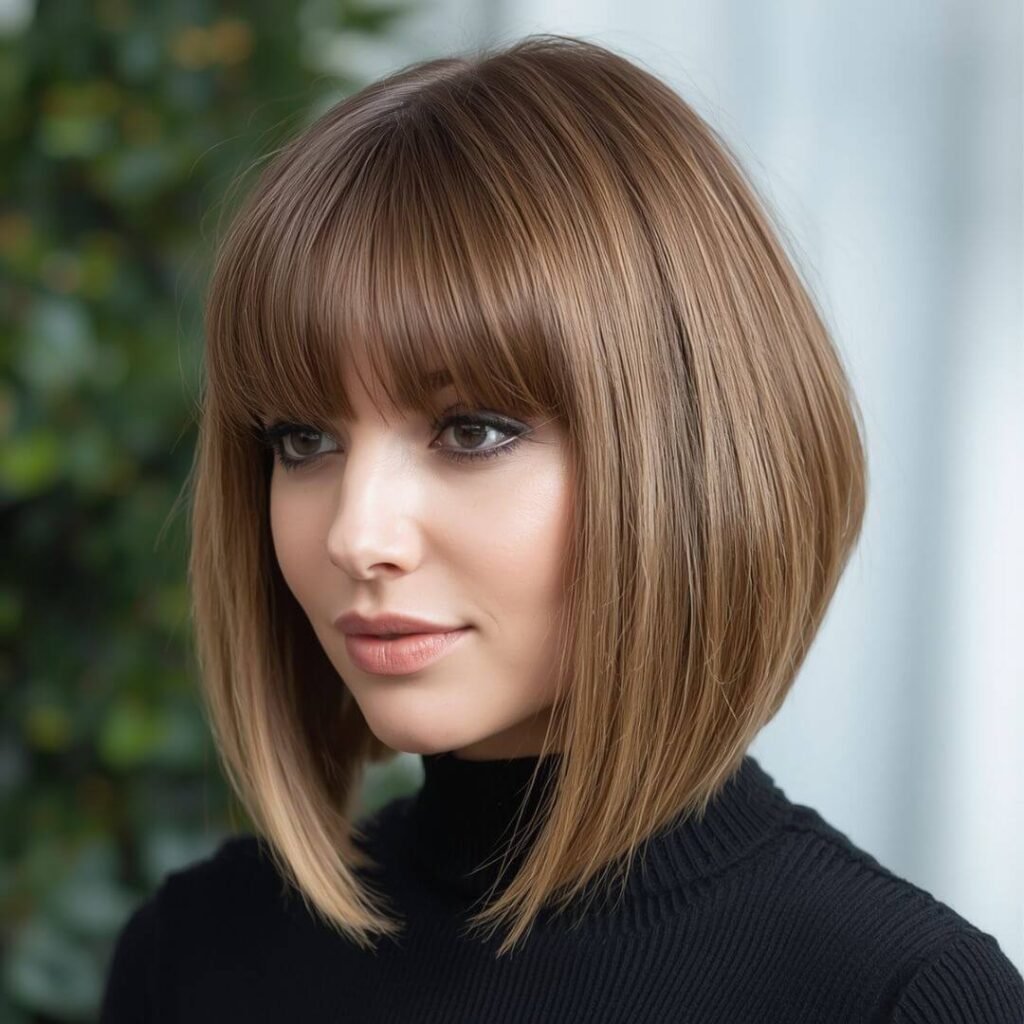
The graduation in this bob creates natural lift at the back of the head, which adds volume to the overall profile of the style. Combined with curtain bangs at the front, the cut addresses the two areas where fine hair most needs help, the crown volume and the face framing, in one cohesive style.
Ask for curtain bangs paired with a graduated shoulder-length bob that is slightly shorter at the back for crown lift and longer at the front for face framing, with interior layering kept minimal to preserve perimeter density.
13. Wispy Fringe with Face-Framing Highlighted Lob
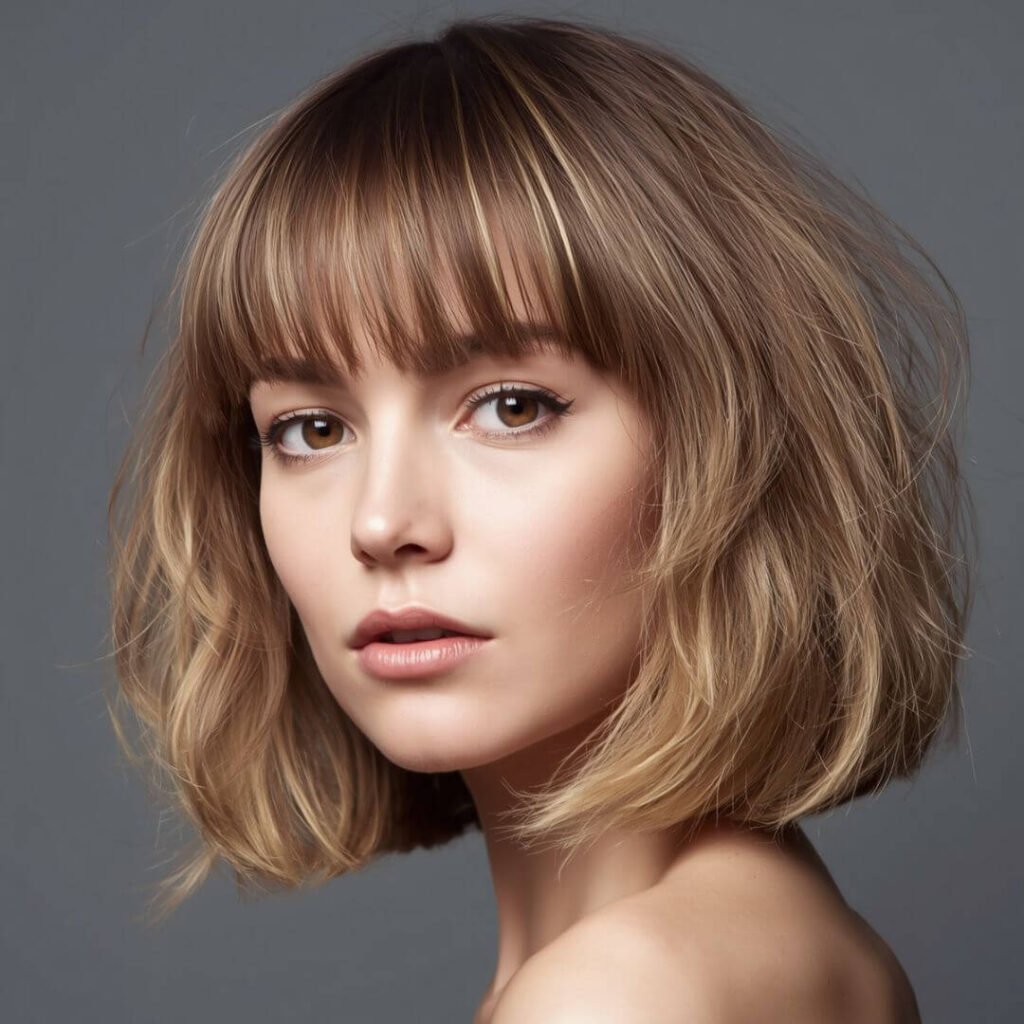
This combination uses color as much as cut to create fullness. The wispy fringe adds front coverage, and the face-framing highlights through the lob create the illusion of dimension and density that fine hair struggles to project on its own. The two elements together give the style a visual richness that neither would achieve alone.
Ask for a wispy fringe paired with a shoulder-length lob with face-framing highlights placed to add dimension around the face and through the mid-lengths, with a clean blunt perimeter that keeps the end density as high as possible.
14. Side Bang with Textured Shoulder Length Cut
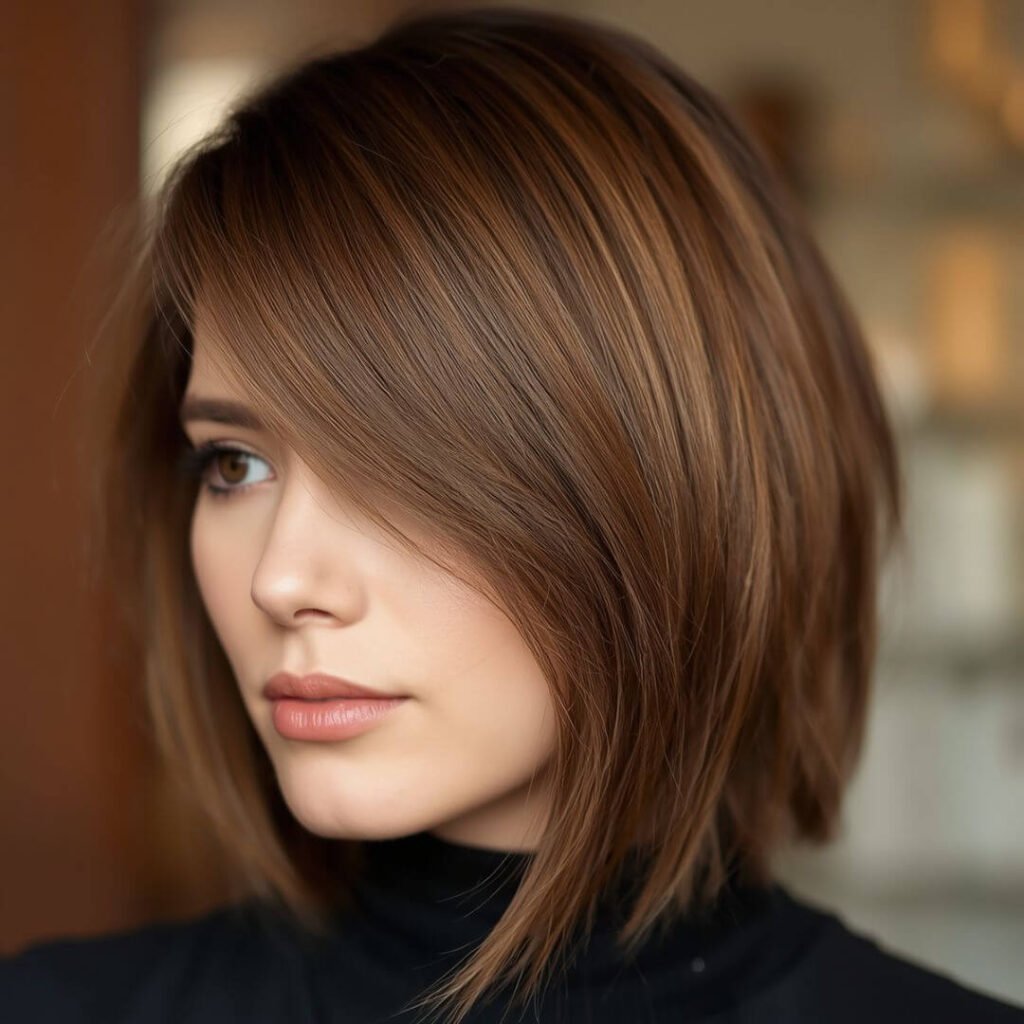
This style uses a side bang rather than a full fringe, which means only part of the front section is used for the fringe itself. This preserves more density in the rest of the cut and allows the shoulder-length body to stay as full as possible. The textured cut underneath adds movement and dimension that the side bang alone would not create.
Ask for a side bang that covers part of the forehead on one side, paired with a textured shoulder-length cut with point-cut texturing through the mid-lengths that adds movement and dimension without thinning the ends significantly.
15. Curtain Bangs with Shoulder Length Wavy Cut
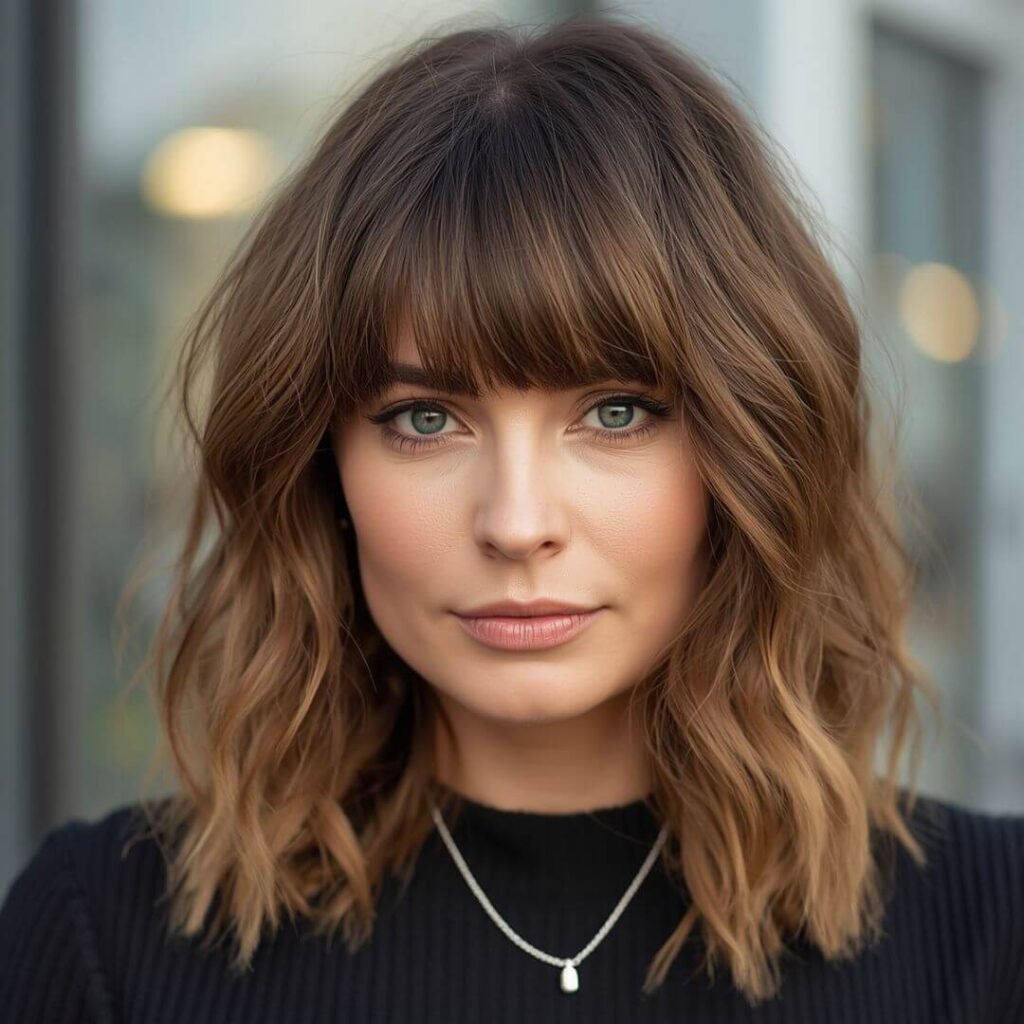
This combination works particularly well for fine hair that has natural wave or is styled with a wave. The curtain bangs frame the face and add front coverage, and the wave through the shoulder-length body of the cut adds volume and movement that fine straight hair cannot create on its own. The two elements reinforce each other to create a fuller overall impression.
Ask for curtain bangs paired with a shoulder-length cut with layering placed to support and encourage natural wave movement through the mid-lengths and ends, keeping the lower layers full enough to give the wave something to work with.
16. Wispy Fringe with Babylight Lob
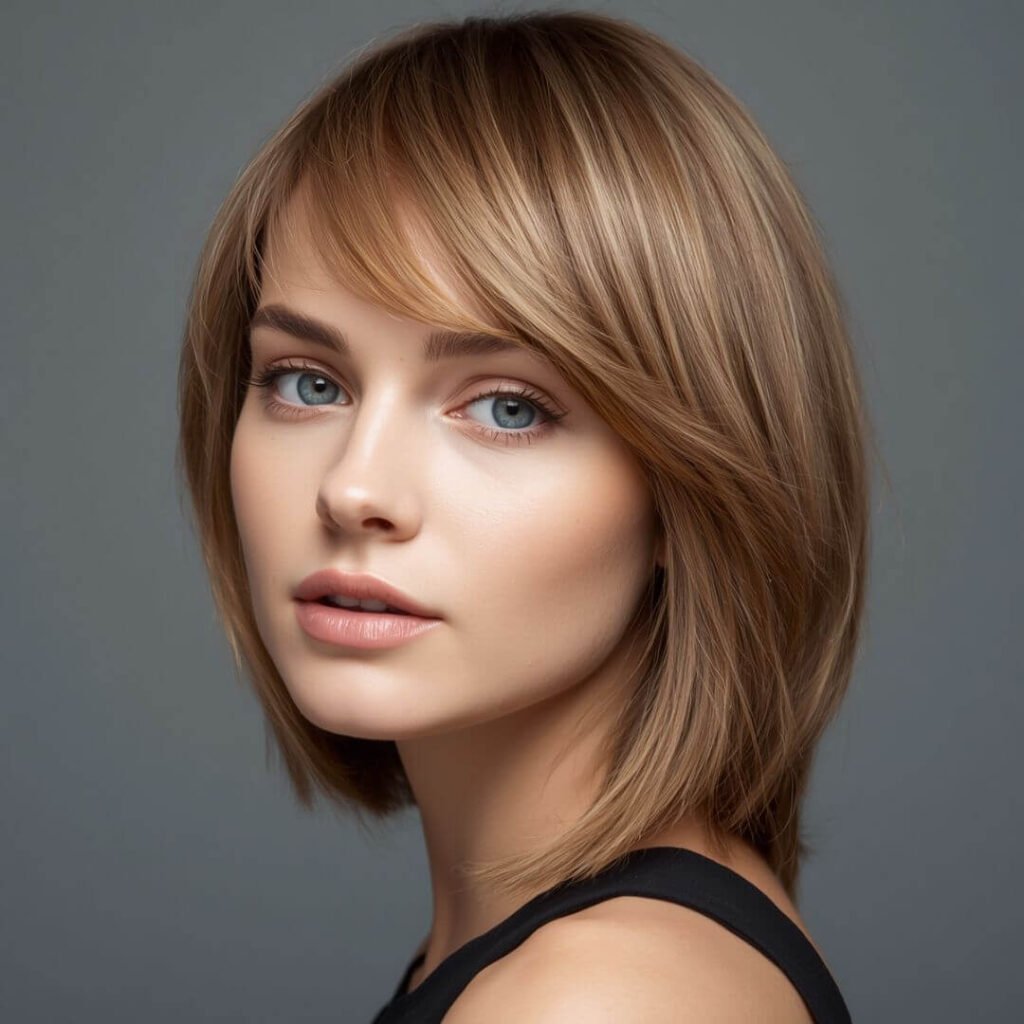
Babylights are very fine, closely placed highlights that add diffused dimension and brightness through the hair without looking obviously highlighted. For fine hair they create a visual thickness that the hair type does not naturally have. Paired with a wispy fringe and a shoulder-length lob, the babylights make the whole style look fuller and more dimensional than the cut alone would achieve.
Ask for a wispy fringe paired with a shoulder-length lob with babylights through the mid-lengths and ends that add diffused, natural brightness and dimension to fine hair, with a clean perimeter that keeps end density high.
17. Full Fringe with Blunt Shoulder Bob and Root Lift Layers
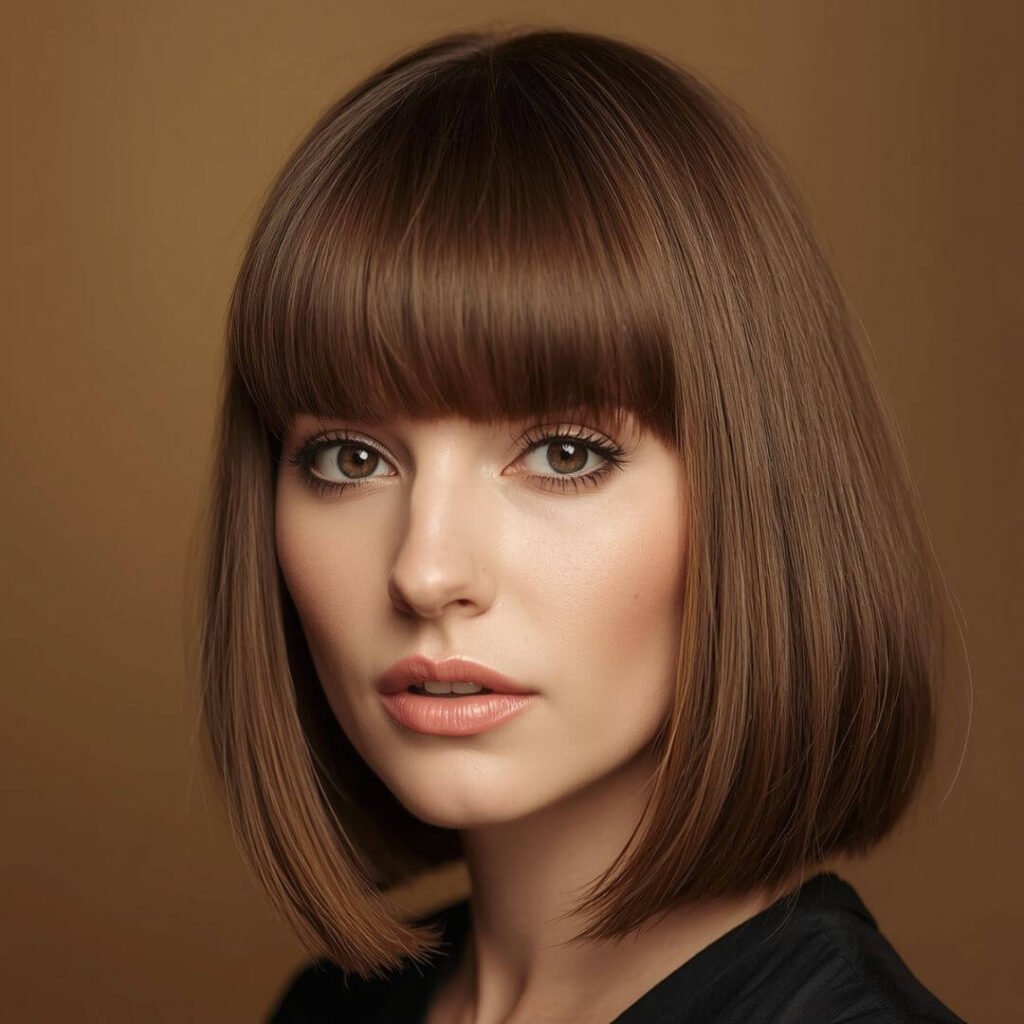
This combination uses a full fringe for maximum forehead coverage and a blunt shoulder bob for maximum end fullness, with root lift layers hidden inside the crown to add the volume at the base that fine hair loses through the day. The three elements together create a style that looks genuinely full from root to tip.
Ask for a full fringe cut to sit just above the eyebrows, paired with a blunt shoulder-length bob with invisible root-lift layering at the crown that adds volume at the base without breaking up the clean blunt perimeter.
18. Curtain Bangs with Side-Parted Shoulder Length Cut
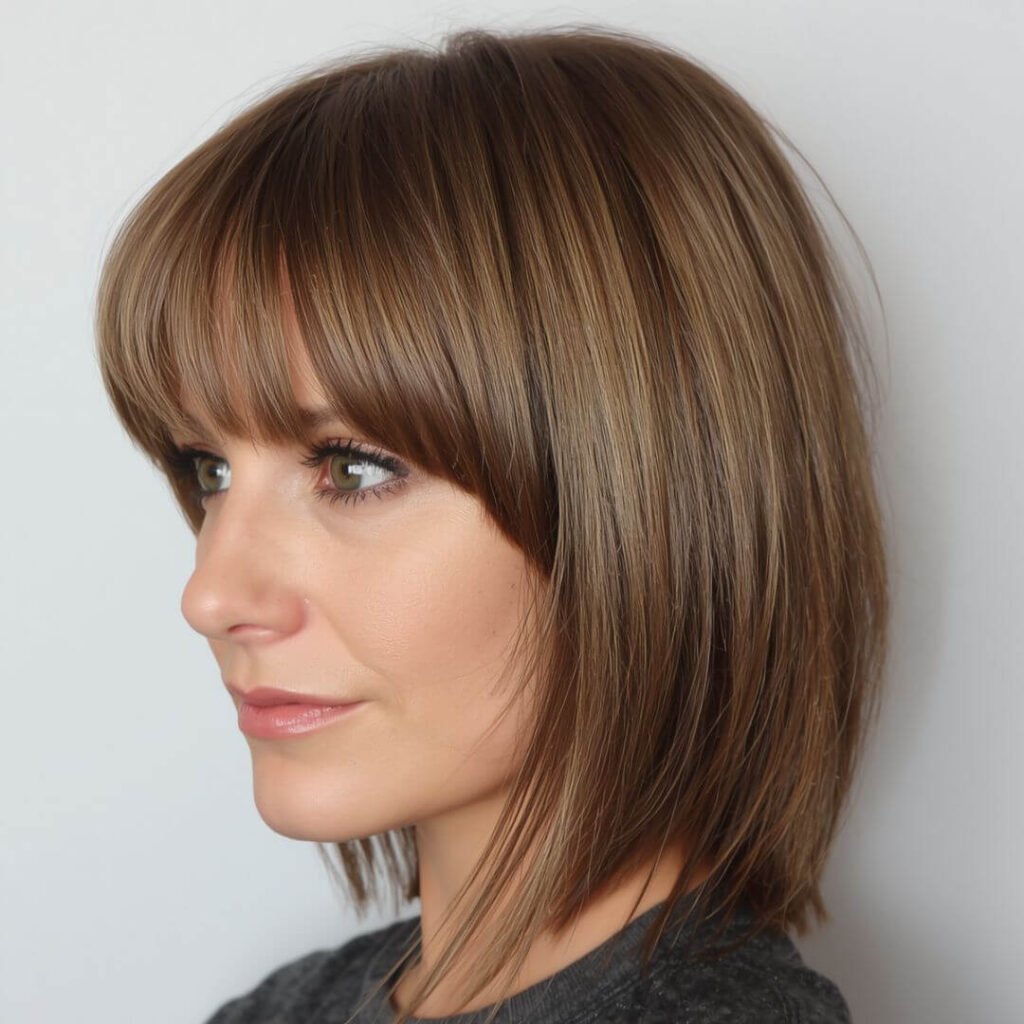
This combination uses a side part to create immediate volume on the heavier side while the curtain bangs soften the transition from the part to the forehead. The side part and the curtain bangs work together to give the front of the style maximum volume and face-framing quality without requiring density the fine hair does not have.
Ask for curtain bangs that work with a defined side part rather than a middle part, blending into a shoulder-length cut with conservative layering through the upper mid-lengths and a full, clean perimeter at the ends.
19. Feathered Side Bang with Collarbone Length Blunt Cut
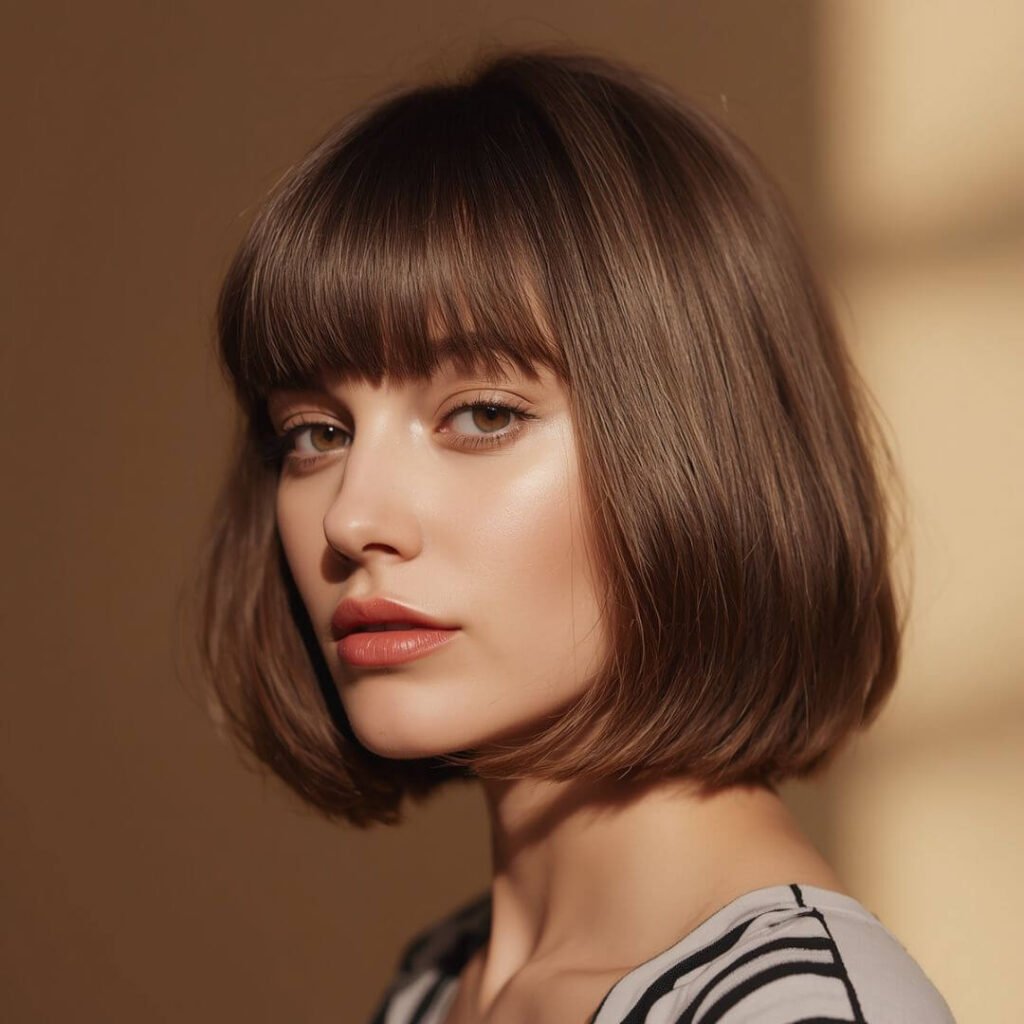
This style keeps things simple. A feathered side bang sits lightly across part of the forehead on one side, adding a soft directional element at the front without committing to a full fringe. The collarbone-length blunt cut underneath maximizes end fullness and gives the fine hair as much presence as possible through the rest of the style.
Ask for a feathered side bang that sits lightly across the forehead on one side with a soft, textured edge rather than a blunt line, paired with a blunt collarbone-length cut with a clean even perimeter and minimal interior shaping.
20. Wispy Curtain Fringe with Voluminous Root Lift Lob
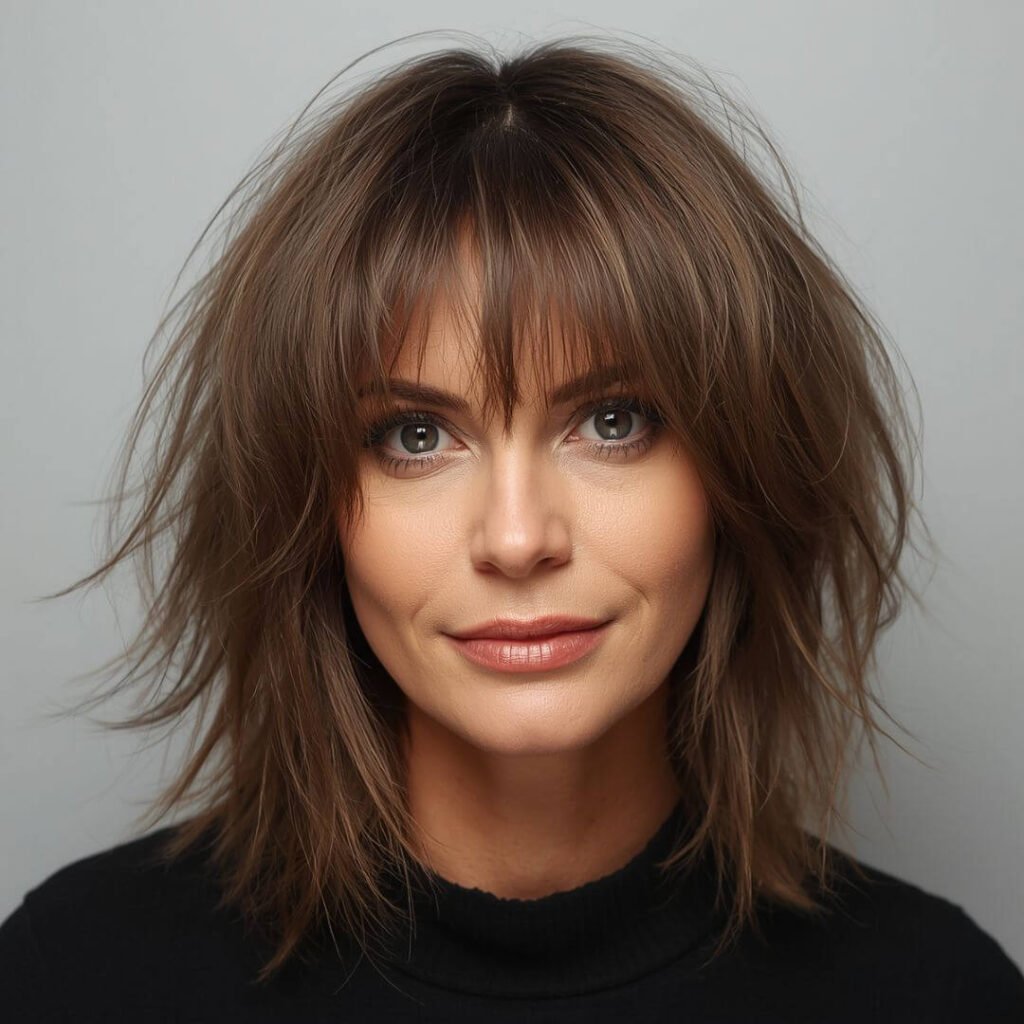
This combination takes the best elements of the wispy fringe and the curtain bang and blends them into a single fringe style that is both light and face-framing. Paired with a shoulder-length lob designed for root lift and volume, it creates a style that addresses fine hair challenges from the fringe all the way down to the ends in one cohesive approach.
Ask for a wispy curtain fringe that parts softly in the middle with a feathered, transparent quality rather than a blunt or heavy edge, paired with a shoulder-length lob with invisible root-lift layers at the crown and a clean full perimeter at the ends.
FAQs
What type of bang works best for thin fine hair?
Wispy fringes, curtain bangs, and feathered side bangs all work well for fine hair because they are naturally lighter and more transparent than a full blunt fringe. They create face-framing coverage and visual interest without demanding the density a thick fringe requires to sit properly. Full blunt fringes can work for fine hair but need to be cut conservatively and maintained regularly to avoid going flat.
How do I keep a fringe from going flat on fine hair?
A root-lifting spray or volumizing mousse applied at the roots before blow drying makes the biggest difference. Blow drying the fringe with a small round brush or your fingers directed upward and then to the side helps the hair hold a shape rather than sitting flat. A light-hold finishing spray applied after styling can also help the fringe keep its volume through the day.
Should fine hair avoid full fringes completely?
Not necessarily. A full fringe can work for fine hair when it is cut conservatively rather than very thick or blunt, and when the density of the fringe is appropriate for the amount of hair the person has. Very thin fine hair may find a full fringe hard to manage, but medium-fine hair can often carry a carefully cut full fringe well.
Can shoulder length fine hair with a fringe be air dried?
Yes, for some fringe styles. Curtain bangs and wispy side bangs tend to air dry reasonably well for fine hair because their lightness means they do not go as flat when left to dry naturally. A full blunt fringe is harder to air dry on fine hair because it tends to separate and go flat without the help of a brush and dryer to direct it into shape.
How often does a fringe on fine hair need trimming?
Every three to five weeks for most fringe styles. Fine hair fringes grow out quickly and change character as they lengthen, going from covering the forehead to sitting in the eyes in a matter of weeks. Regular fringe trims are one of the most important maintenance steps for keeping a fine hair fringe looking intentional rather than grown-out.
Wrapping Up
Fine hair at shoulder length with a fringe is not a compromise. When the fringe type matches the hair weight and the cut underneath is designed to maximize fullness where fine hair needs it most, the result is a style that looks deliberately chosen and genuinely flattering.
The 20 styles on this list cover a wide range of fringe options and shoulder length shapes, all chosen with the specific needs of thin fine hair in mind. The right combination of fringe and cut can make fine hair look more dimensional, more full, and more intentional than almost any other approach at this length. Finding the version that works for your specific hair and your daily routine is the starting point for a style that finally feels like it is working with you rather than against you.