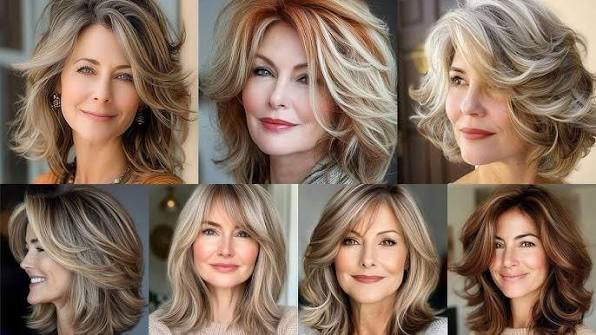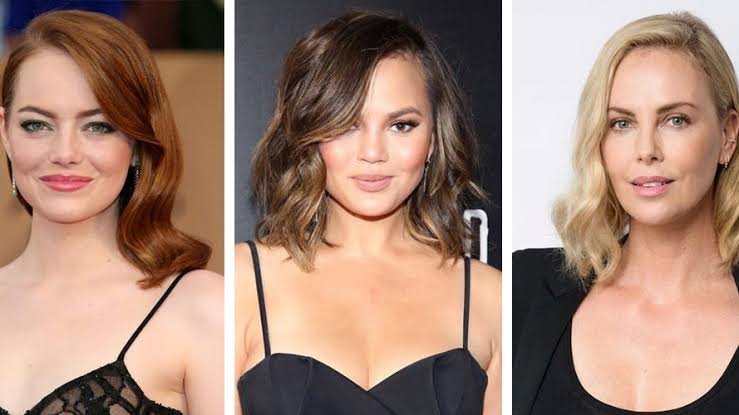
18 Hairstyles for Thin Fine Hair With Glasses
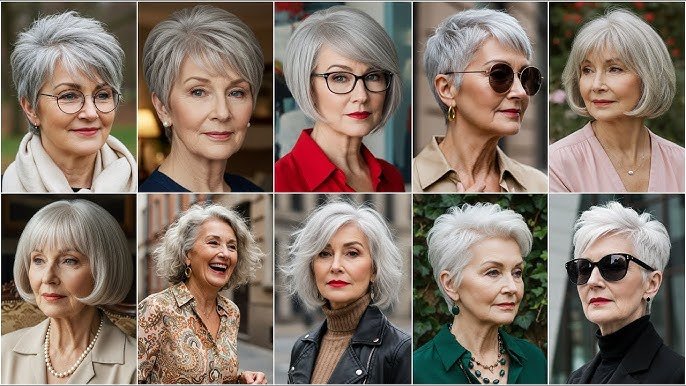
Glasses change the equation for hairstyles in ways that most people do not think about until they are standing in front of a mirror trying to figure out why a style that looked great in a photo is not working on their face. Frames add a strong horizontal element at the eye level that influences how the rest of the face reads. They add visual weight, structure, and sometimes color to the middle third of the face. The hairstyle needs to work with that rather than compete with it or disappear behind it.
For fine hair, the challenge is compounded. Fine hair already struggles to create the volume, fullness, and structure that balance the visual weight of a pair of frames. A style that goes flat through the day can make the glasses look like the only thing happening on the face, which is rarely the effect anyone is going for.
The hairstyles that work best for fine hair with glasses tend to create interest and volume above and around the glasses rather than simply framing them from below. They complement the shape and weight of the frames without echoing them too closely. And they stay looking intentional through the day rather than collapsing into flatness within a few hours.
This list covers 18 hairstyles for thin fine hair with glasses that address both the hair type and the eyewear together.
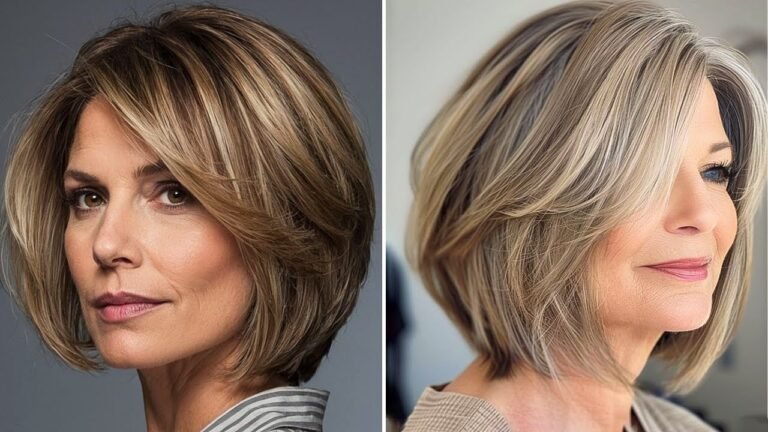
1. Side-Parted Bob with Crown Volume
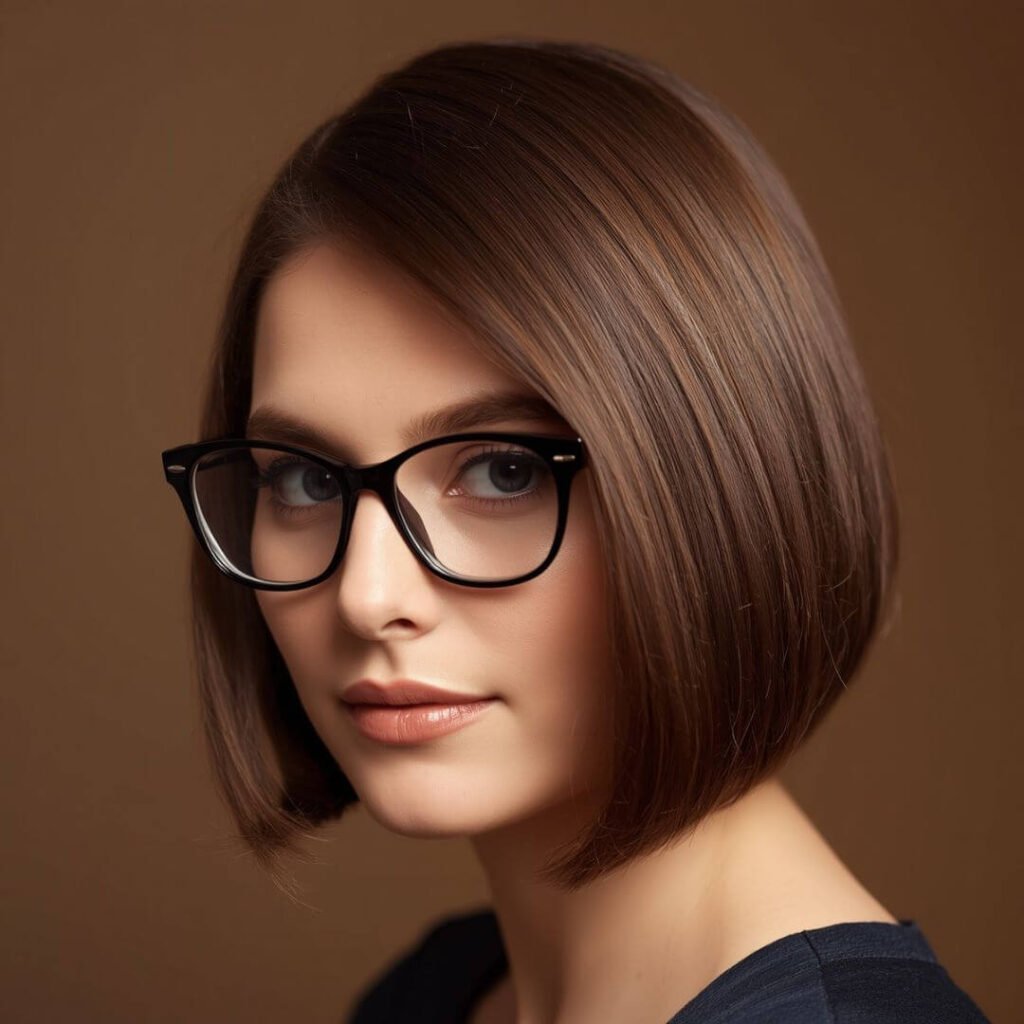
A side part creates immediate asymmetry that contrasts with the horizontal symmetry of glasses frames, and the crown volume it generates on the heavier side draws the eye upward above the glasses level. For fine hair the side part also concentrates density on one side which makes the hair look fuller than a centered part would.
Ask for a short to medium bob with a defined side part and root-lift layering through the crown that encourages volume above the glasses level, with a blunt or minimally layered perimeter that keeps the fine hair as dense as possible at the ends.
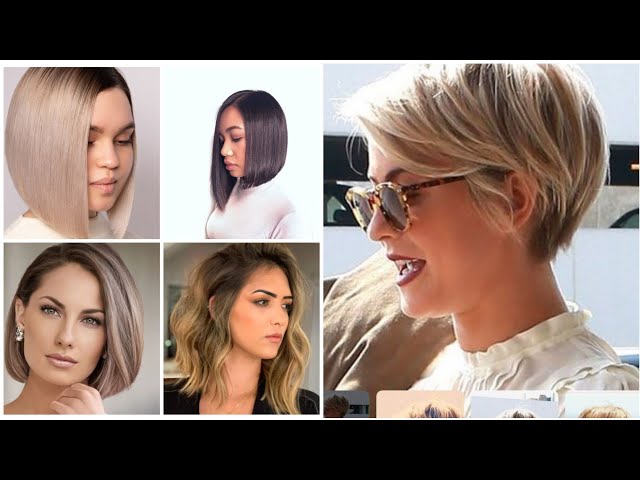
2. Voluminous Pixie with Lifted Crown
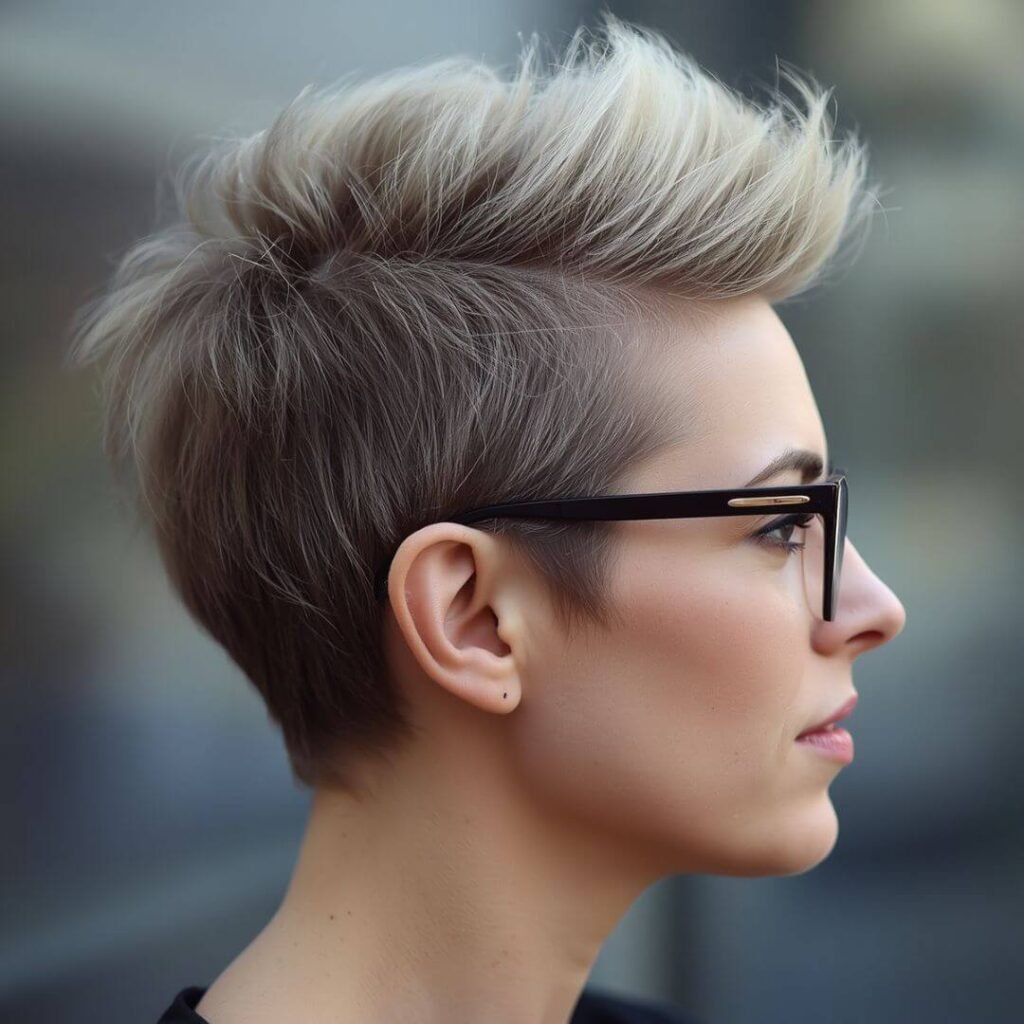
A pixie with a lifted crown draws the eye upward above the glasses frames and creates a strong shape at the top of the head that balances the visual weight of the eyewear below. For fine hair the short length means the crown lift layers have less weight to work against and can create more visible volume than they would achieve in longer hair.
Ask for a short pixie with crown layering cut specifically to create lift and volume above the glasses level, close tapered sides that keep the overall shape proportional, and enough crown length to hold the lifted shape with minimal product.
3. Textured Lob with Root Lift
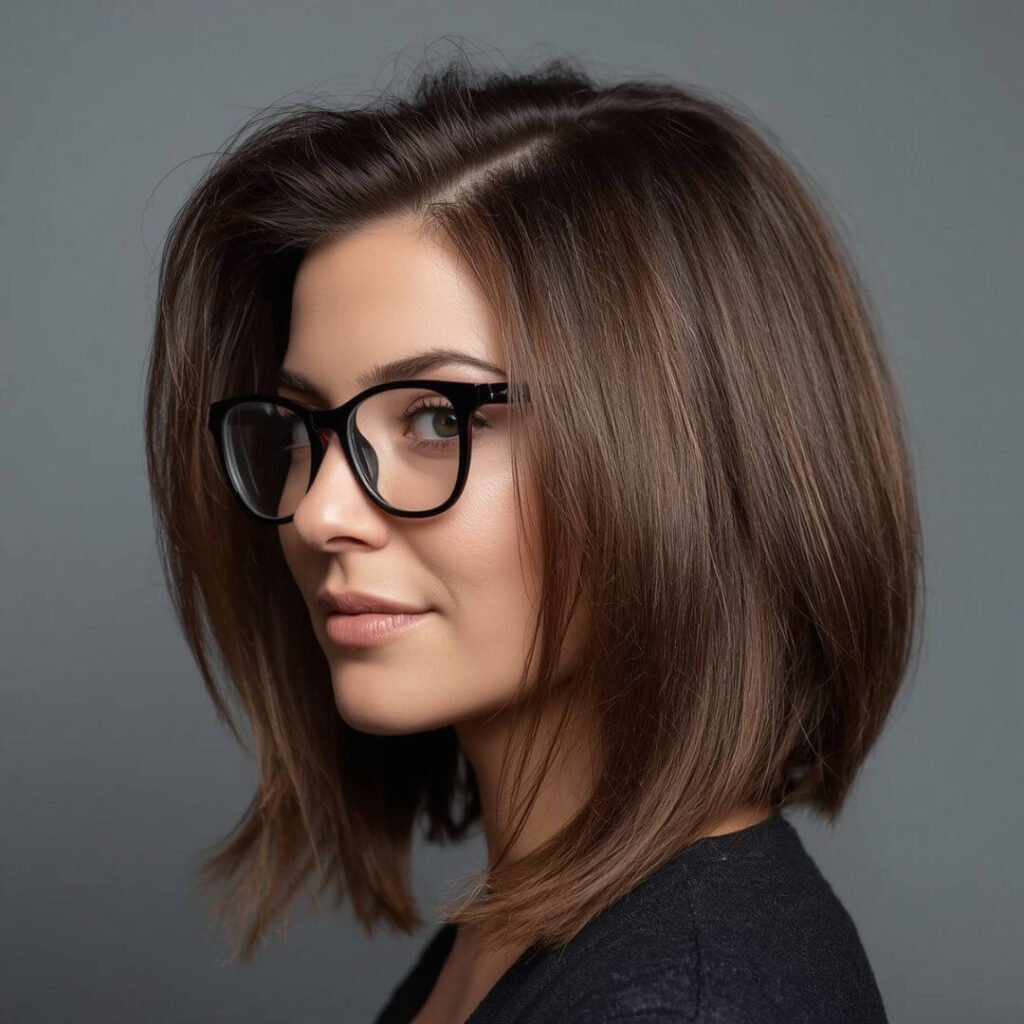
A textured lob at shoulder length with root lift layering creates volume that starts above the glasses and carries through the rest of the length. For fine hair with glasses the key is keeping the volume concentrated at the crown and upper sections rather than at the sides where it would echo the horizontal line of the frames and add width at the wrong level.
Ask for a shoulder-length lob with root-lift layering through the crown and upper mid-lengths that creates volume above the glasses level, with point-cut texturing through the mid-lengths for dimension and a full perimeter that keeps the fine hair ends dense.
4. Curtain Bangs with Volume Lob
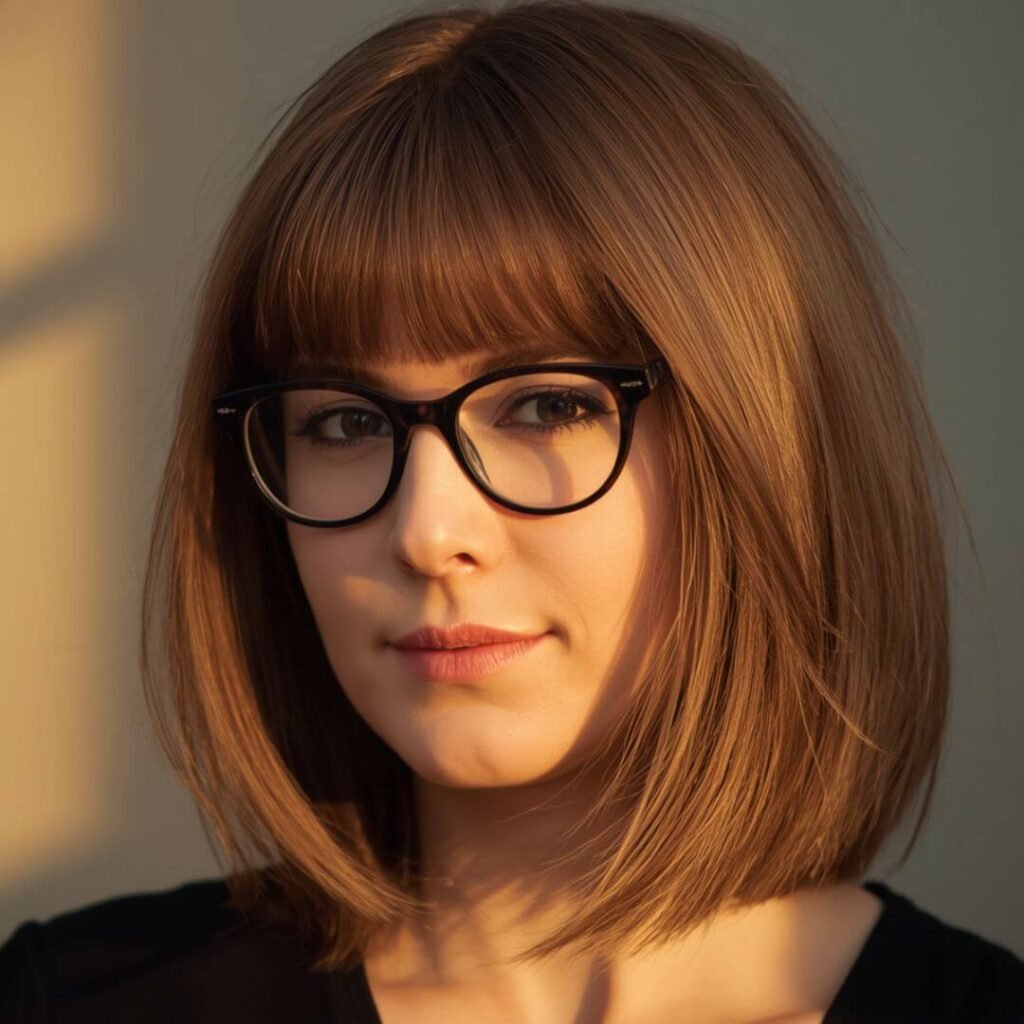
Curtain bangs interact with glasses in a specific way, sitting just above or at the top of the frames and creating a soft horizontal element that connects visually with the eyewear without competing with it. For fine hair curtain bangs are one of the lighter fringe options available and do not demand the density a full fringe requires.
Ask for curtain bangs that sit at or just above the top of the glasses frames, blending into face-framing layers at the sides, paired with a shoulder-length lob with conservative upper layering that keeps the ends as full as possible for fine hair.
5. Wispy Fringe with Blunt Bob
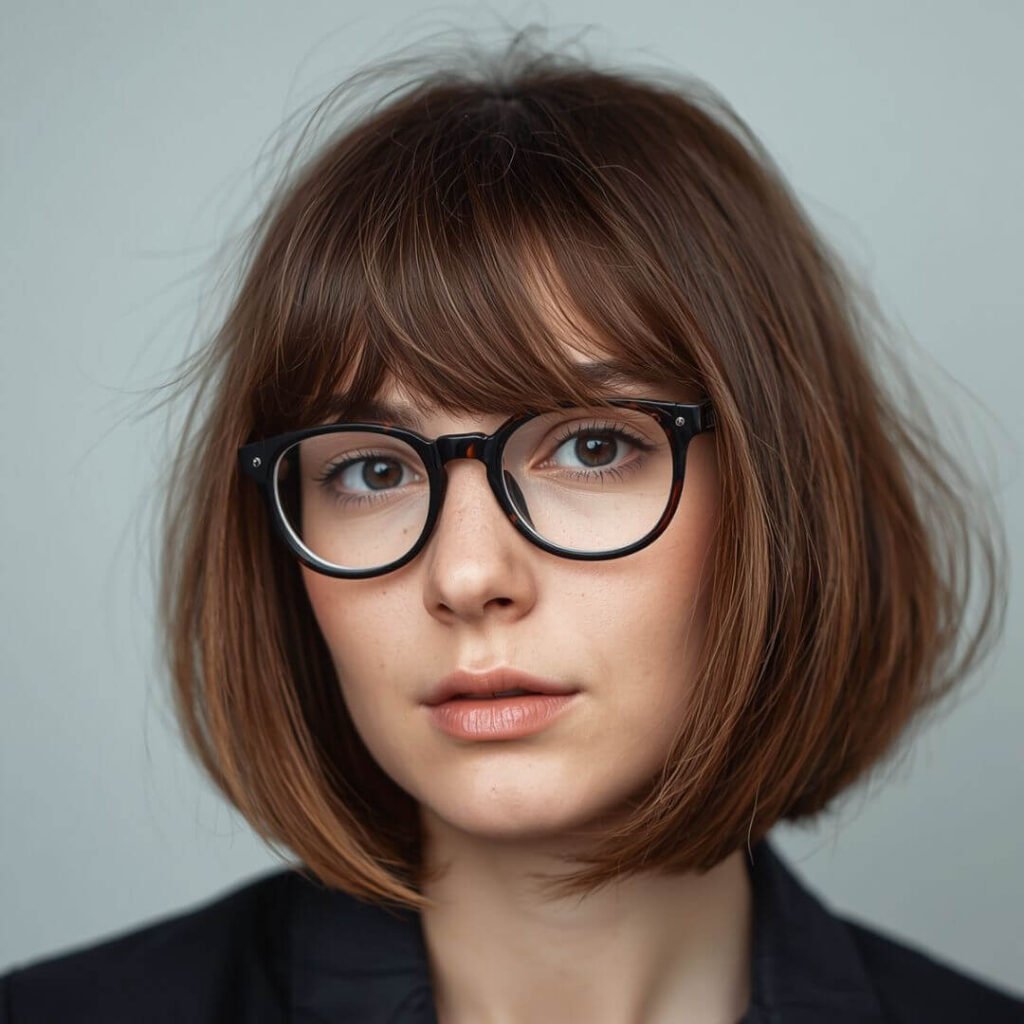
A wispy fringe sits lightly across the forehead and partially covers the top of the glasses frames, which can reduce the visual dominance of heavy frames and create a more balanced relationship between the hair and the eyewear. For fine hair a wispy rather than full fringe is more manageable and does not demand density the hair cannot provide.
Ask for a wispy fringe that sits across the forehead and partially covers the top edge of the glasses frames, paired with a blunt shoulder-length bob that maximizes fine hair end density and keeps the overall style looking full and intentional.
6. Side-Swept Bang with Layered Cut
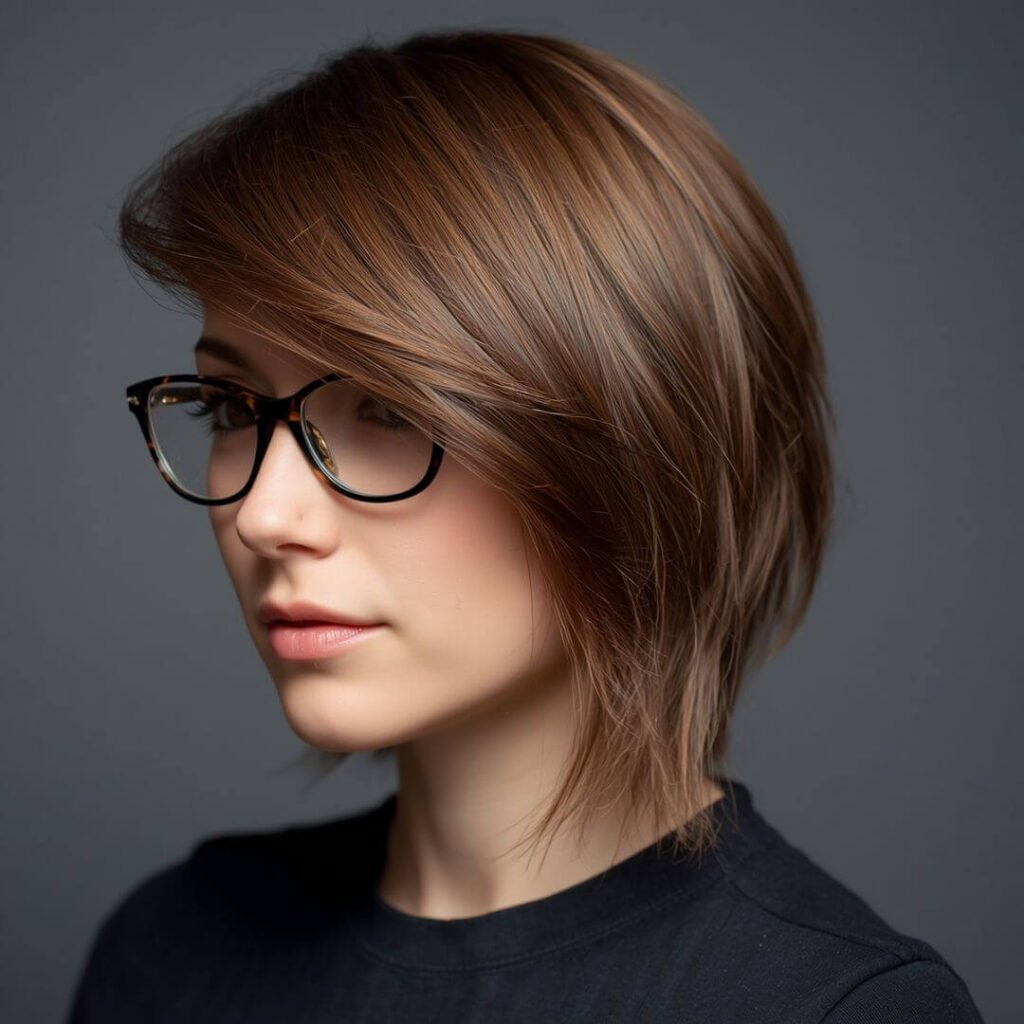
A side-swept bang creates a diagonal line at the forehead level that cuts across the horizontal line of the glasses frames, breaking up the symmetry and adding a directional element that makes the overall style look more dynamic. For fine hair the side sweep uses less of the front section density than a full fringe and does not go as flat through the day.
Ask for a side-swept bang that sweeps across the forehead and partially covers one side of the glasses frames, paired with a layered cut at shoulder length or shorter with conservative upper mid-length layering that preserves fine hair end density.
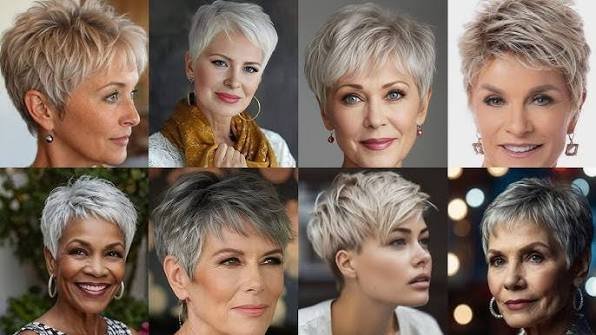
7. Short Textured Crop with Crown Height
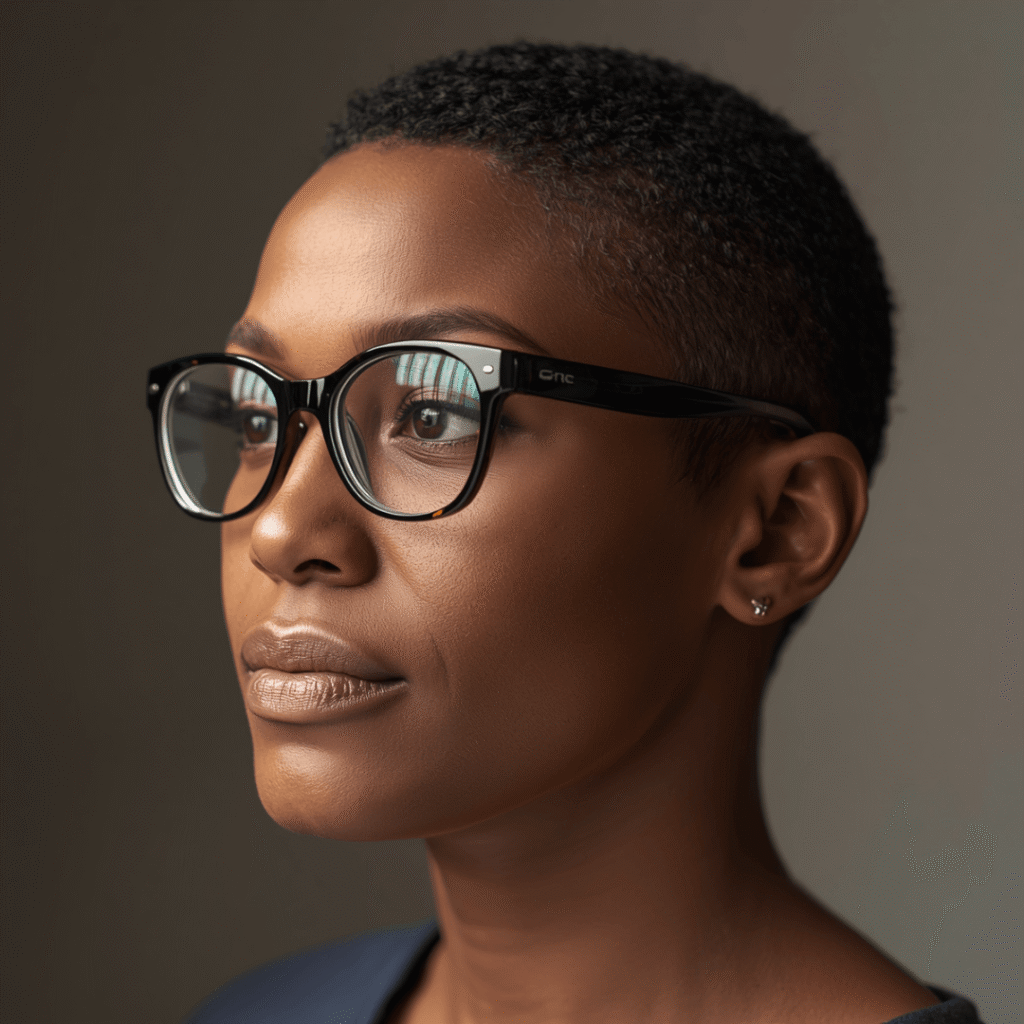
A short textured crop cut to create height specifically at the crown draws the eye upward above the glasses and creates a strong silhouette that balances the visual weight of the frames. For fine hair the short length means the texture and height are easier to maintain through the day than they would be with more length to weigh the style down.
Ask for a short textured crop with layering through the crown concentrated to create height above the glasses level, with close sides that keep the shape proportional and a finish that works with the natural texture of fine hair rather than fighting it.
8. Soft Layers with Face-Framing Pieces
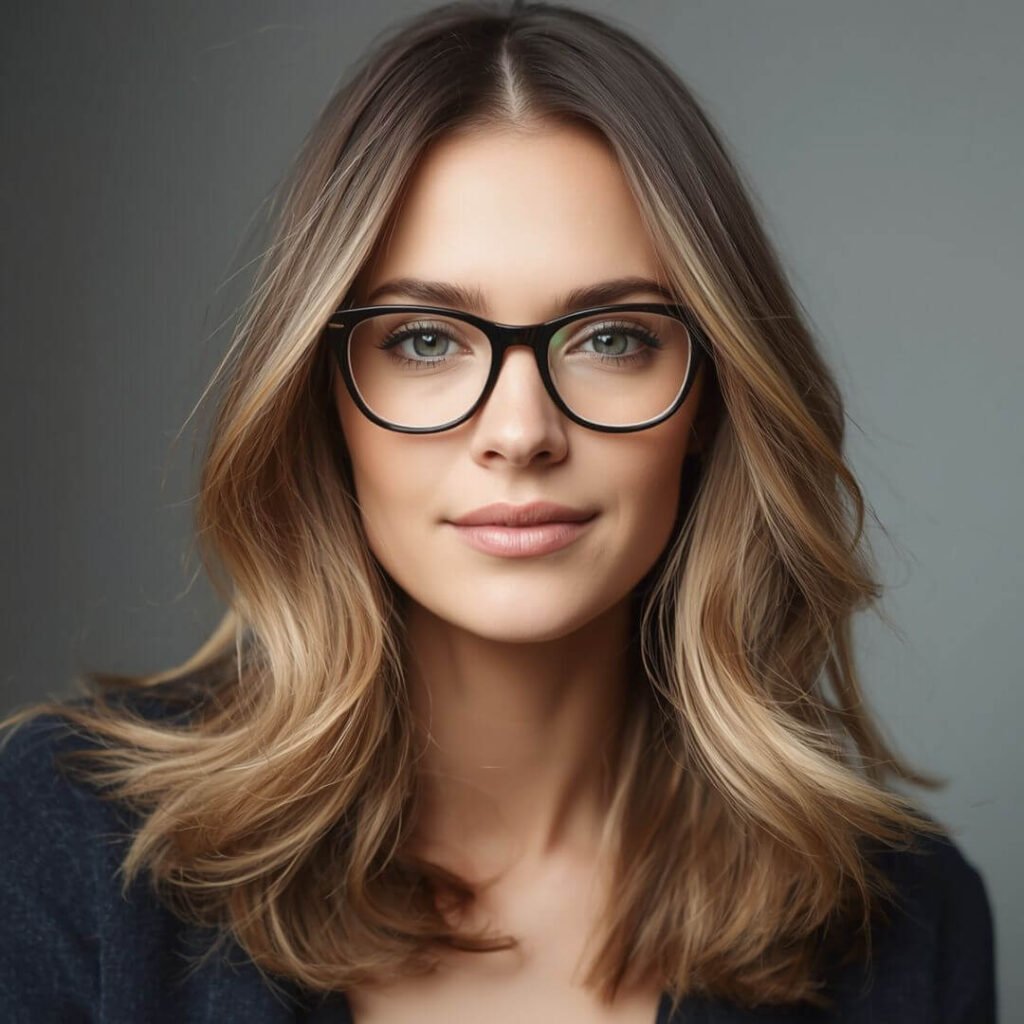
Soft layers with face-framing pieces that start around the temple level create a framing effect that works alongside the glasses frames rather than against them. For fine hair the face-framing layers need to be placed conservatively to avoid removing too much density, but when done correctly they create a flowing transition between the hair and the eyewear that looks considered and flattering.
Ask for a shoulder-length cut with soft conservative face-framing layers starting around the temple level that create a gradual frame around the glasses, with the body of the cut kept as full and dense as possible for fine hair.
9. Blunt Bob at Jaw Level
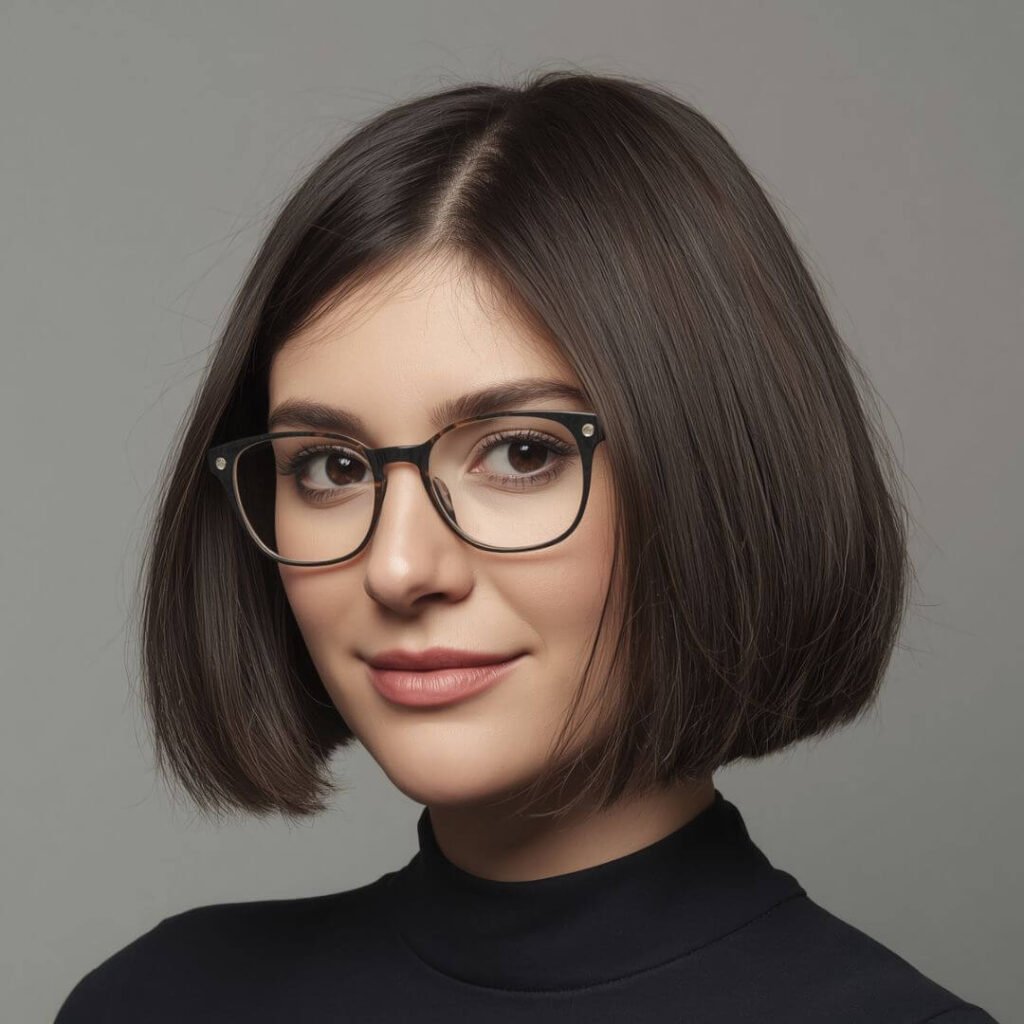
A blunt jaw-length bob creates a strong horizontal line at the jaw that balances the horizontal line of the glasses frames by echoing it at a different level of the face. For fine hair the blunt perimeter maximizes end density, and the jaw-level length draws attention to the lower face in a way that creates a visual counterpoint to the glasses above.
Ask for a blunt bob cut to sit at jaw level with a clean even perimeter and minimal interior layering, relying on the weight and density of the blunt edge to give fine hair maximum fullness at the ends.
10. Half-Up Style with Crown Volume
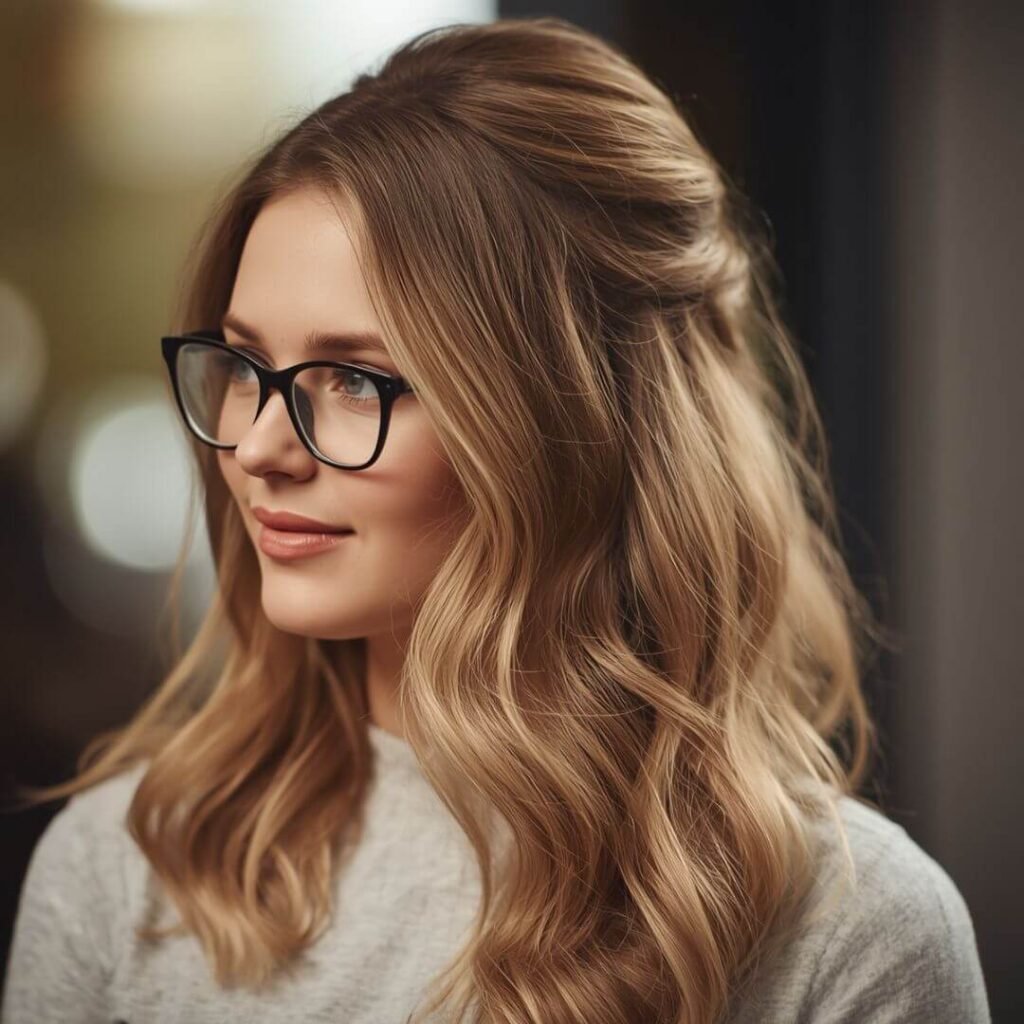
A half-up style that gathers the top section and creates volume at the crown draws the eye upward above the glasses frames and gives the overall style a sense of lift and fullness that fine hair worn completely down often cannot achieve. The lower sections worn down add length and movement that balances the gathered crown section.
Ask for a half-up style with the top section gathered to create crown volume above the glasses level, with root-lift layering or light backcombing at the crown before securing the top section, and the lower sections finished with soft waves or a light blowout for movement.
11. Layered Pixie Bob with Side Sweep
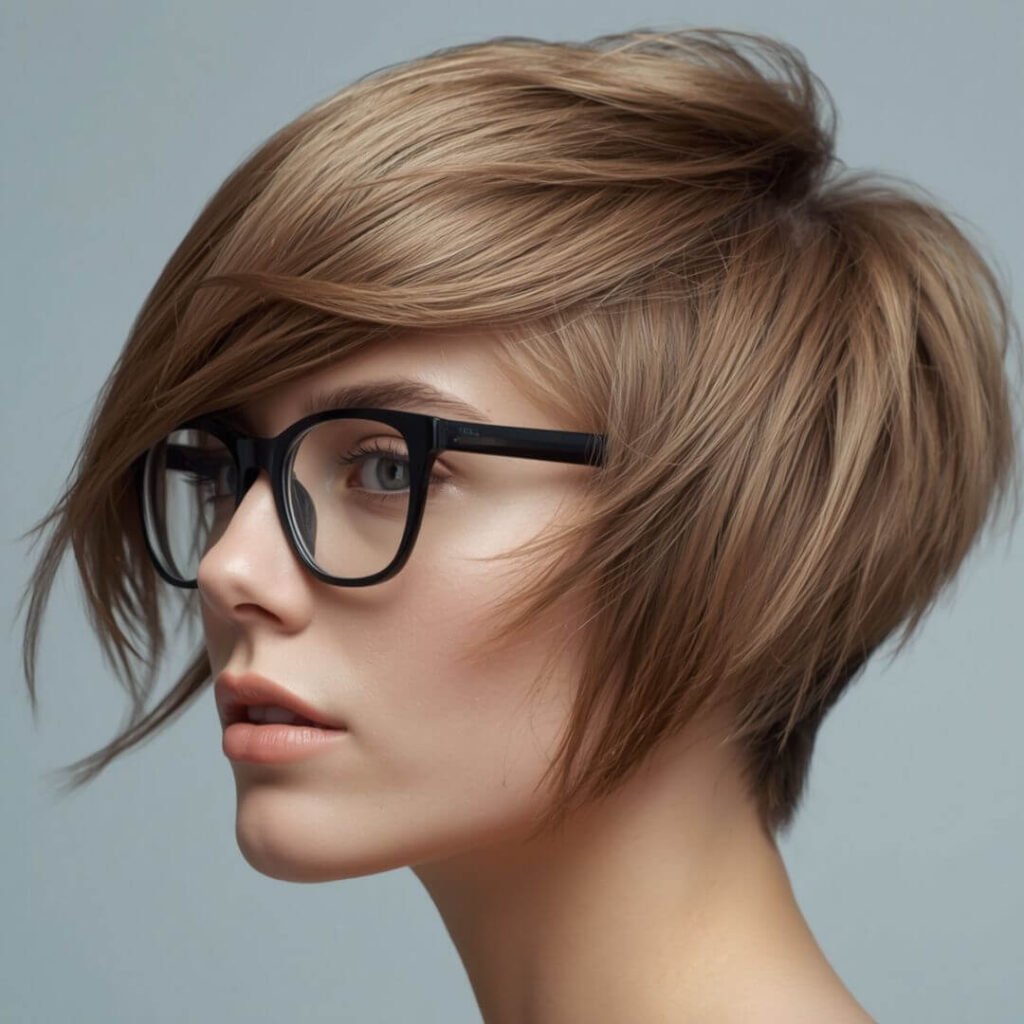
A pixie bob with a side sweep creates volume and direction above and across the glasses frames that draws the eye along a diagonal rather than straight across the horizontal line of the eyewear. For fine hair the shorter length of a pixie bob means the side sweep holds through the day more reliably than a longer side-swept style would.
Ask for a pixie bob with a side sweep through the crown and front that creates movement and volume above the glasses frames, with close sides that keep the overall shape proportional and conservative layering that preserves fine hair density at the perimeter.
12. Voluminous Blowout Bob with Side Part
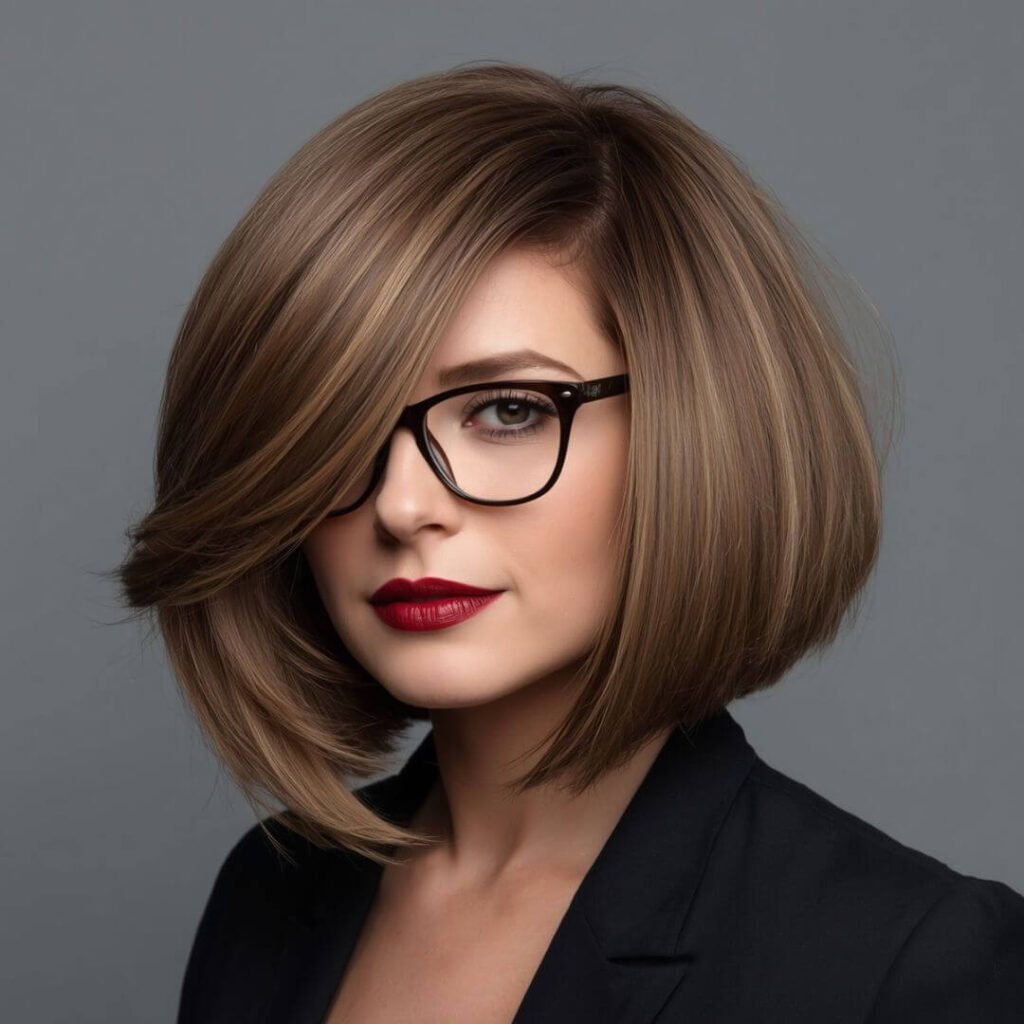
A voluminous blowout bob with a deep side part creates the maximum possible volume and height for fine hair above the glasses level. The side part concentrates density on one side and the blowout technique adds body throughout that a natural air-dry finish for fine hair would not achieve. For a special occasion or an important day this is one of the most impactful options.
Ask for a bob with a deep side part and a voluminous blowout finish using root-lifting products before drying and a firm hold setting spray after, creating maximum height and volume above the glasses frames that holds through the day for fine hair.
13. Soft Updo above Glasses Level
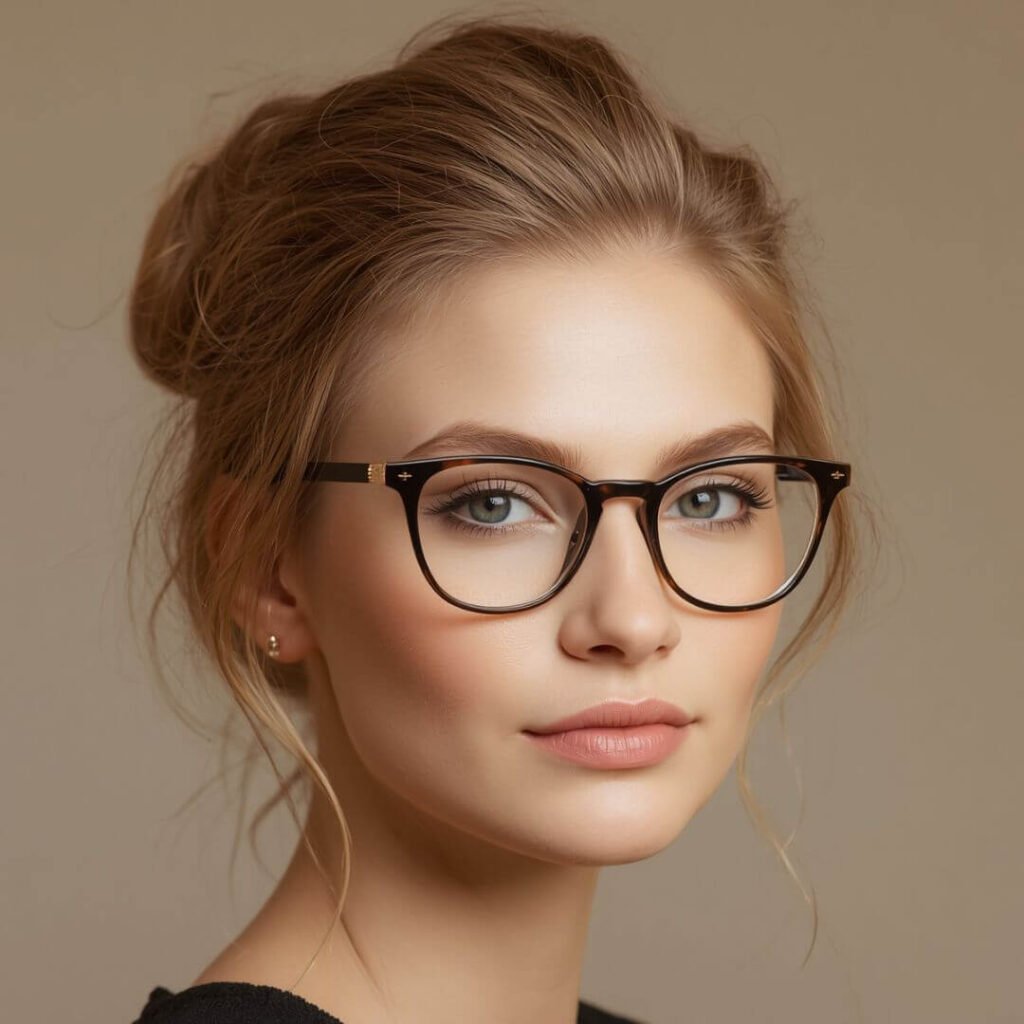
A soft updo that gathers all the hair above the neck creates a clean, open look that lets the glasses read as the main feature of the face rather than competing with the hair for attention. For fine hair an updo is one of the most practical options because the gathering of the hair creates more apparent volume and fullness than the hair has when worn down.
Ask for a soft updo with the hair gathered smoothly or loosely above the nape, with soft face-framing pieces left loose around the temples and cheekbones to soften the look and create a transition between the hair and the glasses frames.
14. Graduated Bob with Crown Stacking
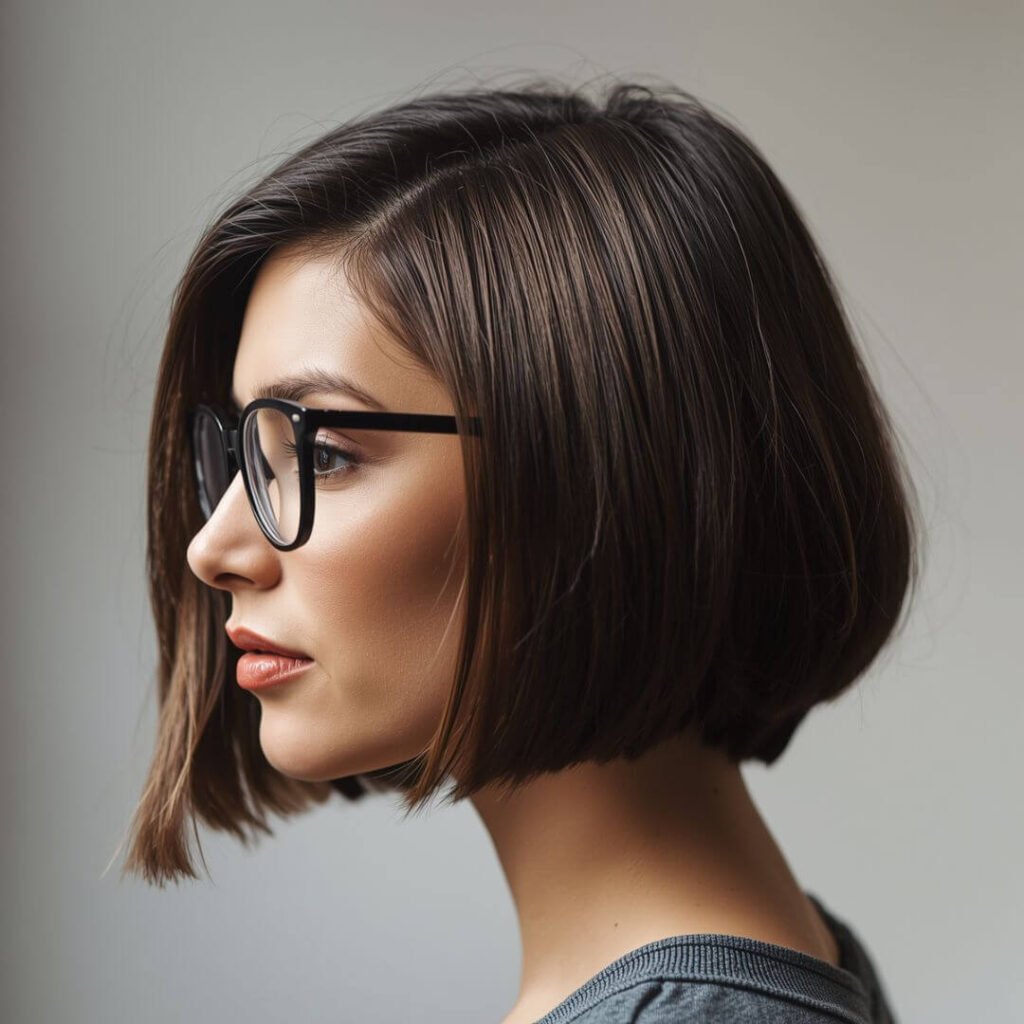
A graduated bob with stacking at the back creates crown lift that draws the eye upward above the glasses and adds height to the overall profile of the style. For fine hair the structural lift of the stacking means the volume comes from the cut rather than from the density of the hair, which makes it a more reliable approach than relying on styling alone to create height.
Ask for a graduated bob with close stacking at the back that creates crown lift and volume above the glasses level, a longer front that frames the face around the glasses, and a perimeter kept as dense as possible for fine hair.
15. Loose Waves with Root Lift
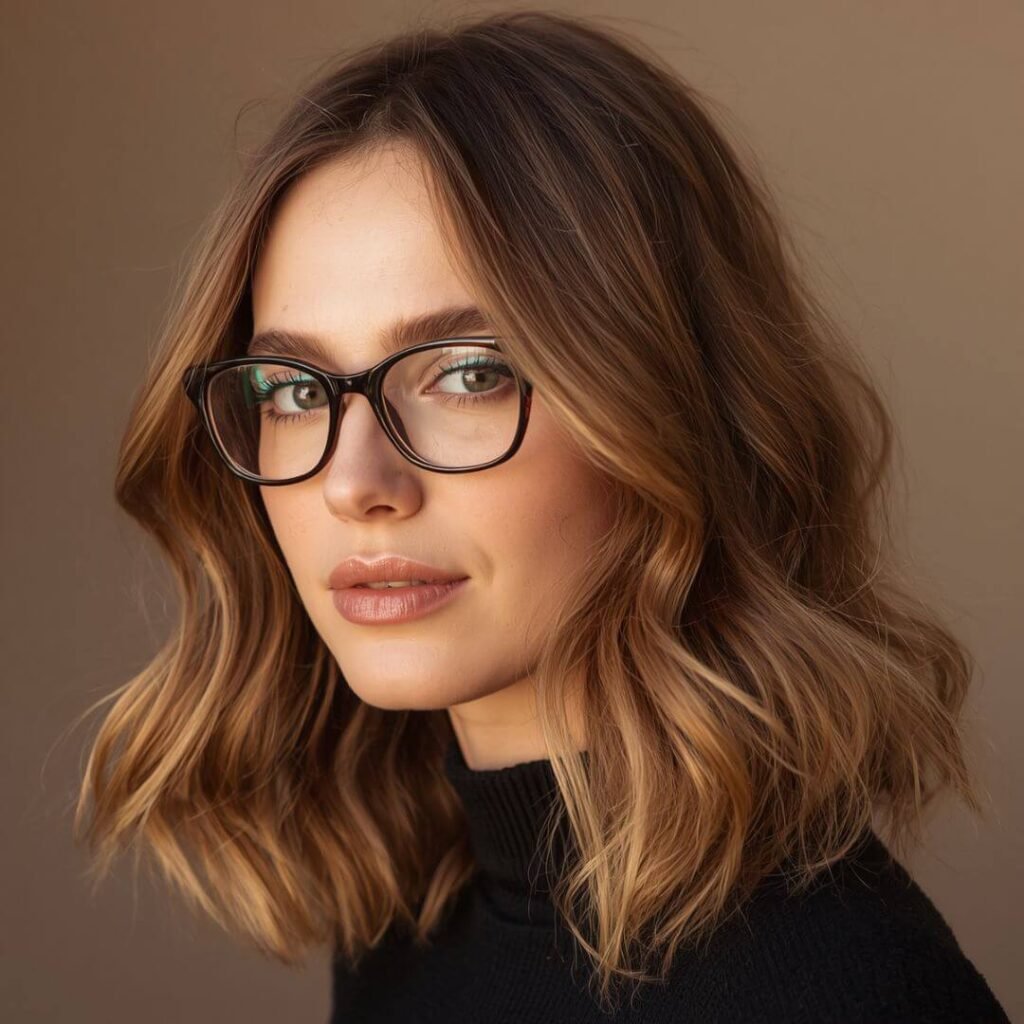
Loose waves worn down with root lift are one of the most versatile and flattering options for fine hair with glasses because the waves add volume and movement throughout the style while the root lift creates height above the glasses level. The combination of height and wave movement gives fine hair significantly more presence than it has when worn flat and straight.
Ask for a shoulder-length cut with root-lift layering through the upper sections, blown dry or set with a wand to create loose waves through the mid-lengths and ends, and finished with a light-hold setting spray that helps the waves and root lift hold through the day.
16. Asymmetric Bob with Deep Part
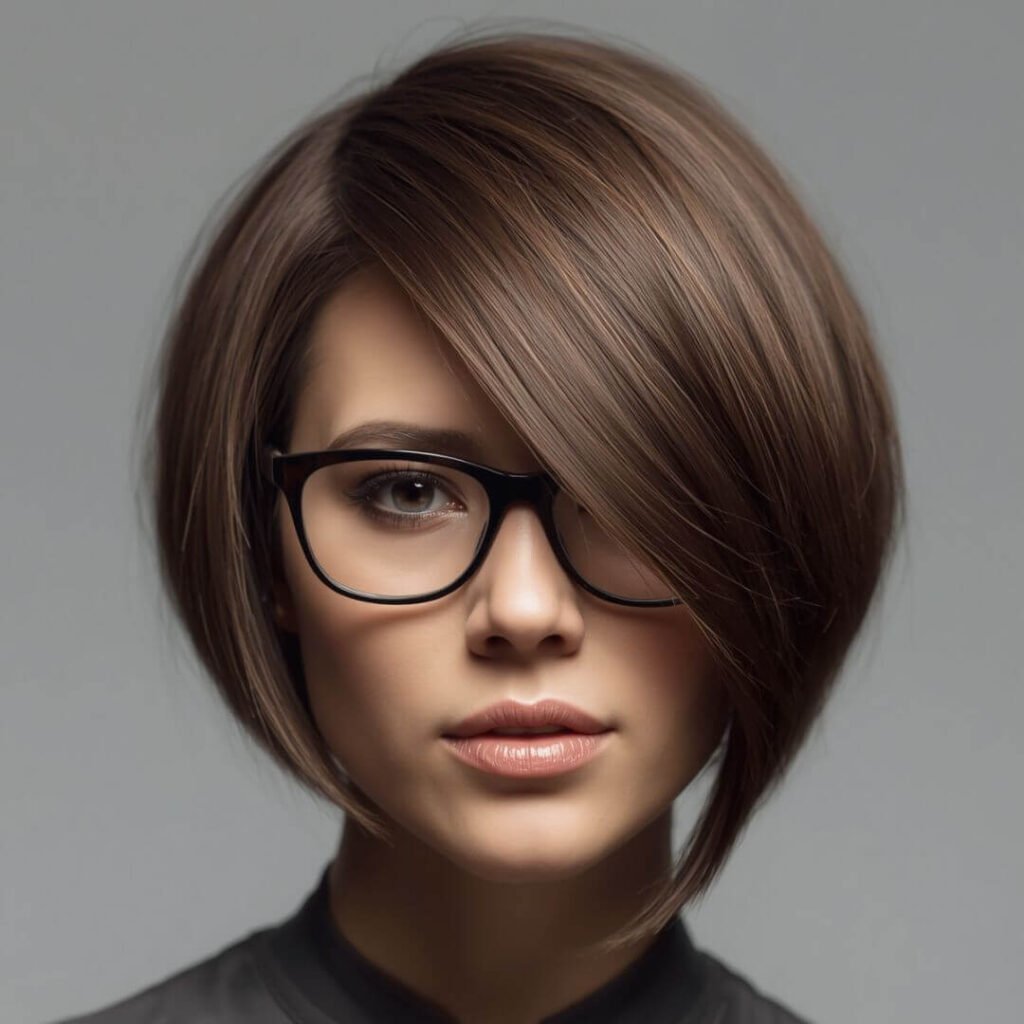
An asymmetric bob with a deep part creates strong diagonal lines that contrast with the horizontal symmetry of glasses frames and draw the eye across the face in a more dynamic way. For fine hair the asymmetry also concentrates more of the hair on one side which increases the apparent density and gives the style a more full and intentional look than a symmetrical fine hair bob might achieve.
Ask for an asymmetric bob with a deep part and one side sitting noticeably longer than the other, with light interior layering on both sides that preserves perimeter density and an overall shape that creates strong diagonals to contrast with the horizontal glasses frames.
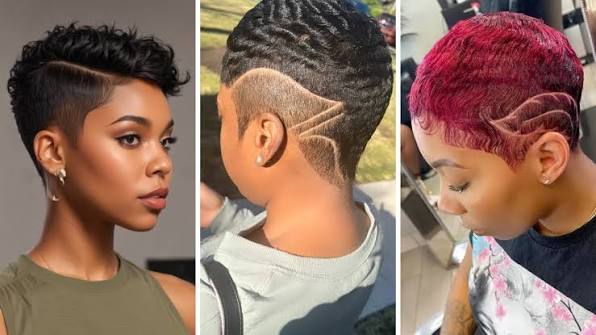
17. Textured Crop with Natural Movement
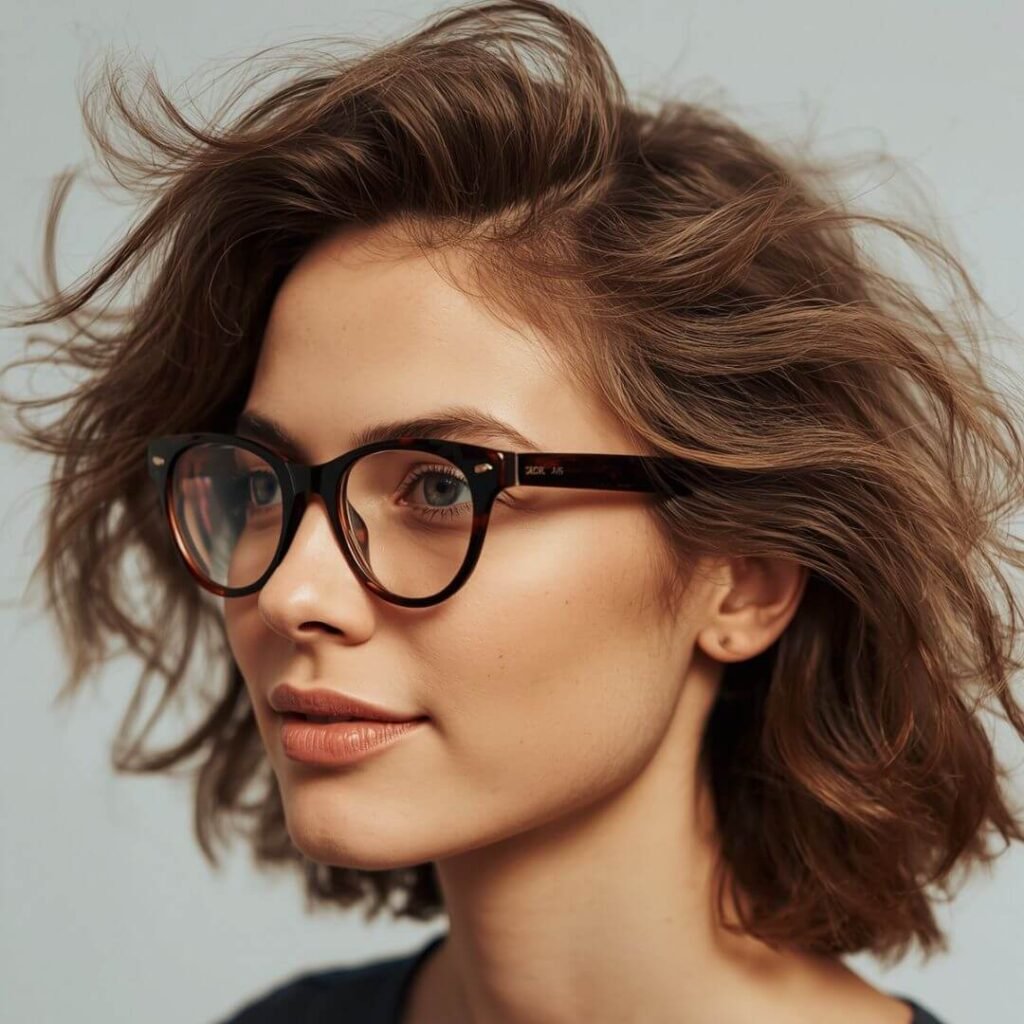
A textured short crop that works with the natural movement of fine hair rather than trying to smooth or override it creates a style that stays looking intentional through the day with minimal maintenance. For fine hair with glasses the natural texture adds visual interest above the frames that a smooth, flat crop would not, giving the glasses a more interesting context within the overall look.
Ask for a short textured crop shaped to work with the natural movement and texture of fine hair, with layering through the crown that creates visible movement above the glasses level and a clean outline at the edges that keeps the style looking neat and deliberate.
18. Soft Bob with Babylights
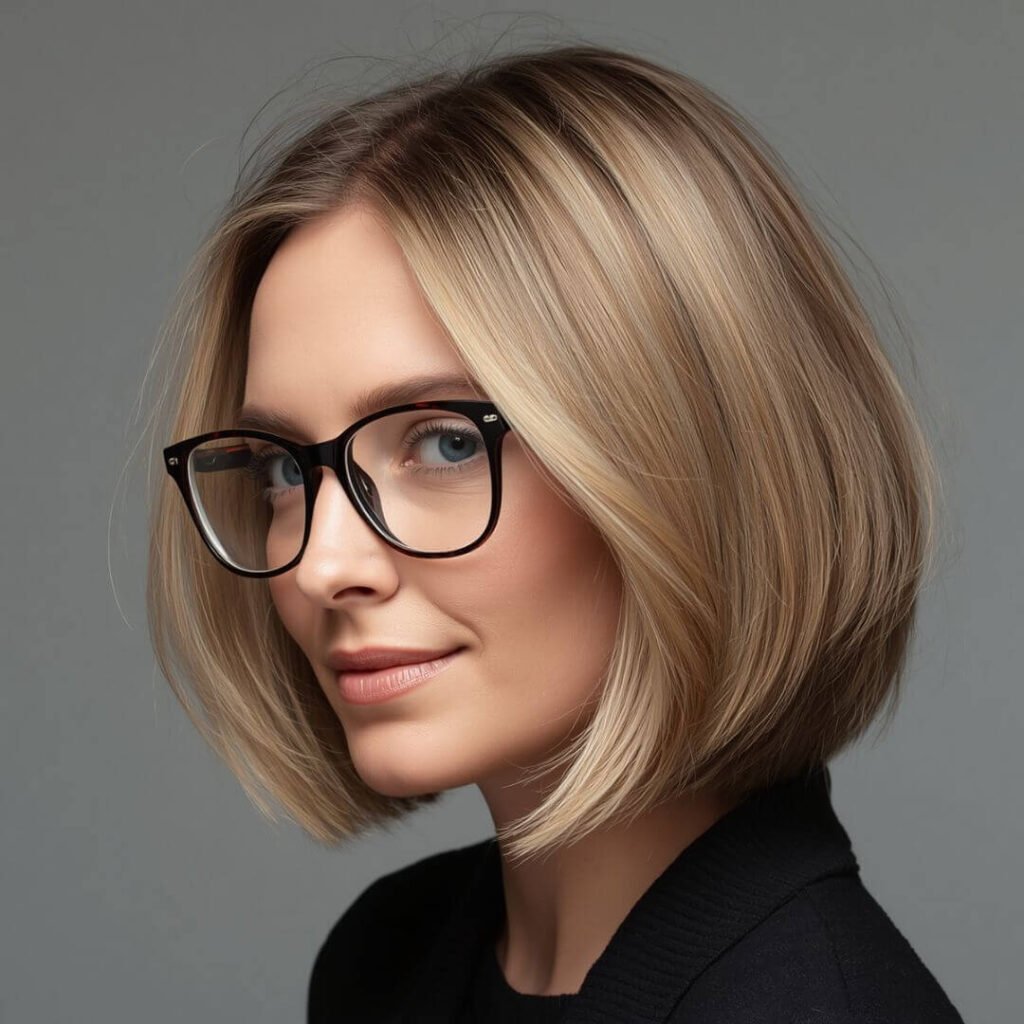
Babylights through a soft bob add diffused dimension and visual depth that make fine hair look thicker and more textured than it is. For fine hair with glasses the added dimension that babylights create gives the hair more visual presence alongside the frames, preventing the glasses from being the only element with depth and texture in the overall look.
Ask for a soft bob with babylights through the mid-lengths and ends that add diffused brightness and the impression of more texture and density, paired with conservative upper layering that adds root lift and movement while keeping the fine hair ends as full and dense as possible.
FAQs
Should hairstyles for glasses avoid volume at the sides?
Generally yes, particularly for wider or heavier frames that already add horizontal width at the eye level. Volume concentrated at the crown creates height that draws the eye upward and balances the frames, while volume at the sides echoes the horizontal line of the glasses and can make the face look wider than it is. For fine hair this is also more practical because crown volume is easier to create and maintain than side volume.
What fringe works best with glasses for fine hair?
Wispy fringes, curtain bangs, and side-swept bangs all work better than a full blunt fringe for fine hair with glasses. A full blunt fringe on fine hair tends to go flat and sit on top of the frames rather than interacting with them in a flattering way. Lighter fringe options create a more dynamic relationship with the frames and are significantly more manageable for fine hair through the day.
Can fine hair with glasses wear an updo?
Yes, and updos are often a particularly good choice for fine hair with glasses because they create a clean, open look that lets the glasses sit clearly within the overall style without competing with large amounts of hair. An updo also creates the appearance of more fullness than fine hair worn down, because the gathering creates volume that the hair does not have naturally.
How do I stop fine hair going flat with glasses through the day?
Using a volumizing mousse or root-lifting spray applied before blow drying is the most effective starting point. Blow drying the roots upward and away from the scalp rather than downward adds body that lasts longer than air-dried fine hair. A firm hold setting spray applied after styling and allowed to dry completely before touching the hair helps the volume stay in place through the day. Dry shampoo applied at the roots midway through the day can also revive fine hair that has started to go flat.
Do glasses frames affect which haircut length works best for fine hair?
Yes, to some extent. Larger, heavier frames tend to suit styles with more height at the crown to balance the visual weight of the eyewear. Smaller, more delicate frames are more versatile and work well with a wider range of lengths and styles. For fine hair the most important factor is always choosing a length and shape that maximizes the appearance of fullness, but the frame style is worth considering as part of that decision rather than as a separate one.
Wrapping Up
Fine hair with glasses is a combination that rewards careful thought about the relationship between the hairstyle and the eyewear. The two elements are both present in every photograph and in every first impression, which means they need to work together rather than simply coexisting.
The 18 styles on this list are chosen with both elements in mind. Some use volume and height to balance the frames from above. Others use diagonal lines and asymmetry to create contrast with the horizontal symmetry of eyewear. All of them address the needs of fine hair at the same time. Finding the combination that works for your specific frames, your hair type, and your face shape is the starting point for a style that looks considered and intentional from every angle.