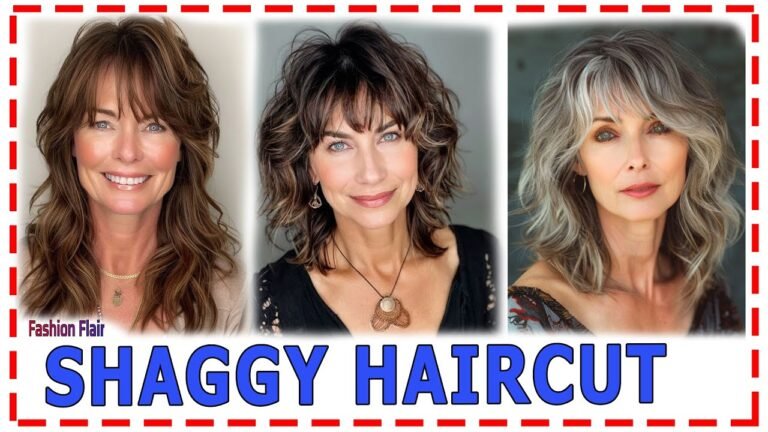
18 Shaggy Hairstyles for Women Over 50
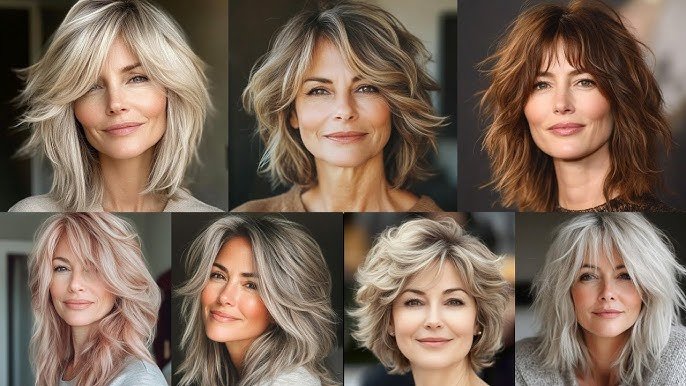
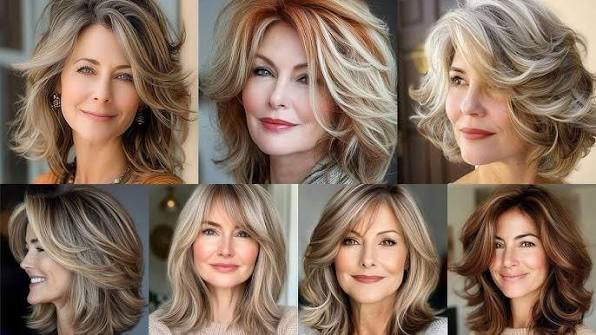
A shag cut over 50 is not the same conversation as a shag cut at 25. The hair has usually changed. It might be finer, drier, or less dense than it used to be. The face has changed too. What frames it well now is different from what worked decades ago. A shag that works for women over 50 has to account for all of that.
The good news is that the shag is one of the most adaptable cuts available. You can dial the layering up or down depending on your hair type. You can add curtain bangs or skip them entirely. You can wear it textured and relaxed or give it a quick blowout for something more polished. It is a cut that suits a lifestyle more than an age.
Before you pick a style, think about where you want the volume. If your hair collapses at the crown, you want the shorter layers concentrated there. If the ends are the issue, softer layering through the mid-lengths helps. Either way, ask your stylist to go lighter on the thinning shears. Over-thinned ends are the most common mistake made on shag cuts for finer mature hair.
1. Soft Crown Shag
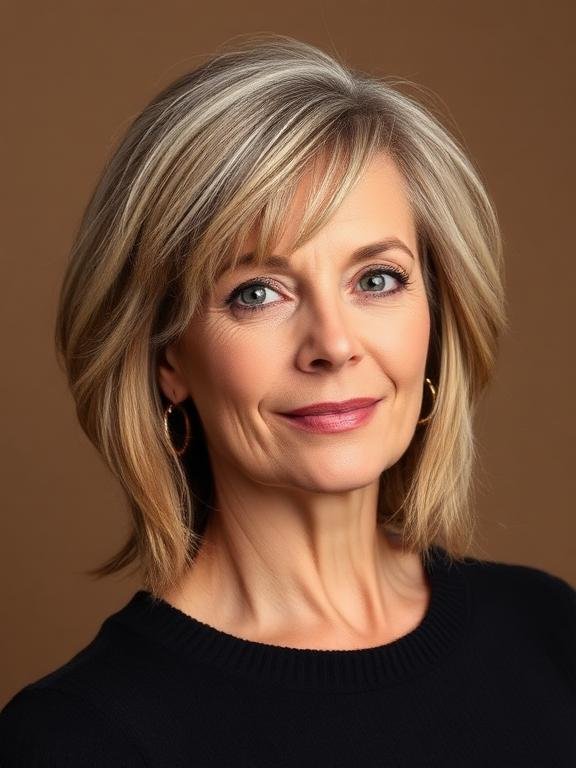
A soft crown shag puts the shorter layers specifically at the top of the head where mature hair tends to go flattest. The crown lifts and the rest of the cut stays fuller and less layered. It reads as a shag without stripping the ends of the density they need.
Ask for layering concentrated through the crown and upper sections only. The lower mid-lengths and ends should be left as full as possible. A light mousse at the roots before rough drying gives you the lift to make the crown layers work.
2. Curtain Bang Shag
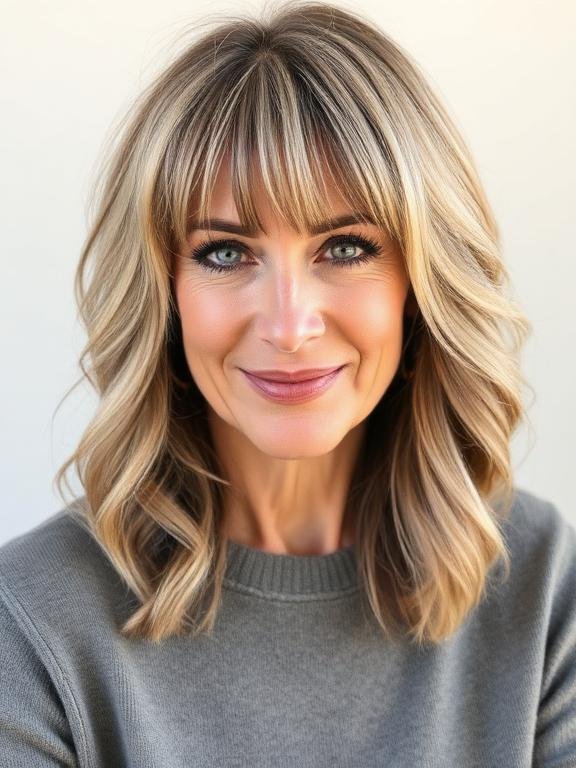
Curtain bangs change the whole front section of a shag cut. They add face-framing intentionality at the forehead that makes the rest of the cut look more polished and considered. For women over 50 they are a softer and more flattering option than a full blunt fringe.
Keep the curtain pieces airy rather than thick. A small round brush blow-dried forward then swept outward keeps them sitting right. The key is making sure they blend into the face-framing layers at the sides rather than sitting as a separate heavy section.
3. Silver Shag
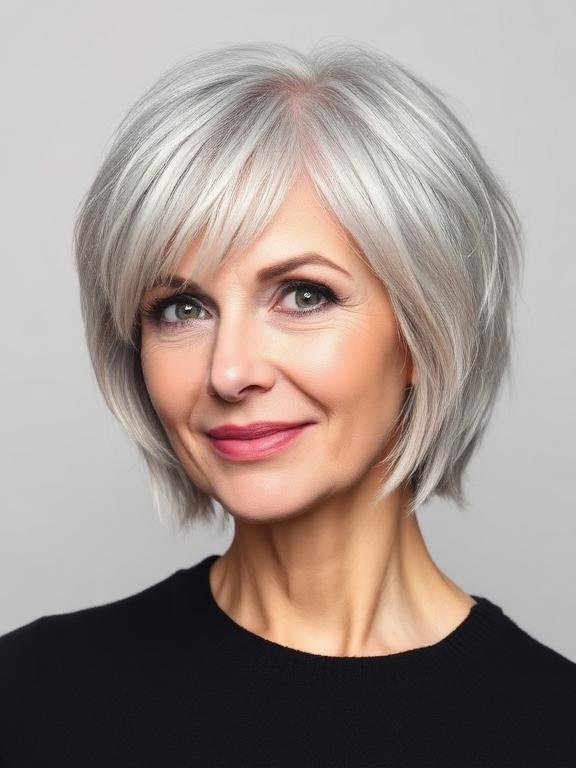
A shag cut on silver or gray hair is one of the most striking and modern styles available for women over 50. The silver color and the textured, layered quality of the shag create a combination that looks genuinely intentional and confident rather than simply low effort.
Use a purple toning shampoo occasionally to keep the silver looking bright rather than dull or yellow. A light texturizing spray through the mid-lengths after diffusing or air drying brings out the layered quality of the cut and keeps the silver looking dimensional.
4. Short Shag Crop
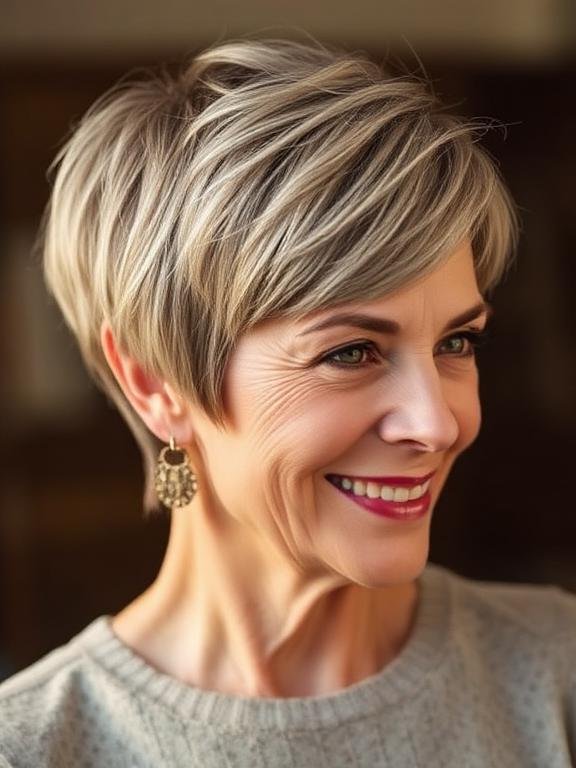
A short shag crop brings the shag concept into a very short format that works well for women over 50 who want minimal daily effort. The layering is concentrated through the crown and the sides stay cleaner and shorter. The result has texture and personality without requiring much styling time.
Ask for layering through the crown and upper sections with the sides kept close and clean. A root spray and a quick rough dry at the crown is usually all this style needs. Avoid heavy product that weighs the short layers down.
5. Layered Shag Lob
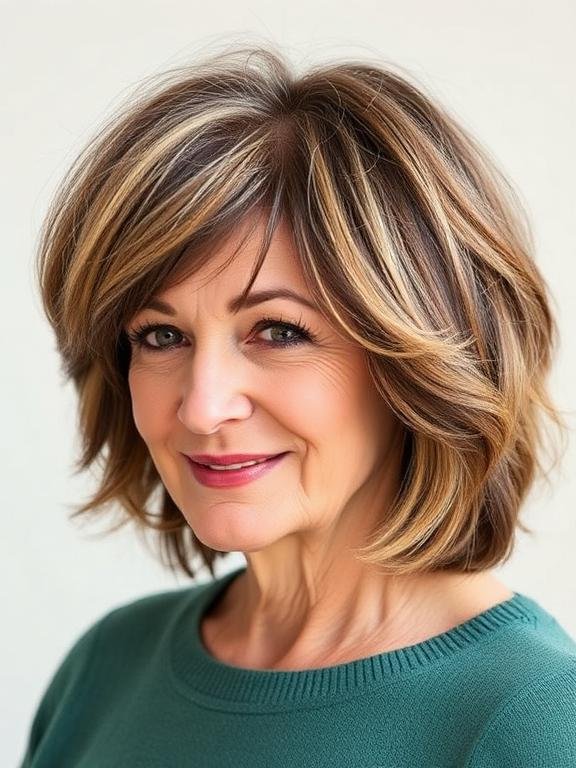
A shag at lob length gives women over 50 a longer version of the cut with enough length to create real movement and swing through the layered sections. The layers run from the crown through the mid-lengths, and the lower sections stay fuller to protect the perimeter density.
Ask for the shag layering to start at the crown and taper gently through the mid-lengths, with the ends left fuller than a standard shag. A large barrel wand used loosely through the mid-lengths brings out the layers without making the style look overdone.
6. Wispy Fringe Shag
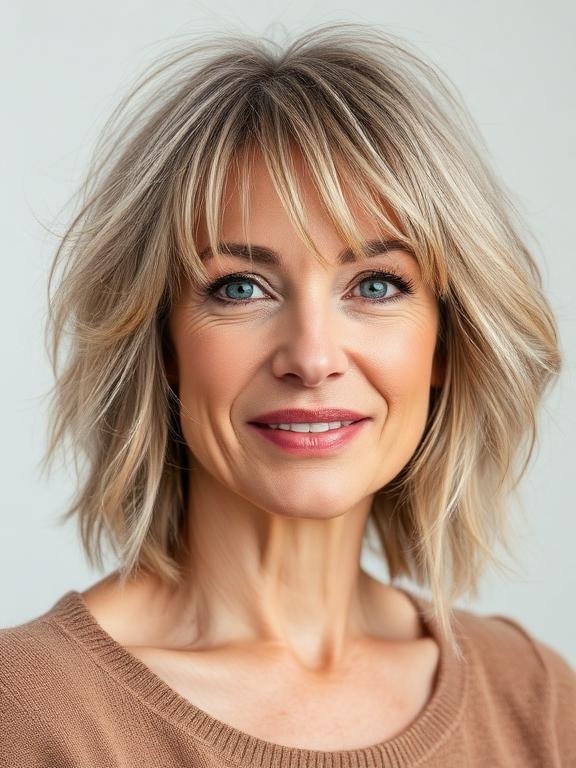
A wispy fringe combined with shag layering gives the cut a focal point at the front that makes the whole style feel more complete. The wispy quality is important for women over 50 because it does not demand the density a full blunt fringe requires and looks better as it grows out.
Keep the fringe separated and airy rather than flat and heavy. Dry shampoo at the roots of the fringe adds grip between washes. The shag layering through the rest of the cut should share the same relaxed, light quality as the fringe for the style to feel cohesive.
7. Textured Bob Shag
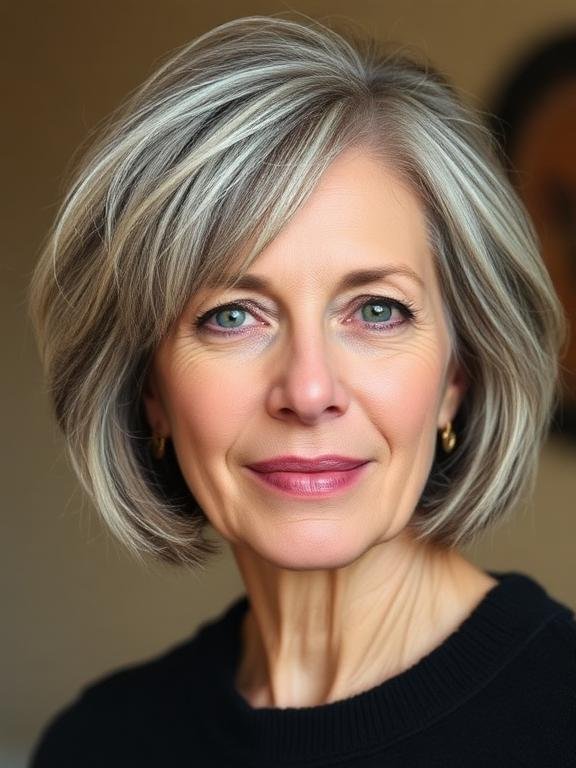
A shaggy bob that sits at chin to jaw length with visible choppy layering through the ends and mid-lengths creates a style that is short enough to be genuinely low maintenance but textured enough to look modern and considered. It is the most compact version of the shag on this list.
Ask for choppy, visible layering through the ends and mid-lengths within the bob shape. The crown layering adds lift and the end texture adds movement. A light mousse before rough drying and a scrunch through the ends is usually all this style needs.
8. Feathered Shag
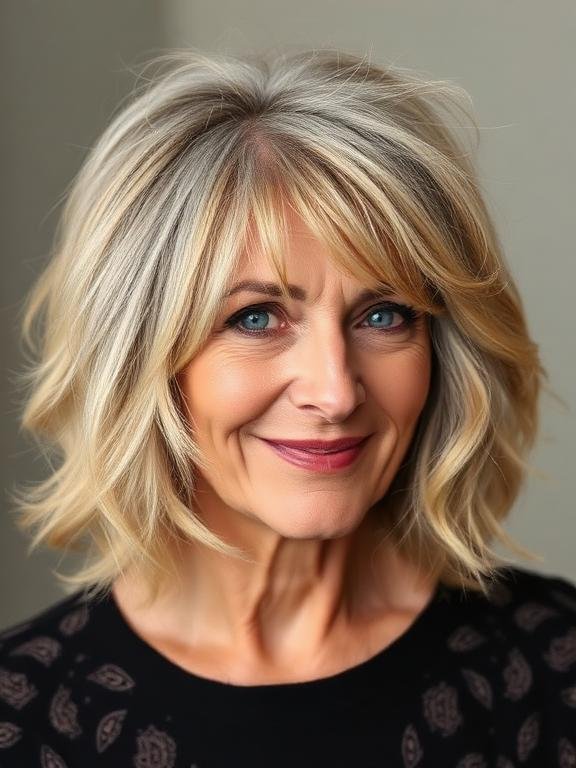
A feathered shag uses gradually diffused layering rather than sharply defined layers, which removes weight gently and creates a softer, more airy texture. For women over 50 with finer hair this approach is more flattering than aggressive layering because the gentle feathering preserves more density at the ends.
Ask for feathered layering through the outer mid-lengths that removes weight gradually without creating sharp breaks in density. This is the style to choose if you want shag movement and lightness without the risk of the ends looking too thin or wispy.
9. Half-Up Shag Style
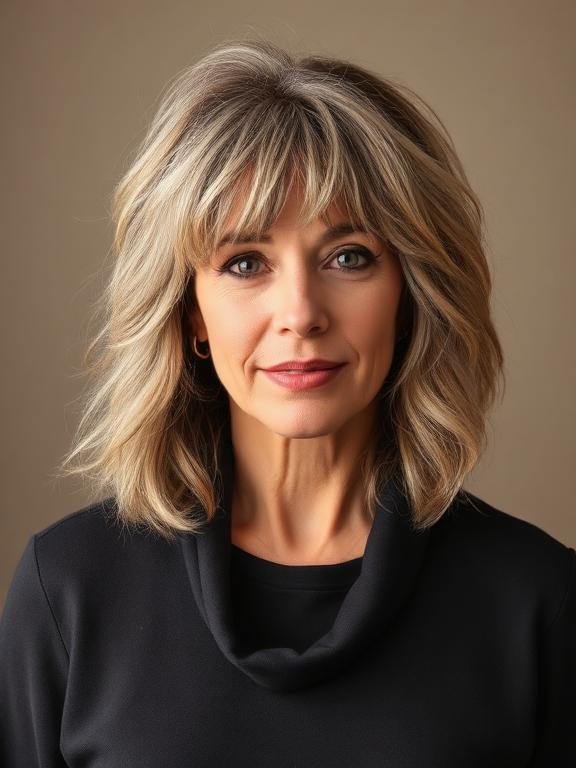
A shag cut worn half-up uses the layering of the lower sections as the main visual feature while the top section is gathered to show the face clearly. It is one of the most practical everyday styling options for a shag cut because it looks intentional without requiring much effort.
Gather the top section loosely and secure with a clip or soft elastic. Leave the shaggy lower layers down to show the texture and movement of the cut. Pull a few face-framing pieces loose at the front and finish with a light texture spray through the lower sections.
10. Natural Wave Shag
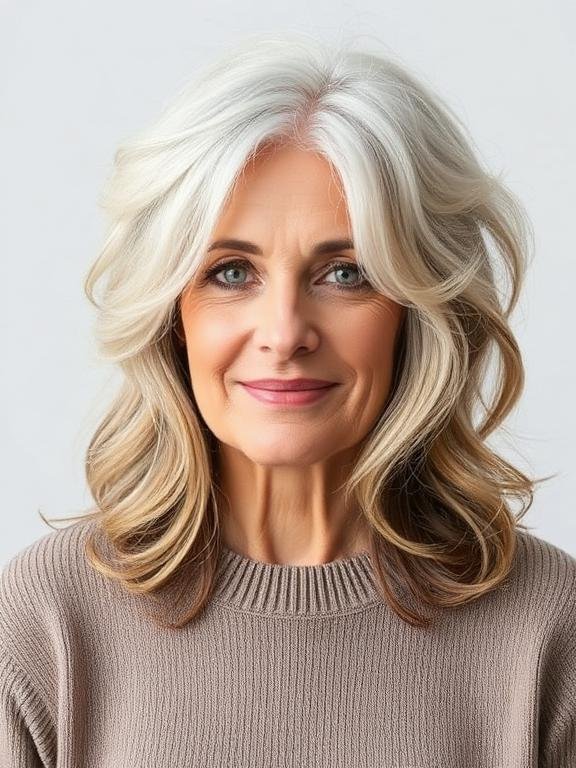
A shag shaped around a natural wave pattern creates a style that air dries into exactly the right shape with minimal daily effort. The wave does the textural work that the shag layering usually needs to create artificially, which means the layering can stay conservative and the perimeter can stay fuller.
Ask for layering placed to support the natural wave rather than work against it. A lightweight mousse scrunched into damp hair before air drying is usually enough. Avoid touching the hair too much while it dries or the wave definition breaks down.
11. Choppy Medium Shag
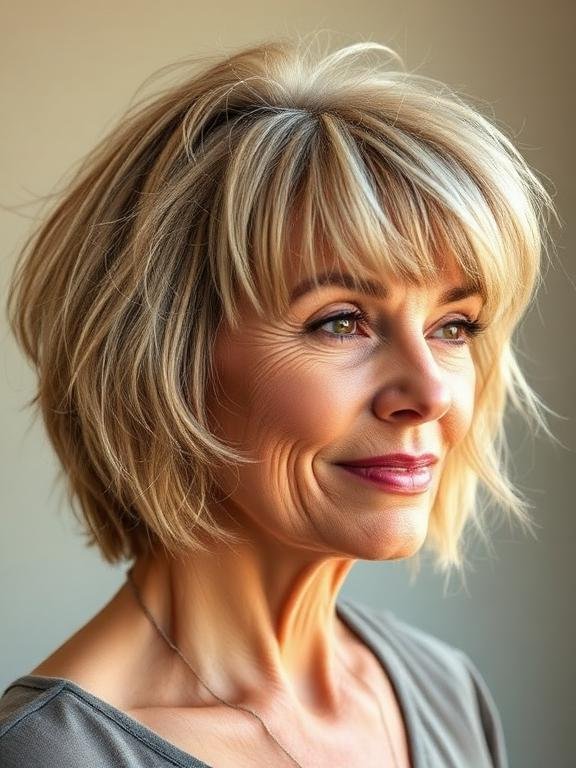
A choppy medium shag at shoulder length has visible, deliberate layer breaks through the mid-lengths that give the cut a modern, edgy quality. For women over 50 this version works best on hair that still has reasonable density because the choppy ends need enough hair to look intentional rather than sparse.
Ask for choppy layering through the mid-lengths and crown with slightly fuller ends than a standard choppy shag. Style with a texturizing spray and a quick rough dry at the roots. Scrunch the ends rather than brushing to keep the choppy quality intact.
12. Shag with Side Part
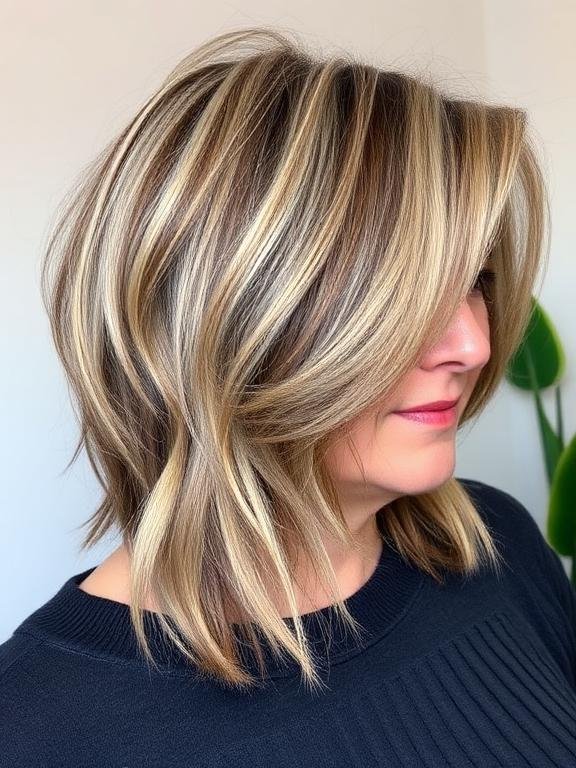
A deep side part added to any shag cut creates immediate volume on the heavier side and gives the style a directional, polished quality that the standard shag sometimes lacks. For women over 50 the side part also concentrates the fine or thinning hair on one side where it creates more apparent fullness.
Set the side part while the hair is damp and blow dry the roots upward and over to the dominant side. The shag layering through the rest of the cut will fall naturally from the part and create more movement on the heavier side than a centered part would.
13. Long Shag with Face Frame
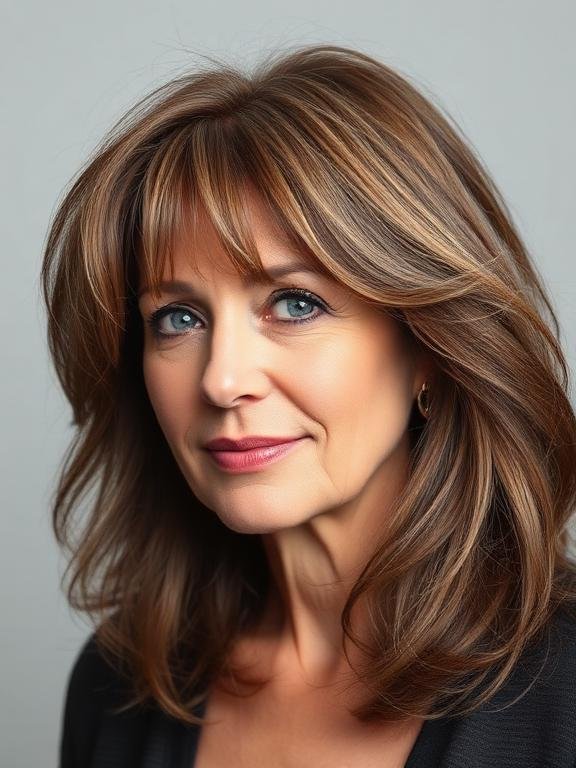
A long shag that keeps significant length while adding crown layering and defined face-framing pieces creates the most length-preserving version of the shag on this list. For women over 50 who are not ready to lose length but want more movement and lift this is the best starting point.
Ask for the shag layering concentrated through the crown and face-framing sections, with the rest of the long length kept fuller and less layered. The face-framing pieces should start around the cheekbone level and blend naturally into the longer sections behind them.
14. Shag with Undercut
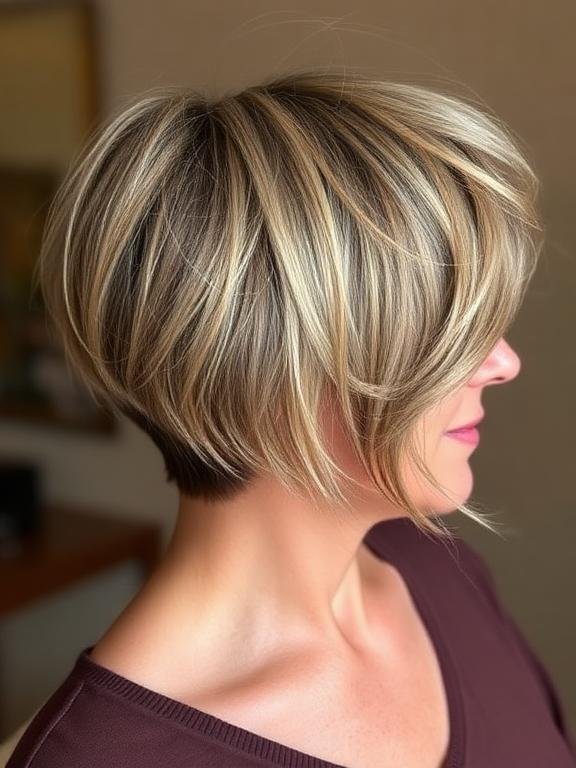
A soft undercut at the nape added to a shag cut removes hidden weight from underneath the surface layers without changing anything visible about the style. For women over 50 with thicker hair this undercut makes the shag significantly lighter and easier to manage through the day.
Ask for a soft undercut at the nape clipped closely underneath the surface layers. It should be invisible when the hair falls naturally. The weight reduction makes the shag layers sit lighter and move more freely, which is exactly what the cut is designed to do.
15. Shag with Babylights

Adding babylights to a shag cut gives the layering more apparent dimension and visual depth than the cut alone achieves. The fine highlights interact with the layers to create a shifting, multidimensional quality that makes the shag look richer and more intentional.
Ask for babylights placed through the mid-lengths and ends to add diffused brightness that enhances the movement of the shag layers. Choose a tone that complements your natural gray or base color rather than fighting against it. A gloss treatment every few weeks keeps the highlights looking fresh.
16. Relaxed Shag Pixie
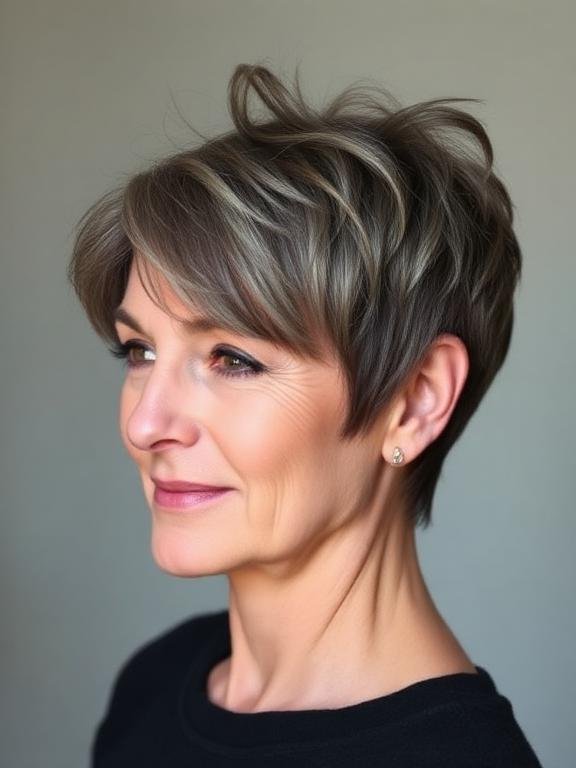
A shag pixie is the shortest version of the shag concept, with choppy layering through the crown and a clean, close finish at the sides and nape. For women over 50 this style is genuinely low maintenance and the shag quality at the crown gives it enough texture and personality to look intentional with minimal daily effort.
Ask for visible choppy layering through the crown section with close, clean sides and nape. A root spray and a quick finger-dry at the crown is the whole styling routine. Avoid heavy product that flattens the short crown layers and removes the texture the cut is built around.
17. Shag with Curtain Bangs and Highlights
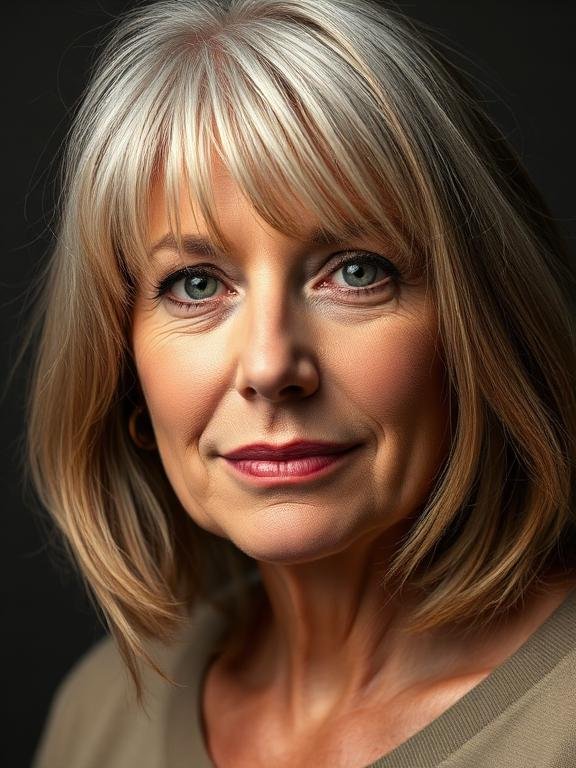
Combining curtain bangs, shag layering, and subtle highlights creates a style with multiple elements working together to add movement, face-framing, and dimension simultaneously. For women over 50 this combination addresses the most common mature hair challenges in one complete package.
Ask for curtain bangs that blend into face-framing layers, shag layering through the crown and upper mid-lengths, and highlights placed to enhance the movement the layers create. Keep each element subtle enough that the three work together rather than competing.
18. Effortless Air-Dry Shag
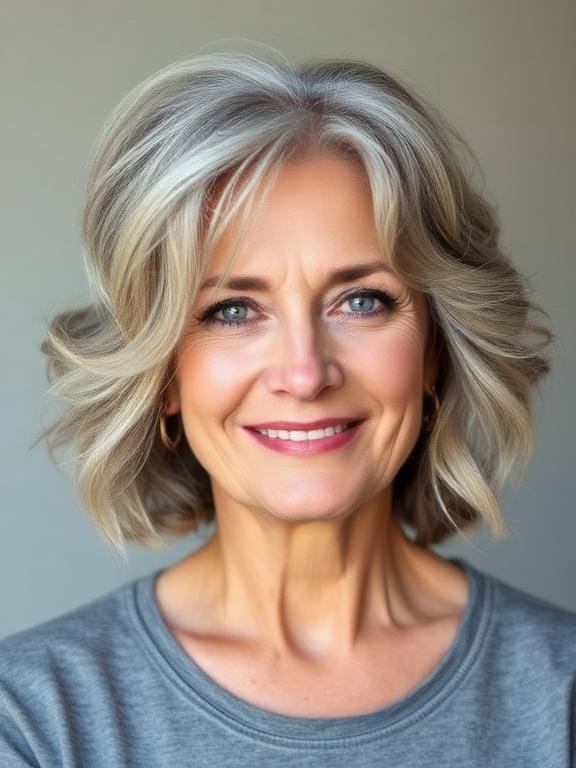
A shag designed specifically to look its best when air dried without heat tools is the most genuinely low-maintenance option on this list. The layering and the cut are shaped around how the hair behaves naturally when it dries, which means the daily result looks intentional without any styling effort.
Ask for a shag shaped to work with your natural hair texture and behavior when it dries without manipulation. A lightweight texturizing mousse scrunched into damp hair is the only product you need. Let it dry completely without touching and the layers settle into place on their own.
FAQs
Is a shag cut good for fine hair over 50?
Yes if the layering is kept conservative. Fine hair needs the shag concept more than the full shag execution. Concentrate the layering at the crown where it creates lift and keep the ends fuller than a standard shag. Avoid aggressive thinning shears through the lower sections.
How often does a shag need trimming after 50?
Every six to eight weeks keeps the layers fresh and the shape intentional. Shag cuts grow out faster than blunt cuts in terms of how quickly the shape changes. Regular trims are more important for a shag than for a one-length cut.
What products work best for a shag over 50?
A lightweight volumizing mousse at the roots before drying, a texturizing spray through the mid-lengths after drying, and a light finishing spray to set the shape. Avoid heavy waxes, thick creams, and oils through the lengths. They weigh mature hair down and cancel out the lift the shag is designed to create.
Can a shag be styled straight as well as textured?
Yes. A shag with a blowout and a round brush looks polished and smooth while still showing the movement the layers create. It is a different finish from the textured air-dry result but both work equally well for most shag cuts. The layering shows up in both versions just differently.
Wrapping Up
A shag over 50 is one of the most flattering and versatile cuts you can choose at this stage because it adapts to your hair type, your lifestyle, and how much time you want to spend styling. The key is telling your stylist exactly where you want the volume and exactly how conservative you want the layering to be.
Save two or three styles from this list that match your hair length and texture. Show your stylist the crown layering and the end fullness in the reference photos. Those two details make the biggest difference between a shag that works for your hair and one that strips it out.