19 Hairstyles for Women Over 60 With Fine Hair
Fine hair over 60 is one of the most specific combinations to style well, and one of the most frequently given advice that does not quite fit. Generic fine hair advice often ignores the reality of how the face and the hair have both changed by this stage of life.
Generic over-60 advice often assumes a density and strength of hair that fine hair does not have. The result is a gap where the most useful and specific guidance should be, and where most women with this combination end up making do with approaches that partially work rather than finding the one that genuinely does.
What fine hair over 60 actually needs is a cut that maximizes the appearance of fullness without demanding density the hair cannot provide, frames the face in a way that suits its current shape rather than the shape it had decades ago, creates volume at the crown through structural or styling techniques that do not depend on the thickness of the hair, and holds its shape through the day without requiring constant attention or elaborate product application.
This list covers 19 hairstyles for women over 60 with fine hair that address both aspects honestly and deliver results that look genuinely full, flattering, and appropriate for this specific combination.
1. Blunt Chin Bob
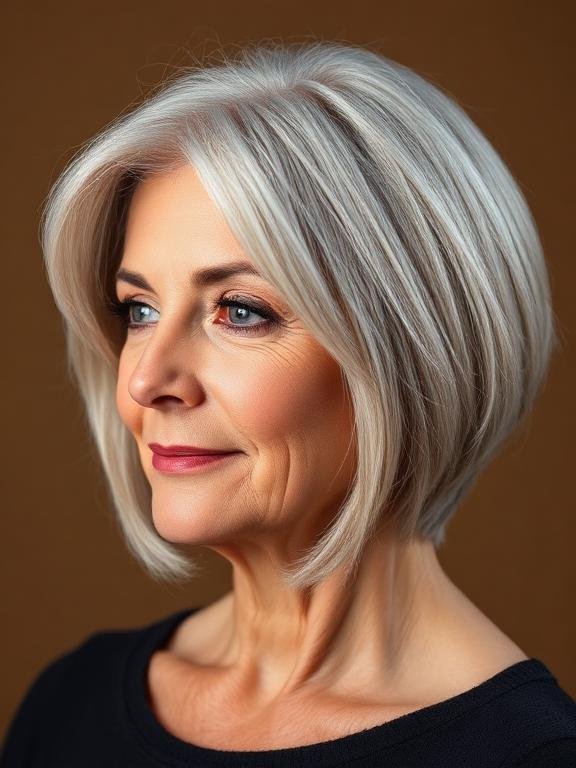
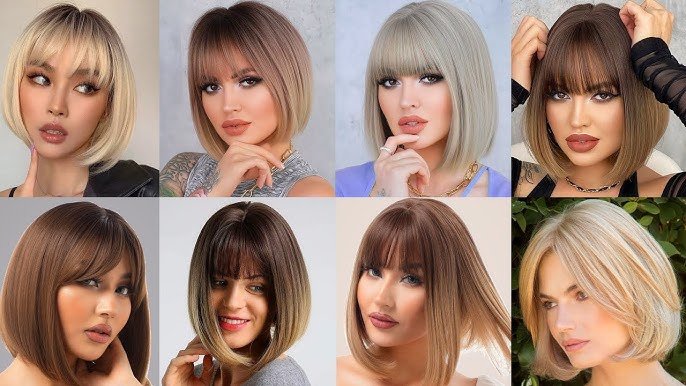
A blunt chin-length bob is the single most reliable starting point for fine hair over 60 because the dense, even perimeter concentrates the hair’s limited density at the ends where it shows most, the jaw-level length creates a flattering visual line, and the clean lines of the blunt cut look intentional and polished without needing volume the hair cannot provide.
Ask for a blunt bob cut to sit at chin level with a clean even perimeter and no thinning through the ends, with only the lightest possible root-lift shaping through the crown if needed, letting the weight of the blunt edge do the work of making the fine hair look as full as possible.
2. Side-Parted Lob
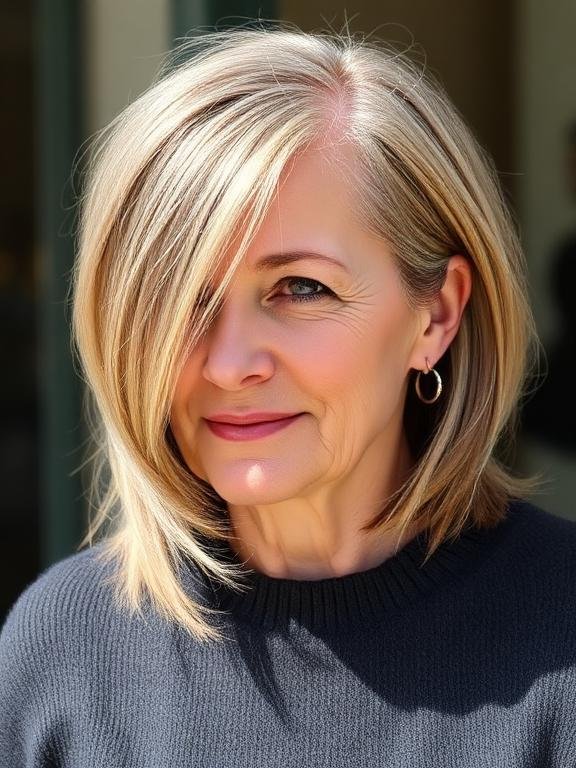
A lob at shoulder length with a deep side part creates the two most useful things fine hair over 60 needs simultaneously. The side part generates crown volume on the heavier side and creates asymmetry that reduces the circular impression of a rounder mature face, and the lob length creates a vertical line that elongates the face and neck.
Ask for a shoulder-length lob with a defined deep side part and only very light crown layering to support the volume the part creates, keeping the perimeter as full and dense as possible so the fine hair retains presence and weight at the ends.
3. Stacked Bob
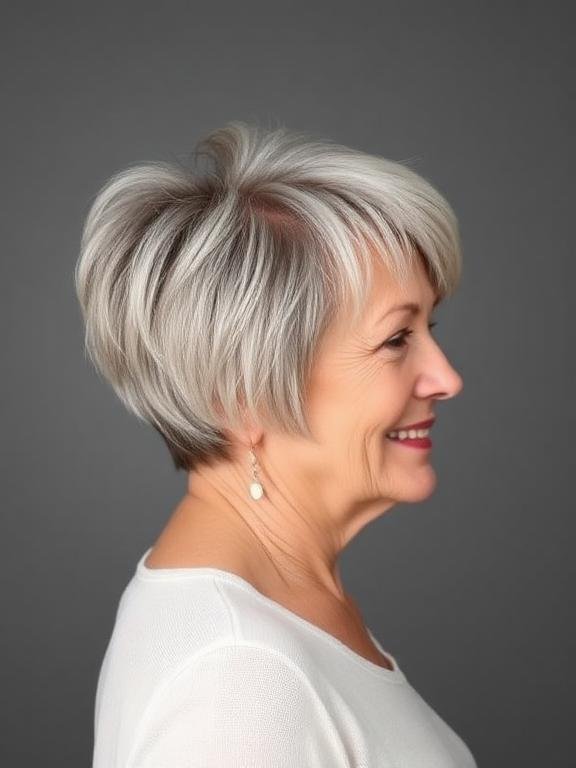
A stacked bob creates structural crown lift and volume at the back of the head through the construction of the cut rather than through the density of the hair. For fine hair over 60 this structural approach is one of the most reliable ways to achieve the crown volume that fine hair cannot generate on its own, and the stacked back creates a shape that holds through the day.
Ask for a stacked bob with close layering at the back that builds crown lift, longer and fuller front sections that frame the mature face, and a perimeter kept as dense as possible to maximize fine hair end fullness.
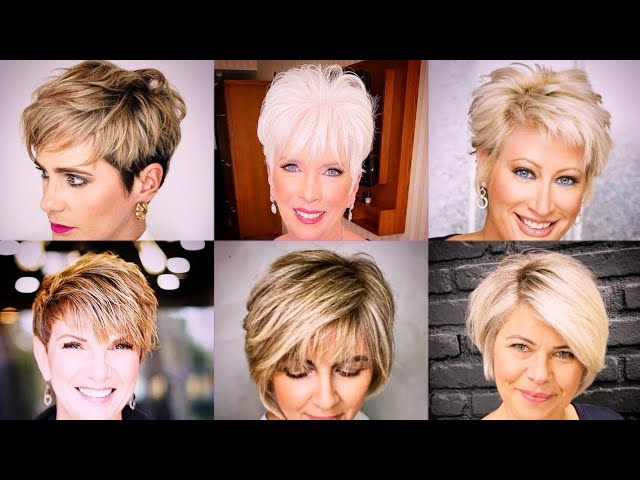
4. Short Textured Pixie
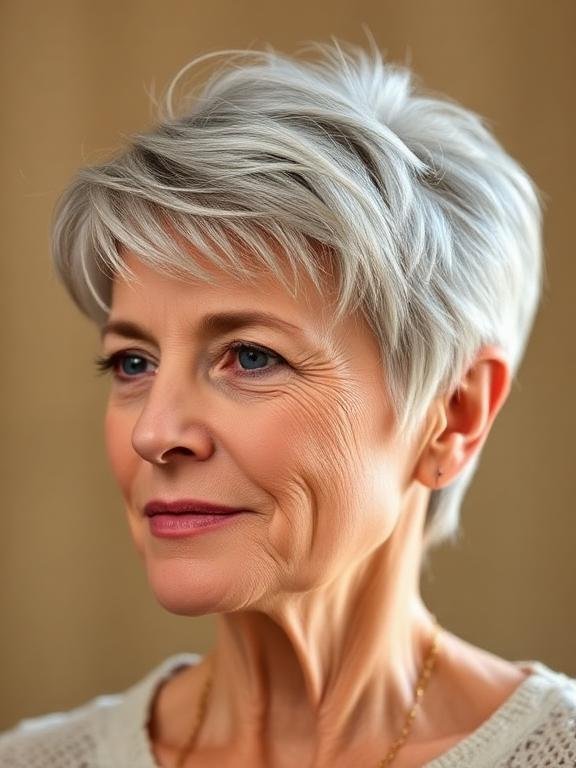
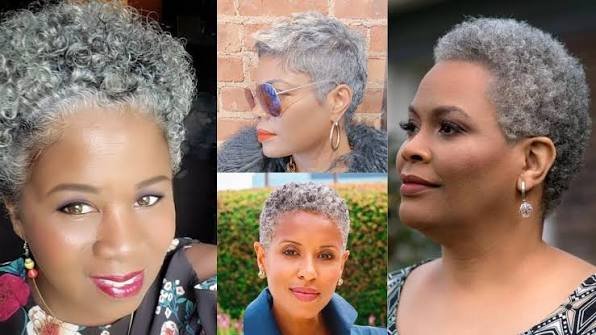
A short textured pixie removes the length that makes fine hair go flat and replaces it with a close, considered shape where the limited density is concentrated in a small enough area to create genuine presence. At this length the texture and shape do the work that density would do in thicker hair.
Ask for a short textured pixie with layering through the crown for visible lift and movement, close tapered sides that keep the silhouette proportional, and a finish that works with the natural behavior of fine mature hair rather than trying to create volume it cannot sustain through the day.
5. Curtain Bang Lob
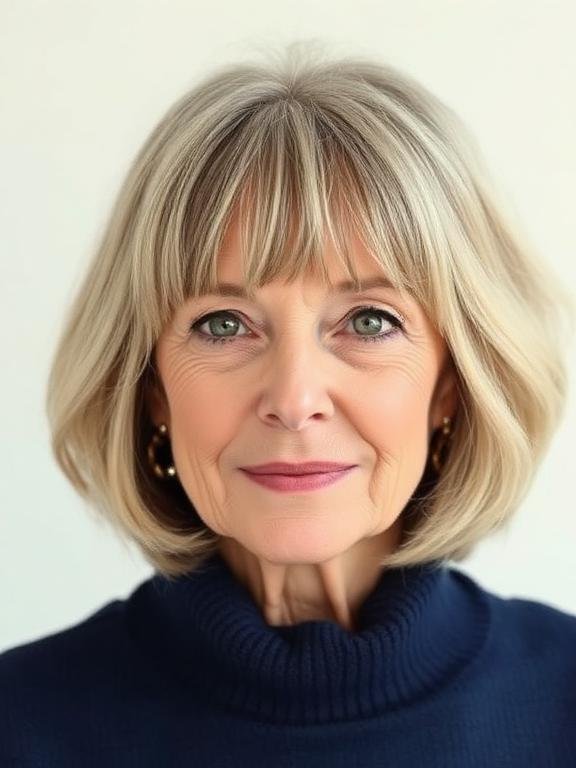
Curtain bangs on a shoulder-length lob add face-framing interest at the forehead level that draws attention to the eyes and upper face while the lob length elongates the face and neck. For fine hair over 60 curtain bangs are one of the most manageable fringe options because they are naturally lighter and do not demand density the hair cannot provide.
Ask for a shoulder-length lob with curtain bangs that part softly in the middle and blend into face-framing sections at the sides, with the body of the lob kept as full and dense as possible and interior layering placed only through the crown to encourage root lift without thinning the ends.
6. Voluminous Crown Bob
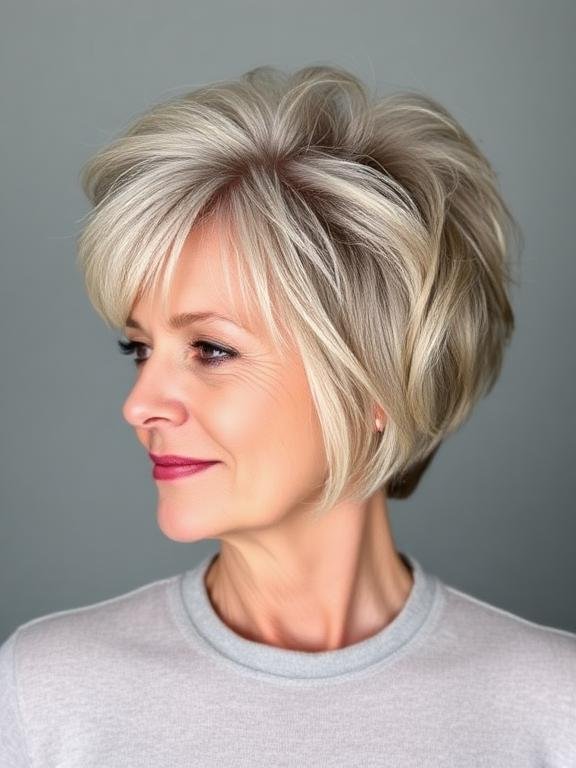
A bob that concentrates its styling energy on creating crown volume through root-lift layering and blow-dry technique gives fine hair over 60 a style that looks significantly fuller than the hair’s actual density would suggest. The crown volume draws the eye upward, which is consistently flattering for mature face shapes.
Ask for a bob with root-lift layering placed specifically through the crown and upper sections to encourage lift and volume when blown dry, with a clean perimeter that keeps the fine hair ends as full and dense as possible and sides kept relatively flat to concentrate the apparent volume at the crown.
7. A-Line Bob
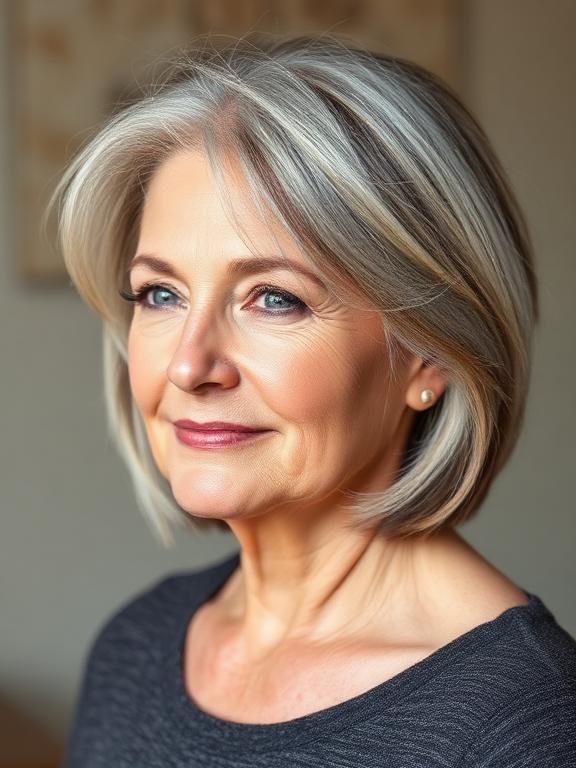
An A-line bob creates structural shape and a strong vertical line through the cut’s angle rather than through density. For fine hair over 60 the A-line is particularly useful because the angular shape does design work that does not depend on the hair having significant volume or strength, and the longer front sections create a flattering frame around the mature face.
Ask for an A-line bob with a shorter back and longer front sections, with interior layering kept as minimal as possible to preserve fine hair perimeter density, letting the angle of the cut provide the visual interest and the elongating vertical line.
8. Bob with Babylights
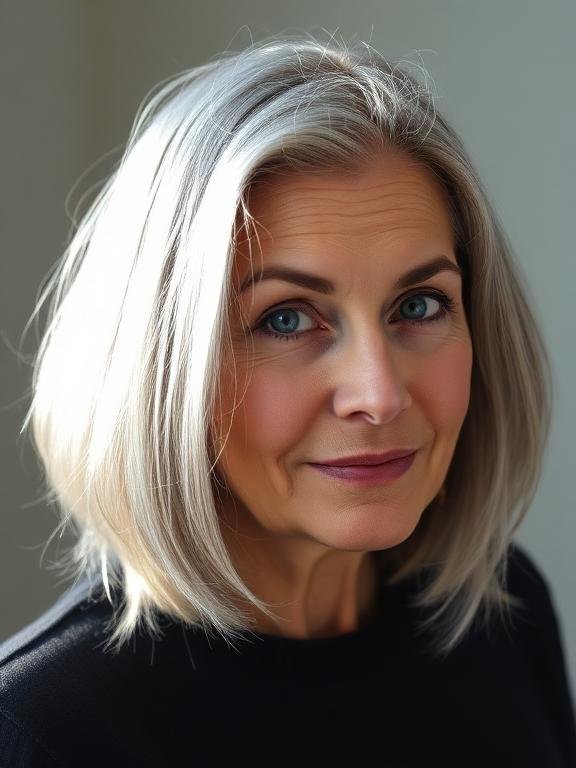
Babylights through a bob on fine hair over 60 add diffused visual dimension that creates the impression of more texture and density than the hair actually has. For mature hair that has become more uniformly colored with age the babylights restore the natural color variation that younger hair often has, giving the bob more apparent richness and fullness than a flat single tone.
Ask for a bob at your preferred length with babylights placed through the mid-lengths and ends to add diffused brightness and dimension, choosing a tone that complements the natural gray or base color of mature fine hair.
9. Short Natural Wave Cut
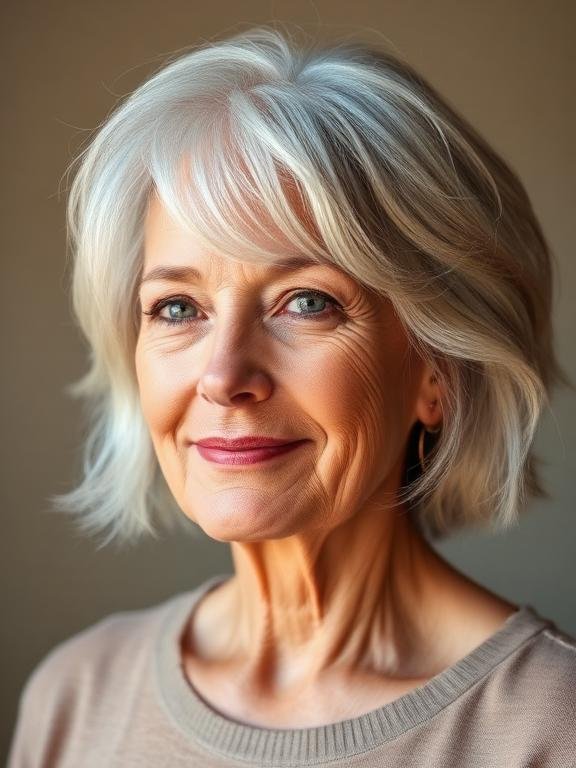
A cut shaped specifically to work with whatever natural wave fine mature hair has, even if that wave is subtle, creates a style that looks more alive and intentional than a cut that smooths or ignores the hair’s natural texture. Even a very subtle wave, when supported by the right cut and lightweight product, adds movement and apparent volume that straight fine hair cannot generate.
Ask for a short to medium cut shaped to work with your natural wave pattern, with layering placed to encourage the wave rather than suppress it, and style with a lightweight wave-enhancing mousse scrunched into damp hair before air drying or diffusing.
10. Half-Up Style
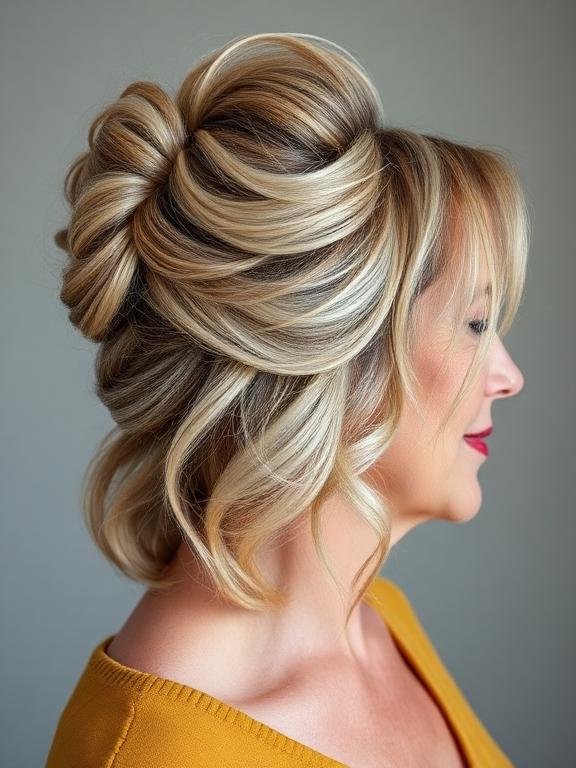
A half-up style that gathers the top section and creates crown volume while leaving the lower sections down gives fine hair over 60 a practical, polished everyday option that addresses flatness at the crown through arrangement rather than through density. The gathered top section creates apparent volume and structure, and the loose lower sections add movement and length.
Apply a volumizing spray through the crown section before gathering the top half of the hair, secure softly with a clip or decorative elastic, and leave the lower sections down with a light wave or clean blowout finish, pulling face-framing pieces loose at the front to soften the look and frame the mature face.
11. Wispy Fringe Bob
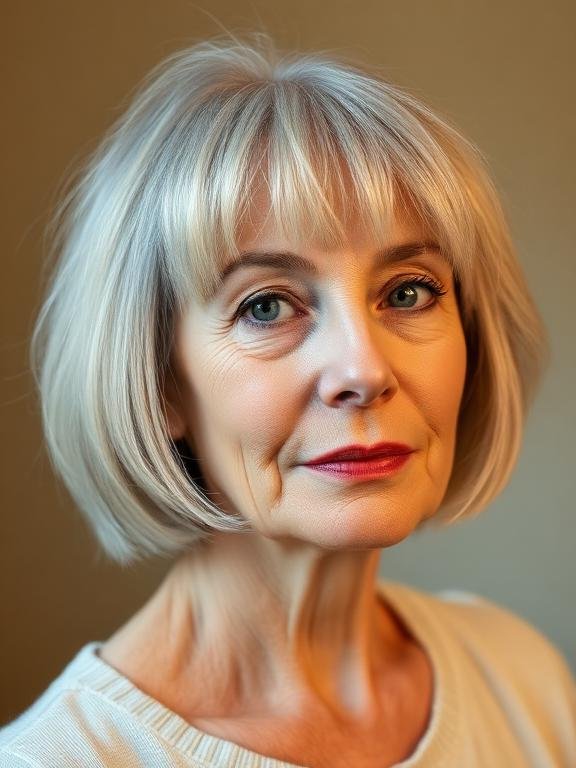
A wispy fringe on a bob gives fine hair over 60 a soft face-framing focal point that draws attention to the eyes without the density demands of a full blunt fringe. The wispy quality suits fine mature hair because it does not require the thickness a heavier fringe would and does not go as flat through the day on hair that lacks body.
Ask for a bob at your preferred length with a wispy fringe that sits lightly across the forehead without a heavy blunt edge, with the bob perimeter kept as full and dense as possible and interior layering placed conservatively to preserve fine mature hair end fullness.
12. Lob with Face-Framing Highlights
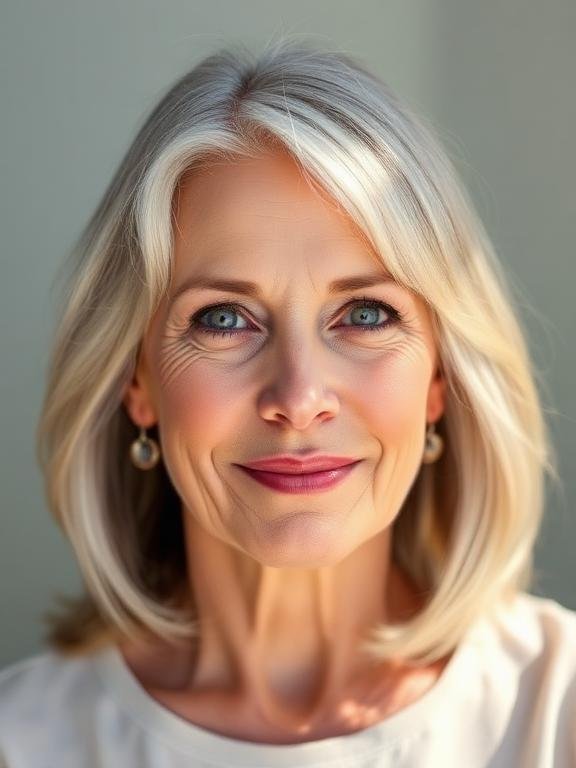
Face-framing highlights on a shoulder-length lob draw attention to the center of the mature face rather than its full width, and add visual dimension that fine hair over 60 often lacks. The highlights create a brightness around the face that makes the overall style look more alive and considered without any structural change to the cut.
Ask for a shoulder-length lob with highlights placed through the face-framing sections around the cheekbones, choosing a tone that adds brightness and dimension in a way that complements rather than fights the natural color or gray of mature fine hair.
13. Graduated Bob
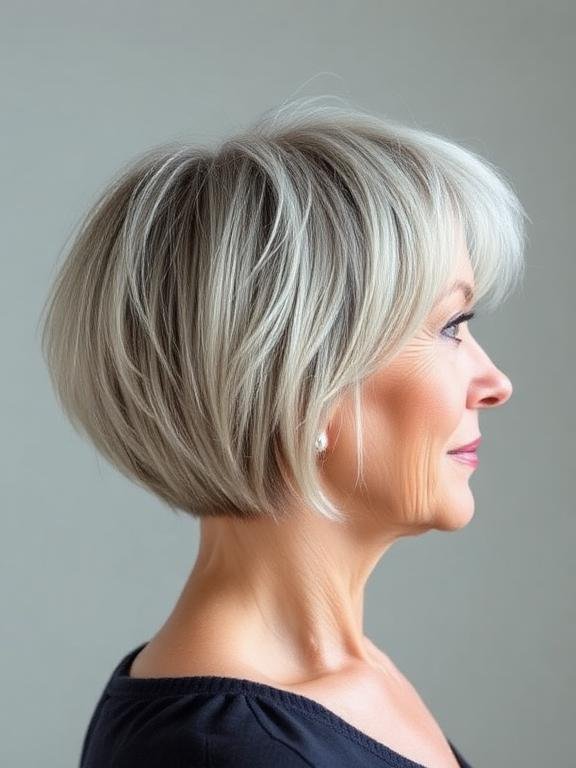
A graduated bob creates structural crown lift through the graduation itself, with the shorter back generating natural volume and the longer front framing the mature face. For fine hair over 60, the structural element of the graduation does shape-creating work that does not rely on the density of the hair, which makes it one of the more reliable approaches to achieving a full, considered shape.
Ask for a graduated bob with a shorter back that creates natural crown lift and longer front sections that frame the face, with interior layering kept minimal to preserve as much fine hair density as possible at the perimeter.
14. Collarbone Blunt Cut
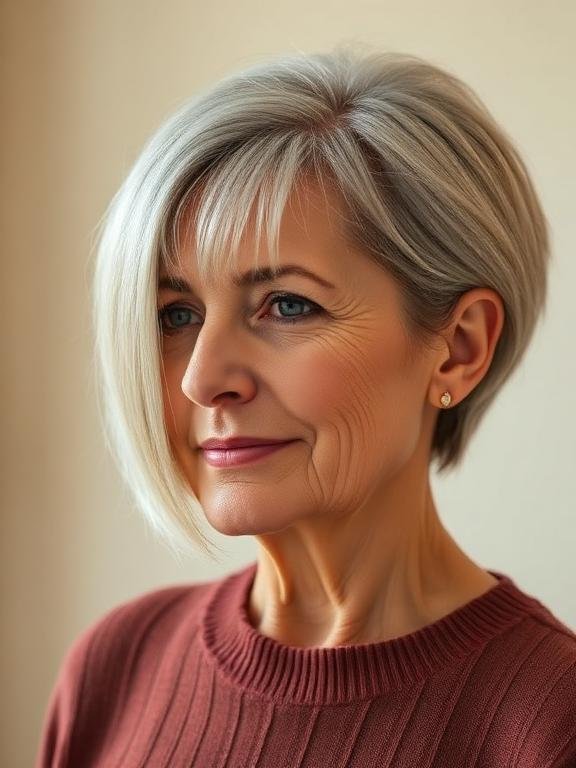
A blunt cut at collarbone length gives fine hair over 60 a clean, dense perimeter at a length that creates a strong visual line along the face and neck and draws attention to the collarbone and décolletage. The collarbone landing point is universally flattering for mature women and the blunt edge maximizes the fine hair’s end density at that length.
Ask for a blunt collarbone-length cut with a clean even perimeter and minimal interior layering, relying on the weight of the blunt edge to give the fine hair maximum fullness and the length to create a flattering frame for the mature face and neckline.
15. Bob with Side Sweep
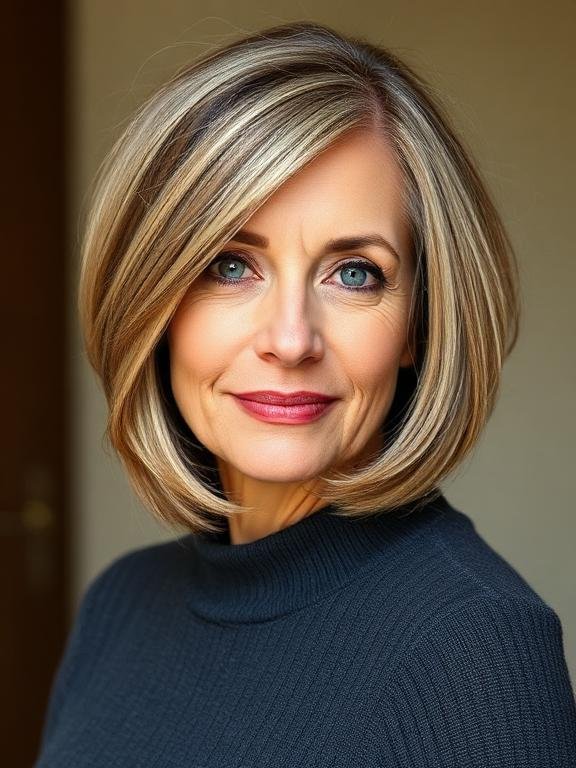
A bob with a side-swept front section creates a directional, polished quality that is consistently flattering for fine hair over 60 because the sweep generates volume on one side, creates a diagonal line that reduces the circular impression of a rounder mature face, and gives the overall style a sense of movement and intention.
Ask for a bob with a deep side part and front sections layered to support a natural side sweep, with the rest of the bob kept as full and clean as possible and the sweep designed to fall into place naturally rather than requiring resetting each morning.
16. Soft Feathered Cut
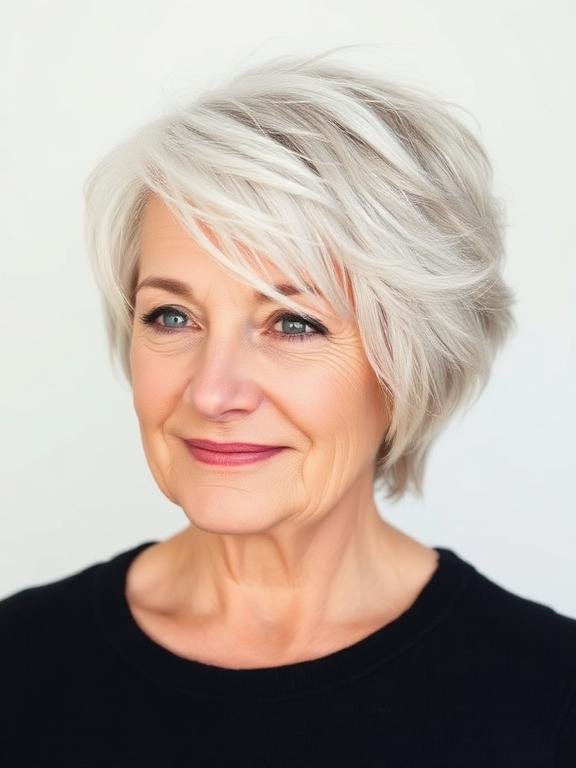
A feathered cut uses gradual, diffused layering through the outer mid-lengths of a style to create a soft, airy quality that suits fine mature hair because it removes weight gently rather than sharply, giving the hair a lighter, more natural feel without the abrupt changes in density that aggressive layering creates on fine hair.
Ask for a cut at your preferred length with very conservative feathered layering applied only through the outer mid-lengths, graduating gently toward the ends without thinning the perimeter enough to make the fine mature hair look scraggly or wispy at the tips.
17. Pixie with Side Part and Crown Volume
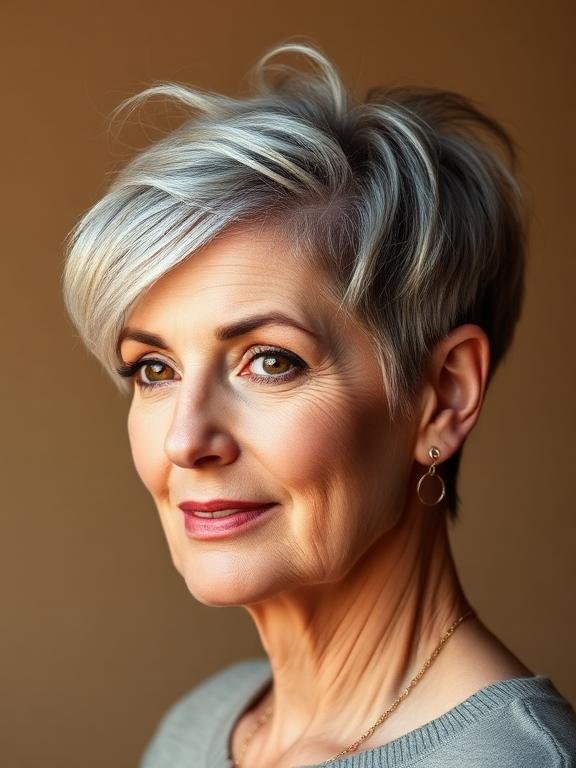
A pixie with a defined side part and crown layering that creates significant height and volume above the glasses level, or simply at the top of the mature face, is one of the most reliably flattering short styles for fine hair over 60 because the upward visual movement elongates the face and the side part creates asymmetry that reduces the impression of roundness.
Ask for a short pixie with a defined side part and layering through the crown that creates visible height and volume on the heavier side, close tapered sides that keep the silhouette proportional, and enough crown length to hold the lifted shape with minimal daily product.
18. Bob with Root Lift and Clean Perimeter
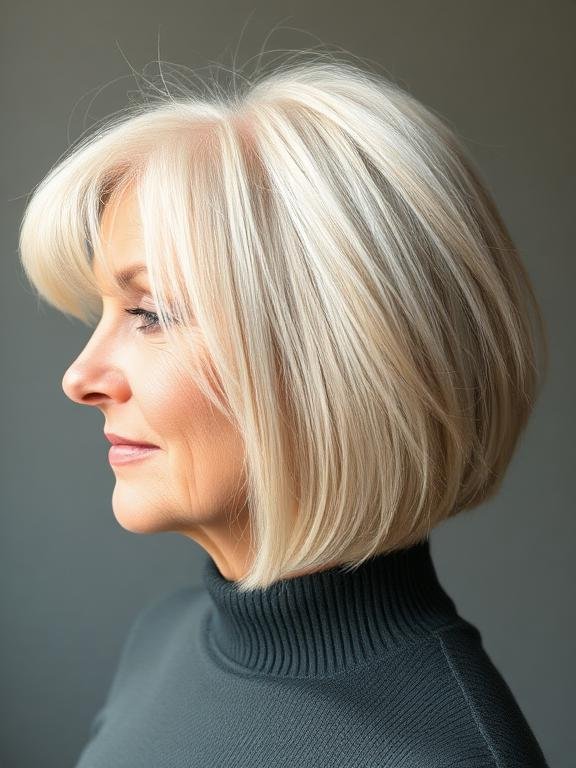
This bob pairs a clean, dense perimeter that maximizes fine hair end fullness with invisible root-lift layers through the crown that create the volume and height fine hair over 60 most needs at the base of the cut. The two elements address the two primary fine hair challenges simultaneously without compromising each other.
Ask for a bob at your preferred length with a clean blunt or lightly textured perimeter and invisible root-lift layering placed specifically through the crown and upper sections, leaving the lower mid-lengths and ends completely untouched to preserve as much fine hair density as possible at the perimeter.
19. Effortless Air-Dry Lob
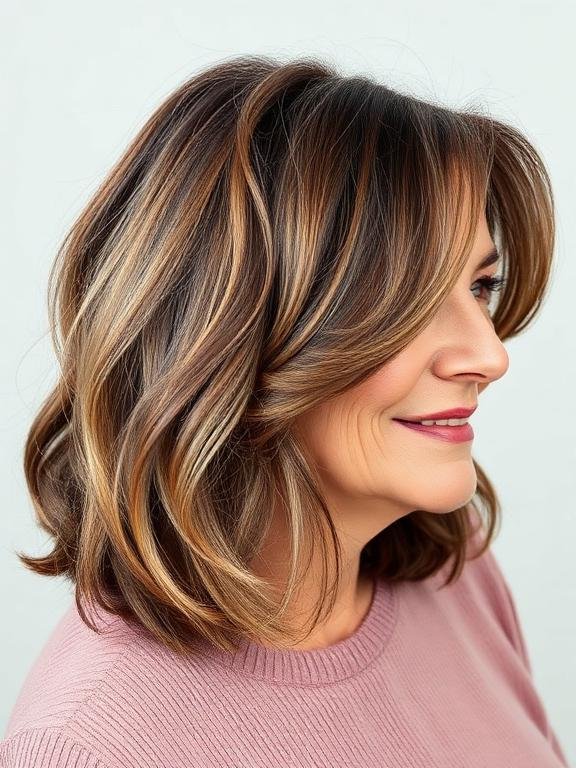
A lob designed specifically to look its best when fine mature hair is left to air dry without heat tools or significant manipulation is one of the most genuinely sustainable everyday approaches for women over 60 with fine hair. The cut is shaped around how the hair naturally falls and moves when dry, creating a result that looks intentional without requiring daily styling effort.
Ask for a shoulder-length lob shaped around how your fine mature hair behaves when it dries completely naturally, with the cut designed to produce a flattering, full result every day without heat tools, and style with only a lightweight volumizing mousse scrunched gently into damp roots before leaving the hair to dry.
FAQs
What is the most important consideration when choosing a hairstyle for fine hair over 60?
Perimeter density is the most important factor. Fine hair over 60 needs every strand it has concentrated at the ends of the cut to create the appearance of fullness and presence. Any layering through the ends removes that density and makes the perimeter look thinner and more sparse.
The second most important factor is crown volume, created through structural elements like stacking or graduation, or through targeted root-lift layering and blow dry technique, rather than through density the fine hair cannot provide.
What length works best for fine hair over 60?
Short to medium length generally works better than very long styles because length adds weight that pulls fine mature hair flat and makes the limited density more visible as it spreads over a greater distance.
Chin to shoulder length concentrates the available density in a manageable range where it can still create a convincing perimeter. Short styles like pixies can also be very effective because they concentrate fine hair’s density in a very small area where it creates more apparent presence than it would at longer lengths.
Can fine hair over 60 look full and healthy?
Yes, when the cut, the color, and the styling approach are all working together. A blunt or minimally layered perimeter maximizes end density. Conservative root-lift layering adds crown volume without stripping ends. Babylights or face-framing highlights add visual dimension.
Root-lifting products and blow dry technique extend the volume through the day. All of these elements together can make fine hair over 60 look significantly fuller and more intentional than any single approach achieves on its own.
What styling products help fine hair over 60 look its best?
A volumizing mousse or root-lifting spray applied to damp roots before blow drying is the most effective starting point. Blow drying with a round brush directed upward at the roots adds lift that lasts significantly longer than air-dried fine hair. Dry shampoo at the roots between washes adds grip and body.
A light-hold finishing spray keeps the shape without weighing fine hair down. Heavy serums, oils, and creams should be avoided completely because they flatten fine mature hair and cancel whatever volume the cut and styling create.
How often does fine hair over 60 need trimming?
Every five to seven weeks is ideal. Fine mature hair shows split ends and perimeter thinning earlier than thicker hair, and waiting too long between trims allows the ends to deteriorate in a way that makes the already fine perimeter look even more sparse and damaged. Regular trims are the single most important maintenance step for keeping fine hair over 60 looking as full and healthy as possible.
Wrapping Up
Fine hair over 60 is not a problem to manage around. It is a specific hair type with specific needs that, when those needs are genuinely understood and addressed, can produce beautiful and flattering results across a range of lengths, shapes, and personal styles.
The 19 styles on this list all start from an honest understanding of what fine mature hair can and cannot do, and build from there toward styles that look full, considered, and genuinely appropriate for women at this stage of life. Some rely on structural cut elements to create shape the hair cannot generate alone.
Others use color to add the visual dimension the fine hair’s texture cannot produce. All of them respect the perimeter density that fine mature hair most needs to look its best, and none of them require the hair to perform beyond its actual capabilities to achieve a result worth wearing every day.